• RELEASES
  • VIDEOS
  • ARTISTS
  • NEWS
  • ABOUT
  • STORE

Monthly Archives: July 2017

Steve Smith 11/10 pt.2

July 14, 2017
News, Steve Smith
Steve Smith


AL: I remember checking out the interview you did some time ago with Bill Milkowski where you talked about drum machines. Do you have any general opinion about how the trend in having a musician actually play drums to emulate a machine has taken music, or where you feel it might be going?

Steve Smith: For thousands of years music was created by musicians playing without the technology of computers or drum machines. The idea of drummers keeping time, without a click track, and coming up with interesting drum parts was one of the main reasons why you got hired as a drummer, whether it was Ringo playing with the Beatles, Gene Krupa playing with Benny Goodman or Hal Blaine getting called for countless sessions. Especially in the ‘60’s and 70’s studio drummers were hired because of their creativity and time keeping ability. Then as it became popular to use click tracks in the mid to late ‘80’s, right around when the drum machine came in, things started changing where it became crucial not only to have good time but to be able to play in perfect sync with a click track and to be able replace the drum machine part. Generally what happened in the studio, starting in the late ‘80’s to the present, was an artist would record a song with a drum machine or computerized drums and then have the drummer replace that with live drums. With this scenario there is less creativity asked of the drummer because the drum part has already been composed. The drummer learns the parts, maybe embellishes them a bit, and cuts the tracks. Performance accuracy becomes very important because there’s no room for the time to move around naturally the way it has for the past 20,000 or 30,000 years, or however long you want to look back, in music making. I think one of the musical ideas that has changed over time is, composers can tend to find what I consider, “awkward tempos” because they program a drum beat and write a tune that is composed at a particular exact tempo. A real band might never actually play that tempo and feel, or care to play it, because it’s some uncomfortable tempo crack. That’s something that I’ve noticed that’s different from the earlier days, whether it’s Buddy Holly, The Beatles, James Brown or Led Zeppelin. The tempos that different groups play are quite natural whether they are easily danced to or whatever it is. Tempos are so finite with machines that they’re not that natural to play. With the exact steadiness of tempo, it’s an unnatural way to approach music. Music naturally has more breath, tempo moves up and down. Imagine “Stairway to Heaven” with a click track, it wouldn’t have worked. There are thousands of examples of music like that; “Lucy in the Sky with Diamonds,” for instance, that’s a tune where the tempo changes a couple times. In some ways I think clicks can keep people from having a freer approach. A good musician, an evolved musician hopefully, can go beyond that, but “perfect time” has its pluses and minuses. One way you can see it a plus is that people can overdub parts and more easily create music that way. But another way of looking at it is that it’s an artificial way of making music. Overdubbed records can tend to sound that way, especially if they are jazz oriented records. They don’t sound like people playing music together — just my thoughts on the subject.

AL: You said in an interview a long time ago you practiced every day. Do you still get a chance to get in the hours and if so, what are you practicing?

SS: I still do like to practice every day but I don’t practice as religiously as I used to because it’s difficult these days. I live in New York City a portion of the year and I can’t practice in my apartment. It’s not practical, it’s just too small. Actually I go to the Drummers Collective to practice, which is a drum school in New York. For me to go to the Drummer’s Collective I have to get on a schedule and go in for two or three hour increments, so it all has to be planned in advance. At least three or four days a week I go to The Collective. When I don’t go to The Collective I practice on a practice pad here in the apartment just to try to stay in shape. When I’m at my house in Oregon I have a drum room there, so I can practice every day. But one of the other things, since that interview in 1997, is that my life as a band leader and the person organizing the details of tours has become even bigger and more time consuming. There’s a lot of administrative work with having a band on the road and sometimes my life gets taken up with all of those details. I don’t like it, but that’s the problem with being a bandleader and musician. I still like to practice but unfortunately I don’t feel like I get to do it quite enough.

Lately what I’m working on is developing the konnokol and incorporating the Indian rhythms on the drumset and different ways of orchestrating the Indian rhythms on the drum kit. Lately, because of the “Raga Bop” tour, I’m working on memorizing the songs and coming up with a lot of vocabulary for each song. My practice tends to be on exactly what it is I’m doing, not practicing chops for their own sake, but I keep it focused work on the music that I’m playing.

AL: I remember reading the liner notes to the second “Vital Tech Tones” record where you said “With Vital Information I’m not so concerned with virtuosic playing. We have more of an overall sound that we’re putting across so we’re focusing more on the vibe of the tunes. We have solos but virtuosity is not an over-riding concern. It is with this band. Is it ever a concern that taking an approach like that the music can become too clinical, for lack of a better word?

SS: No [laughter]. No, because I think that with the all the musicians that I work with there’s a certain aesthetic of earthiness and blues and rock that comes across. Some of those quotes were addressing the vibe of the times. When Mike Varney (the president / owner of Tone Center Records) came up with the idea to make records for Tone Center there was a lot of smooth jazz in the air. People were simplifying their music. Mike and I had talked and felt there were a large segment of record buyers that were being ignored. The people who were fans of the Mahavishnu Orchestra and Return to Forever or Larry Coryell’s Eleventh House and Weather Report were not being addressed. The musicians that played on those recordings were no longer making music in that style, or the some of the artists who were making music were not address their fan base. A lot of the concept of Tone Center was to push beyond that. I feel like the Tone Center records that I produced and played on had a very good musical concept. Whether it was Henderson / Wooten, Gambale / Hamm, or Howard Levy / Jerry Goodman, or the other strong lineups, there was always a very musical aesthetic along with the virtuosity.

For example, in the 90’s, if you made a record for Columbia they’d ask, “Who’s going to buy this record? Who will this appeal to?” So they’d try to go for, what they thought was, the biggest market and that can lead a big record company to try to make the music a little more “listener friendly” which means catchier melodies, simpler grooves and all the stuff that everyone knows about. Mike Varney was saying the opposite. He said let’s appeal to those people who don’t want to buy the smooth jazz records. They have all the classic fusion records but they want to buy a new fusion record. Imagine that person going into the store looking for some new music, that’s a wonderful idea! That’s a great idea! And I miss that about the current market. To be fair to Columbia, back in the ‘60’s and ‘70’s Columbia was on the cutting edge of having great fusion music. They signed Miles Davis, The Mahavishnu Orchestra, Weather Report and The New Tony Williams Lifetime. There was a time when all the major labels had fantastic jazz and fusion. Without those labels pushing those musicians to make those records we would not have a lot of those amazing records. It’s much more difficult in today’s world, as far as I’m concerned, because you have to finance the recordings yourself. In the days where Atlantic was saying to John Coltrane, “Maybe you should make an album with Johnny Hartman,” that was genius! In today’s world we might not have a record like that because we’re left totally to the ideas, and more importantly the BUDGETS, of the artists. Musicians might not think of a particular collaboration or might not want to finance it themselves, or be able to finance it. As much as some people are saying there is great liberation with people making their own music, I think there’s a lot that’s lost in the process in the well. You can look back at whether it’s Blue Note, Columbia or Atlantic, there’s a lot of great of jazz and fusion records that came about as a result of a record company wanting to put out an album that people would buy, so they came up with music that we now have and can listen to forever. Without Mike Varney we wouldn’t have those great Tone Center albums. We had a fusion renaissance for about 10 years and now Mike’s not making new albums. Now the future is Abstract Logix where Souvik Dutta is really taking the lead in putting out adventurous music. This is great, I’m really pleased to be associated with Souvik and I hope he continues to make albums for a long time. But the sad part is that it’s unfortunate that we’re in a world where there are so few labels putting out adventurous music.

AL:When you interpreted the music for your recent DVD Drum Legacy: Standing on the Shoulders of Giants you took on the compositions of some of the legendary jazz drummers, was your focus on recreating the music exactly or interpreting the music as yourself?

SS:The first thing I did was research the approach and vocabulary that great drummers used. I transcribed and learned vocabulary from Max Roach, Art Blakey, Philly Joe Jones, Tony Williams and Elvin etc. I’ve always done that since I was a teenager but I readdressed it to get deeper into that jazz vocabulary. Each one of those drummers had unique approaches as far as how they developed their concepts. Each developed into the next sequentially. You needed one innovation before the next idea emerged — there’s logic to how that vocabulary evolved. It’s interesting to get inside that, and then to internalize it so that I’m comfortable in that approach. When I play the tune I do my best to get inside that approach but not in a re-creationist way. My drums are tuned the way I like to have them tuned in today’s world. I play with an energy and an attitude that is current but I pay respects to the vocabulary and direction of the drummers who originally played that music. Even though I’ve done the homework and learned the licks and phrases, at a certain point I let my creativity take over and flow with the discipline that each tune takes to make it work. It’s hard to describe, and it’s more organic than it may sound in an interview. In the end I increase my vocabulary and it can be used in a variety of ways. In general, as different projects come up, and I complete them, there’s a sense of finality and integration that occurs and that tends to open up possibilities for new ideas to come.

AL:What are you currently listening to?

SS:I’m very eclectic in what I listen to. From the new Roots album, How I Got Over and their new collaboration with John Legend to Stravinsky’s Rite of Spring. I’m always a fan of Prince, I buy whatever he puts out. I also listen to the records that my friends make. For example I like Walt Weiskopf’s new album See The Pyramid. Anthony Wilson, Diana Krall’s guitar player, has a very good album out Jack Of Hearts. Mark Soskin’s got a new one out with Ravi Coltrane called Man Behind the Curtain with Bill Stewart on drums. I enjoy all of Bill Stewart’s records too like his latest Incandecence. Ari Hoenig is another young drummer who is really innovative. There are a lot of great young jazz drummers and I’m always amazed at how they developed such evolved concepts at such a young age in this society and culture. There seems to be no shortage of them, that’s for sure.

It’s the music, man.

It’s the music, but it takes a very discerning young person to be drawn to jazz. It has to be quite a different person than the average teenager or young adult who doesn’t see beyond rap or heavy metal. Of course there are certain rock things there that I like. Porcupine Tree is an incredible band. If I had to name a favorite band it would be that one. They’re really singular, they’re that unique.

Buy

Itunes-note 
Amazon  Bandcamp

Steve Smith Interview Raga Bopping

July 14, 2017
News, Steve Smith
Steve Smith

For nearly three decades in music Steve Smith has proven himself as one of the finest technicians worldwide on the drum kit. Adept at nearly every style from fusion (Jean-Luc Ponty, Steps Ahead, Vital Information), pop (Journey, Mariah Carey), and straight jazz (Buddy’s Buddies, Jazz Legacy) through to his original iconoclastic work on the Tone Center label, Smith’s formidable technique has earned him innumerable accolades and awards both from connoisseurs and contemporaries. In 2010 he continues his experiments with Indian music with “Raga Bop”, his collaboration with Carnatic guitarist Prasanna Ramaswamy and sax maestro George Brooks. Prior to the group’s tour of North America, Smith took time out to talk to Abstract Logix via phone from his New York residence. In part one of this two-part interview Smith talks about his interest in Indian music and the genesis of the exciting new project.

Abstract Logix: What initially got you into Indian music?

Steve Smith: In 2001, a tabla player named Sandip Burman hired me to do a tour. At that time he was really trying to make a name for himself. He had just played with the Flecktones and he put together an all-star band and by doing that was successful in booking a tour of the USA. The group was Jerry Goodman, Howard Levy, Victor Bailey, Randy Brecker, Paul Bollenback and David Pietro. It was a very good band. Really, nobody knew Sandip but we all knew each other so everyone said they’d do it. Sandip was living in Chicago and he had dictated his music to Howard Levy orally and Howard wrote it down. At the time Howard didn’t really know much about Indian music, so when Howard wrote the charts of Sandip’s tunes some of the charts had each measure in a different time signature. There’d be a bar of 9/8, a bar of 7/8, a bar of 5/8 and then another bar of 9/8 and so on. One of the reasons that Howard and Jerry decided to call me was that they knew I was a good reader and could play odd time signatures. We had just made an album for Tone Center called “The Stranger’s Hand”, with Oteil Burbridge on bass. They called me to do the tour and that was my introduction to Indian music.

I didn’t know anything about the music but during that tour I figured out a couple of things. The first thing was that I learned how to play with a tabla player, as far as volume goes. I altered my drum set radically and ended up using a small Sonor jungle kit that has a 16” bass drum and just a couple of flat ride cymbals and splash cymbals and I was using brushes and bundle-like sticks. I found that the tabla was much softer than any jazz situation that I was ever in, even compared to an acoustic bass and piano trio. Playing with a tabla player is even much softer than that. So I developed an approach to playing with tabla players. The next thing that happened is that as the tour progressed I was able to see that the music was not really in a lot of odd time signatures but each tune was in one time signature but the phrasing of the rhythms could have the appearance of odd time signatures if you didn’t understand the music. I started to see the rhythmic structure that was inside the music, which was very interesting to me. For instance, one of the songs that Howard had written out with lots of different time signatures was actually in 4/4 but he didn’t realize that. I started to notice the rhythmic symmetry, the phrasing and patterns and explained it to him. And then a light bulb went off in that way where it was all very interesting to us. Unfortunately that tour ended on 9/11 because of the tragic attacks that happened, the remainder of the tour was cancelled. But during that tour I developed a curiosity about the Indian rhythms.

A year later when I was teaching at a drum camp in Gemany in 2002 there happened to be a thavil player named Karuna Moorthy who was teaching Indian rhythms and basic konnokol. I went to his class every day for a week. He was very clear at teaching the fundamentals of Carnatic rhythm theory and konnokol. Karuna is a very good teacher and because I have an extensive musical background, it’s not like I’m learning the music from nothing. I have a lot to relate it to as far as western music and rhythms. As a result of that I was able to learn the concepts very quickly and understand them easily. After the drum camp I worked on the rhythms by myself, practicing over the next year, and then I met George Brooks on a gig with Larry Coryell. Larry was playing a gig in the San Francisco area and hired Kai Eckhardt, George and myself as his “local” band. George and I talked about Indian music because I learned that he was into Indian music and was putting together his group Summit. He was in the stage of organizing the line-up and asked me to be the drummer. That was a fantastic situation and opportunity so I jumped at that chance, and Zakir Hussain was the tabla player in that group. In 2003 we recorded an album and Zakir really appreciated the fact that I could play at a very low volume and play all these rhythms with him. When we recorded that first Summit CD he and I played in the same room together about five feet apart. At first he very surprised that that worked because he was used to overdubbing or being in a different room from a normal kit drummer, but as it turned out we could play together. We had a strong rapport because he realized that I respected not only his playing but that I could play at a volume level that was comfortable for him. That was a fantastic opportunity for learning that developed over the course of more than three years where we played a number of gigs and tours with Summit, the entire time I was learning from Zakir. And the method of learning on the job is really crucial to becoming a great musician. You can take lessons and practice by yourself but it doesn’t become something that you own until you play with the musicians and have the music happen on stage. And that really occurred during those years with Summit where I could internalize the rhythms, play the music and have great musical experiences with Zakir and the entire Summit group.

AL: So when you were playing with Zakir was it coming from a Hindustani vocabulary, or a Carnatic thing when it was in Summit?

SS: Well I would say it was initially more from the Carnatic side because that’s what I knew and those rhythms tend to be a bit more universal when it comes to fusion projects. Zakir is well versed in Carnatic rhythms because of his association with Shakti and specifically Vikku Vinayakram. Zakir would also show me some of the Hindustani rhythms, and of course they’re different but they’re related so they’re not radically different. Sometimes I would learn rhythms that he would teach me and I really couldn’t tell you if their background was Carnatic or Hindustani but he would show me rhythmic compositions and I would memorize them or write some notes so I would remember them and then memorize the rhythms and we’d perform them. I’d say my association with Zakir was as valuable an experience as a jazz musician getting a gig with Miles Davis. It was a game changer in that it was a fantastic learning environment from a master that’s a once in a lifetime type of opportunity. And we’ve continued to play and have had different musical experiences. For instance Zakir invited me to come to Mumbai, India to play the Homage to Abbaji [the annual concert dedicated to the memory of Zakir’s father Allah Rakha]. That event is amazing because it starts around six o’clock in the morning and goes until ten o’clock at night. People play all day and over 3,000 people attend so it’s quite incredible. In 2009 Zakir had four nights at Carnegie Hall where he could do whatever he wanted and one of the nights he had a four-piece group, Masters of Percussion, that was Vikku Vinayakram and Giovanni Hidalgo, Zakir and myself so I was able to play an exciting concert with him at Carnegie Hall. That was fantastic.

In 2003 and 2004 I was playing with Summit and through the Indian grapevine Prasanna heard that I was a western drummer playing Indian rhythms and so he hired me to play some duet gigs. I didn’t know about him but he tracked me down and called me up. Those turned out to be really interesting and great opportunities. We were playing in a setting that was, in a way, traditional for Indian music because there was a melodic instrument and a percussion instrument, but the instrumentation was very modern because it was a drumset and an electric guitar. I learned a lot from Prasanna because in order for me to play his music I had to learn a lot of Carnatic patterns and concepts in order to accompany him. He uses a lot of Carnatic patterns and devises in his improvising. So again, that on-the-job learning really expanded my rhythmic knowledge and musicianship. And there’s been other fantastic musicians that I’ve had the opportunity to work with. I’ve played quite a bit with Vikku Vinayakram and he always greets me with a lesson, or a new composition within the first five minutes of saying hello. It’s all very natural, it’s simply his way of relating. Then I have to learn his rhythmic composition right away and he’ll want to play it that night! And another fantastic musician who is very well versed in both north and south Indian rhythms is Pete Lockett. Pete is British and lives in London and we’re always looking for opportunities to play together. I’ve worked a lot with Pete Lockett lately and he’s also an excellent teacher. He shows me a lot of rhythms and worked with me on my konnokol because he’s really fantastic at konnokol. In fact I had him perform on my Vital Information album called “Vitalization” where I incorporated a lot of Indian rhythms into the music. I’ve been working the Indian rhythms into my concepts, whether it’s solo drumming, Vital Information or other group situations I’m involved in.

What led directly to the creation of the Raga Bop Trio was the latest George Brooks Summit record called “Spirit and Spice”. One of the things I really enjoy about working with George Brooks is that he still writes music with pen and paper — not a computer demo — and comes in with a chart and we work out all the details of the groove and tempo and the form of the song. One of the downsides of modern technology is that a large part of drummers job is done for him by the composers when they program the drum parts into the computer demos. A big part of what used to be valued as a creative part of a drummer’s life was being presented with music and the drummer had to come up with an interesting drum part, that is not so much a part of today’s drummers’ world. If we go back to 1976, where I first got my start on the international touring scene with Jean-Luc Ponty, he hired me to play in his band and play on his record “Enigmatic Ocean”. He handed me charts and said “the tempo is about here,” he counted it off, we played the music and I needed to come up with drum parts. That was common for every musical situation I was in up until more recent times, where that creative part is generally much less. With the new Summit record George came to my house and just the two of us worked on the music before we rehearsed with the other band members. So I was in on the ground floor of helping the music take shape. We found that it sounded pretty good with just the two of us playing together which recalled another situation of a duo which was me and Prasanna. I mentioned, “Do you know Prasanna,” and he had heard of him but didn’t really know him. Then I suggested we do something with the three of us. There are different ways of looking at the construction of this trio, one way you could look at Raga Bop Trio is it started as a duo: drums and guitar, and we added a sax, or a drums and sax duet adding a guitar. Anyway, we liked the idea, so after we were finished with the Summit album we booked some time to get together with Prasanna and jam for a few days. In fact in those three days we came up with all of the music for the “Raga Bop Trio” album. George and Prasanna brought in some compositions they thought would work and we rehearsed them and came up with a couple of original pieces, we had a very successful collaboration. Next we booked recording time at a studio in Northern California, Prairie Sun, which has a little living facility where we could go and live and record. We spent four days there and recorded the entire album during that time. We made the record by getting together in a room and playing, we didn’t construct it with computers and overdubbing. Prasanna and I were in the same room and George was in the vocal booth and we played the music and that’s what you hear on the record.

Buy

Itunes-note  Amazon  Bandcamp

Walter Kolosky Interview: Follow Your Heart

July 14, 2017
News, Walter Kolosky
Walter Kolosky

Walter Kolosky, the author of the acclaimed “Power, Passion and Beauty” – The Story of the Legendary Mahavishnu Orchestra had no plans to write a book specifically about the leader of that band, John McLaughlin. His next work was going to be about the movies. He says he is still going to write that one, but the order of things has changed. In the meantime, his new book “Follow Your Heart: John McLaughlin Song by Song – A Listener’s Guide” was officially released on November 1 by Abstract Logix Books.

Over the summer of 2010, Kolosky presented a sneak peek of his new book during a presentation he was invited to give by The Cordoba Guitar Festival in Cordoba, Spain.

Recently, Abstract Logix interviewed Kolosky to find out why he decided to write about John McLaughlin again and why he chose such a unique format to do so.

Abstract Logix: Before we get to the actual book’s contents, you must have been thrilled that Chick Corea agreed to write the foreword.

Walter Kolosky: More than I can say. His manager Bill Rooney was most helpful in getting this done. Chick is the busiest man in jazz. For him to find the time to write something for me was a dream come true. At the same time, I was quite confident that Chick’s deep admiration of John would play in my favor. I am very thankful Chick proved me right!

Abstract Logix: Where did the idea to write about 298 of John McLaughlin’s songs from 1969 to 2010 come from?

Walter Kolosky: I was driven to write this book mostly by fans that convinced me there was a real need to chronicle McLaughlin’s career above and beyond Mahavishnu and put it in one place for purposes of enjoyment, history and study. Truthfully, I didn’t need much nudging. After all, we are really talking about one of the most important musicians on the planet today. However, I decided that if I were to write such a book, I had to take a totally unique approach.

My last book, “Power, Passion and Beauty: The Story of the Legendary Mahavishnu Orchestra” came out about four years ago, but I still receive a lot of mail from fans who tell me one of their favorite things to do is to listen to a particular Mahavishnu Orchestra cut while they read about that song in the book. The idea also stems from my experience writing for Jazz.com. Reviews on that site were of individual tunes and not whole albums. This made you listen to each song much more deeply. I heard many new things by doing that. I thought John McLaughlin fans and others would be interested in doing the same thing. I’ll never forget the thrill of discovering McLaughlin’s music. It was literally life-changing. It was an experience I thought I could never relive. I was wrong. Going back and listening to every single minute of music again in such a focused way was very profound. It didn’t matter I had already heard “Birds of Fire” about 1,000 times. I still discovered things. There were true revelations. I would find myself listening to “The Heart Of Things” albums and pausing the CD player to run to the bookshelf and grab a McLaughlin album from 1970 to discover the genesis of a motif or melody. It was fascinating.

Abstract Logix: Who is the audience for “Follow Your Heart”?

Walter Kolosky: It is a listener’s guide and is best enjoyed while listening to the music. So, first and foremost, it was written with the listener in mind, whether that be the everyday fan, musician or student. The more McLaughlin music you have, the more you will get from this book. If you don’t have all the music, I hope “Follow Your Heart” makes you get some more. Of course, I am very interested in reaching people who are not yet fans of McLaughlin’s work as well. The book is more than just a listener’s guide. It can be read straight through as a history of jazz, rock, fusion and world music. It is also a quick reference guide and, very importantly, it is a source of inspiration as well. John McLaughlin kindly agreed to comment on many songs. He very much agreed with my approach, which was to shy away from dry analysis and, instead, focus more on the pure act of listening. It is really about cause and effect. That’s why he plays. He wants to make people happy or to move them in some way. Readers will not only learn about the music in this book, they will learn about the man behind it as well.

Abstract Logix: “Follow Your Heart” is not simply a collection of reviews. Each album and song seams to be approached in a different manner. Some tunes, for instance the Mahavishnu and Shakti stuff, can be quite detailed when it comes to describing song structure. There are other songs on which the structure is not touched upon.

Walter Kolosky: This is quite on purpose. Form and structure are emphasized when I think it is important. They are not emphasized when I believe they are not so important. This is all very subjective. Not everyone will agree with me about everything and I probably made a mistake or two in counting time or structural analysis that someone will point out to me. This is music that sometimes can quite easily fool you. But, I hope readers will get a fuller understanding of McLaughlin’s musical portfolio that allows them to enjoy it in a way maybe they never thought about before. I simply let the music lead me.

Abstract Logix: As you said earlier, the book is designed so that regular fans and musicians can both enjoy it. How did you go about trying to obtain that equilibrium?

Walter Kolosky: I am not a musician. I can play guitar just good enough to impress myself in my own house. However, I have a very good ear and know just enough about structure to be dangerous. I used a simple formula to make this book accessible. With the help of some fine musicologists, who have studied McLaughlin’s music deeply for many years, I acted as any good news reporter would. I asked them specific questions about music structure in McLaughlin’s work that I had questions about. In the end, if I was able to grasp what they were talking about, and write about it in an understandable way, it may appear in the book. If I couldn’t – it does not. By following that rule, I could represent the everyday fan and the serious musician at the same time. For the uber-serious, I provide resources in the book for deep study and analysis of McLaughlin’s music.

I am most grateful to the musicologists who helped me – Marco Anderson, John Curtin, Marc Rossi, Nat Janoff and Massimo Morrone. My senior editors, Rod Sibley and Ted McCallion, were also very knowledgeable.

Abstract Logix: What was the hardest part in writing about 298 songs?

Walter Kolosky: It is to try and not repeat yourself. I mean, how many different ways can you say John McLaughlin is a great composer and guitar player, or that two musicians may play in unison? It is very difficult. It forces you to approach each album and song from a different place. I think readers will be appreciative that I had to do that. Each album and song is its own story.

Abstract Logix: I must say that “Follow Your Heart” has some of the most remarkable pictures of John McLaughlin’s career I have ever seen.

Walter Kolosky: Thank you for bringing that up. I spent months searching the world for images of John McLaughlin that have never been seen before. I contacted everybody I could think of. In many cases, we had to scan photos from private collections that were over three decades old and make them as presentable as possible. I am so thankful to each and every photographer whose work appears in the book. I have confidence that my written words are good enough to support interest in this book, but I believe many fans will want to own “Follow Your Heart” for the photos alone.

Abstract Logix: That’s a beautiful cover too.

Walter Kolosky: Thank you. Joe DeRenzo, its designer, and I wanted it to be clean and pure. That is why it is mostly white. Although I associate many colors with John McLaughlin’s music, white is the most dominant in my mind. The pictures on the cover represent John McLaughlin in transition. And of course, the title “Follow Your Heart”, which came from McLaughlin’s composition of the same name, is the core of McLaughlin’s life and music. For that matter, it should be the driving force for us all.

Buy    Amazon  Bandcamp

John Czajkowski Interview

July 14, 2017
John Czajkowski, News
John Czajkowski


Guitarist-composer, John Czajkowski, founded the critically acclaimed fusion-rock band, Hectic Watermelon in 2004. The 2006 debut Hectic Watermelon album, “The Great American Road Trip”, features Jerry Goodman (of Mahavishnu Orchestra and Dixie Dregs) on electric violin. HWM was quickly recognized as a fiery and creative new tour de force earning a number one ranking in the UK Alternative Jazz polls published by Jazzwise magazine. HWM has performed live with Jerry Goodman and more frequently as a power trio in Southern California and West Coast tours, festivals and clubs. Additionally, HWM has also performed live with Trans Siberian Orchestra founder and Grammy-nominated violinist, Mark Wood.

John has helped spearhead an historic multi-composer multi-CD project with German drumming phenom, Marco Minnemann named “Normalizer 2.” The composers Mike Keneally, Trey Gunn, Alex Machacek, Phi Yann-Zek, Marco and John each are writing and recording a complete album around a virtuosic 52-minute recorded drum performance. John’s album, “West ZooOpolis”, is a colorful and tightly woven trip that weaves its way though many Americana, Rock, Jazz and Fusion textures. John has also engineered Mike Keneally’s album, “Evidence of Humanity”, at his studio, Picasso By The Sea.

New York downtown composer, Scott Johnson, remarks, “John Czajkowski is a monster guitarist with a metal carapace and a creamy jazz center, sprouting hydra heads of classical picking, insinuating slide, and a particularly funky banjo. He leads us on a tour of the American landscape and all the music that grows here.”

John is presently writing for the next HWM record which will may include Jerry Goodman on violin, Mike Keneally on keys, vocals and pitched percussion, Marco Minnemann on drums in addition to the regular HWM team, Darren DeBree and Harley Magsino. John is an active BMI composer publishing both independently and with Sonikstep Publishing which places music on TV networks ranging from CNN to MTV and beyond.(www.hecticwatermelon.com

Randy Allar: This is Randy Allar and you are tuned to the Fusion Show on 89.3 WCSB. For those of you just joining in, we just heard the first gapless 7 tracks from a beautiful new album by John Czajkowski, from Hectic Watermelon, and now teamed up with drummer extraordinaire Marco Minnemann. The album is called “West ZooOpolis”. Wow, what a weird name…Here joining us live is John Czajkowski. John, I have to tell you: this album is absolutely stunning. The diverse sounds you brought in and the compositions just knock me out. I loved your Hectic Watermelon album with Jerry Goodman, but this is just awesome music!

John Czajkowski: Thank you so much, Randy. Yes, it is a very different album that was born from a very different compositional process compared to a traditional situation where you write 10-12 songs independently, record them from ground on up with your band, then go hit the road with it. Yes, this began with a raw drum track that Marco recorded in one single 52-minute seamless performance. My job was to imagine and create an album of music around this monster that sounds like it was written either before or concurrently with the drums rather than after them. Not a simple task. It was actually the most difficult musical challenge I have ever faced. However, as with most all challenges, the difficulties are often accompanied by hidden opportunities along the way. These opportunities often inspired me to bring in new sounds that I didn’t use on “The Great American Road Trip” album. Marco both challenged and inspired me to write and play things I probably would not have done if I were starting from scratch.

RA: So, that this album actually started with a drum solo – this didn’t sound very appealing to me at first to be perfectly honest. But what you’ve done with it feels like a jazz-rock masterpiece with banjos, these beautiful acoustic guitars, Nashville sounds – very unusual and very creative.

JC: Thanks again Randy. Well, what Marco is doing here is not at all a traditional drum solo either per se. When he first gave me the solo to check out I had no idea what to expect, I wasn’t familiar with what he does. We’d been introduced by mutual friend, Mike Keneally, and after hearing some of my Hectic Watermelon stuff one night after NAMM in 2007 Marco gave me some files to feast on. When I loaded his drum session into my ProTools rig, I was not prepared for what I was about to hear. I quickly realized this was unlike anything I’d ever heard. I mean, in my Master’s degree program, we’d analyze the most ridiculously complex serialized and atonal music of the 20th century like Boulez, metrically complex music of Stravinsky where he has different sections of his orchestra in different time signatures, and Elliot Carter with all his highly patterned metrical modulations, or Brian Ferneyhough who makes some of the most complicated music conceivable. But, with Marco’s drum track, I soon realized here is just one dude in a single drum performance employing many of these same techniques like a big funky octopus juggling all these different rhythms simultaneously. Unreal.

RA: Sounds pretty crazy…and scary!

JC: Absolutely. Although I was somewhat intimidated by the challenge of trying to get my pea brain around some of the most severe sections, I was immediately inspired by the musicality of it all, that I soon lost track of how hard I was working. If it didn’t grab me emotionally, the complexity would be of little interest, but Marco’s still manipulating traditional styles…just turning them completely inside out, upside down, and into pretzels! It’s the best of both sides of the historical equation – the complexity of high art music mixed with the primal urgency of popular forms and sounds.

RA: So how do you take this insanely complex drum solo and end up with something so fluid and seamless in the end? I mean, I can start your album anywhere along the 20 tracks you’ve divided and it just wants to play out until the end. It’s really hard to stop! How did you do this?

JC: Well thanks again Randy. Although I do have a high pain threshold for the mathematical elements of music theory, but when I write, I am most happy with my music that occurs with the most expression and fluidity. In other words, when I’m not thinking about it. I’m sure this is pretty common. So, obviously trying to write around this solo presented hazardous bait. With all the mathematical complexity inherent to this beast, it would be tempting to let the analytical brain hijack the creative process for me. However, I can bet this would end up in music that leaves me cold after the gee wiz factor quickly wears off. So, after leaping in and initially composing a few pieces over the easier drum sections, I stopped the presses and mapped out the whole thing with a beat map. This took forever, like a couple of weeks, but it forced me to sit down and thoroughly analyze all the levels and layers of Marco’s polymetric jungle up front.

RA: So the computer helps you analyze this?

JC: Yes and no. You still have to do most of the hard work with more difficult and abstract metrical stuff. Keep in mind, Marco recorded his performance in free time with no click to start with. So, a beat map helps a Digital Audio Workstation like ProTools, Logic or Digital Performer – whatever – tick along with a metronome click to what you determine to be the dominant beat. His playing is so complex and layered. He may be doing a 9/16th repeating pattern with one foot on a high hat and then a totally different and seemingly unrelated pattern in say 5/4 and maybe even in a different tempo will appears with the adjacent arm on the toms. So, you just have to decide which time signature and maybe tempo is the dominant or most consistent to get the machine to click along to it. The computer only helps line up the workstation’s general time reference. You still need to tell it what to follow and correct it’s errors.

This can be useful when tracking so you can actually mute a busy drum channel like the toms or something and focus on a particular part of the groove. When I engineered Mike Keneally’s album (another album in the whole group along with Alex Machacek, Trey Gunn, Phi Yan-zek), Mike made great use of this strategy a number of times Also, it helps you just see bar structures overlaid to help analyze it all visually, so you can more easily plat out arrangements. You could also use it if you wanted to sync up MIDI sequences with something recorded in free time. So, there are lots of ways it can be helpful. In the 40 hours or more it took me to map this out, I started to internalize the math of what Marco is doing so I could let myself compose more freely and naturally later in the end.

RA: Well, like I said, you would never realize that your album was composed to a pre-existing drum track. It has me fooled — regardless of how you figured it out.

JC: Nice. Remember that getting the beat map together is just basic preparation. Like getting your kitchen organized before you really start cooking.

RA: In addition to Marco’s amazing drumming, you have many new sounds here on “West ZooOpolis” that we haven’t heard on the first Hectic Watermelon album. There are banjos, steel guitars, all kinds of stuff!

JC: Yes! In terms of orchestration, with Hectic Watermelon, you are hearing my amalgam jazz-rock that can actually be performed in a trio or quartet setting with minimal modification. However, in “West ZooOpolis”, I am trying to evoke the image of my ideal vision of a 70s-esque Americana jazz-rock ensemble playing a folksy, through-composed program that flows seamlessly. This music would take far more musicians to perform live, but I didn’t let that constrain me whatsoever. With “West ZooOpolis”, the orchestration is such a huge part of how I hear the music, that in order to play it live, I’d need to add about three people to the Hectic Watermelontrio. We’d need a keyboard player plus one or two multi-instrumentalists for the acoustic guitar (both classical and flatpicking styles), banjo, baritone, pedal steel, and maybe marimba. It would be hard to reduce much of the album to a trio format, but some of the rock pieces could still actually work pretty well as is.

RA: This album also sounds great I’m terms of the mix and sonics in general. It has a nice 70’s open spatial thing going on.

JC: Thanks. In terms of the sonics of the album, I really worked hard to balance the modern expectations with the classic 70s production sensibilities in terms of space and depth of field. The mastering engineer, John Cuniberti, and I worked hard to ensure these elements made it all the way through to the CD. I have some buddies who are super freaky audiophile geeks who sweat all the details, so I want it to be a real treat to their ears.

Also, mixing “West ZooOpolis” was very demanding because of orchestration choices as well as all the variations of the drums. Due to the whole vibe I was going for, I sought both instruments and tones that had suggested classic sensibilities. There were times where I may have wanted to carve up a more modern metal guitar and bass tone, but doing so would threaten the unity of sounds across the album. So, I’d shape it so that it all fit together as a cohesive whole, but still with as much variety as possible.

RA: So, there actually is a lot of thought that goes into making this album flow so well from track to track.

JC: I wanted it to reward not only the audiophile guys, but more importantly, the dying breed of people who like to enjoy whole albums, or album sides in a sitting. So, I tried my best to create a through-composed program that flows seamlessly and feels like it is developing along the way. This happens best with contrast, variation and some repetition of orchestrations, but hopefully I’m not overdoing it. I do enjoy the idea of creating the image of performers coming on and off the stage and switching instruments along the way.

When writing a new section, I had to pay careful attention to where I had been, and where I was going with all this so everything had a purpose. Each new idea would have to be good enough to pass that initial test of, “Ok, do I like this idea?” Then it had to pass the test of “Next, is this thing serving a purpose in the macro structure of the album?” Then I’d consider more subtle things as well.

RA: Ok, so where do you get these song titles like “Midget Magi and the Bearded Hippo”, or “Elephant Emergency” or “West ZooOpolis.” I guess there are some normal ones too like, “Three Trains to Tennessee.”

JC: Well, with instrumental music, you are pulling the narrative element of lyrics away from the listener for starters, so with the title you can give them something to help hear your music so it’s communicating a little less abstractly. Sure, you can also be difficult and just call the piece “Irritant Number 5” for no reason in particular. I know some of my titles may sound random or whimsical, but I don’t usually roll that way. Speaking of which, Debussy would write a beautiful piece of music and then ascribe a title to it utterly whimsically – and totally after the fact. He’d be walking through the park and see his footprints in the snow and viola, (in French accent) “Ahhh, this is it! I will call it footsteps in the snow.” The funny thing is that such a title may actually encourage a listener to create a whole visual, or other sensual narrative to follow this. It’s how we try to make meaning of things I suppose.

I have to admit, I have a whole storyline created that could be animated later, so these animals do all suggest specific characters in the plot. However, I felt it was best to keep my liner notes minimalist to not try to direct the listener’s interpretation of my music either. I may just leave it open-ended. I think the role for titles is really just to suggest possibilities of interpretation rather than constraining the listener’s imagination. It’s no secret from reading my titles and the few clues from the album art and liner notes, that there are some strong suggestions of theme, plot, character and settings…Iguanas, American landscapes, Kodachrome 60s beaches, deserts, cold war spies, tumbleweeds, dwarfs, circus freaks, psychedelia, you know…the usual menagerie. But out of due respect to the creativity of my listeners, I’ll leave the rest up to your imaginations.

Buy

Itunes-note 
Amazon  Bandcamp
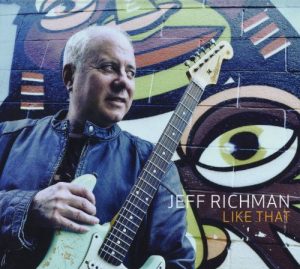
Tony Grey speaks about his Unknown Angels

July 14, 2017
News, Tony Grey
Tony Grey


Bass, the final frontier. Anyone who has taken a moment to study the low frequencies cannot help but notice a philosophical bent that many of its finest exponents take on. Cats like Victor Wooten, Kai Eckhardt, and Jonas Hellborg are just a few of the players at the vanguard of music introspection—low plains drifters, if you will. With the release of his third album “Unknown Angels”, Tony Grey continues his foray into the company. Known for his gorgeous tones and textures (not to mention his chops galore backing up the blazing Hiromi Uehara), on “Unknown Angels” Grey offers up a series of meditative and introspective compositions featuring Indian maestros U.Srinivas and Selvaganesh.

Abstract Logix caught up with him via e-mail to get the down low low down on the new Obliqsound release.

Abstract Logix: This album strikes me as more textural, spacious, and maybe meditative. Simpler, but let’s say no less sophisticated. Was this something you were going for on the release? Not unlike Coltrane’s approach on “A Love Supreme” or McLaughlin’s new track “To the One”. Was this stylistic change a conscious one?

Tony Grey: Well, this last year has been a tough one for many reasons and as always music is like therapy for me. So this loopy sonic meditation sound came out. It all really came about with me just creating loops on my bass, but in a way that almost sounded like a pad. From there I was experimenting with chords and melodies on top. It was never really intended to become tracks for an album—it was just calming for me to play in this way.

AL: Obvious direction aside (specific harmonies / voicings / lines) that Hiromi dictates in Sonic Bloom, do you approach the bass differently in her group as opposed to your own projects? How so?

TG: As a sideman I just try to envision the concept the writer or leader is going for and try to put as much of my personality as possible into what I’m doing. It can be a little tricky sometimes because as writers we all have our own tastes and vision, so it’s always a balance to create something to please the leader and yourself at the same time. I think it’s important to let go of the ego a little and first try to do the job you need to do. Next, where it’s appropriate for the music, you can take liberties to find the moments to express and please yourself within the boundaries.

But in Jazz usually the writer hires musicians based on their sound and personality to give you want you want with limited instruction. Hiromi is very aware of with whom she’s playing and always tries to accommodate the musician’s own personal approach.

When I write for a CD I’m also very aware of whom I want to recreate my vision.

I always create the complete concept I’m going for myself on a sequence, and send the tracks to the musicians for some feedback [as] I don’t want to be over controlling as a leader. I know very much what I want and am looking for but I’m also trying to be open so that everyone in the band can totally have freedom to express themselves fully. And sometimes being open can really help the music take off in an unexpected direction. My band is full of amazing beautiful original creative musicians—they completely get what I’m going for and add so much to any idea I come up with.

AL: What made you want to incorporate your vocals so heavily into the album?

TG: Well for this CD the music was really about making a statement, and vocals really helped convey that message. They aren’t really meant to be the main focus but are kind of like food for thought. I left the message open enough hopefully for the listener to fill in the message with their own thoughts and experiences.

AL: You said in a press release, Why did John McLaughlin help me realize this drastic, extreme shift in my lifestyle? I had very limited contact with him and really had no idea what he did. What was the lifestyle shift that McLaughlin helped you realize?

TG: What I was trying to say about John McLaughlin was that it’s funny sometimes the twists and turns life throws at you unexpectedly. I was in the army with absolutely no plans or dreams of being a musician. If my step Dad never gave me a bass without any request or provocation, and I hadn’t known John what would I be doing now? It was a series of extreme events that lead me to this place. It was his [McLaughlin’s] idea I apply for Berklee and move to the US. “Unknown Angels” is really about the people you encounter in your life that completely change your direction and way of thinking.

AL: McLaughlin has pointed many times in interviews to the connection his (largely eastern) spiritual practices have to do with him as a person and by proxy his music. Your description of “No More Struggle” on your website seems as though it may be suggestive of such an outlook. Does spirituality inform your music, and if so, can you talk about how?

TG: For me music is completely spiritual. It’s not about technique, advanced complicated time signatures or ambiguous harmonies, all of which are cool and fun, but about expressing yourself as an artist and a human being. If that leads to all the complicated things music has to offer then fine. My goal is to be informed of all the things that make up music, and then to make choices in the best way to relay my message.

AL: The track Out of Something, kind of reminds me of a track by Vinnie Colaiuta, I’m Tweaked. Rhythmically the pulse stays the same but you are doing some unconventional rhythmic shifts. Can you talk about that track and how you think about it, how you conceived of it?

TG: Wow, I love Vinnie Colaiuta—he is so amazing. I had never heard that track but yes, I hear the similarities in the groove.
What I was going for with Out Of Something a rhythm very stable but not obvious. The harmony and melody is a little more active so I wanted a solid groove with a twist.

AL: How is your philosophy with the new one different from say “Chasing Shadows” ?

TG: “Chasing Shadows” was a completely different concept but a good reflection of where I was at that point. For “Unknown Angels” I wanted to do something so different and unexpected to surprise the listener. I love Indian music and I lost that connection with my last CD so I wanted to explore that world a little more. My first CD “Moving” touched on a few different elements of world music, Indian, Chinese, Greek etc. Chasing Shadows was a very focused sound as is “Unknown Angels”.

AL: You have talked in the past about how many different ways you have used to compose, melody first, harmony first, groove first, etc. Is there any one in particular that you’ve found most effective, or does it just depend?

TG: When I compose it’s still a mixed bag. Sometimes groove first like in the track Out Of Something. Bass chords were the starting point in the track “Unknown Angels. The loops were the birth of Some Are Saved, Some Are Lost and No More Struggle. Harmony was the starting point in Living Underground, and the track Say What You Mean was written off of the vocal. It just starts from sitting down with a cup of tea and letting come out what comes out.

AL: Do you have any specific goals, ideas or projects you can point to at this point in your journey?

TG: My goals are to really get on the road a little more with my project. These musicians are so expressive and amazing I think it’s a really interesting journey of emotions when we play live. It’s so open everything changes every time we play.

AL: You also started teaching on Skype? Can you talk about that? Due to your own unique journey in music, aside from the above do you have any specific philosophy or approach with regard to teaching?

TG: I have been spending a lot of time writing an instructional book and DVD. This has been a lot of work and I’m very excited about it.
It basically is my own concept and way of practicing which is very focused and a very creative approach. My goal with that is to help the student learn the vocabulary but find their own ways of using it—to help find their own personality and voice.
One thing I hate is where musicians just sound like someone else. Possibilities in music are infinite and everyone should be searching for their own way of doing things. All I want to do is give some direction, tools and methods to help achieve this.
I do teach on Skype, which can be a lot of fun. It’s amazing to me that we can connect all over the world with each other just like that.

AL: Can you talk about U.Srinivas and V.Selvaganesh? What made you want them for the session and how’d you get hooked up? Did you guys track live or did they overdub?

TG: I have loved U.Srinivas and Selvaganesh from the very first time I heard them with Shakti. They are explosive, calm with beauty and so in control of their instruments. When I got to meet them through John McLaughlin I was blown away touched by their humility. They are everything I hope to be as an artist. No ego and such love and devotion for their art. I was so lucky they wanted to be a part of this vision. I flew to Chennai to record with them which was an amazing experience for me. Mahesh Vinayakram is Selvaji’s younger brother is a vocalist who was recommended to me by Selvaji. He is a deeply passionate musician and person and was so thrilled he also took part in the music.

AL: You talked about how in the past you used to sometimes panic in unknown musical situations. What was it that pulled you in the direction of not panicking and allowed you to open up more?

TG: Well I think that music and time happens when you just let go and let it happen. Sometimes there is a tendency with musicians and bands to try and force the issue. It’s important to trust yourself as an artist, leader or sideman to realize you are there for a reason, usually because you are wanted. When you find yourself nervous or in a frame of mind that is pre- planned you can find yourself panicked when someone throws you a curve ball. We are playing improvised music with other musicians that are also improvising. So the thing I learned is to prepare as much as you can, then let go and trust yourself and the musicians around you.

AL: You have talked about how you meticulously document your practice regiment. What benefits have you found in doing this?

TG: I like to document what I work on as it helps me be more efficient with my time. Sometimes I’m on the road or in the studio for a period of time so if I keep a note of what I’m working on or where I’m at I can just continue where I left off. I like to split my practice routine up into 30 minute sessions. I think the brain can only absorb so much information at one time so I put a time limit on it to optimize my study. Also, it helps me cover a lot of different things I work on in a day. It also helps me stay focused knowing exactly what I’m working on and how far I have come with it.

AL: Obligatory gear question: Anything you want to talk about with regard to what you are playing through now? I’ve always loved the tone Fodera players get (seemingly through any rig). Anything new or interesting for you now in the gear world?

TG: I’m loving my Fodera at the moment. It gives me everything I need to express myself. I’m working with Aguilar Amps and effects which are amazing, DR Strings and TC Electronic Effects for my bass and vocals. It’s all really incredible equipment and I feel very lucky.

AL: Who will be in your ensemble for the upcoming dates in NYC?

TG: My band for NYC will include these fantastic musicians and friends:
Romain Collin, Keys
John Shannon, Vocal and Guitar
Gregoire Maret, Harmonica
Dan Brantigan, Trumpet and FX
Obed Calvaire, Drums.

AL: Thanks Tony for your time. The record sounds great and I wish you all the success with it. See you soon

Buy

Itunes-note 
Amazon  Bandcamp
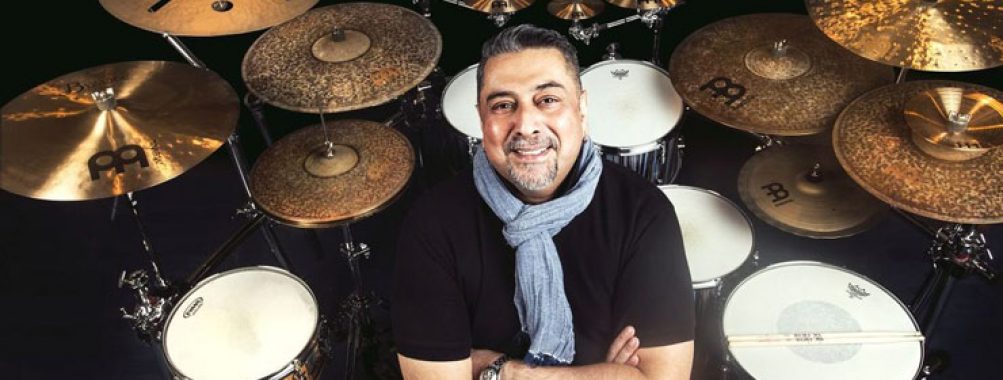
Jonas Hellborg A Candid Conversation

July 14, 2017
Jonas Hellborg, News
Jonas Hellborg

Over the last 30 years, Jonas Hellborg has simultaneously defied and defined what it means to be an electric bass player. In the 21st century, he is doing more of the same. As one of the most iconoclastic musicians experimenting with the bottom frequencies, Hellborg has seemingly never been at a loss for ideas or direction.

From his new approach to the bass (aside from Spinal Tap, who else had the balls to play a double-neck bass?) with John McLaughlin’s third Mahavishnu Orchestra, to his groundbreaking work with virtuosos Shawn Lane and Jeff Sipe, through his current focus with drumming maestros Selvaganesh, Ranjit Barot and freak guitarist Mattias IA Eklundh, Hellborg has always found ways to innovate within the confines of composition, improvisation and technique. But try to ask him where he is consciously going in his journey and you are likely to get an answer that is at once hazy yet steadfast. He struggles to define what the music is, but is confident in his approach, which is, at the moment, centered on his guitar trio.

Due to editorial guidelines the full interview wasn’t published in the May issue of Performer Magazine Abstact Logix now presents Jonas’ full perspective from January 2010.

On Current Projects: I’m just dealing with a bunch of different musicians. It’s all a network of people. Of course the center core of the Indian music thing for me is Selvaganesh, who I’ve been working with for ten or 20 years.

On the Genesis of Indo-fusion Projects: I played with John Mclaughlin, was a huge fan of Shakti, and the person I admired most in Shakti was Vikku. And I never got to meet him when I was playing with John. I was at a Frankfurt music trade show about 15 years ago and I heard about Vikku’s son. I was really excited and I wanted to meet him and hook it up and he wanted to meet me also, but we could never get it together. I think it was like 1991 or something like that I came back to Paris where I was living at the time…it must have been 1995 or ‘96. Somebody calls me up and says Zakir is playing today and Selvaganesh is playing with him, so I went to the gig and we met after the gig in Paris and from then on we started playing together. Selvaganesh is the center figure in my whole connection with India and Indian music and through him I met Ranjit Barot and I really love how Ranjit plays the drums because he is a kit drummer and he knows all the classical Indian stuff but isn’t trying to make it sound Indian. He just uses it in kind of jazz or fusion kind of language. So if you just listen to it casually you wouldn’t even know it is Indian stuff, it would just sound like this intricate incredible stuff. But it being Indian, it makes me able to approach it that way or to understand it that way and integrate with it. So what comes out is not all Indian sounding but it elevates the jazz language to a much higher level.

On Mattias Eklundh: After Shawn [Lane] the only guitarist who interested me was Mattias Eklundh because he has also an incredible capacity and a totally different approach to how he’s doing stuff. And a vast knowledge of music.
What unites them is that they both know all music. With Shawn, I could play classical music, and with Mattias I can play classical music. With Shawn I could play Indian music, with Mattias I can play Indian music. With Shawn I could play rock n’ roll music, with Mattias I can play rock n’ roll music. It’s the same sort of relationship which covers all the musical territories necessary. And my instrument, my ensemble is the guitar trio and it has been since I was a kid. It’s my natural environment in which to play music. This is just a continuation of that work. We tried the Art Metal thing because we wanted more architectural kind of project so we tried to do that. But when it comes to just playing, just blowing, that environment is the easiest for me to handle, to deal with, so we went back to the trio format.

The Art Metal thing was much more about structure, about compositions. This is about improvisation. It’s a whole different thing.

He covers music on a level on which I am comfortable with. If I ask about string quartets to understand what that is have heard that and be familiar with that. I can’t start by explaining who Bela Bartok was if I want to go that stylistic direction or approach. And if I say rock I can’t start by explaining that approach or what that is. I can’t educate people who I am playing with. I need someone to come to the table and give me something. I don’t want to play with my students. I want people who can challenge me and elevate me to the next level.

I do not want to revisit places I’ve already been.

On Composition: At the heart of this is me; it’s what I do and what I’m comfortable with. I play bass. I will continue to play bass. I’m not going to switch to tuba all of a sudden. I know how to deal with the trio. It’s like you say you write for string quartet as an instrument as you write for piano as an instrument. I write for guitar trio as an instrument in the same way. We’re not doing the same thing we did with Shawn. There is a whole new set of ideas and knowledge that has come at this point in my life. My understanding of Indian music is deeper, my understanding of life is deeper, my understanding of classical music is deeper. Everything has gone to another level. [I’m] not taking anything away from what I did with Shawn which was great, but this is another time and another approach and has another depth to it.

I look at it like this. For some people they could look at something as a certain style of music. For me that is not valid because it’s basically based on the instrumentation always. If you hear a certain piece of music played by a string quartet they will say classical music. If you give the same music to Megadeth it will be heavy metal. But it might be the same notes being played. So what is the style? Is it the instrumentation? So I can’t really discuss style or stylistics. To me, that’s fashion. And I’m not dealing with fashion. I’m dealing with music. The parameters and knowledge and human implications of what music and musical sources are. I learn with all types of interaction I have with other human beings and that comes out in my music. It’s about substance, not about style. It’s about content.

If I meet somebody, I want to interact, discuss, synergize and find something I didn’t know before. I’m not here to lecture anybody or tell anybody about life. I’m here to learn, not to teach. I’m not going to tell anybody what anything is. I’m not going to try to push my answers to the questions of life down anybody’s throat. I’m just exploring, experiencing, learning and studying. And that’s what these meetings are. It’s not about telling anybody how great I am. If somebody gets something out of what I do, I’m very happy, but I don’t see it like I invented anything or created anything, because whatever comes through me, I’m just a mirror reflecting the light that has already come down through the centuries. It’s coming from this mirror to that mirror and it’s just reflecting. It’s just a different angle.

On Selvaganesh / Carnatic Rhythm: Selvaganesh and I have the duets. And we’ve never done a duet album yet. We’re working on it. That includes me developing my bass playing to a new level and a new standard. I’m working very hard on that.

Selvaganesh understands western music very well and western drumming. He can play a groove like a motherfucker. He can really hit it. We westerners think of pulse and then stuff that falls within the pulse beat. Indian rhythms consist of musical phrases that make up the totality of a whole. And it’s not about the bar. It’s about the whole periodic movement that might be repeated or not be repeated.

On Jazz: If you just play rehashed Charlie Parker or Coltrane licks, what’s the bloody point? If you are going to do it, write some new chord changes and go somewhere else. Don’t play fucking “Stella by Starlight.” That’s not now. It has nothing to do with now. You have to understand harmony, tonality, and of course you have to study that stuff, but jazz or bebop is just one expression that is very bound into certain time aspects and social situations that aren’t valid anymore. Here we have a song that is not normally a very intelligent harmonic composition anyway, it’s just the bloody same ii-V progression in eternity over and over again. As soon as you learn to play over ii-V-I progression, you can put those building blocks and go doopie doopie doopie doopie forever. What’s the fucking point? This doesn’t make any sense. So you have to be smarter than that. If you go back in time and study Bach, Beethoven, Mozart and study harmony for real. Then all of that (jazz) harmony is rubbish—it’s useless. Take something out of that history, make it modern, make it today, and do something that hasn’t been done. Then wow, great. Modern Jazz pedagogy is totally fucked. I can explain all that stuff on one page. All that stuff you go to Berklee for four years to learn I can explain on one page. But I don’t because everybody should figure it out for themselves because there’s nothing to it. It’s empty.

Bebop think bebop is tradition and I would say no, it’s not. Bebop comes out of the crossroads between western classical music and the black tradition which I would say is an African tradition, which has to do with gospel which is a cross between European and African music, going back which is traceable back to African music. And so there’s that tradition of course. But even Duke Ellington studied western classical music to make his compositions. If you are really getting into that, his compositions and his arrangements, there you go. Then you have something worthwhile to study. But study it, and OK, play it for educational purposes, but you don’t have to recreate it.

On Expression: I think all expressions are valid. Having said all that, I can totally contradict myself by saying whatever you feel to express yourself is who you are and what you should do. So if you feel very strongly that you should play doopie doopie doop then that’s who you are and I cannot criticize that. I am not here to tell anybody what they should do.

On Style: Wayne Shorter is the god. He’s amazing. Because it’s music. It’s beyond stylistic. And Keith Jarrett does everything I am criticizing. He’s playing “Autumn Leaves” and whatever, and what he’s doing is unbelievable. It’s amazing. But it’s not doopie doopie doop. When he plays it’s composition. There is intelligence. There is continuity. There is cross reference. He doesn’t just play a bunch of phrases stacked on each other. He starts and from the point where he starts to where he stops playing. There is a thread. He builds a house. He builds a cathedral. It is improvisation on the level of the great Indian masters. That’s what they do. It’s not, “Now I play this lick, then I play that lick, then I play that lick.” No. It’s music created in the mind in time, in  consciousness, in continuity.

If you give up formulated music, you can actually attract normal people. Because when you have a click of people, let’s say you have the fusion click. Then you start to set rules for what is fusion. If you have the jazz click, you start to set rules for what is jazz. And if you just let that go and you actually deal with human, general human tastes in music, what actually moves you and you get away from the whole concept of, “Is it stylistically this music or that music?” then you will actually attract people who are not in your field. Keith Jarrett, case in point. People will not listen to [imitates traditional jazz]. But they will listen to Keith Jarrett because he’s making music. What he does goes beyond styles. You can take someone like Stevie Wonder. He’s an R&B guy, but everybody loves Stevie Wonder. Why? Because he goes beyond that. And whatever level you are on, if you actually don’t cut any kind of musical parameter or resource of your world, just because you are this or that, which is what stylistic ideas do, they confine you. Then you will deal with music as it is. It’s just like food. They talk about fusion food. I don’t like the term, but the fact is I have Indian spices in my pantry. So when I make an omelette, I get something out and I put it in there and it tastes good.

If you decide to be in a small neighborhood and stay there all your life, that’s what you do, and that’s fine. That’s just another choice. But if you live in the modern world, the global world, you are encountering all these things. You just deal with it. But do whatever you like. You take it and you use it. Whatever is in your culture. But they key concept for me is not to confine yourself just because it’s supposed to be that way.

On Meaning In Music: In order to be a fulfilled human being…I don’t want to use terms like spiritual because it kind of gets out of the subject. But in order to function as a human being, you have to be able to focus. You have to be able to center. Some people are into religion. They pray or they meditate or they do this and that. Music is such a thing. It’s a discipline and you use it for the purpose of focusing your mental, your spiritual activity in one direction and become whole. And as you do that you will get more and more capacity as a musician. But if you can express what you need to express with just a very limited vocabulary, you can still do that. It’s not about the vocabulary. It’s not about how many words you can use; it’s about what you can say.

I don’t want people to admire me, and I don’t want to admire people. We are all the same. We all have basically the same capacity. I admire Gandhi. When you think about what Gandhi did it’s unbelievable. Everybody can learn a scale and everybody can practice forever, but it’s the other thing. But really, it’s a quest for truth. It’s sort of encapsulated in what Thelonious Monk said: “The true definition of a genius is one who is most like himself.” It starts and ends there. And when you are really in tune with yourself—and this is where the discipline comes in, and you really express yourself truthfully and powerfully, then people will say, “Oh wow. That’s amazing.” And it doesn’t matter if you do with two notes or a fugue or a really intricate rag, or whatever it is. It’s the same thing. It’s the spirit. When are you open and clear and innocent like a child, that’s when it really hits you. And that’s why somebody like Wayne is so powerful. Because he really does that.

Buy

Itunes-note 
Amazon  Bandcamp

Ehsaan Noorani Interview: Music, Film and Beyond

July 14, 2017
Ehsaan Noorani, News
Ehsaan Noorani

Buy

Itunes-note


Amazon


Bandcamp

For those of you who are finding out about Ehsaan Noorani, for the very first time, he is one of the finest composers of Indian Film Music often termed as Bollywood, a mammoth machine that churns out big movies quite so like Hollywood, if not more. However what sets the two film industry apart among many things, is the music score that is as integral to the movie as the movie itself. In fact in a lot of cases, its the music score or the songs that determines the success of the movie.

Ehsaan is one-third of India’s most celebrated composing outfit, SEL (Shankar-Ehsaan-Loy), yes you guessed it right – it’s the same Shankar (Shankar Mahadevan), the magical voice of Remember Shakti who have enthralled audiences all over along with John McLaughlin, Zakir Hussain; the other third of the trio is Loy Mendonsa an industry veteran who have been a big part of jingle scene in India for many many years.

Incidentally, Ehsaan graduated from Musicians Institute in MI in the mid eighties and studied with Scott Henderson & Robben Ford among others.

An extremely humble individual inspite of selling millions of records through his music in films, Ehsaan is a perpetual learner, a big music buff and an avid blues music lover, always keeping his ears and eyes open to music everywhere, especially his favorite guitar players- Robben Ford, Michael Landau.

I recently caught up with Ehsaan as he prepares for his first American Concert Tour with Shankar Mahadevan and Loy Mendonsa along with eight other musicians.

Abstract Logix: For those of the readers who are reading about you for the first time, tell us about yourself?

Ehsaan Noorani: I am a guitarist / composer. A blues guitarist and a composer of music for films here in India. I also compose music for advertising films and other corporate stuff .I am one third of Shankar Ehsaan Loy .

AL: I have read that you started off in the ad / jingle scene in Mumbai, can you let me into that world?

EN: Well, when I got back from the US where I studied at MI (Musicians Institute, LA) I was completely lost as to what I would do in India , luckily there were openings for studio guitarists in the advertising studio scene in Bombay . I began working with all kinds of composers and worked with Louis Banks for about a year . Then I began composing music for advertisements in 1989 and luckily haven’t looked back since. I have composed music for all the major brands like Coke, Pepsi, Uniliver, Procter and Gamble etc.

AL: I know you were in MI, which years were those and tell me how they contributed to you as a guitarist and musician?

EN: I studied in MI from March 1985 to March 1986 it was one of the most precious years of my life .That one year opened up my mind not just as a guitarist but as a musician and songwriter . One expects to got to MI and come out a hot shot guitarist but it actually depends on your mind set and how open you are to music. I learned about all forms of music and of course I heard Robben Ford and it changed my playing style forever .I was into blues always, but after listening to him, my whole perception towards blues changed. . I love his playing even now, that year at MI made me more adaptable and evolved me to take a holistic approach to music.

AL: How was your practice schedule during the early days during GIT or even after you returned to India … How do you practice today?

EN: Most of my days at GIT were spent in class it involved class rehearsals and jamming. After I got back to India I started thinking about what I was playing and realized that it was not good to be academic about ones playing and eventually it is important to discover your own sound. However a lot of my learning at GIT found way into my song writing and literally opened up my mind and helped me in composing.

AL: Lets talk about the role of a guitarist in the film industry of India?

EN: There was a time when there were quite a few studio guitarists in the Bombay film industry. A lot of them had to resort to programming and keyboards in addition to playing guitar in order to make a living or else the programmers would take over. Producers and film makers wanted to spend less unlike the lavish recordings of the 70’s and 80’s. As a composer and guitarist I have played a lot of guitar in our songs that we compose for films. One of our latest film “Rock On”  have brought guitar to the fore front. You get to hear a lot more guitar now but it’s not like the older days when a guitarist was always on the studio floor playing in the ensemble.

AL: How does guitar as an instrument contribute to your compositional side.. Do you use any other instruments to compose?

EN: I do compose a lot on guitar and I do play some keyboard and do a little bit of programming but most of it is textural and production oriented. I find that I compose the best, when I compose without an instrument, that way my mind is totally open to creativity and new ideas flow in freely irrespective of harmony or anything.

AL: When you say that your best composing is without a instrument, do you normally sing melodies or phrases in your head and then write it down?

EN: Well, I sing out the melody and normally record it on my mobile phone and store it, unfortunately my writing (notation) skills are not very good, I wish I had worked more on that.

AL: How does SEL compose? Tell me from scratch, when a project comes to your plate, how does it work?

EN: We jam like any other bands do. Then we start off with a brief from the filmmaker and of course listen to the film script first. Then we get together in the studio and jam on ideas sometimes a snippet of a melodic idea or a little guitar riff or even a groove anything can be a trigger. We run pro tools all the time and keep recording our ideas irrespective of good or bad. After that we piece the melody together and do a rough production of the tune . Shankar puts down dummy lyrics and then the songwriter writes the lyrics to the melody given to him. We then record the main vocals and then add live instruments, which may be Indian ethnic or orchestral, or whatever would fit the best. I re track my guitar parts and Loy incorporates his synthesizer and piano parts. It’s an effective working method and with 3 minds its very interesting because the music turns out very eclectic.

AL: Do all three of you orchestrate everything or do you guys have anyone else help out in the various orchestrations ?

EN: We ourselves do mostly all the orchestrations, occasionally we use a second programmer to help with background scores. We have a couple of people who does music copying for us so that we can present it to the string players etc. With logic 9 it becomes very easy to take print outs of the score but even then one does need the human touch to make sure that the range of the instruments are correct.

AL: SEL is about to come to USA for a tour. For someone that might not be hip to the music, what is it in for them?

EN: We will be performing a lot of our hit songs from our different films like “Dil Chahata Hai”, “Kal Ho Na Ho”, “Rock On” etc. we perform with a lot of energy and Shankar is a great live singer.

AL: What guitars are you taking out on the road this time?

EN: I am taking a Parker fly mojo and a Godin multiac steel. I will also be visiting the Fender factory to see their work on my signature model, which will be launching in India soon.

AL: I believe you are a collector. Which are your most cherished guitars that you own?

EN: I own a 1986 Paul Reed smith, a John Cruz fender custom shop strat , a Tom Anderson classic , a 63 fender custom shop , a Martin Eric Clapton acoustic ……… these are a few of my favorites and very special to me .

AL: India has always been known for the rich musical heritage mainly through classical music. What do you have to say about the contribution of film music?

EN: Film music fortunately or unfortunately is the highest selling and the most popular music in India. Fortunate cause one can make tunes which are mega film hits and enjoyed by the masses, unfortunate cause it has cornered the music industry completely any other forms of music like rock, jazz, blues which are non film based do not get promoted at all. Record companies concentrate mainly on film music and do not spend money on promoting non-film music. On the other hand film music has introduced many global forms of music also like rock and hip hop, rnb , techno etc to listeners as nowadays film composers have incorporated these styles into film music also.

AL: I know that there has been a very healthy migration of Indian Musicians collaborating with Western musicians to produce some real great music over the last 40 years. So what is the scope and opportunity for Western musicians going to India and collaborating on Indian music, lets say even film music ?

EN: Well there have been small collaborations like for e.g. composer Wayne Sharpe recently composed for a Bollywood film called ‘ “Rajneeti”  which was very well received. Some of the intellectual rights laws in India may turn off composers from the West cause over here the producer keeps all the rights to the music and then passes it on to music companies. But the Bombay film industry is wide open and has many other avenues of collaboration.

AL: I just found out that the composers in India don’t get to keep any publishing or mechanical royalties of their music? is that true ?

EN: Yes it is. In India we do not get any royalties on our music, it is a sad state of affairs and hopefully the laws will change soon in our favor.

AL: I believe that SEL is writing music that is not going to be part of any film but more like a music album. Can you let us in on it?

EN: Yes, it has been on the cards for a long time we have songs that we have put into cold storage and soon as we get a comfortable time window, we will start working on it .It will be eclectic in sound and style .

AL: It seems that there are a few really great young guys playing guitar in India. Anyone special ?

EN: Yes, there is Sumit Ramachandran, Saibal Basu, Amyt Dutta and many more who are hidden away .

Thanks Ehsaan, Wishing you and the band great success on the American Tour.

Latest album

Latest NEWS

SUBSCRIBE

Please Subscribe your mail to get notification from AbstractLogix.


Facebook-f


Twitter


Instagram


Youtube

Copyright © 2021 ABSTRACT LOGIX

Facebook-f


Twitter


Instagram


Youtube

Copyright © 2021 ABSTRACT LOGIX

Jeff Richman Interview

July 14, 2017
Jeff Richman, News
Jeff Richman

Buy

Itunes-note


Amazon


Bandcamp

Jeff Richman has been a fixture on the west coast jazz scene for some 20 years. In addition to his highly-regarded solo recordings, the LA-based guitarist has an extensive list of session and sideman credits, which includes work with artists such as Ernie Watts, T Lavitz, Mark Isham, Robbie Krieger, M’shell Ndegeocello, and many others. Richman is also an educator who has taught at both Musician’s Institute and the LA Music Academy, and has produced an impressive array of side projects, including a critically-acclaimed collection of tribute albums for the Tone Center label, in which he rounded-up some of the top guitarists in the business to pay homage to John Coltrane, Miles Davis, Steely Dan, and other musical legends. If you’re in LA for any length of time, you’ll likely be able to catch Richman performing at the legendary Baked Potato jazz club; a venue he’s been playing for years. In fact, when the club held it’s two-day 40th Anniversary Jazz Festival this past May, who was the first performer on day one? Jeff Richman and the Baked Potato Allstars.

Richman recently released his 16th solo album, “Like That” (Nefer Music Records) – a fine collection of original tunes that span the gamut from rocking fusion to near straight-ahead jazz, all the while retaining his distinctive sound. For this new disc, Richman enlisted a who’s-who of his fellow jazz and fusion heavyweights to back him up including Vinnie Colaiuta, Mitch Forman, Will Kennedy, Alex Acuna, and many others. Richman took time out from his busy schedule to discuss the new album, his writing, his gear, and other topics.

Abstract Logix: I’ve always thought of you as one of the top “west coast jazz” players, but you were originally from the east coast, correct?

Jeff Richman: Well, both actually . . . I lived in Los Angeles as a kid and was heavily influenced by all the great music that was going on at the time like the Beatles, Stones, the Yardbirds……everybody! A few years later my family moved to Hawaii! Luckily, I got to see an amazing amount of incredible live concerts over there like Led Zeppelin and Jimmy Hendrix just to name a few. When I was 21, I moved to Boston to study at Berklee College of Music, then moved to New York City for three years right afterwards before returning to LA. So in a way, I am a mixture of all of that!!

AL: How has the west coast scene changed over the years since you first moved out there?

JR: I’ve been here in LA for over 20 years now and it seems like the scene ebbs and flows – more or less. Sometimes things seem to be really happening, new venues and cool clubs to play open up and its really great. Then it can turn south, things change, clubs close down and you just have to wait for the next wave to come. Even through those ups and downs, one thing is for sure – there are so many great musicians out here that it just never gets boring!

AL: Your new record, “Like That”, definitely has that modern, west coast sound. How long did you spend writing and recording the album?

JR: It took me about a year to work out all the tunes. With all my albums, I go through a pretty long process of writing and re- writing the music until it feels right to me. Once I was ready to record, it became all about organizing everything, which was a task in and of itself. The actual recording took about three months from start to finish.

AL: You utilize 3 distinctive lineups of killer players on the disc – 4 songs feature Will Kennedy on drums, Dean Taba on bass, and Deron Johnson on Fender Rhodes; 4 others have Vinnie Colaiuta on drums, Neil Stubenhaus on bass, and Mitch Forman on keys; and 2 feature Steve Hass on drums, and Larry Goldings on organ. You also have Alex Acuna on percussion for nearly every track. How did you decide which band to use for a given song?

JR: For me, it all starts with the drums. Vinnie Colaiuta played on my very first album “Himalaya”, released in 1986. Since then, he’s appeared on several of my projects. He’s a genius at understanding complex music and turning it into something better than you ever could have imagined, so I absolutely wanted him on “Like That”. Although Vinnie would have been great on every single one of these tunes, I really “heard” his sound on these four (In Spirited, Awful Pretty, Rock Tall, Touch and Go) in particular. I teamed him up with my long time friends and amazing players in their own right, Neil Stubenhaus and Mitchel Forman. They really understand my tunes and compliment Vinnie perfectly.

William Kennedy has such amazing spirit and a soulful groove. I knew that he would really take charge, groove hard and add his distinct personality to my songs (Like That, Small Kid Time, The Endless In-between, Truffaz). Dean Taba and I have played together for almost 20 years – he’s always a perfect ingredient because he can do anything! Deron Johnson is one of my all-time favorite keyboard players. I knew that this band would blend perfectly.

In Flux and Tsuyako feature Larry Goldings, Steve Hass and Neil. I composed these two songs with a jazzy, open approach utilizing the organ. Even though I put a lot of thought and deliberation in composing and in choosing the players, I really believe that being spontaneous along the way is an important part of the creative process. For instance, I decided to add percussionist Alex Acuna at the last minute. It was a good move – he added depth and color to the music.

AL: You already have a familiarity with all of these players from previous sessions and gigs, but when it comes to bringing them in the studio to record your stuff, how much direction do you give them? Do you do go over parts ahead of time and tell them “This is what I’m looking for here?” Or do you just throw up your charts and let them do their thing.

JR: Collaboration with the band is so important to me. It’s always a give and take when in these situations. I trust and encourage the musicians to be themselves and to “go for it” using their instincts. I’ve always believed that playing music is a communal effort and I want that to be a part of all my projects.

AL: I wanted to ask you about your writing process a bit. For a piece like “Awful Pretty” from the new album – which has some sections where the harmony is pretty dense – do you write the chords first, the melodies first, or do you hear it all at once?

JR: Each song has a different story. Most of the time, I experience an “inspirational moment” where a distinct chord change, melodic idea, or bass riff will come to me. Sometimes there are two or three ideas floating around in my mind, and I try to see if I can put them together somehow. Then comes the process of filling everything in, balancing and honing in on a form, slowly shaping it into a composition. In “Awful Pretty” I believe I came up with those dense chords first and later filled them in with the melody. I do want to say that I “heard” the melody to be somewhat busy like that before I actually came up with the exact notes. So I had it visualized before it was committed to the paper!

AL: What about for heavier tunes like “Rock Tall” or “Touch And Go?” Do you come up with the riff first then start building from there?

JR: “Rock Tall” is a tribute to my guitar hero Jeff Beck. I just started messing around with a “rockin” bass riff with an odd time feel. I ended up with a four bar phrase: three bars of 4/4 and one bar of 3/4. The interesting detail is that the bass comes in on beat 2 of the first bar which makes it kind of an odd phrase. I wrote a simple melody over it that could be played with harmonics. It has a bit of a tricky phrasing. The bridge has two short sections to it – one is “Mahavishnu- esque”, and the other one has touches of the “Yardbirds”. On the solo, I wanted to create an element of surprise, so there is an unexpected chord change.

“Touch And Go” has an almost comical element with a country riff, it then surprisingly ventures into a completely new feel, a rocking fusion shuffle with a dense melody. the solo section is fun because it goes back and forth from shuffle and a straight eighth feel.

AL: As an improviser, you’ve obviously built up a deep jazz vocabulary over the years. Is improvisation something you still practice though?

JR: Absolutely! I practice improvising all the time. I use various programs on my computer and play along to jazz standards, chord vamps, fusion tunes and even my original stuff. I practice lots of things without any accompaniment. I also enjoy improvising with my students and peers.

AL: Let’s talk about some of the gear you used on the new record. You mention in the liner notes that you played a Fender Relic Strat and Tele, among other guitars. What can you tell me about those Fenders?

JR: I have two Stratocaster Relics and one Telecaster Relic, they are absolutely incredible. They feel amazing, sound amazing and they look pretty cool too. I first got the Tele over a year ago. After realizing what an amazing instrument it was, I just had to “upgrade” my existing Strat to match the Tele. The first Strat has an ebony neck, the other one a maple neck, so I have the best of both worlds!

AL: Which vintage years are the Relics modeled after?

JR: My green ebony neck Relic is modeled after a 1963 Strat, and brown maple neck is modeled after a ’57 Strat!

AL: You also played the Jim Hall and Semi-Hollow model Sadowskys. Are you using those on the more straight-ahead sounding tunes like “Tsuyako” and “Truffaz?”

JR: Yes. I played my Jim Hall Sadowsky guitar on Truffaz and Tsuyako to get that warm, rich and dark jazz sound, I used this same guitar on most of my last album Aqua. I played my semi-hollow Sadowski on “In Flux” and “Small Kid Time”. The guitar is super easy to play and I can get the Scofield kind of sound, jazzy yet with a bit of distortion…really works. They are both truly wonderful instruments.

AL: What amps and effects did you use on the album?

JR: I used a Marshall Silver Jubilee combo amp, the one with two 12” speakers. For effects on “Like That” I used a number of pedals including a couple of Exotic boost pedals, an XTS distortion pedal, delays and reverb. I also used a Royer microphone.

AL: When you play live, do you use a different setup than you do in the studio?

JR: I use the Marshall along with an old Fender Deluxe or Super Reverb when I play live. I have lots of various pedals that I like to play around with to get different textures as well. The pedals I’ve already mentioned, plus Octiver, Moogerfooger, Envelope Filter and some others.

AL: Speaking of live playing, I wanted to ask you about “The Baked Potato Allstars.” For readers that may not be aware, this is essentially a pick-up band where you bring in different top shelf jazz and studio guys to jam at the Baked Potato in Hollywood. You’ve been doing it for years now. How did that residency start, and what it is about the Baked Potato that makes it such a special place to play?

JR: I have been playing at the Potato for 20 years now. The acoustics are really great and it’s a club where people come to really listen to the music. Lastly, Justin Randi is a true fusion fanatic, so it feels great to be in an atmosphere where my music is welcome!

AL: Other than your BP Allstars gigs, do you have any other shows or upcoming projects you’d like to mention?

JR: We’re working on plans to tour Japan and Europe. South America is also a possibility. Earlier this year I did a short tour to India and Scandinavia with Russel Ferrante, William Kennedy and Jimmy Haslip. Everyone had such a great time, we’re looking to do it again next year.

AL: Thanks for your time Jeff!

Latest album

Latest NEWS

SUBSCRIBE

Please Subscribe your mail to get notification from AbstractLogix.


Facebook-f


Twitter


Instagram


Youtube

Copyright © 2021 ABSTRACT LOGIX

Facebook-f


Twitter


Instagram


Youtube

Copyright © 2021 ABSTRACT LOGIX

Guitarist Chris Taylor Interview

July 14, 2017
Chris Taylor, News
Chris Taylor

Buy

Itunes-note


Amazon


Bandcamp

Seemingly from out of nowhere, New York-based guitarist-composer Chris Taylor has emerged after nearly 30 years on the scene with a brilliant, fully-realized first album as a leader. And though it’s been a long time in coming, “Nocturnal” may be the most auspicious debut of the year.

Reflecting the influences of such potent bands and composers as Weather Report, Pat Metheny, Tribal Tech and the Zawinul Syndicate, as well as such guitaristic icons as John Scofield, Bill Frisell and Allan Holdsworth. Taylor’s compelling album also stakes out strikingly original territory. Taylor is ably supported on his maiden voyage by a stellar crew featuring drummers Gary Novak, Dave Weckl, Joel Rosenblatt and Kirk Covington, keyboardists George Whitty and Scott Kinsey, bassists Ric Fierabracci and Gary Haase, and saxophonist Steve Tavaglione.

Jazz writer and author Bill Milkowski conducted a interview with guitarist-composer Chris Taylor on the eve of his Abstract-Logix debut, “Nocturnal”. As their conversation progressed, Milkowski realized that he had more in common with Taylor than he had imagined coming into the interview.

Bill Milkowski: Very impressive music. You’ve created this whole sound work on this project.

Chris Taylor: Thank you, man. That means a lot coming from you.

BM: I’m sure there’s a story behind it. I’m not really familiar with your playing. This is an introduction for me, and it’s quite a fully-realized debut.

CT: Thanks so much. I really appreciate that because I’m a fan of your writing. I loved your Jaco book [“JACO: The Extraordinary and Tragic Life of Jaco Pastorius”, Backbeat Books]. I was around the Village when Jaco was there and it really captured the vibe of those times.

BM: So you went to some of those gigs at the Lone Star?

CT: Yeah, I was around for some of those and the Bleecker Street clubs, and also the whole 55 Grand scene. Mike Stern and Jaco used to do duet gigs there. It usually sounded great, but man…The 80’s… it was scary.

BM: Yeah, that was a notorious place…affectionately known as 55 Grams.

CT: Right!

BM: So if you’re telling me these stories, that means you’re not a new young kid on the scene, which is what I was expecting.

CT: No, no, I’m 50! I’m definitely no kid. I’ve been playing around New York, in the area, for most of my life. I went to Berklee way back in January of ’80 and was up there for three semesters. I ran out of money and decided I’d go gig for a while. And I ended up gigging for 20 years or so…never got back to school. And since then I’ve done just about every gig imaginable.

BM: 1980…was that when Kevin Eubanks was at Berklee?

CT: I didn’t know Kevin, but I used to hear his name. There were so many great musicians there it was hard to keep track. Branford Marsalis was in his last semester when I started. The first gig I saw after enrolling at Berklee was Branford playing with Billy Pierce and Alan Dawson. And I was like, Damn! These cats are serious up here! It was ridiculously swinging, inspiring and at the same time completely intimidating. And there used to be this great club called Michael’s where Mike Stern used to play at regularly before he was with Billy Cobham’s or the Miles’ band. Mike was already an amazing and completely developed player at that point. Boston was definitely a scene at the time.

BM: Was Steve Vai at Berklee then?

CT: I think it was Steve’s last semester and I remember he had a band called Morning Thunder, but I never caught them. He had a reputation as a player by the time I got there, this was just before he went to play with Frank Zappa. I probably saw him around, but I didn’t know who he was back then. I used to see Aimee Mann all the time. She lived on the same street as me and was always walking by with her bass.

BM: So here we are 30 years later and you’ve finally come up with your first record.

CT: Yeah. It’s the first record under my own name. I’ve written for other people and I’ve played some of my material with some of the groups I have gigged with over the years…. I guess I never really thought of myself as a leader, even though I’ve been writing music since I was fairly young.

BM: Some of this material on the new record is very cinematic. It really paints a picture for me…not your typical AABA forms. It’s a real musical journey.

CT: Thank you. I definitely go for the more through-composed approach. Weather Report is one influence in that regard. Cinematic is a good description of what I am trying to do. Movies are not in an AABA form. I tend to stay away from that type of structure for the most part. I prefer to let things develop organically, allow the music to expand and follow it’s own path without having to be so regimented in design. If I let the music go where it wants to I find it is always better for it.

BM: I hear that Weather Report influence on a couple of tunes, like Ear to the Rail and Odd Hours.

CT: Yeah, definitely. Ear to the Rail should probably be dedicated to Weather Report and Tribal Tech, another band that was a big influence on me. They were able to take that Weather Report vibe and make it into something uniquely their own. And their compositions were always great. That’s the thing I like about those bands, the writing was always so strong. The playing was amazing, but on top of that the compositions were just incredible. Those Weather Report discs…Night Passage and the others…still sound cutting edge today. People will be talking and listening to that music for a long time to come.

BM: Talk about what went into the making of this project? Was it conceived over a long period of time?

CT: The music was mostly written over the last two or three years as far as what made it onto the disc. I think what got me started was I was posting some of my music online and [guitarist-producer] David Torn heard some of it through a website called The Gear Page he contacted me through the site and was really encouraging. And coming from someone like David….I was floored. I have always had great admiration for his work. We eventually spoke both on the phone and in person and he mentioned that I should consider putting out a disc, that got me thinking about it. George Whitty was also prominent in pushing me towards doing a disc of my own. I’ve known George for a long time and we have worked together both live and in the studio over the years. He’s such a multi-talented musician with big ears and a great aesthetic. I have a serious respect for his opinion. And my experience with him is he doesn’t mince words. So when he would hear music I was working on and tell me that he dug it and thinks I should put it out, I listened. He also ended up sharing the mixing work with me on the recording and did the mastering. He really tightened the disc up sonically and played his ass off on all the tracks he was on.

BM: Where are you based now?

CT: I’m up in Westchester County. I live here with my wife in South Salem, near Katonah. We have a house here.

BM: That’s up in John Scofield country.

CT: Yeah he is up this way. I took some lessons with Sco in ’82 when he was still living in the city, at Westbeth. And it was funny because he kept telling me, Look, I might have to cancel you at the last minute. I got this weird gig and rehearsals come up real fast. And the next thing you know he’s playing with Miles. So then it all made sense.

BM: I can hear a little Sco influence in your playing.

CT: Yea, absolutely! He has always been one of my favorite players.

BM: Certainly on the first track, Voices in my Head.

CT: Yeah we are swinging during the guitar solo so his influence is probably more obvious. John has this kind of speaking quality in his playing that I dig, a conversational way of playing that stems from his phrasing and use of space. He is such a brilliant improvisor and a unique and prolific composer as well. I particularly like when he plays with Joe Lovano, they are a great pairing in my opinion, they both have that thing.

BM: Listening through your album, I did hear that Scofield influence a bit. But you also have this very nice legato quality happening, which made me wonder if Allan Holdsworth was also an influence on you.

CT: Oh, a huge influence! Anyone who plays electric guitar in any kind of modern improvisational setting has to be influenced by Allan. His originality alone should be an influence. I’ve definitely been inspired by his playing and have taken a page out of his legato book for sure. He is a genius, otherworldly.

BM: Tell me about that opening track, Voices in my Head. Who’s the soprano player on that?

CT: That’s Steve Tavaglione. We are planning on doing a disc together this year. A glitch jazz disc for lack of a better term. We get a nice blend when we play melodies together. He’s such a lyrical player. I’m sure you’ve heard him.

BM: Yeah, with Scott Kinsey’s band.

CT: Right, they play a lot together. He’s all over Kinsey’s record [“Kinesthetics” on Abstract Logix], and he has played with everyone and their brother at some point in his career. He has several records out as a leader as well. Steve’s plays saxophone in a way I really dig…great lyricism and depth. He’s has plenty of chops but his playing doesn’t rely on them.

BM: Who is the rhythm section on that first track?

CT: It’s Gary Novak on drums, George Whitty on piano and Ric Fierabracci on bass.
Ric is a great cat and bass player. We met through a recording project for another musician whom I was doing some writing and production for and I was really impressed with his sound and playing, so he was the first one I thought of for this track. He’s has a record with the drummer Joel Rosenblatt called Hemispheres, which is really great. Steve Tavaglione is on that disc , so Ric hooked me up with Steve and then through Steve I got introduced to Gary Novak. I can’t say enough about all the musicians on this project and what they brought to it.

BM: Ear to the Rail has that strong Zawinul influence going on.

CT: Yea, no doubt.. Joe has been a huge influence on me. I love how Zawinul seamlessly integrates different cultural elements into his music and no matter how dense he gets harmonically the groove is always so deep. On this track it’s Tracey Kroll playing E-drums …he plays an electric kit and does this cool improvised electronica looping thing. The keyboard player is a very talented friend of mine from Toronto named John Findlay. And the bass player is Kevin Freeby another monster player. It’s probably the oldest tune on the this disc, but I have always liked it’s vibe.

BM: The title track, Nocturnal, is a very evocative composition. Are you playing slide guitar on that?

CT: Yeah, it’s my Telecaster with a volume pedal and a long delay, trying to go for a steel guitar type of thing, kind of like the stuff that Greg Leisz does with Frisell. That was one of those stream of consciousness tunes that just I wrote and recorded in a few hours. I played the keyboards, bass and programmed the drums, and then later I got Joel Rosenblatt to come in and replace my programmed drums and also had Ric come in and redo my bass parts. I asked them to take more of a classical approach with this track and play it as written. The tune starts out in 3 and moves into 7/8 with a 3-2-2 pattern that I took advantage of in orchestrating all the different parts to give it that percolating thing it has. I’m real happy how that one came out.

BM: You mentioned Frisell. I hear a bit of that Frisell looping influence on the intro to the next tune, Know What I’m Saying.

CT: Totally….the backwards guitar loops..

BM: It goes into something else, but that solo guitar intro with the backwards loops reminded me of Bill.

CT: Both Bill and David Torn have influenced me with those type of sounds for sure. And that’s Gary Novak, Ric and Steve playing on that one. Scott Kinsey plays the synth solo at the end trading with Tav. Kinsey has such a unique and completely burning thing going on in his playing, he is truly one of a kind. Novak is bad dude! He’s such a technical monster but he’s got this organic kind of underpinning to everything he does that keeps it grounded. He gets that whole storm-type thing going on but it never feels like math, OK, now we’re subdividing 13 over 7. It just feels really natural.

BM: His playing on You Know What I’m Saying is particularly super-charged.

CT: Yeah, I left that section after the guitar solo really open for him to kind of improvise over. So basically the band is playing time for him through the hits and it’s just amazing what he played over the top of it. He really brought that tune to life.

BM: Green Divided by Blue is an interesting title.

CT: That’s actually the name of a Mark Rothko painting. He didn’t title anything for the most part but that was one he did, I think it was to reference it for a gallery. I’m an admirer of his art and I was inspired to try and write something tonally influenced by his work.

BM: When I heard that tune it somehow reminded me of that band that Mike Stern had in the ’80s with Bob Berg. You remember that group?

CT: Oh yeah, I saw them a bunch of times. They used to play at Mikell’s all the time. That was an amazing group. And Bob, man…he is missed. What a force of nature that guy was.

BM: So who is playing on this track?

CT: That’s Steve again, this time on Tenor, Joel Rosenblatt on drums, Ric Fierabracci on bass and George Whitty on piano. Ric played a beautiful bass solo on this. I had originally written this tune and some of the others for upright bass, but Ric has a unique way of capturing the quality of an acoustic bass with his electric fretless that worked really well in the ensemble sections.

BM: Next tune, All of Us, sounds like you’re doing some bluesy fingerstyle playing on the beginning of that one.

CT: Yeah, I actually play fingerstyle on a lot of the tunes. I go back and forth from the pick and fingers even when I am playing lines. I dig that sound. I get more snap and warmth with the fingers then I can get with a pick.

BM: And that’s sampled tabla on that one?

CT: Exactly.

BM: It’s a very atmospheric piece.

CT: I debated including that tune on the disc, but I wanted to get something in there that showed that side of me, because I do write a lot of tracks like that as well… atmospheric remix kind of stuff. I listen to a lot of electronica music like Squarepusher and Venetian Snares. I really love what Prefuse 73 does too. I have pretty diverse listening habits and this tune is probably a product of them.

BM: And then you involve some spoken word stuff on the tune Bela.

CT: That’s Bela Lugosi from the movie “Bride of the Monster” the track is dedicated to him. There is spoken word all over the disc, it is something I like to use as a texture. I don’t use it in a random way, I generally hear a place where I want to put it as I am writing or mixing, often knowing exactly what spoken word sample I want to use. I ended up writing some hard changes to blow over on this track. I didn’t think they were difficult till I tried to play over them… That happens a lot to me with my own tunes. George played the synth solo of doom on that track… I wisely took the first solo.

BM: This piece Recluse is a very dreamy soundscape. I can hear slide guitar on this. And is that bass clarinet?

CT: Yes, that’s Steve playing bass clarinet and Gary Haase playing upright bass on there as well. I worked with Gary for years. He is a great musician and producer.

BM: A very cinematic piece.

CT: Thank you. That’s what I was going for…tell the story through the sound.

BM: Who is playing that amazing harmonica on this next piece, Here to There.

CT: That’s Steve Tavaglione on EWI wind synth with a harmonica patch.

BM: I thought it might’ve been one of those virtuoso cats like Gregoire Maret.

CT: Yeah, I first heard Steve use that sound on a Gary Willis record, and he also uses it on Kinsey’s record [“Kinesthetics” on Abstract Logix]. He plays beautifully with that sound, it is very natural. That’s Dave Weckl on drums on that track along with George Whitty and Ric Fierabracci.

BM: The last track, Odd Hours, has this Weather Report / Tribal Tech influence coming in again.

CT: It does. I also tried to go for a Jeff Beck approach there too, melodically. And that’s Kirk Covington on drums and Scott Kinsey on synth, which definitely helps push it into the Tribal Tech zone. Kirk has this beautiful loping quality to his playing that was perfect here. Scott Kinsey was the one who suggested Kirk for this track and for that very reason. Kirk plays in a very unique and soulful manner, he has a real identifiable sound and feel. Kinsey is such a brilliant musician, he is one of those cats when you bring up the fader on his track you never know what you are going to hear only that it will be deep and you would of never thought of it yourself. Tav’s soprano solo on this is my favorite moment of the whole record. The way he floated in and out of the orchestration in that section is a thing of beauty. I also brought in my composer/guitarist friend John Czjakowski in to play the baritone power chords of death you hear towards the end of the tune.

BM: Did you play various guitars throughout this recording?

CT: Yeah, I used bunch of ’em. I have a ’67 Strat I’ve had since I was young. I have a ’66 Telecaster I bought in high school for $30. I also played a borrowed Rick Canton Custom Guitar which I used on Know what I’m saying? and I broke out my Martin D-18 on a couple tracks as well. I am not that big of a gear head, mainly because I can’t afford to be. But I do spend a lot of time trying to get the best sounds I can with what I have.

Latest album

Latest NEWS

SUBSCRIBE

Please Subscribe your mail to get notification from AbstractLogix.


Facebook-f


Twitter


Instagram


Youtube

Copyright © 2021 ABSTRACT LOGIX

Facebook-f


Twitter


Instagram


Youtube

Copyright © 2021 ABSTRACT LOGIX

Jeff Richman Interview : The Line Up

July 14, 2017
Jeff Richman, News
Jeff Richman

Guitarist Jeff Richman’s latest album “The Line Up” has him reuniting with his bandmates from Chatterbox – Richman’s 2005 project which combined elements of west coast jazz with a more jam-oriented focus. Featuring Dean Taba on bass, Joel Taylor on drums, and Mitch Forman on keyboards, the group has an obvious cohesiveness and chemistry that remains as palpable now as it did 6 years ago. In other words – this quartet sounds like a real “band,” which is not always the case when top-shelf cats such as this get together to record.

“The Line Up” includes a collection of Richman originals, plus three band improvisations, all of which showcase the group’s impressive chops and musicianship with a fun, easy going vibe. I asked Richman about the new album, the Chatterbox band, and more.

Abstract Logix: You haven’t recorded with this band in some time. What led to the decision to do another album with these guys?

Jeff Richman: Well I am close friends with all of them and do play with them frequently in various settings. We did do two gigs as a band towards the beginning of the year. We played at The Baked Potato and at Alva’s Showroom (which by the way, there are some Youtube clips from). It felt so good and comfortable with these guys that I made the decision that my next recording project would feature this band “Chatterbox.

AL: How did the band first come together for that first album in 2005?

JR: One of my past students, liked my music and guitar playing. He decided to finance a recording for me with my favorite players. So I chose Dean, Mitch and Joel to record the first “Chatter” CD, an album which I still really proud of!

AL: Describe the difference between the Chatterbox band and material, and what you do in your solo projects.

JR: Honestly, its not too much different. This is a solo project but it is exclusively with one band which happen to be my favorite guys. You could say that it has more of a “band sound,” a very comfortable and ready to take chances at any moment. The three “jams” on the record show how we just we interact so well together.

AL: Did you write the songs for “The Line Up” with the Chatterbox band in mind?

JR: I just write songs, I had a bit of a blues theme in mind at one time, but it morphed into something else. I decided to put together this Chatterbox CD knowing that my songs would be played superbly. However, I play these songs with different configurations as well with great results.

AL: The album has a fun, loose vibe – especially on tracks like “Rule of Thumb” and “Hat Trick” where you venture into blues territory. Is that a natural by-product of the band? Or did you tell the guys to keep things loose.

JR: Since we are all so comfortable playing together it just organically is loose. The improvisational aspect is heightened and intensified. We all have such a rapport with one another that taking chances is the name of the game!!

AL: There are three improvised jams on the album – “It’s All One,” “Square Root” and “Right Here, Right Now.” How did those pieces come about?

JR: I just started playing a riff in the moment!! NO preconceived ideas, and that is what happened!! First takes, no overdubs, just pure band improvisation. We did that on the first “Chatterbox” record as well for four songs. That is what I believe is particularly unique about the four of us…..it just happens organically!

AL: Did you record other band jams that were left on the cutting room floor?

JR: NO! We just played those three jams, first takes…no looking back.

AL: I thought “Cross My Heart” was going to be another pure studio jam as well until it morphed into this swinging jazz piece. Tell me a little about that track.

JR: That “free” intro was just an impromptu, last minute idea. The band started jamming freely and then we slowly started the groove up to “Cross My Heart.”

AL: “Point of You” is a bit of a departure from the west coast jazz sound you are normally associated with. There’s a prog rock vibe there, especially in the odd time riffs, and even the melodies which have a soaring, almost Steve Morse-like flavor. What can you tell me about the origins of that tune, and what you were going for there?

JR: I put together two different ideas together on this song. The intro and outro is an odd time signature line which is very hard to play….even harder for Joel to solo over, but he manages to take a fantastic solo at the end. The other part, or middle of the song is kind of a bit of o rock anthem. I stuck the two parts together and it seems to work.

AL: You get pretty adventurous with your tones on this record, particularly on the jam tunes. The first Chatterbox album had some wild guitar tones also. Is it fair to say you have a different approach to tones and effects with this band than you do on your solo records?

JR: Those weird tones are on the jams on both albums. It just felt right to use those various pedals on the jams….it kind of fit in perfectly, it was my voice in the band. Some of the pedals I used were a Mogerfooger, octave pedal, tremolo, Octavia and a backwards delay.

AL: What other gear did you use on the album?

JR: I played two Fender heavy relic Stratocasters, a Fender heavy relic Telecaster and a Sadowsky Jim Hall model guitar. I used a Marshall Silver Jubilee Amplifier miked by a Royer microphone. I have various pedals as well, besides the ones I just mentioned, I use an XTS overdrive, Tube Screamer, Arion Chorus, Exotic RC and EP, Carbon copy delay, volume and wah-wah pedals.

AL: Will you be playing any gigs with Chatterbox in the future?

JR: A few gigs here and there but more than anything, I would love to tour the world with this band!!!

Buy

Itunes-note 
Amazon  Bandcamp

Ranjit Barot: From Floating Point to Meeting Point

July 14, 2017
News, Ranjit Barot
Ranjit Barot

Buy

Itunes-note


Amazon


Bandcamp

The phrase World Music should suggest a wide-ranging music form that encompasses the music of cultures from around the planet. But it really depends on what part of the world you’re talkin’ about. In my opinion, the phrase is really a generic term used to easily label any music made outside of the U.S.A. or Europe that isn’t in 4/4 time or sung in English.

Let’s be honest: the majority of music listeners in the West have a problem counting beyond 4. This is quite the opposite with the music of India, where odd time signatures are played as naturally as breathing. But odd time feels very…well…odd in the West. So a rich, rhythmically-based musical language becomes pigeonholed and stereotyped merely on the almost fearful assumption that it’s too hard and cannot be easily assimilated into western popular music. Some one-off East meets West projects have had some success serving as Indian Music 101 primers. But an original music form that truly integrates East and West has yet to develop from these experiments.

Playing within the Indian raaga system requires some degree of study. But the prospect of a cultural reversal in the West that incorporates learning the Indian system along with western harmony is not going to happen any time soon. A true and lasting synthesis of North or South Indian forms with western harmony will have to originate from the East.

And it has.

Ranjit Barot: “Bada Boom” (Abstract Logix 2010)

The flower of a new generation of Indian musicians who are at home in both worlds is starting to bloom. And their music is slowly – yet surely – gaining a foothold in the West. Ranjit Barot is at the forefront of the musical evolution (revolution?) that is happening in India. And with the release of “Bada Boom”, his debut recording as a leader on Abstract Logix Records, the lines between East meets West are not merely blurred, they’re erased altogether.

Ranjit Barot employs his talents as drummer, composer, arranger and producer with maximum effect on “Bada Boom”. It is a work that is grand and sweeping in its scope and vision; yet at the same time focused and succinct in its execution and musicality.

My first interview with Ranjit, “Duality On The Drums”, was conducted after the release of John McLaughlin’s “Floating Point”, on which Ranjit’s drumming played a significant role. Although this interview was done in the wee hours of Bombay time shortly before the release of “Bada Boom”, Ranjit was again animated and engaging – much like his music. Additional biography, touring schedule, and equipment information is available at www.ranjitbarot.com.

Astronomer Edwin Hubble discovered that the universe is expanding. Some believe this expansion was caused by The Big Bang. Today, our musical universe is expanding thanks to musicians like Ranjit Barot and his music on “Bada Boom”.

RS: Congratulations on “Bada Boom”, Ranjit. It is a beautiful work of Art.

RB: I’m glad you feel that way, because I feel like that. It’s been such a fantastic journey for me. It’s been wonderful. I think because of my association with Carnatic music and Indian classical music; the jazz and jazz-rock world; and my love for songs and songwriting which feature lyrics and melodic things – there had to be an element of storytelling in it. I wasn’t trying to write a jazz-rock / Indo-jazz rock chops-fest album. I wanted it to be a thing of beauty. I’m happy with the way it turned out.

RS: Well, it connected with me right away.

RB: Thank you. Thank you, man.

RS: I think “Bada Boom” has the potential to knock down some of the barriers that exist between eastern and western music.

RB: Souvik introduced me to a gentleman named Randy Allar, who runs a radio show, and I spoke to him recently. He downloaded a song that Souvik sent and he said, I listened to ‘Dark Matter’ and I have to say first off it wasn’t my kind of music.

RS: [incredulous] Whaaa?!

RB: He said, I had to listen to it a couple of times, and then it hit me. Then he said, Wow! The Indian vocals with the horn arrangements, it flattened me. Those were his exact words. So, I’m curious to see how people react to it. But I know that most people who have a good ear, and who have a good musical diet of the world, should come back loving it.

RS: So to the listener it becomes just music, rather than eastern music or western music?

RB: Right, absolutely. It’s funny, when I’m speaking to you and I’m getting this kind of reaction, it’s extremely – I’m happy and it’s gratifying – but I’m curious to see how the western world will receive something like this. You know, there’s good music and there’s bad music. Just like there’s good food and bad food. If somebody asks me What kind of food do you like? I like good food. I don’t care where it comes from.

RS: You have a great line-up of guest musicians on the album.

RB: We were joking in the studio the other day and I was saying if I ever have to open a record label, I would have to call it Greedy Bastard Productions [chuckle]. When you go through the album, the personnel is varied on every song. There’s no real core band. Every song has a different rhythm section and a different soloist on it. It was like a perfect casting; everyone was perfect for that song. I was really lucky – it’s not like I threw tens of thousands of dollars at people. Pretty much every musician that I casted on the album was available to play and wanted to play. They played because they love the music. And what everyone brought to the table was just incredibly, incredibly inspiring. It wouldn’t have happened without these guys, man.

RS: Yeah. But it’s your vision, though.

RB: It is. It is. That’s absolutely true. But they are the ingredients I needed. Having all these heavyweights on board was not just because they are heavyweights. Really, I don’t know anybody else who could have played and done justice to this music like this. I couldn’t have done it without these musicians. Yeah, I was really lucky.

RS: We last talked in 2008 after you did “Floating Point” with John McLaughlin. What were you doing prior to creating “Bada Boom”?

RB: Umm, really simple things. Like picking which school is my daughter going to go to? She was in this small little international school, and we had to move her. You know, living life, man.
The germ of an idea started in my mind because “Floating Point” got me some recognition and got me exposed to a larger audience than just my hometown. Souvik visited India a couple of times with Wayne Krantz. We spoke on both occasions of the possibility of me doing something with Abstract Logix. We all met at my studio in Bombay. One of the first tunes I did was T=0. It was a sketch and I had just put my drum part down. I played it – I mean, just the drum take and the melody, man – and Souvik said, Yeah! This sounds like the record!
It gave me a little confidence to know that if I took this up; got the personnel on the record that I wanted; and I spent the money that it would end up getting released with someone who knows what he’s doing. As opposed to me just doing it and then shopping it, and trying to look for people who would release it. I knew Souvik was pretty much on board. Souvik also introduced me to Matt Garrison and Scott Kinsey. I kind of started the process from there. I just did one song at a time.

RS: After working in India’s music industry as a musician and producer, you would think it would have been easier to get your music released there.

RB: India is a rough place on a commercial level, man. It’s going through this whole economic industrial upswing. Which is okay, it’s fine. But it comes with such baggage and such narrow parameters. It’s hard for me to find a voice in that space; it’s really hard. Indian music has become closely associated with Bollywood. There’s kind of a power struggle with the producers. It’s almost like they sort of narrowed the playing field – let’s really make music so dumbed-down that everyone can participate. And then if everyone can participate we can pick and choose who the players are. You don’t need giants any more. You don’t need people who are making big grandiose arrangements and symphonic things.
So when you’re working in a commercial world waiting to be commissioned, you’re almost never allowed to express the full bandwidth of what is possible. It’s either you’re scoring to a film or you’re producing a song; or you’re doing something within strict parameters that are allowed – that are sort of imposed – on your creative process. There’s a bunch of stuff that you want to do, but there’s no outlet for it. And what happens is it sort of percolates and it stays there. It’s waiting to be released in some form or the other. I think when I did this album there were some residual things left over from that which manifested itself in the arrangements of some of the songs.

RS: So you needed a way to express yourself musically outside of the establishment?

RB: Yeah. And also, I just decided because of that little momentum I got from being on John ji’s [pronounced like gee, ji is used as a sign of respect] album I had some sort of, how shall I say, one foot into the western world. Souvik was being so supportive; you had done that interview with me; there was a little bit in Modern Drummer. And suddenly, it’s not like people knew me; but at least I wasn’t a complete stranger. I used that opportunity to say, Well you know there’s all these other people in the world that I can speak to and why don’t I do that? If people in my city don’t want to hear it, too bad, you know. And it’s not like they don’t. All the musicians and all the people who are in the know here, whoever I shared it with in the studio and stuff, I mean they’re all loving it.

RS: So how did creating “Bada Boom” come about?

RB: It started with a couple of ideas that were running around in my head. I did a one week writing session at the studio with my friends Amit Heri, Harmeet Manseta, and Palakkad Sreeram; a wonderful musician in South India who sang on Dark Matter and played flute on T=0. I threw every one down, just chucked a couple of ideas, and we played. Two or three songs were born out of that session.

RS: Really!?

RB: Yeah. Like T=0, that flute opening is a traditional sort of lullaby around India that a mother sings to her child. In fact, the song was called Lullaby first, and then it changed to T=0 because of the whole concept of The Big Bang. We’ll get into how I got into the titling, later. Once that flute melody was down and we harmonized it, we took a rhythmic structure and extrapolated on that. That song was born in that session. And a couple of little ideas for Dark Matter came from there; just rhythmic things.
It was just a way for me to try not to write in a vacuum. To try and bounce ideas off people; musicians that I respected and liked. When you’re trying to do an album like this which takes a western harmonic approach to coloring Indian melodies, some you can compose straight off. But there’s a lot of music in India which is contrived of in an urban setting. There’s no access to a radio station – everything pretty much on the air waves has gotten commercialized and urbanized. There’s no specialty station. It’s not like I can zero into something and just say I want to hear South Indian folk music. It’s just not there. It’s either film music, or film music; basically.
Some people, like Sreeram, are a huge reservoir of information. He’s archived all these incredible folk melodies and traditional melodies. And I wanted to expose myself to a lot of this information. After that week, I was kind of energized enough. I had a direction to follow. I knew where this album was going.

RS: You have electronic instruments mixed in with traditional instruments like the veena and nadaswarm, for example. Trying to decide the instrumentation must have been a challenge.

RB: True. I have to say that, again coming back to John ji, when we did “Floating Point” that was not just a big experience for me to play drums. Here was somebody from the western world very comfortable with Indian instruments; he understood how they could fit into his arrangements. To see him work and to see the way he approached them – I learned a lot from that session, man. I learned a lot. Although I’m from this country and all those instruments are familiar to me, there was some information I took away from that session which enabled me to re-look at these instruments again. Though my approach was a little different.
Like if you take the first tune Singularity, the Indian solo at the top, the veena, which is like a big South Indian sitar. The lady playing is Punya Srinivas. I had seen her on another project years ago, on a gig. And I was blown away, man. She was playing veena, but at that particular gig she was phrasing like John Scofield, man! I couldn’t believe that this is an Indian woman sitting and playing this instrument because normally Indians – I was having this discussion with Charles Lloyd at a workshop that we did here with Zakir Hussain and Eric Harland. And I was mentioning how difficult it is for Indian people to play loose; without strict time.
Indians are very, very time defined. You can play with the rhythm; and you can play behind the beat; and you can kind of keep it lazy. But not completely loose like a drum set player would do. But this lady she was playing really like Scofield. That’s the closest comparison I can find to her phrasing. So I filed her away in my memory. And when it came to playing this song, I knew I had to call her. It’s stuff like that, when you go for a gig; when you go to a concert; or you hear something; or somewhere somebody plays you something; or a classical record; and you go, Well, I’d like to see them with a western rhythm section.

RB: A lot of the Indian music system is very modal. We wrote a set of changes, and I could see when she came into the studio that she was straining and listening to these changes. And I thought well maybe they were throwing her off and maybe I shouldn’t use that track. But she said, No, no, no. Leave it on. And she’s almost playing through changes, man. The Indian raga system is: you take a song, you take one rag, and you play it; you improvise on that scale. Well, she is playing about three or four different rags, and three or four different modes, to kind of connect to the changes that the piano player is playing. That was just absolutely fantastic for me, because that’s rare for an Indian musician to do that.

RS: Especially on a traditional instrument like the veena.

RB: Yeah. That’s a tough one. And she just…it was phenomenal!

RS: The production on “Bada Boom” is just amazing, Ranjit! No one will believe that most of the album was constructed from sound files sent as email attachments when they first hear it!

RB: I have to tell you – not to detract from anybody’s performance or anything – but man, it’s a testament to my editing ability. It sounds like everybody is in the room together. All the songs do not sound disjointed or sound like things that are just superimposed upon one another. I had to try and achieve that because there were days when I’d be waiting a week for a bass file to come in from the U.S. And I couldn’t work further on the track until I had that down – Oh, but that hasn’t come in. Or, I have to do this musician now because he or she will not be available next week. So it was a lot of juggling.
Then I was trying to see – Okay, I think this is what Dark Matter is going to go for, and based on that I’m going to make sure that I get this kind of performance out of this musician. There was also a lot of that. It was not like I could have all of the information available to me at the same time. There were some things that happened together in the studio. Like the drums and percussion section and the gospel choir in Revolutions.

RS: What about your drum parts? Did you send out the final takes, or did you re-do them when you got the files back?

RB: I was sending out sketches for them to play their part and send back. Some had my drum takes on it. Some just had a guide or shaker on some things. Because it was important for me, on some tracks, to play drums at the end. It was a tricky one!

RS: I can imagine! Normally you think of laying down drums as part of the basic tracks, first.

RB: Yeah. But again, I was lucky because I’ve done so much studio work that I’m not at all daunted by the process at all, man. I’m an old studio hand, you know. I’ve cut my teeth on that shit. I know exactly how everything works. I know how to make things fit. I can edit the shit out of a track! I’ve got that under my belt.
So doing an album of this nature, if you don’t have that aspect of it together, it will end up sounding completely different.

Barot: “Origin” featuring Wayne Krantz, Matt Garrison, Scott Kinsey, Bala Bhaskar, Arto Tuncboyaciyan
Available at abstractlogix.

RS: So you basically had to compose and arrange on the fly in some instances?

RB: I had to. I had to. And I actually kind of enjoyed that. I like the fact that I would start a song a particular way and then I’d receive a track from someone that would push me, and I would hear a new arrangement around that. Or a new production aspect or something that deviated from what I had pre-planned. And I kind of liked that. I like for things to be evolving continuously. Actually, until we mixed the tracks, it was kind of cooking until then. Because what happens is that the minute you become tired of what you’re doing and what you’re listening to, that fatigue will translate to the audience. And that kind of keeps it fresh, and keeps it still edgy.

RS: But doesn’t that interfere with your final vision of the music? You start off in a direction and have to keep changing things. How do you get to the point that you originally wanted to realize?

RB: I don’t think the core concept changes. I don’t think that changes. The core concept remains the same; the primary motifs that you’re building on; the melodic aspects; the improvisational aspects. The little, little things will change. Like Dark Matter when that horn section came. There was no horn section on that. That was arranged and was supposed to be a little different; I’d done that in the studio. I was playing with Tim Garland at a memorial concert for Zakir Hussain’s father at the Southside Center. Tim heard the song on my laptop, and he said, Man, this is screaming for a big band. And I said, Well, I have to head back to India. He said, Well, I’ve got a thirteen piece horn section that I work with. And we’d kill this. I said, Do it. I went back to India; and he sketched it and he raised a costing for me. This was the A-section of the whole horn arrangement before the sax solo. Then he extrapolated on that. And it’s a monster of a song.
So the core concept remained the same, but the whole dynamic changed completely. It became this roaring horn section song with an Indian melody. When I opened the file, it was like a slap in the face! That prompted me to have Sreeram sing in a particular way because of the dynamic range opening up from something that was not so ferocious.
That kind of change – the core concept remains the same. But I think little offshoots and little improvisational things creep into it that you may not have planned for, but which only further accentuate the beauty of the whole thing.

RB: I don’t remember where I read this: God is in the details.

RS: That’s a beautiful line.

RB: Yeah, it is. When I listen to a piece of music, I listen very, very strongly. I can’t do music as a background thing. People put on music and start talking – I start shushing people, you know. My wife really gets pissed-off at me. For me, listening to music – it’s food. I’m actually eating at that time. It’s very important. It’s a big part of my diet. Listening to the masters: that’s my institution, that’s my academy. Because I’m self-taught, I don’t read and write. I’ve never been to music school. I had to teach myself some keyboards to work in the studio and pay the bills. So really, all of my inspiration comes from listening to great, great music. There’s nothing casual about it for me.

RS: You taught yourself keyboards as well as the drums!?

RB: Yeah. That came about in the late-’80s when in Bombay there was an electronic revolution and I just found myself unemployed. There was no work as a drummer. And all my friends were working in the studios doing advertising and jingles. The drum machine had replaced me, basically. After about six or eight months starving really – I wasn’t living at home, there wasn’t any money coming in. Then I got a break working with a friend of mine, jazz pianist Louis Banks, who was doing a lot of advertising. I didn’t even own a drum machine. He said, Well listen. Why don’t you work with me? Because I was going to leave, go to the U.S. and go to Berklee College of Music in Boston. So he said, Well you know, we can’t have you doing that. There are no drummers and we’d hate to lose you. Why don’t you come work in the studio? I have a drum machine and you’re a drummer; we’ll show you how it works. So at least when you program it, it will sound like a drummer playing instead of a keyboard player trying to make it work. I said, Fine. Yeah.
And the first month I made so much money, it was insane. I didn’t know how to spend it. It was a very novel experience. I don’t have anything like that now, man [chuckles].

RS: [laughing]

RB: [still chuckling] You know? It was a unique experience.

RS: I say that to my wife, You know, I used to have money. Now…? [laughs]

RB: [laughing] I realized that, Wow. This is why everybody gets into the studio. I did that for a couple of years. But I got maxed out pushing buttons on the drum machine. So I saved up some money and bought a bunch of keyboards, and started to teach myself off records. I worked my own inversions out, started composing and writing. I branched out on my own and did that for a long time. Then I built my own studio. You know, a natural progression.

RS: You say in your liner notes that “Bada Boom” is a celebration of my Indian-ness. Do you feel that you had to dilute the Indian elements of the music to make them accessible to a western audience?

RB: Not really, actually. I think whatever Indian-ness is on the album – I aimed for most of the Indian stuff that’s off the beaten path. In the sense that, apart from a few great musicians – you know, like Ustad Zakir Hussain – Indian music is severely misrepresented in the world. Forget about the Indian film industry and Bollywood. Nobody here even likes it! I don’t know who they’re kidding. It’s just that in 6.5 billion people, 1.5 billion are Indian. It’s just the numbers sell themselves; the numbers make it work. They’re not kidding anybody. It’s not even hugely popular in India.
What I’m trying to say is that when I write for singers like Sreeram, and Vignesh Ishwar, who sang on the track Revolutions which has that Indian wind instrument at the top. On the album it’s song #3; it has this big gospel choir at the end…

RS: Awww, man. That’s a phenomenal piece! That choir on the coda? Geeez!

RB: …Yeah. Here’s the thing: when I meet most of the Indian musicians, I actually ask them, Sing me a raag that nobody ever asks you to sing. Sing me something that no concert would ever allow you to sing. There’s a wealth of information that is untapped because even Indians in the Indian classical circuit now have certain parameters imposed on them. Young musicians are having to – the elders are telling them what to do; what not to do; stay within the repertoire. Maybe the same thing happens in western classical music. Maybe you’re not allowed to play some of the more adventurous composers. You have to stay more traditional. And I think a lot of that is happening in Indian classical music.
What I’m trying to say is that on the contrary, there was no diluting. In fact, we were going for everything that was pretty unorthodox and cutting edge. And this will complement – I think – that sheer sort of limited exposure. Because it is such a rare and beautiful thing, this music that is in our land. Just by that ferocity, it complements the jazz-rock idiom. The energy of drums / bass / keyboards playing, then you have somebody from the Indian world coming with a mode or scale – which is really never heard of. In Dark Matter, what Sreeram sings just after the piano solo I told him, Sing me something which has a lot of chromatic in it. And I know that he’s not going to be singing those things in Indian classical concerts. He did this whole chromatic scale – where the whole orchestra goes into limbo just before the coda in Dark Matter. When you listen to it, it’s like it has the spirit of jazz man, you know.
So really, there’s just so much music here. I’m just getting started, man.

RB: Tim Garland, when we were in London and we were walking down the street, he was marveling at the Indian melodic system. And I have such respect for the western harmonic system. I said, Tim it is not an accident that the West has developed such a rich harmonic system over the last three / four / five hundred years. And Indians have such a strong melodic improvisational, melodic evolution, that has happened in Indian music. These two cultures are waiting to meet, man! It’s not a mystery. I don’t think it’s a mystery, at all. I think this is the Grand Design. And the more people that see the meeting point, the more beautiful music will be made. This is my viewpoint, you know. I think these two cultures will meet, and free expression will be born out of this.
In our first interview we talked about the drumming aspects on “Floating Point”. Basically, even the music has the same duality that the drumming has. The music that I’m trying to compose and arrange and put out is this multi-lingual sort of dialogue that’s happening internally in my mind. It’s having strong Indian roots, but having grown-up and listened to all the great bands that came out of the whole ’70s-’80s jazz-rock era. It comes from all the music that I’ve listened to and internalized on a very deep level. As I said it on my CD, John McLaughlin and Zakir Hussain, they’re really the biggest influences in my life; and my musical career, as well.
I think most of the successful writers – like John McLaughlin – have some clarity of sight. It’s an ability to be able to see the meeting point in a lot of things. What you’re left with is intent of spirit. And that is universal. It doesn’t matter what you play; whether you dance; if you paint; or whatever. Intent of spirit that comes when an artist is trying at that moment to create something bigger than himself or herself. It’s universal. And once you get to that place, then I think genre, and identity, and ethnicity; all these things are stripped away. It’s a very, very liberating space.

RS: But eastern musicians understand, and can play, western music more so than western musicians understand eastern music. It’s pretty one-sided in terms of which culture is looking for the meeting point.

RB: Hmmm. Maybe you’re right about that. There are very few people that have been able to pick up on the eastern system. I guess John ji is one of the few people that is comfortable with it.
I think a lot of musicians in the West, I think maybe they think there’s some mystique or something. We need to de-mystify this. That’s one of the things about this album that I think I’ve inadvertently done: is demystify this thing about India. If you listen to it also, I’m not composing like a drummer. I’m not trying to do a bunch of rhythmically intricate structures all the time and a lot of mouth percussion. It’s just a little here and there which is part of my identity and which I wanted in the song. But mostly, it’s just about writing good music.
Maybe a lot of western musicians when they look at India, they have preconceived ideas about what the music is about – Aww man, it’s too complex! – maybe? I’m not quite sure, actually. I haven’t spoken to enough people about it. Maybe that has stopped them from finding out more about Indian music or informing themselves more about it? I’m not quite sure. But like when John ji heard Indian music on BBC radio he just made it a point to come to India. He was excited about it. And he came here seeking that searching spirit that I think a lot of people hear.
You know it’s one thing to be in awe of a music, and it’s one thing to have deep respect. Awe sometimes distances you from your purpose of interaction with that entity. You know what I’m saying? Whereas a deep respect, is deep respect. You respect it, but you want to mess with it, too.

RB: Also, when I’m working with Indian musicians on this record I was sure to infuse into them some of what I was hearing in my mind, and what I was expecting from them. I didn’t want the western improvisation and the eastern improvisation to be very different, really. If you listen to T=0 when that first electric mandolin solo gets over and then hands it to the saxophone player; all that’s different is the choice of notes. The intent and the ferocity in dynamic level is exactly the same. They’re just two people talking to each other, but one has a South Indian accent and one is from London, you know [chuckles]. They’re just talking to each other; and they’re on the same subject. And they’re both well informed. They aren’t on two sides of the fence; they’re just across the coffee table from each other. You know what I’m saying?

RS: [taking it in] Ummm. Yeah. That’s a nice way of putting it.

RB: Yeah. I wanted to maintain that sameness through the whole album. Super Nova: U. Shrinivas ji played that mandolin solo and then handed it to Tim Garland on saxophone – and they complemented each other. Tim was just picking up what Shrinivas ji had finished playing and was taking it to the next chapter. And I wanted that seamless flow. It’s like you said, it’s an east/west record, but it not an east/west record. It’s not; it’s not really.

RS: Let’s talk in detail about the individual songs on “Bada Boom”. The first track, Singularity, features a rare guest appearance by John McLaughlin.

RB: John ji was the coup, really, for me. Because I was really keen that he play. And I know that John ji is also – you know, he’s a realist. He comes from Miles, man. And if he doesn’t like your writing he’ll tell you. He’ll tell you straight. He’ll say, Don’t waste my time.
But he has tremendous love for me and I’m blessed that he actually took time out, went back to his home studio, and he made it. He just killed that, man.

RS: Well, that’s just one of many killings that are on this record.

RB: Yeah. One of the many killings on this record [chuckles].
I remember Souvik was like, Ranjit, we gotta get the album out. If we don’t do it now, we’re gonna lose Japan and then it’s gonna go into next year. I said, Well, John ji’s solo hasn’t come in yet. So… And Souvik said, Well, we wait then.

RS: The strings on Singularity remind me of White Night from Narada Michael Walden’s “Garden Of Love Light” record. Actually, the string arrangements for the whole CD are incredible! And it’s even more amazing that you’re self-taught when it comes to orchestrating.

RB: Yeah. It’s all the years that I have been film scoring and stuff. A lot of the time you’re deprived of a budget to really get a real orchestra. So we used all these samples to mock-up an orchestra. I used the samples to mock the section in Singularity which basically happens underneath what Matt is soloing on for this break-down section. Also the strident motif at the top [sings the line]. Those are all staccato strings.
I found a nice little fifteen piece string section here in Bombay. It was a mixture of some of the local guys and some students from Europe that study at the classical performing arts society, here. We wrote all of the parts in one day. I sat with a violin player who wrote out all the parts for me. We got the orchestra into the studio and then we spent the whole day doing all the string parts for the various songs.

RS: Another thing that amazed me about Singularity is that although McLaughlin sent you his solo as a sound file, you’re matching his licks stroke for stroke on the drums! It sounds like a John McLaughlin and Billy Cobham guitar / drum battle.

RB: Yeees. You caught that, man! I actually had a drum take on when I sent it to John ji. And John ji listened to it. When he actually played the take and he sent it back he said, Here it is Ranjit. I hope you enjoy it. It was great to play with you again, although not in person. I heard what he played and – See, this is the thing with John ji: he’s a drummer’s delight, man! To play with him, his rhythmic thing is so impeccable.

RS: Well, you gave him a helluva track to play over, too.

RB: Here’s the thing, man. I’d grown up listening to Cobham go head-to-head with John. Also, that whole energy he had with Narada Michael Walden. And I said, Here’s my chance [chuckle] to immortalize on tape that I could duet with him. Actually, Matt Garrison had played that whole section. And what I did was I muted that; I killed that track.

RS: Ahh!

RB: There was no space for it; between John ji and me. There was just no space for John ji and me to get a word in. I un-muted Matt just for the last eight bars before the end arrangement. Matt had finished playing on Singularity. He played the arrangement that had the little riff that happens in between John ji’s solo. I sent an email to Matt saying, Listen, John ji’s going to solo. It’s going to be a one chord thing with no changes. Do you think you could give me something? He said, Yeah, I’ll send you something. And of course I only ended up using the last eight bars. But it ended up with me and John ji going head-to-head, man. I know John ji got-off on it ‘cuz I sent him the finished track and he was like, Yeeah. I like this! [chuckle] I love that section.

RS: Again, for that to have been a constructed piece and have it sound like everyone is in the studio is amazing, man. Like you said, you certainly edited the shit outta that one!

RS: Speaking of playing with John McLaughlin: you’ll be joining his 4th Dimension band and playing in Europe with him this summer! You must be very excited.

RB: Well, it’s the high point of my career, really. John ji is not only a master of his instrument, but he is also a composer of some of the most path breaking and relevant music of the 20th century; most of which has been a roadmap for me, personally. To share the stage with him and to experience the joy that comes with making such immediate and spontaneous music together is a blessing.
Also, I see this opportunity to play with John ji as a step up in my quest for complete spiritual awareness. To be validated by not only one of the greatest composers of our time, but by someone who is supremely aware spiritually – someone who walks the talk – is surely a divine blessing. Nothing less.

RS: How did you find out you got the gig?

RB: I had just come back from Singapore, and as I turned my cell phone on I saw his mail asking me if I would join The 4th Dimension. I called him right back and he said, Well Ranjit, I was just wondering if you would be ‘interested’ in touring this summer? Well, is the Pope catholic!? Of course, I replied in the affirmative and we made plans to meet in Europe.
I’m invited every year to attend the Frankfurt Music Messe (Europe’s version of the NAMM show), where John ji graces the Godin guitar booth. We met there and at the end of the fair, he flew me to Nice where we had a two day rehearsal. John ji sent me about twenty-four songs a month or so ago. I remember I was travelling doing gigs in India, finishing recording sessions and film scores at the time. Any free time I had, I would put my headphones on and go through the songs.
The first day was just John ji and me, running through most of The 4th Dimension set – twice or thrice. The next day we did it again, but this time with Gary Husband and Etienne M’Bappe. I think everyone felt good about the musical fit, so to speak. I mean, I was entering into a band which was already a well oiled unit, you know? I had to make myself musically available in a way that added something to the mix and didn’t disrupt the equilibrium in any way. At that level, there is just no excuse. I knew my parts. And I think that helped in putting everyone at ease as well, knowing that I was affording the music and the musicians, due respect.

RS: You described The 4th Dimension as a well oiled unit, but the band has gone through a few personnel changes. What do think John wants you to bring into the band?

RB: It would be presumptuous of me to know exactly what John ji was looking for. I can tell you what I need to be like. You have to have a combination of being incredibly focused, yet free to explore the immediacy of his music. I mean, it’s not the kind of gig that you can take a walk in your mind, you know? There are some gigs where you go, Hmmm, I wonder what’s for dinner tonight? Not this gig, for sure. And you have to be physically fit!
I think John ji chose me for my drumming capabilities as they are, and what I can bring to the music. I mean, even when I did “Floating Point”, it was my abilities as a western drum kit player who was infused with an Indian approach to the syncopation involved. I’m still playing in the same vein, so I think John ji knew that and chose me for those qualities.

RS: Have you ever played with the Gary or Etienne before?

RB: No, this is my first time with both maestros and it feels great to play with them. An absolute joy.

RS: Let’s talk about T=0, which has one of the loveliest string orchestrations I’ve ever heard. They’ll bring tears to your eyes, you know.

RB: Yeah, that’s a good one, that one. I’m glad you like it.

RS: You said the opening of T=0 was from a folk song. How do you go from there to your arrangement?

RB: It started with the flute melody and then we took an Indian rhythmic structure [sings the line]. Then it’s just some changes that we wrote like – it’s almost like Miles, those block chords [sings the phrase]. Just one motif there. I just needed enough of an arrangement there to take it from one soloist to the next and not get in the way of all the stuff they are playing. I wanted to keep it really simple. Then the soloist’s trade-off.
This tune – I was quite clear – was like a blowing song. I wanted it to feature the three soloists that are on it. It also became thematic in its own way because the changes that happen on top of the flute repeat themselves later in the song; over which that beautiful guitar solo that Marc Guillermont plays where the string section comes back in.

RS: It is a beautiful solo. This track was my first time hearing Marc Guillermont.

RB: I gave Marc such a hard time, [chuckles]. I mean, not in that sense. He played that section and I also got him to play at the opening. Where U. Rajesh’s solo is I said, Mute that mandolin part Marc and go head-to-head with me and with the drums. And send me that as well. He kind of sent me a couple of things, but he was like, Maaan, it’s not working. This is where I should be playing. So, he was right because where he comes in over those strings, it breaks your heart, man.

RS: Oh yeah. Just lovely!

RS: U. Rajesh’s mandolin solo on that tune is just stooopid!

RB: Awww, man! Yeah. He was so wound up because I had gone to Chennai and I recorded his older brother U. Shrinivas on Super Nova. U. Rajesh was there, and Shrinivas ji killed that song. When Shrinivas ji finished, he left; he went home. He said, Listen, come by for a coffee later. I’m going. And U. Rajesh plugged in for his part and he was like, What am I going to play, now? Because Shrinivas ji played the most beautiful solo. And I said, This song is a completely different animal. So you just do your thing, man. I think he was so wound up and so intent that he lived up to that moment that he killed it.
He was telling me how he spent some time with John ji learning some of that fast picking that he does at the end. He actually played it dry on the tape. I processed it later. I put some distortion on to it, because it had that kind of energy, you know. And it sat just fine. Emotionally, it lent something to the song.

RS: You create a different rhythm section on each of the songs. Did you have to adjust your playing for each bass player?

RB: No, not really. Like for T=0, I just felt that Dominique DiPiazza should play this song. I played with Dominique when John ji was in Bombay and we did a gig here. I also changed my tuning in my drums for each song. I’m not playing the same dimension drums for each tune. So, it was not only an exercise in composition, arrangement and everything. It was also important that I got the tonality’s right. I knew what kind of bass Dominique was going to play – I mean, I was familiar with his playing. So I chose drums that complement that.
And what happens is that when your drums – or for that matter, I guess all instruments seem like that – but when I change the dimensions of the drums with the tuning, they actually play me. I play a little different. It is me; it’s the same vocabulary. But some things change because the sound that’s coming back to you from the drum set is different. You try to complement that; you try to play to that sound. It’s a wonderful interactive process, man. So I didn’t really have to change much.

RS: There’s a section where you’re singing, and you have a jungle rhythm playing underneath the acoustic guitar part. I’m listening to this and I’m wondering, How does he mix all of these different things into one song?!

RB: It’s really just all this stuff that I’ve grown-up listening to and bits and pieces of stuff left over from God-knows-what internal dialogue, man. In the creative process, if the person creating is comfortable with all this stuff that is happening inside, when you externalize that you somehow convey to the listener that This is all okay. It’s meant to be like this. Nothing is by chance. It’s not out of whack, even if you may think so the first time around.
It wasn’t like I consciously tried to squeeze all of my experiences onto the album. I just externalized everything that had come to a boiling point in my musical consciousness. I just tried to find the quickest way from the canvas of my mind on to tape. So everything came into play: everything that I’ve been hearing in my head and all the stuff I’ve been working on.
It’s the conviction you have as a composer or as an arranger. If you’re convinced that it works, I think somehow that translates to the listener. But if you yourself are trying to force something, then I think people are going to pick up on it. It’s like Charlie Parker said, There are no bum notes. If you mean it, then it works. If you don’t mean it, then it’s bullshit, you know what I’m saying. You gotta mean it!

RS: So what’s the story behind the song titles?

RB: You know, it’s funny. I’ve always been fascinated about our Indian Vedic system, The Vedas. They’re usually connected with matters of the universe and deep space. The Vedas are basically the science of life. These are scriptures that are basically without an author. There is no mortal who is credited with having written it. Nobody knows where they came from. And the theory is that the entirety of the Vedas is as old as Time. And my wife had a book by one of the religious leaders of South India; he’s sort of the Indian Pontiff. This is a religious leader: he’s not related to Allen Ginsberg or anything. He’s not dropped acid or anything, man. He’s the caretaker of the Hindu faith and these are the facts; not speculation or theory. The philosophy is based on the belief that The Vedas are basically the sonic information that is contained in the outward motion from The Big Bang. He said the sonic information was decoded, like radio waves, and this contained the information that is the science of life. And I was completely blown away by this statement.
And I bought this book by a gentleman named Bill Bryson. Have you ever read him?

RS: No.

RB: He’s got a book called “A Short History Of Nearly Everything”.

RS: [chuckles].

RB: I bought that book. And Bill Bryson talks about the universe in the book. “Bada Boom” itself: Bada in Indian means big, Boom is bang. It’s not the New York badda-boom, badda-bing

RS: Yeah. The subtitle of my review for “Bada Boom” is The New Big Bang Theory.

RB: Singularity is basically that point at which the universe is compressed into less than a subatomic particle. The whole universe is condensed into something microscopic. Now this is something that scientists agree on! So anyway, to keep it real simple, I wanted the whole album to be a series of events from The Big Bang, onward. So Singularity is when the universe is still dormant.

RS: [bulb off…] Okay.

RB: T=0. This is what scientists refer to as time equals zero. That is the point of The Big Bang – the birth of Time. That is where T=0 comes from.

RS: […dim bulb…] Wow.

RB: Yeah. And the third song, Revolutions. I’m just trying to imagine in this whole outward chaos that must have happened after The Big Bang, the first time where the planets actually started experiencing orbits and some order. I wanted that song to reflect the serenity of that happening in such a volatile environment. Where suddenly you have something which is predictable – like an orbit – where planets actually started revolving around each other.

RS: […bulb getting brighter…] Hmmm.

RS: […bulb on] Uhhh, Ranjit, it just dawned on me. This is a concept album.

RB: Yeah. This is a concept album.

RS: [eyes adjusting to the light] Wow!

RB: So I wanted that song to express that.
The fourth song is Super Nova, which is dedicated to Zakir Hussain’s father Alla Rakha. The definition of super nova is when a sun or a star goes super nova – when it dies – it releases the energy of a billion suns and continues to illuminate. And basically when Alla Rakha ji died, he is continuously illuminating our lives, still. We are still feeling his wisdom and the light that came from his presence and his teachings. We’re still feeling that years after he’s gone. So I thought Super Nova was such an apt title for that dedication. And it’s still part of The Big Bang concept.

RS: Geeez!

RB: The fifth song, we’re looking at all that unseen stuff in space: Dark Matter. And in fact with those big, brooding horn sections, it was just a perfect, perfect kind of sonic representation of the title.
And the last song is Origin. That was like a tribute to Joe Zawinul – which is why I wanted Scott Kinsey on the record because he’s carrying that tradition on from what Joe was doing. And origin is back to the creator, back where you came from; the origin.
So yeah, it is a concept album in that sense.

RS: Ranjit, you’ll have to forgive me while I take a moment to let that sink in ‘cuz it just hit me how deep it is from where you’re coming from on this recording!

RB: I wanted this concept because I wanted the title and energy of what they represented to influence the music. Super Nova and Dark Matter: when you hear these names – when you hear that – there’s an energy in the title itself. And I was feeding off that energy when I was doing the songs, also.

RS: [godsmacked] I’m tongue-tied, man. That’s it.

RS: The third piece, Revolutions. This tune opens with a nadaswarm soloing over keyboards and is dedicated to sax great Charlie Mariano. Some people might not know that he also played nadaswarm.

RB: Yes. And I’ll tell you a really funny story about this tune. It’s based on this traditional composition played in South India called Mallari. On a particular day, they take the idols out of the temple and through the streets to all the disabled people that couldn’t make it to the temple. So the idols are taken out so that God can go meet them; the deities can go and meet them. It’s quite a unique concept in itself. And it’s such a beautiful tune.
I did one of my first European tours with Charlie. So I got to know him as a friend. He was somebody who was a big inspiration and dear human being – wonderful, wonderful guy. I wanted to dedicate this song to Charlie because I knew he played nadaswarm. And then my friend Amit, who helped me harmonize that flute melody on T=0 – who’s also a good friend of Charlie’s – he said, Hey, funny you should dedicate this song to Charlie because ‘Mallari’ was his favorite song. I never knew that.
Apparently he just loved this tune. I was so happy that I got to pick the right song to dedicate to him. I was happy that it worked out like that. It starts with the nadaswarm and a friend of mine from Istanbul, Aydin Essen – great, great piano player – put some keyboard parts down. And that prompted me to do that gospel thing at the end. It’s funny: it starts at the temple and ends at the church.

RS: Yeah, yeah [chuckles].

RB: I never knew that when I made it! The thing he was playing was faintly reminiscent of like a B-3 organ. It had this organ-ish quality to it and the lines he was playing were like this gospel kind of thing. So I sang a little line over the coda in my voice and I said, This would sound great with a little gospel choir. So I got some friends of mine to come into the studio and they just did a beautiful, beautiful arrangement of the melody that I had sung. I sang the lead notes on top, they harmonized it, and it became this huge gospel choir at the end. When I sat back and listened to the song, I said, Yeah! This is it!

RS: Suzanne D’Mello is really wailin’ on top of that choir!

RB: She’s a killer, man! She’s a killer! She arranged that whole section with her posse.

RS: The melody that the choir sings on the coda, is that a lyric or just vocalization?

RB: No, no. It’s just without words. It’s just something like Bobby McFerrin or somebody would do.

RS: That ending is just incredible! But another highlight of the piece is the percussion break in the middle!

RB: Yeah, yeah, yeah. I was trying to find a way to transit from the vocal solo and that melody, and to get to that end coda. I got an idea to do a little percussion break. My friend Sridhar, who’s the mridangam player on that, he arranged that whole section. And we all sat down and performed it together.

RS: There’s a lot going on in that percussion section. And it sounds like you’re playing konnokol lines on the drum set.

RB: Yeah. I’m playing traditional South Indian on the breaks. I did my drum take at like 5AM [chuckles]. I was like so fried, man! It was towards the end; just trying to make the deadline. I was the musical director for these Commonwealth Games that were happening here, and there was a big gig in Delhi. But luckily we got a window, like three or four weeks, where things were slow with the Commonwealth Games. And I said, Well, hunker down and get the album done, man. Because I didn’t want to miss the deadline. So we were pretty much working like eighteen hour days: editing; putting things down; conceiving things. I had raised the bar so high in my head that there was no way I was going to put out an album that fell short on any level.
So the last bit was really, really, really tiring and extremely satisfying. Because we knew somewhere we had left enough room for God. There was something divine-like working for sure.

RS: Definitely, definitely. I said in my review that there isn’t a dead note anywhere on “Bada Boom”. There’s absolutely no filler on this album, Ranjit. It’s just all there, man.

RB: I’m glad you think that way because that was intentional. I didn’t want any weak link on the album, man. You know, there’s so much great music that’s been made and you have to ask yourself before you put an album out, Why are you doing this? Really. Don’t take up space just because you can. If you have nothing to say, shut up. I tell myself that. If I don’t have anything valid to say, you would be best served to be silent. Because a lot of great music has been made. And we need to celebrate that and we need to respect that. That’s all I can say.
And because there was sort of a deadline to deliver, the album is lean. I kept it tight; six songs. It doesn’t have excess bullshit in it, you know. There are no weak moments. I made sure each moment on every track has some energy and momentum to carry it forward so that you’re always attentive when you’re listening to it. I could have put a seventh or an eighth song there, but they weren’t fully developed and it would have been not doing justice to these six. So I just kept it six songs that I know we could do well, and we’ll put those out. We’ll keep something for the next record.

RS: Let’s talk a little about Super Nova. It’s dedicated to table master Alla Rakha, and you have his sons Taufique Qureshi and Zakir Hussain playing on it.

RB: That was the first tune we actually – I think one of the first musicians to dub was Zakir bhai. I had spoken to him about it. He does something in Bombay on February 3rd every year as a commemoration to his father. The concert starts at 6AM, and in the evening there is a jam session. The last one that I did Zakir bhai said, Ranjit, why don’t you go out in the morning and play something. And I was like, Yeah. Okay. I had to play in front of him, anyway…

RS: [chuckles].

RB: …I’m being polite, here. I was actually petrified. But Sridhar, my friend the mridangam player, said, You know you’re going to play drums. Why don’t you write a song for Abba ji? I said, No, man. He hasn’t called me to sing, he’s called me to play drums. And Sridhar said, Well, yeah. We know you can sing. But what about writing a song? Write a song! He kept pushing me, man.
So I wrote that song and I played it the next morning.

RS: You wrote the song overnight?!

RB: I wrote the song overnight. Yeah, you know [chuckle]. Like for the better part of a day and one night I wrote it. And I performed it the next day with a keyboard player friend of mine and just drums. I sang a cappella because I hadn’t written the lyrics. It was just kind of half-scatted out, and harmonized. And it went down okay. I told Zakir bhai, This is something I’d like to develop for the album and I want to dedicate it to Abba ji. And he said, Yeah. Okay. I’ll do it. He came into the studio and he played against the song. I just had like a guide sort of keyboard part down. Then I started to edit his takes. And what I did effectively was I edited myself out of the track, man. I kept such beautiful parts of his tabla, that I had no place to play. It became like a tabla song. And I said, Shit! Because, you know, I have to play something.
In fact, Zakir bhai told me when I played him the rough cut, Listen, man. Where are you? There’s too much tabla on this. Where’s the drums? And I said, Well, I’m getting to that. I didn’t know what I was going to play, man. Then I really, really listened to it. I tried one or two takes, and then I left it. I came back the next day, and I nailed the song. We were having mix issues with the drums and the tabla; about how to blend them. And what I did was I just panned the tabla’s left, and I panned the whole drum set right. And that just opened the whole song up.
When Zakir bhai’s solo happened – I remember I asked U. Shrinivas ji, Why don’t you play a little motif underneath the solo that kind of acts like a sort of binding agent? Which he did. Then I got the string section to play that. It sounds like something out of the old George Martin stuff.

RS: Oh yeah, yeah! The strings definitely have that Within You Without You [by G. Harrison, on “Sgt. Pepper”] sound happenin’.

RB: Yeeeah. And I love that, man. I love that. And Chandana Bala sings a little sing-along with Zakir bhai’s solo. I wanted to keep it building. That was like a big moment in the song.

RS: It’s kind of difficult listening to Super Nova because you focus on the rhythmic interplay going on between you and Zakir, and you forget that there is a great tune happenin’ on top.

RB: There is a lot of information on the record. It’ll take a couple of listenings – more than a couple of listenings – to peel away all of the layers, you know. There’s a lot going on there.

RS: Dark Matter. Again, that mind blowing horn arrangement. I mean, whoa!

RB: That’s all my piano player Harmeet Manseta and Tim Garland, man. Tim’s the guy that arranged that horn section. And what about the bass player? You know the bass player is this 14-year-old girl?

RS: Mohini Dey?

RB: Mohini Dey. She’s 14-years-old, man!

RS: Yeeah! I saw a clip of her on YouTube.

RB: Talk about talent. This girl is just explosive, man! I met her when she was thirteen. Her father’s a bass player. One day he calls me up and he says, I’d like to come by and play you some music. So I thought he was going to come with like a CD or something, you know. And he comes to the studio with his daughter, man. I said, Okay. I wonder what this is all about?
She plays this groove from like an old Brothers Johnson record. I’m like, What the hell is this?! This is unreal, you know. The bass guitar is bigger than her! I mean, you close your eyes – that’s not a 13-year-old girl. And she played a piece she had written in 5/4. She played a little bit of Teen Town. And I was like, Maaan. This is something else!
We got to spend some time together. She did a couple of gigs with me at a club here. And she held her own, man; she played! When it came to Dark Matter I said, Mohini, are you able to play this song…? And in a couple of hours, she had played the song. She went off and I was working on the album. Once the song was fully developed with the horn section and everything I called her. I said, Do you want to come back and re-do your parts? Because that song had evolved, you know. There’s some new sections in there. She said, Fine. And it was her fourteenth birthday when she played the final take on that song. I remember, she came with another bass guitar. So I said, Listen. The tonality’s going to be different from your earlier take. She said, But I’m going to play the whole thing again. So she played the whole thing again with the new arrangements in place. And when I opened her previous track – just to give it some bottom-end – her bass take was in the same place! There was no flam. Her timing was impeccable; it was in exactly the same place. I didn’t have to edit anything.

RB: This is an extraordinary talent. She’s somebody I’d like to really, really do whatever I can to help her grow as a musician and nurture. You know Anthony Jackson heard about her – or heard her – through Souvik. And Anthony apparently said that If I’m ever coming there or she comes here, it will be my pleasure to teach her. For nothing, man.

RS: Coming from Anthony Jackson, that’s very high praise, indeed!

RB: This was something that Souvik told me.

RB: And Tim Garland introduced me to a wonderful piano player, Gwilym Symcock. He’s on the track as well. I think he was touring with Adam Nussbaum and Steve Swallow. He’s a good friend of Tim’s and they have a band together in London. So, that was Dark Matter. It’s an animal, that song, man. It is. Yeah, it is.

RS: That must have been an extremely difficult piece to conceive its final form with the arrangements coming in pieces?

RB: I’m telling you, all the years I’ve spent in the studio have helped. In fact, it would have been impossible without it. With me having the kind of head that I have, it wouldn’t have been possible to have done it otherwise.

RS: The last track is Origin with Scott Kinsey and Wayne Krantz. This song makes you want to go to the club and go dancing.

RB: Yeah, yeah. It was a groove song on the album and I wanted it to have like a Zawinul Syndicate kind of feel. The melody and that whole aspect is very sort of Sufi Qawali. Qawali comes out of the Sufi tradition, and it’s a very celebratory type of singing that the Muslim community here practices. It’s like their version of trance. It’s a spiritual song form which I love. It’s what Nusrat Fateh Ali Khan used to do. You know, the great Pakistani singer?

RS: I’ve heard of him, yeah.

RB: Well Nusrat ji was a great exponent of Qawali. So that’s the tradition where that song writing sort of comes out of. Just like, I hear a great parallel between how Joe would use Africa as a springboard for the ethnicity within his jazz world. I think parts of India lend the same kind of vibe, you know. And Scott Kinsey was an obvious choice for that. Scott really set that song up. All that coloring and everything, that’s all him, man.
Wayne was in Japan and he came back. He had just one day in New York. I remember we spoke before and he said, Well listen. I’m gonna try and find a studio I can pop into and put something down for you. It was the last day of recording and we had pretty much mixed everything. Souvik was like, Where’s the album? I need it now! And Wayne just went and did his thing. An old friend of mine Nicolas Fiszman, a bass player from Belgium – he’s done a lot of work with Trilok Gurtu – he put his bass part down. It all came together in just a couple of days.

RS: What do you want people to get out of your music?

RB: Uhmm. I don’t really have an agenda in mind. It’s really a sense of – Like you said, it’s a work of Art. It’s something I’ve crafted. I want to convey a sense of beauty, really. Most of the people that I’ve found listening to the album, they’re uplifted, you know.
And in some way I think I’m a representative of my culture and this country. Through the music I’m representing my people. And I want [people] to be better informed about who we are and what our music is. Yes, it’s different. But listen to how much sameness there is. It’s still music. I want those boundaries to disappear forever. I think that’s the best that I can put it.

RB: One of the nicest things I’m seeing about this is that some of the younger musicians who have heard about what’s happening with “Bada Boom” are suddenly inspired to do their own thing. They’re saying, Well you know, everything’s not lost. Ranjit’s doing it, so we can too. Which is fantastic. Which is the point of the whole thing, you know. And if enough people do it, then we have a real sort of [music] movement on our hands. When young kids look up to some of us and they see, Yeah well, he’s doing it and he’s done it with all these people. And it was done over the Internet and it’s not impossible. And he managed to find a label that puts it out. – Suddenly they don’t feel alienated. They feel, Yes. It’s possible.

RS: Do you think western audiences are [getting] educated enough to accept more eastern elements in music?

RB: I would like to think so. I think America has a great history of a sort of searching spirit, and inquisitiveness if you’d like. I know that things like the spiritual aspects of India and things like yoga and stuff are already popular in your country. I think the music, too. A lot of Indian music has already been introduced into America and the West. I think this album is just an extremely sophisticated view of our music blending with the West. It is different, yeah. But I think in some ways because of the song element; and the orchestra; and the whole emphasis of creating something more beautiful than something daunting; I think that in itself has accessibility. You know what I’m saying?
I didn’t try to make the album with serious, really complicated rhythmic structures – we could have gone there. We could have gone there and made something fusiony which was really complicated with Carnatic rhythms / South Indian rhythms. But that wasn’t the goal at all. It’s just to make beautiful music and wonderful songs. That was it, really.
I think the biggest mistake we can make as musicians and artists is have preconceived ideas about peoples abilities. Because then you get into that whole realm of What? Are you specifically going to design something to make it more accessible? You can have production aspects that give it a commonality to listeners so that they associate it with other things that are more accessible.
But really: you write a song, you write it. Then it has a life of its own. And it goes and ends up with the people that it was meant to end up with.

RS: But as a creator of music, does acceptance of your music factor into the goal?

RB: No. Not really. See, in this genre thing, it’s not like we have millions of dollars riding on this, Rod. We’ve removed ourselves from that scenario. It’s not like a new Jay-Z or Beyoncé tune. I’ve yet to have a fan base to disappoint. I don’t have those things to worry about.

RS: So you have more freedom, in a sense?

RB: Absolutely. I mean, we’re making progressive music. You know, when you’re funding it yourself and you have a record label that’s willing to put some money in it – promote it, distribute it – we’re talking about numbers that are not crippling. Okay? Not that that even factors into it in the beginning. But we’re trying to realize the songs, and I’m trying to just make things that I really, really get-off on. And if I get-off on it, and I’m able to make that music to the best of my ability, I will find people that will get-off on it, too. I can’t predict those numbers, and I have no idea of factoring that into the objective of the record at all.
Normally when I’m writing, I become the listener. I become the audience. I try and see – better the conscious experiment – I try and see Would I like and would I buy something like this? And I would have to say with my record, Yeah. I would buy this! That’s all I can say, you know.

RS: There is a tendency for people to categorize. And music from the East gets labeled as Indo-Jazz or World Music. Don’t these labels stigmatize the music and limit the potential audience?

RB: Well, there’s not a whole lot you can do about labels and genres; and what people think; and where they’re going to position it. If you look at the cover, it just says “Bada Boom” featuring Zakir Hussain, John McLaughlin, Scott Kinsey, Matt Garrison and Wayne Krantz. Now, anybody in his right mind who buys music will be inquisitive enough to check this out. Right on the cover you have five of the biggest guns in the business. And we wanted it up front because, hey, you know me and maybe seventeen other people. Leaving my composition abilities and drumming abilities aside, I’m not someone that’s well-known in the West. This is my first record.
So I don’t know about the labels and stuff. People are going to look at the record and they’re going to see these names. Hopefully it’s going to be enough to get them to reach for it and give it a listen. And once they do that, then the songs have to speak for themselves. There’s not a whole lot you can do after that.

RS: You know, I was focusing so much on your composing and arranging that I forgot to mention that your drumming on “Bada Boom” is fantastic, as well!

RB: Yeah, yeah. The drummer’s not too bad [chuckles].

RS: Yeah, he’s all right [laughs].

RB: Thank you.

RS: What did you learn through this whole process of making your first album? From the writing, and recording, and producing; what did you come away with?

RB: You mean at the end of this album?

RS: Yeah.

RB: Well, it was a great experience for me to learn what are my strengths and my weaknesses are; both as a composer and also as a drummer. You have to understand that when you write a song, it’s not always a given that you’re going to be able to play it. It’s a funny thing: you can write a song that’s really hard for you to play, yourself.
When I wrote Dark Matter I was working on all the other songs. And when it came time for me to play drums it was like an obscene hour in the morning. And I actually hadn’t learned that song. I was so busy doing everything else – I knew the song; it was my song. But I had no muscle memory of playing that song; I’d never played it. If you listen to that song, it’s almost like it’s a big band arrangement. Big band drumming is a whole other bag. And I’m not a big band drummer. I approached it like I approach it. And yeah, I mean, I can sell it. But I understood areas that I need to work on, personally.
I’m very, very objective and critical of my own work. I’m pretty clear. I know what my weaknesses are. But because I’ve been in the business of producing and making music long enough, I’ve also learned to play to my strengths. Which I think any sensible artist will learn to do in the course of their career.
Any deep process like this ends up with a lot of self-discovery. That’s really the most you can hope to take out of this. You learn a lot about yourself. What needs to get better; what you’re happy and content with; what you expect out of the music; how other people accept you as a composer.

RB: And that’s what I want to do. I want to keep writing and composing. I’m not a drummer, man. Drums is my primary instrument. Drums is one part of it. When it’s necessary to pull out some chops, that’s because the song needs it. And when it doesn’t, it doesn’t. I’m a musician. I don’t want to be confined by – It’s like my wife told me; she says I hate to be told what I can’t do. I just hate that. It’s just not acceptable.
I’m trying to tell a story. I’m trying to tell my life’s story. The stuff I’ve grown-up with in my country. I’m trying to write songs. I like to play drums, but I also like to sing. I have great respect for the written word. And I want to give vent to all facets of my creative personality. That’s what I want to do. I want to find the right co-conspirators who are willing to share that experience with me. I’m very lucky to have these musicians on this album supporting my story. And I want to continue doing that.
Yeah. It’s not a drummer’s album; it’s a musician’s album. I want to maintain that. I’m very clear about that.

RS: Well, we’re at the open mic part of the interview where I turn it over to you. Is there anything you want to talk about?

RB: I’d like to say that I’m really, really humbled that some of the people who are on this album have chose to play with me. That’s a big one for me. You know, I’m just getting started, man. And people like John ji, and Zakir bhai, U. Shrinivas ji, Wayne Krantz – guys who I have so much respect for – that acceptance that they gave me filled me with so much confidence. I could tread with a sure foot knowing that if it was all right with these guys, then maybe what I was doing was okay. That’s a very, very humbling experience.
I wish that for all composers: that they find such great people to support them. It gave me a lot of strength and a lot of confidence. It’s hard writing good songs! It really is. It’s nice to know that – Yeah, I have my own barometer; and I’m very self-critical; and I’m objective and stuff. But when it swings by all these great people and they say, What you’re doing is okay, and they’re so giving of their time and their talent; it was very, very crucial for me to be able to do the album. It allowed me to express myself completed unhindered. That was a big one for me.

RS: Well, you nailed it in spades, man.

RB: Thank you, man. I’m real happy. I am. I listen to it even now and it has a dream-like quality to me. Sometimes I’m amazed that, Wow, we got all this information down! I mean, some of the songs are so dense, and there’s so much happening there. And yet, it plays out without having any fatigue. It’s a rare thing. So yeah, all-in-all a very, very beautiful journey. And I’ll be sure the next time I do this we don’t slip and we don’t make anything which is in any way less beautiful than this. That’s for sure.
Playing music itself is a blessing. It’s an incredible gift, to live our lives the way we are allowed to do so. It also comes with a responsibility. I think it is not enough, just to be able to play a musical instrument. Merely doing that does not qualify you to be a musician. It comes with channeling that gift into something bigger than yourself and eventually bigger than playing music, too. Then, maybe, you get a glimpse of your place in this world and in the Grand Design.
To spend every moment immersed in a magical world that allows us to see beyond the obvious material world. Add to that the ability to put that into song and share it with other people, to convey your emotions and connect with other people; that’s a feeling like no other.

RS: Ranjit, thanks for the second opportunity to talk to you. I really wanted to be on the forefront of getting the word out on “Bada Boom”.

RB: My pleasure, Rod.

RS: No, no. The pleasure was all mine, man. Sorry that I kept you up so late.

RB: That’s all right.

RS: But it’s musician’s hours, anyway [chuckles].

RB: [chuckles] Yeah. Pretty much, pretty much.

RS: I wish you much success with “Bada Boom”, and I really hope it gives you the exposure and recognition that you deserve.

RB: Thank you, Rod.

RS: Best to your wife Maya, and daughter Mallika.

RB: Best to you and your wife, man. God bless.

Latest album

Latest NEWS

SUBSCRIBE

Please Subscribe your mail to get notification from AbstractLogix.


Facebook-f


Twitter


Instagram


Youtube

Copyright © 2021 ABSTRACT LOGIX

Facebook-f


Twitter


Instagram


Youtube

Copyright © 2021 ABSTRACT LOGIX

Ney Mello: Pioneering the Development of High Speed Pick Technique

July 14, 2017
News, Ney Mello
Ney Mello

Buy

Itunes-note


Amazon


Bandcamp

Georgetown, Washington DC, is a one of kind place where politics abound and history fills each corner. It’s a place where the rich and powerful come to spend a Sunday afternoon and you never know who you’ll meet. On this particular blustery weekend, It was my pleasure to rub elbows, sit, and talk it up with none other than guitarist / composer Ney Mello. Like many others, I’ve been a long time fan of Neys. Top selling collaborations, in demand educator, and now topping the DVD charts are but a few of his achievements. Not only a great guy, his chops are so good it has earned him the praise of his peers; often being compared to John McLaughlin. Here in Georgetown, as we sit across from one of his old haunts, the world famous Blues Alley, we had the chance to discuss his playing techniques, projects, and evolution from influential and observant performer into a master teacher, premier technical advisor, and artistic mentor to musicians around the globe.

Glenn Martin: Besides your own highly regarded stature worldwide as an artist; you are considered by many world class musicians as one of the most complete authority figures in right hand picking education analysis and development. How did you come to reach this point in your career?

Ney Mello: Well, Thank you for your kindness Glenn!….I started from a musically very fortunate position in terms of natural talent for music, piano, drums, voice and classical finger-style guitar. However the pick is what I loved the most and it was also the one that I was absolutely not natural with from the beginning. My left hand, thank goodness!, was much more developed and easily trainable. I had to strengthen it considerably and work on stretching, but the pick was initially very foreign to me, both in feel and in technique. So I had to truly research what to do since there were no sources at all at the time regarding pick playing at high levels. In fact I was happy if I could one day play at any level, so I had to work very hard to find out.

Glenn Martin: How did you research it?

Ney Mello: I went to libraries at universities and read books on violin technique and piano technique. Remember. There was nothing in print about the pick at that time, so I went where there was already a solid tradition of virtuoso technique teachings, to learn anything that could possibly translate to pick playing, not to become a virtuoso, which I thought was entirely beyond my potential, but to enable me to play the music I wanted. I also went to the US cultural center in Brasilia and read down beat for the interviews which were not very technical, but useful in other ways to me as an artist. I also used to get the melody Maker newspaper from London and I found out at the time via a column were Richie Blackmore answered why up and down picking was more effective for speed. We did not even have names like alternate picking. In fact when I invented for my own use what became later described (when the internet was born) as economy picking, I only did so in 1973 because it was the most logically efficient path for the pic in terms of basic laws of physics, in my mind at least. I was quite surprised when decades later I saw the great Jimmy Bruno describing the same technique he had also developed and for the exact same reasons!. The great sweep picking innovator Frank Gambale also considers this as sweep picking which he also developed as his way of picking with a more strictly sweep focus which was sheer genius in it’s vision. It is for me quite amazing that all three of us developed the same technique in the same era, but in 3 different continents: Australia, South America and North America. All in complete isolation from each other!. The human spirit is fantastic when it is involved in something with great love…It will reveal universals, if we only look within…and I consider both of them to be absolute geniuses and their work is a treasure to humanity.

Glenn Martin: How did you get started in music and the guitar?

Ney Mello: Well, practically since birth, I would say. I used to sing a lot when I was little and later I played some piano, all by ear, very playfully and sporadically with no systematic study until I picked up the guitar later when I was 18. At the time I was drawing a lot and even won an award for a book cover design and sold some drawings to collectors. I liked the sound of the bass guitar a lot when I was a child and later in fact my first national tour in Brazil was as a bassist…I Then attended the EMB school of Music in Brazil and got a performance and composition certificate diploma. I also studied jazz arranging very briefly through Berklee. I also have a masters degree from CUA. The atmosphere at Berklee in the 70s was very artistic and vital and I understand that it is today as some of my guitar students have graduated from Berklee quite happily. That was an era when everyone I ran into while visiting and auditing classes was doing music for the right reasons… For the art of it ..for the Love of music. No matter what genre. I understand it is still like that.

Glenn Martin: Why did you chose the guitar as your main instrument?

Ney Mello: Because of what one can express with it. It is ultimately a question of loving the sound and feel of it more than any other instrument.

Glenn Martin: Do you play any other instruments?

Ney Mello: Yes…Bass guitar of course, Drums, bongos, and piano,,what I call arrangers piano Good for recording and some right hand soloing…not much beyond that. Drums I play more for the Brazilian bossa nova styles which are very hard to find players who can do that with the right feel outside Brazil. The ones that can are always touring…Bongos pretty much all basic styles.

Glenn Martin: Do you play finger-style as well?

Ney Mello: Yes. I always did both Jazz etc. with a pick and fingers …and strict classical. I studied classical guitar with Eustaquio Grilo in Brasilia, who was a very open minded master musician, not at all dogmatic. I stopped playing classical repertoire to focus exclusively on improvisation after I was invited to represent Brazil at the Ibero-American chamber Music Festival in Washington DC. I Played Villa Lobos, Gismonti and one of my own compositions. I realized that improvisation and composition which were at the core of my musical life…since the beginning were fundamental and I wanted to do only that. I still listen to a lot of classical music, specially impressionist and I have analyzed about half of Beethoven’s string quartet’s for arranging. They are amazing. I recommend the Alexander Quartet’s recording of those works.

Glenn Martin: Do you transcribe a lot?

Ney Mello: Yes, but I do it by directly playing it. Sometimes I write it down. I have developed my mind and concentration over the decades to the point that I can playback passages in my mind and analyze what is going on while I am chopping tomatoes and garlic in the kitchen for example [ laughs ]. Mostly I listen very attentively and get the vibe and feel and most importantly the aura and meaning, if you will of what is being said musically. Phrasing and dynamics…interaction…Then I personalize it and add it to my vocabulary. Another aspect is rhythm and accents, which in my experience are very neglected by many players…They define entire styles you know…I also studied piano players phrasing and harmonic conception and saxophone and trumpet players solos…organ. Many instruments. I prefer not to be a guitar-centric type. For me it it prevents discovery and finding amazing things that are in essence musical and apply to almost any instrument. I experience the musical creation process as putting music first and instrument second. This is where, for me at least, the pure music has a chance to be heard. And then you can apply it to the guitar as instrument. It is how I liberate myself from the guitar mannerisms I tend to fall into out of blind habit.

Glenn Martin: Any special influences in the beginning of your career?

Ney Mello: In my home there was jazz, British pop, Stevie Wonder, Sinatra, French music and classical as well as Disney music records. I loved it all. Then I heard Flamenco, Sabicas…the great, Django Reinhardt blew me away, and still does!, The monumental John Mc Laughlin made me realize how much more could be expressed with a guitar than I had imagined; The incredible iconic legend Al Di Meola was also a tremendous influence and a caring informal mentor figure to me. Pat Martino’s genius and Allan Holdsworth’s superhuman mind and feel…Actually I used to listen to Coltrane’s Ascencion and Sun Ra. lot’s of free jazz and European and US Avant Garde music, Nevertheless, in the beginning, Holdsworth was the only artist that I could not comprehend or listen fast enough to grasp what he was doing at the time. And Johnny Smith, Jimmy Raney, Joe Pass, Rene Thomas….On the rock side Jimi of course [ GM: Jimi Hendrix] Eric Clapton, Eric Johnson, Gary Moore, Ollie Halsall, also Mike Stern, Grant Green… I also enjoy listening to Yngwie Malmsteen, Steve Vai, Joe Satriani…Paco de Lucia and Vicente Amigo, the brazilian grand-master Baden Powell. I was also fortunate to meet Shawn Lane a few times before he passed on and I also like Jimmy Rosenberg. Miles Davis, Chick Corea, Keith Jarret, Eric Dolphy, John Coltrane…Stockhausen…I studied Indian music with Broto Roy. I had to, to able to play with him [laughs]

Glenn Martin: Why did you decide to create the educational DVD “Maximum Speed Picking with Ney Mello”?

Ney Mello: It was entirely by popular demand and it is the first of it’s kind wit about 3 hours of detailed content focusing exclusively on the right hand. Around 2002, People started to get unprecedented results in their picking abilities from reading my articles and Q&A on the web, so, Jamie Andreas, who is the founder of The Guitar Principles method, http://www.guitarprinciples.com, suggested that I produce a DVD, since one can only get so much by reading about it. The complete nature of the motions is not possible to convey in print. It is a 3D reality..I believe in not wasting any type of precious accumulated knowledge resources that are very hard to come by for musicians, if I can help it. And I had accumulated over the years so much effective and transmittable knowledge that I wanted to better the conditions for guitar players worldwide, since there was nothing of the sort available specifically for pick. I was blessed with the ability to be an extremely accurate translator between the wordless world of the player which I inhabit and the intellect of an aspiring player or even an experienced player, which can only grasp this kind of detailed information via words. The task was to put into coherent linear thinking step-by-step methodology what is by nature non-verbal and a matter of physical feel and physical intelligence. The methods were effective for me, but I also had to test them, over the years, on my students, to see if they were effective for everyone who correctly does the work it takes to develop a pick technique that is consistent and reliable, just like a master’s.

Glenn Martin: What are some of your unique ideas and methods covered in the DVD?

Ney Mello: There are several actual types of pick strokes that are used, and they all have their function. There are different pick angles to consider for different types of articulation. There is finger, wrist and forearm interactions and at times one is used exclusively or it may be a combination of wrist and index/ thumb or forearm with doorknob type motion or sideways motion. A master will use all of these or most of them often without much conscious awareness. By the time they are known as performers it has all become second nature. So for the person who wants to know how to do that, it is necessary to know all the motions and variables, because without knowing what you are doing, you simply will not be able to deliberately develop it to a very high level and avoid plateaus. Plateaus happen when one is missing key motions or motion combinations. When the awareness is not on these details you just stall and it gets very depressing. I have codified all these variables so the player can have a set of technical elements to deliberately and consciously practice.
There are synergistic combinations that are used for hyper-fast passages that are not used for very fast passages. It is a subtle game of technical optimization of these variables to serve the musical purpose. There is a chapter on physical training to prevent injuries. There is a more mentally intensive chapter on practicing for pure speed with a metronome. Pure speed development is the development of your ability to hear every note at high speeds. There was a time when I could not hear very note at say…230 bpm, I heard the general contour of the phrase and was able to play it, but later I developed a method to speed up the mind so it feels comfortable at those speeds as if it was 60bpm. That is also a chapter in the DVD. The student / player, then can apply all these methods and elements to the specific music they are working on. For this reason there are no typical exercises. You can find thousands of those exercises in countless books, some of which you already own! and use them or use your own licks and phrases. I show you precisely what a master actually does to play those and how he practices them. There is a step-by-step chapter on how to practice extremely effectively, in order to make progress as fast as one can.

Glenn Martin: Fascinating! You also privately help some world class recording artists with very specific personal picking issues in their right hand. What are some of the problems you often encounter with performers or student pick technique?

Ney Mello: Most of the time the professionals often have accurate repeatability issues; Loudness deficiencies when they cannot play acoustic guitar with enough power to be heard in a group and sometimes it is specific techniques they want to develop, like sweep picking and have not been able to do it on their own or have plateaued. For less experienced players, I often act as a detail application supervisor, if you will, to make sure that they are actually doing what is on the DVD. There are a lot of factors to keep in mind to someone who has never really looked close enough at their right hand. Others just want to get results as fast as they can and having me guiding directly and confirming the accuracy of their understanding is worth a lot to them if they have a career to attend to and not much time to absorb the great amount of detail in my DVD. The level of detail absorption and comprehension is the difference between mastering the pick and not quite mastering it.

Glenn Martin: What advice do you have for someone starting to play with a pick?

Ney Mello: Be very, very patient or chose another career of hobby! [ laughs ] I laugh know, but it was not easy fun to get here..far from it! The pick is as demanding as a violin bow and as challenging as classical finger technique. I play both so I have experienced both. Therefore one needs to start with the most versatile ergonomic hand position which does not come naturally because untrained wrist and forearm muscles lead one into bad crutch-type habits. Almost None of the great masters of the pick who play both acoustic and electric with equal grace and power have the commonly seen bad habits in form and those who overcame those habits have openly stated in print that they would have done it with the ergonomically friendly way had they known it when they started. It is a matter of either you spend ages struggling to overcome anatomically unfriendly habits or you adopt the body- friendly forms and get to make music almost right away by comparison. The piano and violin technique has had a few centuries of development, but now we are catching up with the pick to the point that I heard a well know classical concert performer in NY, say upon watching a DVD of Al Di Meola live in Germany that I had brought as a present: It makes want to play like Al with a pick! Now that is a staggering assessment coming from a classical guitarist!. Of course there are form variations in pick grip style, depending on the shape of your thumb for example or your psychological bent to tilt it one way or another but the usable range falls within certain anatomical parameters in terms of permitting the necessary precision and power and not courting overuse injuries. The basic principle is that the more versatile you want to be , the more freedom of motion and lack of impediments you will need to have in your form. What works for distorted shred guitar will not work for blues or jazz or acoustic guitar playing like manouche style or bluegrass. So the novice has to cultivate vision in terms of what he may want to play stylistically in the future so as not to chose to adopt burdening right hand limitations that will be very frustrating later. The more technical freedom one wants the more patience and humility one needs. The term virtuoso means full of virtue. So the virtues of persistence, patience, humility, discipline, etc.… have to be developed as well. The more one follows them the faster one progresses, if one understands how to practice and what to practice.

Glenn Martin: Speaking of that: How do you see the evolution of pick playing in the near future and beyond?

Ney Mello: Well.. We have seen in the last 5 years the attainment of very fast speeds on a par with any other instrument and speed per se is not a rarity anymore as long as one knows what to do in great detail and puts in the necessary time. Classical tremolo is now very feasible with a pick and yet as hard to develop as the finger-style tremolo by the way (laughs) I think we have conquered all the interval skips and single note vocabulary fluency that was once the exclusive domain of either classical or flamenco guitar. I see perhaps more development of hybrid picking technique and wide interval playing, but musically, as done on violin or piano or sax ..like Eric Dolphy, instead of forced for effect. Interestingly enough, I found that the great jazz master (who happens to be my cousin) Gustavo Assis Brasil issued several books on hybrid picking. I recommend very highly his books for an extremely comprehensive view of the potential of hybrid picking in any genre of music. I would like to say that any technique is the product of a musical idea that needs to come out. Not the other way around as is often believed. So one’s technical development follows certain paths because we need to express certain musical realities. Any exercise one does is directly connected to the musical content and in fact is the musical content. This is a concept well understood in classical training that needs to be realized in rock, jazz, blues, etc.… The great players and improvisers know this, but it is apparently not yet the mainstream view to develop one’s pick technique at this time.

Glenn Martin: What are the pitfalls in technique that you see musicians falling into? Any recommendations on how to avoid them?

Ney Mello: The pitfalls I see are due to not being able to see the obvious factors that are right in front of us. For example all technique is self- presenting to us. It is the physical embodiment of the music and not just something we master to play the music. Technique is the music presented in physical form. We are presented by the situation with what to do but we don’t do it because we ignore the obvious signs . When we start we look only at our physical condition which is, a that time, out of shape for the pick . We don’t look at what the best form and motion is for what we need to do because we are too busy getting comfortable in regards to our weaknesses. So instead of seeing the right thing we seek to get comfortable by blocking the freedom of our right hand to support it. The support should come from trained muscles , not from unnecessary and inhibiting crutches of all types.. you see. In that way we are already limiting ourselves from the very start. if we instead were more patient and gradually developed our forearm muscles we would feel very comfortable using them (once developed) to stabilize our hand for example. Often we will default mentally to using an easier technique due to impatience to develop the right one. If you look at a great master, his sound is always clear and articulate. You hear the music very well. There are no easy shortcuts if you want to be great at playing music very well. I say that because music is infinite in expressive content and to express that you need to develop each time you technique to do it justice. Justice to the music must come first , not adaptation and watering down of music to fit our technical inadequacies.

Glenn Martin: If you had to pick the worse technical weakness you see in pick players, what would it be?

Ney Mello: Besides anchoring the right hand rigidly to the guitar top at all times and stifling any fluid motion, I would say, the main weak spot I have observed in many players is that when they play fast they lose their power…I mean they play soft…much softer in volume than when they play slow, and that is very common. The great players, on the other hand retain their power at ant speed.. they are not forced to play softer due to lack of foundational technique. If they play soft at high speed it is because the want it at that time for artistic reasons, and you can verify that when they chose to play with great articulation and volume at high speeds, they do it easily. You notice this on acoustic guitar and on clean electric. It takes a lot of patience and awareness of what motions and dynamics to practice to master that level of playing, but too many are impatient to play fast and so they stay at a disappointing level of dramatic expression. That can be avoided!

Glenn Martin: Very interesting…

Ney Mello: You know, Keith Jarret has said that he already changed his technique at least twice in his career, because of expanding musical demands. People say: Why change and have to learn again if you sound great already? It is because you need to sound different because the music is different. Music is not static and so the technique cannot be static either, as it embodies the music. Al Di Meola stated that his right hand technique develops and re-develops during the course of the years. If you are truly developing you have to develop technically as well…Another example is Pat Martino who developed hyper-speed sweep patterns and Schoenberg-like intervallic string skipping you can hear on the original Joyous Lake record even though his expression does not require hyper-speed sweep picking most of the time , but it did at that time in the mid 70s and it surprised everyone in a delightful way. These are all musical directives that push us to develop the ensuing techniques.

Glenn Martin: And that happens to the left hand as well?

Ney Mello: The same applies to the left hand, where I see rigidity of form where there should be fluidity of motion. The tendency to grasp the neck hard and tight for control instead of taking the time to learn the motion is another flow inhibitor. Power has to be dispensed on a musical basis, not as a means to try to force the arms and hand to execute the motions at al times. Additionally, constant states of tension limit endurance, dynamics, accuracy, and even how much power you can release when musically necessary.

Glenn Martin: Does the size or shape of the pick influence the technique?

Ney Mello: Yes to some degree but not as much as people imagine, but in my view the real question is: Does the music require a certain type of pick or not!? Artists often change their picks through time and even use two or several types at the same time for different purposes. It depends on how different feels and tones matter at the time. I use different types for acoustic and electric and sometimes I will use the exact same pick for both. This comes from following the mandates of musical need as opposed to saying to myself something like this is the best shape and thickness.. the most efficient..etc… All that is unmusical thinking to my mind because music requires different types of efficiency and tone. I suppose one could say that at any given time, which may last years or months, there will be optimal thicknesses and shapes for that moment.

Glenn Martin: Great. What would you recommend to musicians who are trying to develop their right hand technique to fit the music as you say…?

Ney Mello: Start in the natural order of things: Music first…Always as far as I experience it. Look at what you want to play first , and not at what techniques you need to know… and then try to make music…It does not work that way. Your music is the technique. And by that I mean…Find out in your heart how the music really wants to be articulated; How it sounds right to you, and then make that your subject of technical development. Take a lick and see if you want it totally legato or not, do you want it on the first string because of the bright sound? or or the third string for a more fully round sound or on two strings? . All these will require very different techniques and will feel very different. If your heart tells you clear staccato run then don’t play with hammer-ons and pull offs just because it may be easier to you. Be true to music. On the the other hand if the music calls for hammer-ons then use them and don’t make it more complex for any ideological reasons. I see sometimes cases of students and even some players not using the right technique at the right time when they know better, because they impose their own ideology on the music and think it is either cheating or too easy to do it as they know it should…instead of just being an artist and playing what is right for the music they start getting in the way with all sorts of super-imposed mental head trips that are very far from where one has to be to express music with the right techniques at the right times .

Glenn Martin: You play and record with some of the world’s top musicians, like Scott Ambush, Cheikh Ndoye, Sean Rickman, David Dyson, Victor Wiliams, Broto Roy..the list goes on…We have talked about the difference in attitude with world class musicians. Would you elaborate a bit on what happens for example in rehearsal with musicians of that caliber, for the benefit of the readers who have not yet experienced a situation like that? What sets them apart in technical terms and personal attitude towards music?

Ney Mello: The more masterful the player the simpler things are in terms of personal communications. It is the opposite of what people think it must be. There are no personal issues with insecurities and egotism. No one has anything to prove and everyone is there to serve music not ego or a need to be admired for one’s skill. With less experienced players there is often an uncomfortable feel that they are trying too hard to impress or to make their mark and to prove their skill to gain approval. That is very unproductive and extremely unmusical. With master players, there is nothing but music and the fun of it. What is interesting to many is that if we discuss passages and phrasing or harmonies or rhythms, there is no technical talk that much. It is more like the music is sung or hummed, you know like in India every musician has to sing their lines…It is the same basic concept: You just sing it to them and they sing their part to you which looks very unusual to someone watching! [laughs]. All technical data is in the charts anyway, written notation or chord charts, or both. The competitive aspect is not present. One has to be open to the grace of inspiration and also to learn the parts [laughs] ..for that to happen the mind has to be free of all the common ego-related distractions. In my experience, the greater the artist the more they can handle anything and adapt to almost anything without making a fuss about it or trying to impose themselves unnecessarily. .and one very important thing: Be prepared for unrehearsed changes in form and sometimes structure when performing live. You see…when you get inspired you will change things on the fly onstage and to play at that level one has to be able to follow and contribute to the new experience that was just born. That is why one works one’s time with a metronome and one’s ear harmonically. I actually wrote an article on specific metronome usage for professionals.

Glenn Martin: That certainly was very interesting and useful. There is a lot for the reader to contemplate. Thanks Ney for this conversation and for being so gracious with your time and wisdom and much continued success in your future projects.

Ney Mello: Thank you very much or asking me Glenn. The pleasure is all mine. I think we need more than ever to help the new musicians and to guide all who love to make music as much we possibly can. I am learning everyday and I am very grateful to be allowed to do what I do.

Latest album

Latest NEWS

SUBSCRIBE

Please Subscribe your mail to get notification from AbstractLogix.


Facebook-f


Twitter


Instagram


Youtube

Copyright © 2021 ABSTRACT LOGIX

Facebook-f


Twitter


Instagram


Youtube

Copyright © 2021 ABSTRACT LOGIX

  • 1
  • 2
  • »

Recent Posts

  • John McLaughlin to perform at Crossroads Guitar Festival in Austin September 26-27
  • Paul Hanson, a musical innovator
  • GLOBAL FUSION PIONEERS SHAKTI NOMINATED FOR TWO 2026 GRAMMY™ AWARDS
  • Shakti – ‘Mind Explosion’
  • ‘THIS MOMENT’ AWARDED WITH GRAMMY

Recent Comments

  • irontemplates on Guns and Plants: Stardust
  • irontemplates on Carla & Bones: Trailblazers
  • irontemplates on Mantis: Glam Porn (Vinyl)
  • irontemplates on Love Elexir
  • irontemplates on Sweater The Rise

Archives

  • September 2026
  • August 2026
  • November 2025
  • June 2025
  • May 2024
  • December 2023
  • February 2023
  • May 2022
  • February 2022
  • June 2021
  • May 2021
  • April 2021
  • March 2021
  • February 2021
  • January 2021
  • July 2019
  • May 2019
  • February 2019
  • September 2018
  • August 2018
  • July 2018
  • February 2018
  • January 2018
  • November 2017
  • October 2017
  • September 2017
  • July 2017
  • November 2016
  • August 2015
  • May 2015
  • January 2015
  • November 2014
  • October 2014
  • August 2014
  • June 2014
  • February 2014
  • July 2013
  • May 2013
  • April 2013
  • February 2013
  • December 2012
  • September 2012
  • July 2012
  • June 2012
  • March 2012
  • May 2010
  • April 2010
  • December 2009
  • October 2009
  • August 2009
  • July 2009
  • May 2009
  • December 2008
  • November 2008
  • October 2008
  • August 2008
  • April 2008
  • February 2008
  • November 2007
  • October 2007
  • September 2007
  • April 2007
  • March 2007
  • February 2007
  • January 2007
  • December 2006
  • October 2006
  • September 2006
  • July 2006
  • June 2006
  • May 2006
  • April 2006
  • March 2006
  • February 2006
  • January 2006
  • October 2005
  • September 2005
  • August 2005
  • June 2005
  • May 2005
  • March 2005
  • January 2005
  • December 2004
  • September 2004
  • August 2004
  • July 2004
  • June 2004
  • May 2004
  • April 2004
  • March 2004
  • January 2004
  • December 2003
  • November 2003
  • September 2003
  • July 2003
  • June 2003
  • May 2003
  • April 2003
  • February 2003
  • January 2003
  • November 2002
  • October 2002
  • June 2002

Categories

  • Abstract Logix
  • Adam Nitti
  • Alex Machacek
  • Alex Skolnick
  • Allan Holdsworth
  • Andrea Marchesini
  • Anil Prasad
  • Avi Bortnick
  • Barry Cleveland
  • Barry Richman
  • Bela Fleck
  • Ben Monder
  • Bill Bruford
  • Bill Connors
  • Brett Garsed
  • Bunny Brunel
  • Chad Wackerman
  • Chris Beckers
  • Chris Poland
  • Chris Taylor
  • Chuba Aomori
  • Cindy Blackman
  • Colin D'Cruz
  • David ‘Fuze’ Fiuczynski
  • Debashish Bhattacharya
  • Dennis Chambers
  • Dewa Budjana
  • Dominic Miller
  • Dominique di Piazza
  • Ed DeGenaro
  • Ehsaan Noorani
  • Featured
  • Featured – John
  • Frank Gambale
  • Fresh News
  • Garaj Mahal
  • Gary Husband
  • Gary Wills
  • General
  • George Brooks
  • Gerald Gradwohl
  • Gergo Borlai
  • GIRLS DON’T LIKE REAL JAZZ
  • Gregg Bendian
  • Hadrien Feraud
  • Henry Kaiser
  • Hiromi
  • Hugh Ferguson
  • Ian Patterson
  • Jack DeJohnette
  • Jahloon
  • Jeff Babko
  • Jeff Berlin
  • Jeff Coffin
  • Jeff Richman
  • Jeff Sipe
  • Jennifer Batten
  • Jimmy Haslip
  • Jimmy Herring
  • John Czajkowski
  • John McLaughlin
  • John Molo
  • Jonas Hellborg
  • Keith Carlock
  • Ken Talve
  • Kevin Scott
  • Kirk Covington
  • Mandolin U. Shrinivas
  • Marc Rossi
  • Mark Egan
  • Mark Mondesir
  • Matthew Garrison
  • Mattias IA Eklundh
  • Michael ATONAL Vick aka VVV
  • Michael Landau
  • Mike Seal
  • Mitchel Forman
  • Nat Janoff
  • News
  • Ney Mello
  • Nguyen Le
  • Nima Rezai
  • Ohm
  • Oz Noy
  • Ozone Squeeze
  • Pandit Debashish Bhattacharya
  • Pat Martino
  • Paul Hanson
  • Percy Jones
  • Peter Fernandes
  • Prasanna
  • Rai Thistlethwayte
  • Rakalam Bob Moses
  • Ranjit Barot
  • Ray Gomez
  • Rez Abbasi
  • Richard Hallebeek
  • Rob Levit
  • Scott Henderson
  • Shakti
  • Shane Theriot
  • Shankar and Gingger
  • Shankar Mahadevan
  • Shawn Lane
  • Souvik Dutta
  • Souviks Music Blog
  • Stanley Clarke
  • Steve Khan
  • Steve Smith
  • Steve Topping
  • Stu Goldberg
  • Surinder Sandhu
  • T Lavitz
  • Terri Lyne Carrington
  • The 4th Dimension
  • The Mahavishnu Project
  • Tom Guarna
  • Tony Grey
  • Tony Smith
  • Trilok Gurtu
  • Uncategorized
  • Ustad Zakir Hussain
  • V Selvaganesh
  • Vernon Neilly
  • Vinnie Colaiuta
  • Walter Kolosky
  • Wayne Krantz
  • Wayne Shorter
  • Zakir Hussain

Meta

  • Log in
  • Entries feed
  • Comments feed
  • WordPress.org

SUBSCRIBE

Music news delivered to your inbox

Follow Us


COPYRIGHT © 2023 ABSTRACT LOGIX