• RELEASES
  • VIDEOS
  • ARTISTS
  • NEWS
  • ABOUT
  • STORE

jeff-richman

Jeff Richman Interview : The Line Up

July 14, 2017
Jeff Richman, News
Jeff Richman

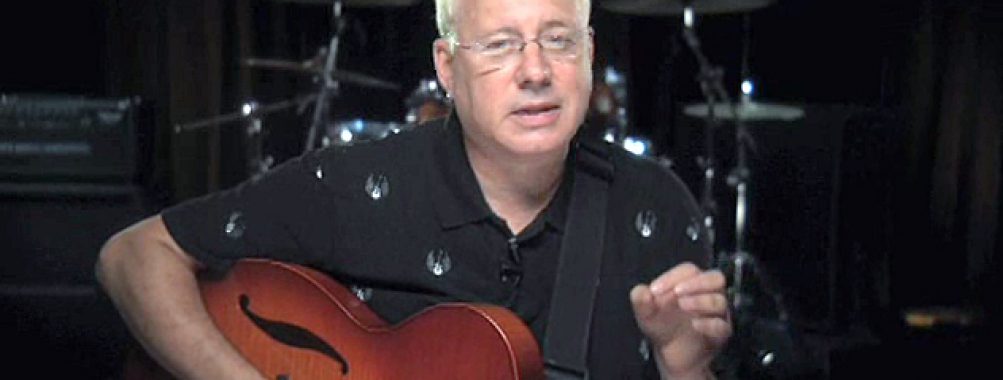
Guitarist Jeff Richman’s latest album “The Line Up” has him reuniting with his bandmates from Chatterbox – Richman’s 2005 project which combined elements of west coast jazz with a more jam-oriented focus. Featuring Dean Taba on bass, Joel Taylor on drums, and Mitch Forman on keyboards, the group has an obvious cohesiveness and chemistry that remains as palpable now as it did 6 years ago. In other words – this quartet sounds like a real “band,” which is not always the case when top-shelf cats such as this get together to record.

“The Line Up” includes a collection of Richman originals, plus three band improvisations, all of which showcase the group’s impressive chops and musicianship with a fun, easy going vibe. I asked Richman about the new album, the Chatterbox band, and more.

Abstract Logix: You haven’t recorded with this band in some time. What led to the decision to do another album with these guys?

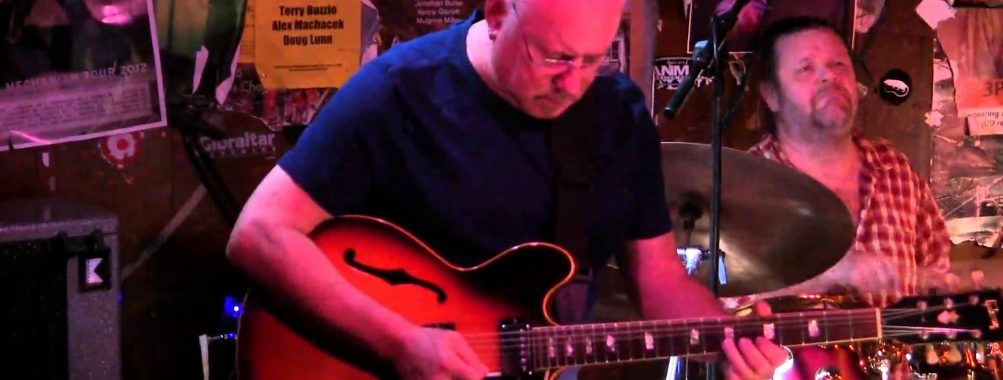
Jeff Richman: Well I am close friends with all of them and do play with them frequently in various settings. We did do two gigs as a band towards the beginning of the year. We played at The Baked Potato and at Alva’s Showroom (which by the way, there are some Youtube clips from). It felt so good and comfortable with these guys that I made the decision that my next recording project would feature this band “Chatterbox.

AL: How did the band first come together for that first album in 2005?

JR: One of my past students, liked my music and guitar playing. He decided to finance a recording for me with my favorite players. So I chose Dean, Mitch and Joel to record the first “Chatter” CD, an album which I still really proud of!

AL: Describe the difference between the Chatterbox band and material, and what you do in your solo projects.

JR: Honestly, its not too much different. This is a solo project but it is exclusively with one band which happen to be my favorite guys. You could say that it has more of a “band sound,” a very comfortable and ready to take chances at any moment. The three “jams” on the record show how we just we interact so well together.

AL: Did you write the songs for “The Line Up” with the Chatterbox band in mind?

JR: I just write songs, I had a bit of a blues theme in mind at one time, but it morphed into something else. I decided to put together this Chatterbox CD knowing that my songs would be played superbly. However, I play these songs with different configurations as well with great results.

AL: The album has a fun, loose vibe – especially on tracks like “Rule of Thumb” and “Hat Trick” where you venture into blues territory. Is that a natural by-product of the band? Or did you tell the guys to keep things loose.

JR: Since we are all so comfortable playing together it just organically is loose. The improvisational aspect is heightened and intensified. We all have such a rapport with one another that taking chances is the name of the game!!

AL: There are three improvised jams on the album – “It’s All One,” “Square Root” and “Right Here, Right Now.” How did those pieces come about?

JR: I just started playing a riff in the moment!! NO preconceived ideas, and that is what happened!! First takes, no overdubs, just pure band improvisation. We did that on the first “Chatterbox” record as well for four songs. That is what I believe is particularly unique about the four of us…..it just happens organically!

AL: Did you record other band jams that were left on the cutting room floor?

JR: NO! We just played those three jams, first takes…no looking back.

AL: I thought “Cross My Heart” was going to be another pure studio jam as well until it morphed into this swinging jazz piece. Tell me a little about that track.

JR: That “free” intro was just an impromptu, last minute idea. The band started jamming freely and then we slowly started the groove up to “Cross My Heart.”

AL: “Point of You” is a bit of a departure from the west coast jazz sound you are normally associated with. There’s a prog rock vibe there, especially in the odd time riffs, and even the melodies which have a soaring, almost Steve Morse-like flavor. What can you tell me about the origins of that tune, and what you were going for there?

JR: I put together two different ideas together on this song. The intro and outro is an odd time signature line which is very hard to play….even harder for Joel to solo over, but he manages to take a fantastic solo at the end. The other part, or middle of the song is kind of a bit of o rock anthem. I stuck the two parts together and it seems to work.

AL: You get pretty adventurous with your tones on this record, particularly on the jam tunes. The first Chatterbox album had some wild guitar tones also. Is it fair to say you have a different approach to tones and effects with this band than you do on your solo records?

JR: Those weird tones are on the jams on both albums. It just felt right to use those various pedals on the jams….it kind of fit in perfectly, it was my voice in the band. Some of the pedals I used were a Mogerfooger, octave pedal, tremolo, Octavia and a backwards delay.

AL: What other gear did you use on the album?

JR: I played two Fender heavy relic Stratocasters, a Fender heavy relic Telecaster and a Sadowsky Jim Hall model guitar. I used a Marshall Silver Jubilee Amplifier miked by a Royer microphone. I have various pedals as well, besides the ones I just mentioned, I use an XTS overdrive, Tube Screamer, Arion Chorus, Exotic RC and EP, Carbon copy delay, volume and wah-wah pedals.

AL: Will you be playing any gigs with Chatterbox in the future?

JR: A few gigs here and there but more than anything, I would love to tour the world with this band!!!

Buy

Itunes-note 
Amazon  Bandcamp
Jeff Richman Interview

July 14, 2017
Jeff Richman, News
Jeff Richman

Buy

Itunes-note


Amazon


Bandcamp

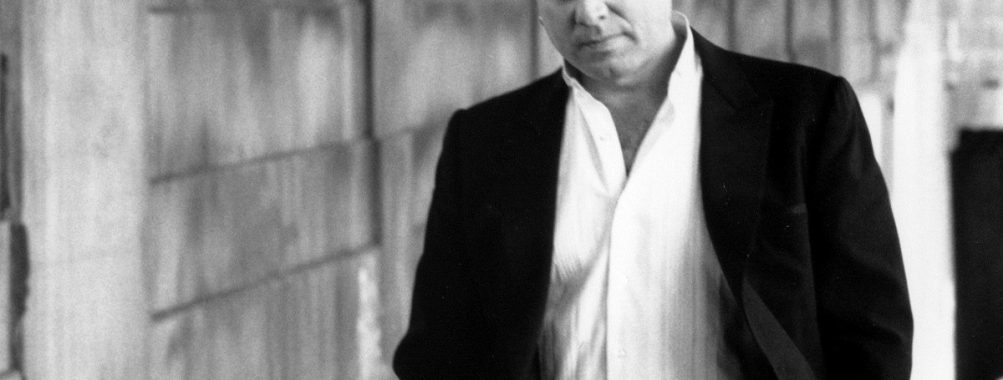
Jeff Richman has been a fixture on the west coast jazz scene for some 20 years. In addition to his highly-regarded solo recordings, the LA-based guitarist has an extensive list of session and sideman credits, which includes work with artists such as Ernie Watts, T Lavitz, Mark Isham, Robbie Krieger, M’shell Ndegeocello, and many others. Richman is also an educator who has taught at both Musician’s Institute and the LA Music Academy, and has produced an impressive array of side projects, including a critically-acclaimed collection of tribute albums for the Tone Center label, in which he rounded-up some of the top guitarists in the business to pay homage to John Coltrane, Miles Davis, Steely Dan, and other musical legends. If you’re in LA for any length of time, you’ll likely be able to catch Richman performing at the legendary Baked Potato jazz club; a venue he’s been playing for years. In fact, when the club held it’s two-day 40th Anniversary Jazz Festival this past May, who was the first performer on day one? Jeff Richman and the Baked Potato Allstars.

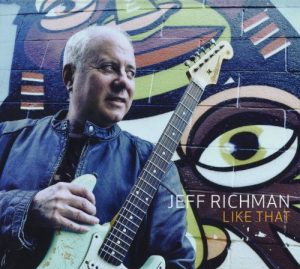
Richman recently released his 16th solo album, “Like That” (Nefer Music Records) – a fine collection of original tunes that span the gamut from rocking fusion to near straight-ahead jazz, all the while retaining his distinctive sound. For this new disc, Richman enlisted a who’s-who of his fellow jazz and fusion heavyweights to back him up including Vinnie Colaiuta, Mitch Forman, Will Kennedy, Alex Acuna, and many others. Richman took time out from his busy schedule to discuss the new album, his writing, his gear, and other topics.

Abstract Logix: I’ve always thought of you as one of the top “west coast jazz” players, but you were originally from the east coast, correct?

Jeff Richman: Well, both actually . . . I lived in Los Angeles as a kid and was heavily influenced by all the great music that was going on at the time like the Beatles, Stones, the Yardbirds……everybody! A few years later my family moved to Hawaii! Luckily, I got to see an amazing amount of incredible live concerts over there like Led Zeppelin and Jimmy Hendrix just to name a few. When I was 21, I moved to Boston to study at Berklee College of Music, then moved to New York City for three years right afterwards before returning to LA. So in a way, I am a mixture of all of that!!

AL: How has the west coast scene changed over the years since you first moved out there?

JR: I’ve been here in LA for over 20 years now and it seems like the scene ebbs and flows – more or less. Sometimes things seem to be really happening, new venues and cool clubs to play open up and its really great. Then it can turn south, things change, clubs close down and you just have to wait for the next wave to come. Even through those ups and downs, one thing is for sure – there are so many great musicians out here that it just never gets boring!

AL: Your new record, “Like That”, definitely has that modern, west coast sound. How long did you spend writing and recording the album?

JR: It took me about a year to work out all the tunes. With all my albums, I go through a pretty long process of writing and re- writing the music until it feels right to me. Once I was ready to record, it became all about organizing everything, which was a task in and of itself. The actual recording took about three months from start to finish.

AL: You utilize 3 distinctive lineups of killer players on the disc – 4 songs feature Will Kennedy on drums, Dean Taba on bass, and Deron Johnson on Fender Rhodes; 4 others have Vinnie Colaiuta on drums, Neil Stubenhaus on bass, and Mitch Forman on keys; and 2 feature Steve Hass on drums, and Larry Goldings on organ. You also have Alex Acuna on percussion for nearly every track. How did you decide which band to use for a given song?

JR: For me, it all starts with the drums. Vinnie Colaiuta played on my very first album “Himalaya”, released in 1986. Since then, he’s appeared on several of my projects. He’s a genius at understanding complex music and turning it into something better than you ever could have imagined, so I absolutely wanted him on “Like That”. Although Vinnie would have been great on every single one of these tunes, I really “heard” his sound on these four (In Spirited, Awful Pretty, Rock Tall, Touch and Go) in particular. I teamed him up with my long time friends and amazing players in their own right, Neil Stubenhaus and Mitchel Forman. They really understand my tunes and compliment Vinnie perfectly.

William Kennedy has such amazing spirit and a soulful groove. I knew that he would really take charge, groove hard and add his distinct personality to my songs (Like That, Small Kid Time, The Endless In-between, Truffaz). Dean Taba and I have played together for almost 20 years – he’s always a perfect ingredient because he can do anything! Deron Johnson is one of my all-time favorite keyboard players. I knew that this band would blend perfectly.

In Flux and Tsuyako feature Larry Goldings, Steve Hass and Neil. I composed these two songs with a jazzy, open approach utilizing the organ. Even though I put a lot of thought and deliberation in composing and in choosing the players, I really believe that being spontaneous along the way is an important part of the creative process. For instance, I decided to add percussionist Alex Acuna at the last minute. It was a good move – he added depth and color to the music.

AL: You already have a familiarity with all of these players from previous sessions and gigs, but when it comes to bringing them in the studio to record your stuff, how much direction do you give them? Do you do go over parts ahead of time and tell them “This is what I’m looking for here?” Or do you just throw up your charts and let them do their thing.

JR: Collaboration with the band is so important to me. It’s always a give and take when in these situations. I trust and encourage the musicians to be themselves and to “go for it” using their instincts. I’ve always believed that playing music is a communal effort and I want that to be a part of all my projects.

AL: I wanted to ask you about your writing process a bit. For a piece like “Awful Pretty” from the new album – which has some sections where the harmony is pretty dense – do you write the chords first, the melodies first, or do you hear it all at once?

JR: Each song has a different story. Most of the time, I experience an “inspirational moment” where a distinct chord change, melodic idea, or bass riff will come to me. Sometimes there are two or three ideas floating around in my mind, and I try to see if I can put them together somehow. Then comes the process of filling everything in, balancing and honing in on a form, slowly shaping it into a composition. In “Awful Pretty” I believe I came up with those dense chords first and later filled them in with the melody. I do want to say that I “heard” the melody to be somewhat busy like that before I actually came up with the exact notes. So I had it visualized before it was committed to the paper!

AL: What about for heavier tunes like “Rock Tall” or “Touch And Go?” Do you come up with the riff first then start building from there?

JR: “Rock Tall” is a tribute to my guitar hero Jeff Beck. I just started messing around with a “rockin” bass riff with an odd time feel. I ended up with a four bar phrase: three bars of 4/4 and one bar of 3/4. The interesting detail is that the bass comes in on beat 2 of the first bar which makes it kind of an odd phrase. I wrote a simple melody over it that could be played with harmonics. It has a bit of a tricky phrasing. The bridge has two short sections to it – one is “Mahavishnu- esque”, and the other one has touches of the “Yardbirds”. On the solo, I wanted to create an element of surprise, so there is an unexpected chord change.

“Touch And Go” has an almost comical element with a country riff, it then surprisingly ventures into a completely new feel, a rocking fusion shuffle with a dense melody. the solo section is fun because it goes back and forth from shuffle and a straight eighth feel.

AL: As an improviser, you’ve obviously built up a deep jazz vocabulary over the years. Is improvisation something you still practice though?

JR: Absolutely! I practice improvising all the time. I use various programs on my computer and play along to jazz standards, chord vamps, fusion tunes and even my original stuff. I practice lots of things without any accompaniment. I also enjoy improvising with my students and peers.

AL: Let’s talk about some of the gear you used on the new record. You mention in the liner notes that you played a Fender Relic Strat and Tele, among other guitars. What can you tell me about those Fenders?

JR: I have two Stratocaster Relics and one Telecaster Relic, they are absolutely incredible. They feel amazing, sound amazing and they look pretty cool too. I first got the Tele over a year ago. After realizing what an amazing instrument it was, I just had to “upgrade” my existing Strat to match the Tele. The first Strat has an ebony neck, the other one a maple neck, so I have the best of both worlds!

AL: Which vintage years are the Relics modeled after?

JR: My green ebony neck Relic is modeled after a 1963 Strat, and brown maple neck is modeled after a ’57 Strat!

AL: You also played the Jim Hall and Semi-Hollow model Sadowskys. Are you using those on the more straight-ahead sounding tunes like “Tsuyako” and “Truffaz?”

JR: Yes. I played my Jim Hall Sadowsky guitar on Truffaz and Tsuyako to get that warm, rich and dark jazz sound, I used this same guitar on most of my last album Aqua. I played my semi-hollow Sadowski on “In Flux” and “Small Kid Time”. The guitar is super easy to play and I can get the Scofield kind of sound, jazzy yet with a bit of distortion…really works. They are both truly wonderful instruments.

AL: What amps and effects did you use on the album?

JR: I used a Marshall Silver Jubilee combo amp, the one with two 12” speakers. For effects on “Like That” I used a number of pedals including a couple of Exotic boost pedals, an XTS distortion pedal, delays and reverb. I also used a Royer microphone.

AL: When you play live, do you use a different setup than you do in the studio?

JR: I use the Marshall along with an old Fender Deluxe or Super Reverb when I play live. I have lots of various pedals that I like to play around with to get different textures as well. The pedals I’ve already mentioned, plus Octiver, Moogerfooger, Envelope Filter and some others.

AL: Speaking of live playing, I wanted to ask you about “The Baked Potato Allstars.” For readers that may not be aware, this is essentially a pick-up band where you bring in different top shelf jazz and studio guys to jam at the Baked Potato in Hollywood. You’ve been doing it for years now. How did that residency start, and what it is about the Baked Potato that makes it such a special place to play?

JR: I have been playing at the Potato for 20 years now. The acoustics are really great and it’s a club where people come to really listen to the music. Lastly, Justin Randi is a true fusion fanatic, so it feels great to be in an atmosphere where my music is welcome!

AL: Other than your BP Allstars gigs, do you have any other shows or upcoming projects you’d like to mention?

JR: We’re working on plans to tour Japan and Europe. South America is also a possibility. Earlier this year I did a short tour to India and Scandinavia with Russel Ferrante, William Kennedy and Jimmy Haslip. Everyone had such a great time, we’re looking to do it again next year.

AL: Thanks for your time Jeff!

Latest album

Latest NEWS

SUBSCRIBE

Please Subscribe your mail to get notification from AbstractLogix.


Facebook-f


Twitter


Instagram


Youtube

Copyright © 2021 ABSTRACT LOGIX

Facebook-f


Twitter


Instagram


Youtube

Copyright © 2021 ABSTRACT LOGIX

Jeff Richman Interview

July 12, 2017
Jeff Richman, News
Jeff Richman

Buy

Itunes-note


Amazon


Bandcamp

AL: You seem to have a desire for arranging and producing all-star records. This is not an easy thing to do and be successful, but you have been. How do you manage all these guys together?

JR: Thanks for the compliment. It kind of all has happened organically. I love playing at the Baked Potato here in LA. I would call the best players I know and I recorded some of the gigs. This is how “Live At The Baked Potato Vol. #1” & #2″ came into being.

AL: “Guitar Supreme”– (A Tribute to John Coltrane) released by Tone Center was produced by you. Tell us about that project.

JR: Mike Varney at Tone Center released the Potato CD’s. I guess he liked my work and the way I put it together. He called me and asked me if I could produce this CD. The Coltrane concept was his idea. He asked me to re-arrange 12 songs- get in touch with the rhythm section and guitar soloist and put it all together in the studio. Some of the guitarists picked tunes they liked. Greg Howe wanted to do ‘Giant Steps’ and Frank Gambale expressed his desire to do ‘Naima’. I have always wanted to do ‘Afro-Blue’. My solo guitar tracks were live, everyone else overdubbed. Alphonso Johnson, Tom Brechtlein and myself recorded the basics. We then add Larry Goldings. All the soloists came in later. I’m very happy with the turn out – it all just seemed to fall into place! It took me a couple of months to pre-produce all the music and then another four months to finish it up.

AL: You have released some acclaimed solo records yourself.

JR: I have been writing my own tunes for a while and enjoy coming up with my own ideas. Here in Los Angeles, I was lucky to perform with Danny Gottliebb on drums and Jimmy Haslip on bass for the CD ,“Trio Loco”, which was also a live CD. My latest CD “One Two” is a mostly studio track with two live recordings with a variety of great players. I personally am attracted to strong musical concepts, which mostly revolves around the compositions. Weather Report was one of the first bands that I was really turned on by. It is hard to make that happen because it takes a lot of thought, preparation, patience and time to evolve into an original musical sound as a unit.

AL: You seem to like live records a lot. Most of your own records are recorded live.

JR: The truth is in the finances. Its much cheaper to record something live than the studio. However I finished a studio record record recently. The name of the band is Chatterbox and it features Dean Taba on bass, Mitchel Forman on keys and Joel Taylor on drum. Half of the record is compositions and the other half we came up on the spot by jamming.

AL: You mentioned a Mahavishnu Orchestra tribute CD. Give us some insight.

JR: Yes. Mike Varney will release it. We are doing some of his classic tunes, – ‘Meeting of the Spirits’, ‘Celestial Terrestrial’, ‘Birds of Fire’ etc. It will feature Vinnie Colauita on drums, Anthony Jackson on bass and Mitchel Forman on keyboards. Should be very interesting. I am listening to the original music now. Just great stuff!!

AL: Do you sometimes think that you never got the attention you deserved like some of your peers did?

JR: I don’t feel like I can answer that question with a yea or a no. Everyone has a different perspective. But honestly, I think I am exactly where I am supposed to be right now and that feels good.

Latest album

Latest NEWS

SUBSCRIBE

Please Subscribe your mail to get notification from AbstractLogix.


Facebook-f


Twitter


Instagram


Youtube

Copyright © 2021 ABSTRACT LOGIX

Facebook-f


Twitter


Instagram


Youtube

Copyright © 2021 ABSTRACT LOGIX

Jeff Richman Sizzles

November 18, 2016
Jeff Richman, News
Jeff Richman

Buy

Itunes-note


Amazon


Bandcamp

Q: Jeff thank you for such an inspirational and well written record , what influences your song writing ?

Jeff Richman: Everything that is around me influences me. I am always looking for something new to listen to whether it is on CD’s, streaming or live concerts. I hope for an inspirational moment which will get me started on a new song.

Q: Its quite apparent that you love Jimmy Haslip as a producer. I am sure you have a long relationship with him. Please tell me what he brings to the plate ?

JR: I’ve known Jimmy for many years. We met in the late 70’s auditioning and getting the gig to tour all over the US with Flora Purim and Airto. Jimmy is a kind hearted, extremely talented musician and one of the greatest bass players today. I think a good word for Jimmy in relation to him being my producer is “transparent”. I mean this in the most positive way. His number one goal is to make sure I am happy. He let’s me do exactly what I want and never gets in the way. By him just being there, it truly makes a difference. He always great input and suggestions which help shape the entire concept.

Q: You have been such a wonderful producer with some many record, not to forget some wonderful tribute releases to Miles Davis and John McLaughlin for Tone Center. Do you prefer not to produce your own records ?

JR: In a way I’m still producing my own records, the lines aren’t always that distinct. I have been fortunate to have Jimmy’s inspirational input by my side for the past three records. He gets the Producers credit and I get the artist credit. When it is my record, as in “Sizzle” the producer, Jimmy, does take a big weight off of my shoulders. His presence is always very positive and supportive, it is remarkable how smooth everything goes when he’s around.

Q: Lets talk about your song writing process ? How do you write, on guitar ? or any other instrument ?

JR: It usually begins when a musical idea enters my mind. It could be anything from a bass line, a melody, a chord progression or even a drum groove. I quickly go to my guitar and write out as much as I can remember. When I’m ready I’ll go onto my computer, put it into Sibelius and start working out all the details. I end up with pretty much a complete usable demo because I put it all into midi and record my guitar parts in audio.

Q: “Sizzle” features some wonderful musicians. Lets start with Vinnie Colaiuta, how long did it take for him to lay down his tracks ? Is it mostly on a few takes ?

JR: Vinnie as everyone who hears him knows, is a musical genius wunderkind. He has an equal amount of both heart and technique. When he plays on my music its as if he knows all my tunes better than I do. I feel like he “gets me” (I’m sure he probably “gets” everybody). It feels so good when he’s on those drums playing down one of my songs. I just sit there with my mouth wide open in disbelief wondering how anyone could be that great. I have known Vinnie for a long time, starting back from my college days in Boston. I have been fortunate and thankful to have him play on a lot of my music.

Q: Lets bring up the great new Hungarian drummer Gergo Borlai, You decided to use him on Jimmy Palm. What does he bring to the plate ?

JR: Gergo is incredible! He played on one song from my last CD “Hotwire” the song “Solar City”, he completely tore it up in his own individual way. I instantly became a huge fan. The ballad on “Sizzle” is Gergo’s composition “Say It Isn’t So”. I loved what Gary Willis did with it on his latest CD, so Gergo slightly re-arranged it and made a demo for me to practice with. One day I started recording my guitar to it, somehow all the knobs of my amp, pedals etc. were magiclly in sync. I got the most gorgeous guitar sound ever, and played it with all my heart. That solo ended up on “Sizzle”. Gergo later played real drums and programmed the synths while Jimmy played bass.

Q: I love the way you have used Bob Mintzer and Jeff Beal on horns. Are you trying to create a different vibe on the songs ?

JR: Not only did I get the amazing Bob Mintzer and Jeff Beal to play on two tunes each, I got the magnificent pianist Taylor Eigsti on two tunes as well. My good friend Mitchel Forman is featured on a song playing fender Rhodes plus I got the legendary bass man Will Lee to play on two songs. I have to mention the unsung hero guest of the album, George Whitty. I got him to program most of the songs. George is incredible! He makes this record sound expensive! His sounds, his ideas, his grooves, his keyboard playing, everything he does is superb, I am so privileged and honored to have George work on my stuff. The reason that I like to get additional players is that this is not a “guitar album”….It is a music collection featuring guitar. I wanted to round out the sound by having some guests.

Q: You have been a long time LA musician. How has the scene changed over the years, for better or for worse ?

JR: The music scene always does change here in LA. When I first came, the studio recording phenomena was popping. Unfortunately it kind of died out before I got really going here. Now there seems to be a young downtown scene with an abundance of new raw talent. Over the years I’ve done a variety of bands, sessions, shows, tours, producing and teaching. Since I have always been working on my music through the years, It has kept me busy and satisfied musically. So for me it has been a pretty positive and balanced experience living here.

Q: What’s more important for you , the guitar or the music ?

JR: I have to say both are equal. I’ve been in love with the guitar from when I was a kid, discovering the Ventures, Jeff Beck and the countless incredible guitarists throughout the years has influenced me deeply. I still am in total awe when I hear guitarists like Scofield, Frissel, Landau, Lukather, Ford, Krantz, Marino, Kreisburg, Morse and countless others. Equally fascination for me is the music. Composition, harmony and concepts. I loved Whether Report for their compositions, Miles Davis for his conceptual ideas and so many others. These days there are many innovative conceptualizers in the Jazz feels as well as popular, alternative, ethnic, blues and on and on. I’m always looking out and hungry for new music to get excited about.

Q: Does “Sizzle” take off where “Hotwire” left off for you ?

JR: I think “Sizzle” is the next logical step for me. This album is the most satisfying album I have done because each and every song is equally strong. What I heard in my head ended up coming out better than I had ever expected. I’m really proud of this work and I am grateful to everyone who has helped me to create this vision .

Latest album

Latest NEWS

SUBSCRIBE

Please Subscribe your mail to get notification from AbstractLogix.


Facebook-f


Twitter


Instagram


Youtube

Copyright © 2021 ABSTRACT LOGIX

Facebook-f


Twitter


Instagram


Youtube

Copyright © 2021 ABSTRACT LOGIX

Jeff Richman Talk About Hot Wire

May 6, 2015
Jeff Richman, News
Jeff Richman

Buy

Itunes-note


Amazon


Bandcamp

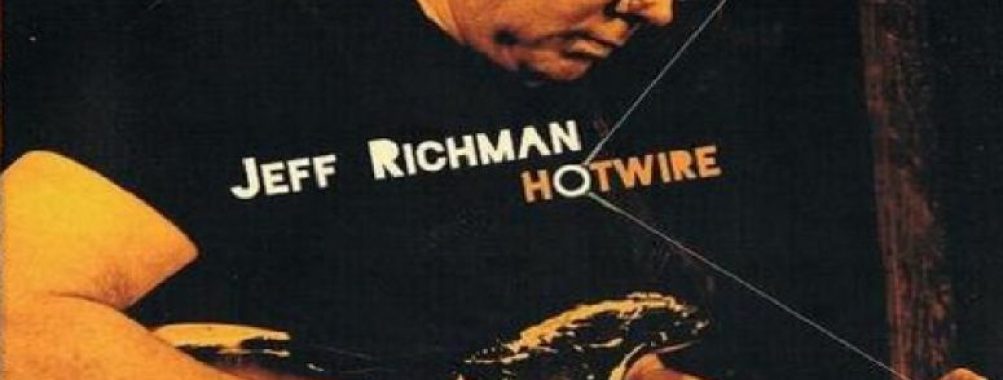
For over 35 years Jeff Richman has composed, studied music, and played guitar. This experience comes to a head with his new release “Hot Wire”. Richman briefly talks about his new album, and his views on music.

ABSTRACT LOGIX: For the past three years you’ve put out an album a year with “Big Wheel”, “The Distance”, and now “Hot Wire”. How do you stay inspired to keep working at this rate?

JEFF RICHMAN: “The Distance” is a mostly an acoustic guitar duo recording with the fantastic guitarist Wayne Johnson. This album was recorded and released about 10 years ago, it got re packaged and released last year by ITI Records. So that doesn’t count.

As far as why I’ve been making frequent recordings, is because I continue to keep writing music. It just organically pops into my head.

I feel the need to document these compositions by getting great musicians to play on them as we’ll as to feature my guitar playing.

ABLX: Jimmy Haslip returned to not only play bass on the album, but returned to the producer chair. You two have been friends for several years, what characteristics make him such a great producer to work with?

JR: Jimmy and I met back in 1978, we were auditioning for a tour with Flora Purim & Airto! We both got the gig and ended up touring together with them for about four months (along with Ricky Lawson). After that, Jimmy, co founded the Yellowjackets and acquired a wealth of experience in this field, not to mention his unique, funky genius bass playing. On top of that, Jimmy is truly one the genuinely nicest people I have ever met. There is a certain quality that he possesses which makes me feel comfortable and at ease. I can really be myself with him. Having his support took a lot of pressure off me and I was allowed to be the “artist”. Jimmy also has tons of great ideas all the time. It was an honor and a pleasure to work with him like this a for second time.

ABLX: Fourteen musicians join you on “The Distance”. With Jimmy Haslip coming on again to play and produce the record, how did the rest of the line up come about?

JR: I knew that I absolutely wanted Vinnie Colaiuta on a fair amount of the album because he is just truly outrageously incredible. We were fortunate to get him and he was amazing beyond belief. Mike Stern was in town playing in LA, since he’s an old friend, I managed to get him in the studio along with the infamous Anthony Jackson and drum phoneme Gary Novak. Jimmy suggested we use Scott Kinsey’s creative genius on a couple tunes which worked out really well. He convinced us to try Hungarian drummer Gergo Borlai on a tune. He ended up just killing it on Solar City which Scott also arranged (track 8). For this album I made demo’s of 7 of the songs at home, we were lucky enough to get the brilliant George Whitty to spice up the songs and add his arrangement ideas. On the song “Seven Up” is his super funky horn arraignment (track 2). We were able to include keyboardists Jeff Lorber, Mitch Forman and Gary Fukashima. Each of these guys contributed something that is uniquely special unto themselves. The exact same thing goes the two horn players, Jeff Beal on Trumpet and Brandon Fields on Sax. Jimmy’s bass playing is like no other, he grooves on everything, and proves once again his mastery, I got one of my all time favorite musician / bassist Dean Taba to play upright on “One Last Kiss” (track 6). All these great players contributed to the music in an organic, natural way, everything seemed to just work in an effortlessly.

ABLX: One of my favorite attributes to your music is that you always put the song first. As a result, “Hot Wire” sounds huge. With so many amazing musicians sitting in, how much of the music was arranged and how much was left to the freedom of the musicians?

JR: That’s it! The music always comes first. As far as what is written, I have charts that are pretty organized and worked out. The form, melodies and harmony is all there. The freedom is on the solos, the guitar and keyboard accompaniment and the basic groove is flexible. There’s freedom for the bass although a fair amount of the bass lines are written. Finally, there’s plenty of room for interpretation for a drummer, although the music is full of twists, turns, accents, time signatures and unusual amounts of bars in a phrase. Whoever is in the drum chair has a lot to contend with because there’s a lot going on.

ABLX: You write charts for all your pieces, but allow the musicians a lot of freedom when recording to inject their own creative voice into the music. Your music is complex and well orchestrated, did you have to turn down a lot of music ideas and input from musicians to avoid the music becoming cluttered, or did it work out to be a uniform collaboration and understanding?

JR: Everyone who was asked to contribute to the album was “like minded”. Either I’ve played with them or know about them. I had never played with Anthony Jackson, but who wouldn’t want to have a legend like him play on this music? The other musician I never worked with was drummer Gergo Borlai. We took a chance on him and it turned out incredibly well. The selection of the musician is thought out and planned carefully, but along with the idea to be open for something unexpected and unplanned to occur, this is what keeps things fresh.

ABLX: “Hot Wire” consists of ten tracks, all originals except for Jan Hammer’s “Oh Yea?”. What is it about the Jan Hammer Group, or the song itself that lent it to be the only covered tune on the album?

JR: It just sort of happened naturally. I started playing that song at my live gigs recently. We also needed one more tune to finish to album. I thought of covering a Buffalo Springfield song, or perhaps to just do an impromptu jam. Jimmy suggested for us to play this song live with Vinnie, I thought it was a great idea, and it really worked out well!

ABLX: You have a musical history in rock, jazz, and fusion, but have also work on music for TV and with film composers like Mark Isham. The arrangements on Hot Wire, like the enliven acoustic guitar appearing on the opening track Hit Spot, use of brass for added energy in Seven Up, or the unique instrumentation of flugelhorn all give the songs their own identify and emotion. Do you find yourself What advantages do you think working in that side of the music industry have offered your music and arrangements?

JR: Most movie scores are written with one specific theme. The composer has to come up with a melody which compliments the concept of the movie or TV show, and this theme heard throughout the film. It is orchestrated differently, re-harmonized, altered, played at different tempos, etc.…..In my compositions I try to employ a similar concept. Sticking to, or limiting myself with what I’ve got, and scrambling it.. My music appears to have lots of information, but I tend to stick to the theme and develop it while being cautious to not over write. I do not want to leave the listener with too much information.

ABLX: With over 35 years of experience with your instrument and 16 albums, are there any new musicians or groups who have made you perk your ears and acted as a new source of inspiration?

JR: Yes, It happens all the time, that’s what I look for. I actively seek it out as much as I can. I try to go out and listen to lots of concerts as well as buy music online or as in the old days – in a record store. I am constantly looking to get inspiration! I’m not one of those people who complain that there’s nothing new or exciting out there. I am fairly open minded. There’s so much to mention here, from new bands to old bands, all styles of music. I like individual musicians and groups of people playing together. All the way from “free” avant-garde to modern sophisticated pop music. Its kind of like a hunger for me keep growing, evolving and staying in the loop.

Latest album

Latest NEWS

SUBSCRIBE

Please Subscribe your mail to get notification from AbstractLogix.


Facebook-f


Twitter


Instagram


Youtube

Copyright © 2021 ABSTRACT LOGIX

Facebook-f


Twitter


Instagram


Youtube

Copyright © 2021 ABSTRACT LOGIX

Jeff Richman on Big Wheels

July 5, 2013
Jeff Richman, News
Jeff Richman

Buy

Itunes-note


Amazon


Bandcamp

35 years of experience, 17 albums, a Berklee College of Music education, and Jimmy Haslip in the producer’s chair. There was no way Jeff Richman’s newest album “Big Wheel” could be anything but spectacular. The album opens with a funky groove that never lets up for the rest of the album, and features a great cover of Stevie Wonder’s That Girl. Richman talks with Abstract Logix about what went into making his new album “Big Wheel” and what influences and inspires him as a musician.

Abstract Logix: You have a created a larger discography. What sets “Big Wheel” apart from the rest of your catalog?

Jeff Richman: If you had to label me, I guess I would be known as a jazz fusion guitarist, and composer. I have had the incredible opportunity to work with some of the best musicians on the globe on all my recordings. What sets this new collection of songs apart in “Big Wheel” is that even though my compositions and solos are similarly familiar, the underlying pulse of the music seems to be void of “fusion”!! Not that it is a pop or smooth record, because it just isn’t. My writing is too complex for that. It feels to me that the music is coming from a different place, another home, different city, different setting. But it’s still me writing the same music. Kind of hard to explain…….

Ablx: When composing the songs for the record, how much freedom did you allow the other musicians to improvise?

JR: I give the musicians a lot of freedom. I do, in fact write charts out for all my music. These charts are very clear and well written from beginning to end. But what occurs when you’re fortunate enough to be surrounded by very creative people like the ones on this record, things change! Along with producer Jimmy Haslip and Jeff Lorber, we explored various options and possibilities. Since these guys have been very successful in their career’s, Jimmy and Jeff have bold, innovative ideas. The goal being ultimately for the music to be the best it can possibly be. I had to really be open and let go, and not be defensive. I needed to be patient and see where it all would lead to. On four songs I hired keyboard, arranger whiz George Whitty to get creative and put his expertise to work. I gave him the charts along with a handful of instructions and ideas. Away he went and came up with super great stuff! In both of these situations I needed to trust that these people I chose to work with, were going to improve and invigorate my music. I think we succeeded and I’m very pleased about it.

Ablx: How was it to work with Jimmy Haslip as a musician and as a producer?

JR: My last three albums (‘“Aqua”, “Like That” and “The Line Up”) I produced all by myself. Honestly, I was very happy with the outcome of these previous three albums, but this time I felt like I wanted to relax a bit more and have someone I trust handle some of the details. I’ve known Jimmy for 30 years plus. We met at an audition for a tour with Flora Purim and Airto in the late 70’s!! We both got the gig and toured the US for 6 months! This was before the Yellowjackets. Jimmy went on to became a very successful musician. He is one of my all time favorite people. Every time we get together to play, record or just hang out, I have such a great time, there’s always lots of laughter and joking. He has always mentioned that he’d like to produce me sometime. Well, I finally took him up on it. Jimmy was a breeze to work with, everything just seemed to fall in place easily. He had many wonderful ideas, some were last minute inspirations and some were very worked out and thought through in detail detail. Jimmy is responsible for getting Steve Gadd on the record, just that alone makes the music come to life in a different way. He was also extremely supportive and aware of his role as a producer: to be really “there” for me in every way. The end result came out way better than I ever could have imagined.

Ablx: You studied and grew as a musician at the Berklee College of Music in Boston, but what initially inspired you to pick up the guitar and pursue music?

JR: My mom played folk guitar and sang, so I was listening to music and guitar at an early age while growing up. I think the first guitar sounds that started me up were “The Ventures” and all their guitar driven, twangy “surf” music. Then came Jeff Beck with the Yardbirds, that did it for me! I was fortunate to have grown up in area where I got to see lots of life changing live music. One of the most mind blowing concerts was Led Zeppelin on their first tour. After that I started buying some “jazz” related records which were fascinating. When I bought Miles Davis’ “Bitches Brew” I didn’t know what was going on. At about that time I realized I wanted to learn more about contemporary music, and in particular, jazz. Berklee was at that time, the only music school for this kind of music, so it was an easy choice to go there. I was lucky to be surrounded by incredible teachers and classmates. Just to name a few: Pat Metheny, Bill Frissel, Mike Stern, Mick Goodrick, Vinnie Colaiuta, and Jeff Berlin. I also saw many incredible live performances that were unforgettable: Miles Davis, Whether Report, Chick Corea, Keith Jarret, Herbie Hancock, Bill Evans, Ornette Coleman, Charlie Mingus, The Brecker Brothers, just to name a few.

Ablx: Fusion music can often become nothing more than noodling, and a frenzy of notes, but on “Big Wheel” , every song held its own music identity. How did you go about to make sure there was meaningful musicality in each song?

JR: I think its the collective years of influences I have had. All the listening to live and recorded music, and all the gigs and recordings I’ve done have make me realize that every note is very important, that’s why I’m careful not to over do it. The well known phrases “less is more” and “the notes you don’t play are just as important as the notes you do play” are useful here. The other thing is, I don’t have amazing chops (speed and technique) so I have to rely on other things to get over. Things like phrasing, sound, time, feel, and melody. Most importantly, I focus on the compositional aspect, I am constantly trying and working towards creating a unique voice through my writing.

Latest album

Latest NEWS

SUBSCRIBE

Please Subscribe your mail to get notification from AbstractLogix.


Facebook-f


Twitter


Instagram


Youtube

Copyright © 2021 ABSTRACT LOGIX

Facebook-f


Twitter


Instagram


Youtube

Copyright © 2021 ABSTRACT LOGIX

Recent Posts

  • GLOBAL FUSION PIONEERS SHAKTI NOMINATED FOR TWO 2026 GRAMMY™ AWARDS
  • Shakti – ‘Mind Explosion’
  • ‘THIS MOMENT’ AWARDED WITH GRAMMY
  • GRAMMY™ NOMINEE FOR BEST GLOBAL MUSIC ALBUM – SHAKTI’S ‘THIS MOMENT’
  • GLOBAL FUSION ALCHEMISTS SHAKTI ANNOUNCE NORTH AMERICAN TOUR

Recent Comments

  • irontemplates on Guns and Plants: Stardust
  • irontemplates on Carla & Bones: Trailblazers
  • irontemplates on Mantis: Glam Porn (Vinyl)
  • irontemplates on Love Elexir
  • irontemplates on Sweater The Rise

Archives

  • November 2025
  • June 2025
  • May 2024
  • December 2023
  • February 2023
  • May 2022
  • February 2022
  • June 2021
  • May 2021
  • April 2021
  • March 2021
  • February 2021
  • January 2021
  • July 2019
  • May 2019
  • February 2019
  • September 2018
  • August 2018
  • July 2018
  • February 2018
  • January 2018
  • November 2017
  • October 2017
  • September 2017
  • July 2017
  • November 2016
  • August 2015
  • May 2015
  • January 2015
  • November 2014
  • October 2014
  • August 2014
  • June 2014
  • February 2014
  • July 2013
  • May 2013
  • April 2013
  • February 2013
  • December 2012
  • September 2012
  • July 2012
  • June 2012
  • March 2012
  • May 2010
  • April 2010
  • December 2009
  • October 2009
  • August 2009
  • July 2009
  • May 2009
  • December 2008
  • November 2008
  • October 2008
  • August 2008
  • April 2008
  • February 2008
  • November 2007
  • October 2007
  • September 2007
  • April 2007
  • March 2007
  • February 2007
  • January 2007
  • December 2006
  • October 2006
  • September 2006
  • July 2006
  • June 2006
  • May 2006
  • April 2006
  • March 2006
  • February 2006
  • January 2006
  • October 2005
  • September 2005
  • August 2005
  • June 2005
  • May 2005
  • March 2005
  • January 2005
  • December 2004
  • September 2004
  • August 2004
  • July 2004
  • June 2004
  • May 2004
  • April 2004
  • March 2004
  • January 2004
  • December 2003
  • November 2003
  • September 2003
  • July 2003
  • June 2003
  • May 2003
  • April 2003
  • February 2003
  • January 2003
  • November 2002
  • October 2002
  • June 2002

Categories

  • Abstract Logix
  • Adam Nitti
  • Alex Machacek
  • Alex Skolnick
  • Allan Holdsworth
  • Andrea Marchesini
  • Anil Prasad
  • Avi Bortnick
  • Barry Cleveland
  • Barry Richman
  • Bela Fleck
  • Ben Monder
  • Bill Bruford
  • Bill Connors
  • Brett Garsed
  • Bunny Brunel
  • Chad Wackerman
  • Chris Beckers
  • Chris Poland
  • Chris Taylor
  • Chuba Aomori
  • Cindy Blackman
  • Colin D'Cruz
  • David ‘Fuze’ Fiuczynski
  • Debashish Bhattacharya
  • Dennis Chambers
  • Dewa Budjana
  • Dominic Miller
  • Dominique di Piazza
  • Ed DeGenaro
  • Ehsaan Noorani
  • Featured
  • Featured – John
  • Frank Gambale
  • Fresh News
  • Garaj Mahal
  • Gary Husband
  • Gary Wills
  • General
  • George Brooks
  • Gerald Gradwohl
  • Gergo Borlai
  • GIRLS DON’T LIKE REAL JAZZ
  • Gregg Bendian
  • Hadrien Feraud
  • Henry Kaiser
  • Hiromi
  • Hugh Ferguson
  • Ian Patterson
  • Jack DeJohnette
  • Jahloon
  • Jeff Babko
  • Jeff Berlin
  • Jeff Coffin
  • Jeff Richman
  • Jeff Sipe
  • Jennifer Batten
  • Jimmy Haslip
  • Jimmy Herring
  • John Czajkowski
  • John McLaughlin
  • John Molo
  • Jonas Hellborg
  • Keith Carlock
  • Ken Talve
  • Kevin Scott
  • Kirk Covington
  • Mandolin U. Shrinivas
  • Marc Rossi
  • Mark Egan
  • Mark Mondesir
  • Matthew Garrison
  • Mattias IA Eklundh
  • Michael ATONAL Vick aka VVV
  • Michael Landau
  • Mike Seal
  • Mitchel Forman
  • Nat Janoff
  • News
  • Ney Mello
  • Nguyen Le
  • Nima Rezai
  • Ohm
  • Oz Noy
  • Ozone Squeeze
  • Pandit Debashish Bhattacharya
  • Pat Martino
  • Paul Hanson
  • Percy Jones
  • Peter Fernandes
  • Prasanna
  • Rai Thistlethwayte
  • Rakalam Bob Moses
  • Ranjit Barot
  • Ray Gomez
  • Rez Abbasi
  • Richard Hallebeek
  • Rob Levit
  • Scott Henderson
  • Shakti
  • Shane Theriot
  • Shankar and Gingger
  • Shankar Mahadevan
  • Shawn Lane
  • Souvik Dutta
  • Stanley Clarke
  • Steve Khan
  • Steve Smith
  • Steve Topping
  • Stu Goldberg
  • Surinder Sandhu
  • T Lavitz
  • Terri Lyne Carrington
  • The 4th Dimension
  • The Mahavishnu Project
  • Tom Guarna
  • Tony Grey
  • Tony Smith
  • Trilok Gurtu
  • Uncategorized
  • Ustad Zakir Hussain
  • V Selvaganesh
  • Vernon Neilly
  • Vinnie Colaiuta
  • Walter Kolosky
  • Wayne Krantz
  • Wayne Shorter
  • Zakir Hussain

Meta

  • Log in
  • Entries feed
  • Comments feed
  • WordPress.org

SUBSCRIBE

Music news delivered to your inbox

Follow Us


COPYRIGHT © 2023 ABSTRACT LOGIX