• RELEASES
  • VIDEOS
  • ARTISTS
  • NEWS
  • ABOUT
  • STORE

Monthly Archives: September 2006

Interview with Village of the Unfretted, Jahloon

September 12, 2006
Jahloon, News
Jahloon

Buy

Itunes-note


Amazon


Bandcamp

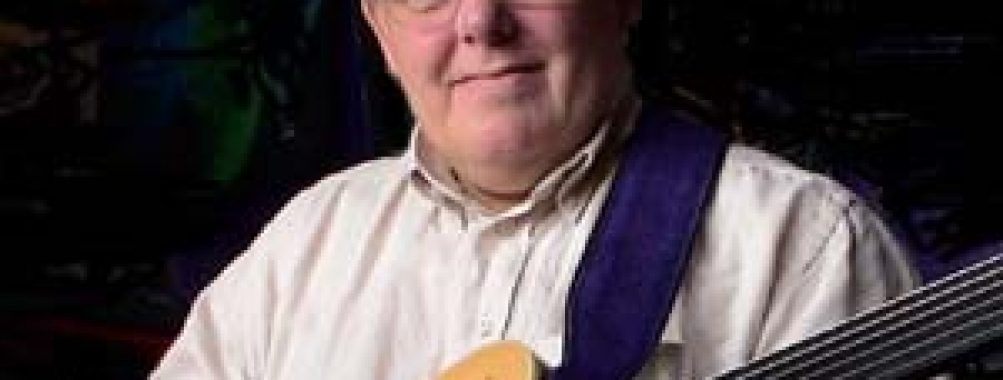
Jeff “Jahloon” Berg is an accomplished guitarist from Liverpool and is the creator of unfretted.com, which is the most comprehensive and leading resource for everything you want to know about fretless guitars and talented musicians. He studied with Bill Sullivan, a well-known guitar and banjo player from Litherland, and performed many gigs all over Liverpool. After nearly driving into a tree while listening to the “Fretless Guitar Masters” CD (yes, fretless music has that kind of effect on people), he created the unfretted.com website, which not only brought together fretless musicians and guitar makers from all over the world but has really helped to pave the “road to Damascus” for all the fans and aspiring musicians. Of course, whenever you put together a forum full of talented and innovative* musicians, as Jeff has done through his website, a big bang is bound to happen. Indeed, that’s just what happened with the release of the “Village of the Unfretted” album and the launch of the annual NYC Fretless Guitar Festival, the largest fretless guitar festival in the world. The accomplishments of Jeff and all the talented musicians, who made this milestone event possible, made huge waves in the guitar world, warranting a feature article in the February 2006 issue of Guitar Player Magazine. Throughout the years, Jeff has been a wonderful mentor, advocate, and a leader in this growing fretless subculture. Although Jeff has somehow managed to keep most of his recordings hidden, his passion and dedication to music are evident in his contributions to the fretless world. I thank Jeff for the opportunity to interview him and for adding all the personal embellishments that made this interview so much fun and a real gem for me.

Innovative: I should emphasize that fretless guitarists are not only notorious for inventing and experimenting with sounds and new ways to play their instruments but are also innovative in the ways they alter their instruments to synthesize new sounds. Nothing can fret them; many of them invented new instruments or made their own modifications to existing instruments, and Jeff is no exception to this. He created his own Baritone Fretless by modifying a fretted Hamer.

MT: I really like your philosophical take on becoming unfretted: There is a transition phase, from guitar to fretless guitar. It’s like walking all your life on Earth and then suddenly finding you can fly. All the fixed points, you relied upon are gone, you are; Unfretted Musically speaking, what is this newfound freedom when one makes the transition from a fretted to a fretless guitar?

JB: Well, the frets are missing, for a start, but what it does give you is an instrument you are already familiar with, but the rules have changed slightly. Suddenly all of what you previously learnt is flying out of the window and a whole new empty canvas is being laid out in front of you. Time to start painting.

MT: Given how amazing a fretless guitar sounds, I can’t understand why more musicians are not playing fretless guitars. In your opinion, why haven’t fretless guitars received more attention from musicians?

JB: Well, it’s not as easy as it looks. Plus it just hasn’t been available for that many people to try. Just walk into any guitar shop and ask for a fretless. They won’t have one. We are still in the pioneering phase; when the wave breaks, everyone will be selling them.

MT: In the world of the unfretted, what is it about the bass that makes it more accessible than the guitar?

JB: I would put a lot of it down to Jaco Pastorias. He really pioneered the fretless bass and that sound he got out of it was just mesmerizing. Many bass guitarists also play double bass, which is a fretless instrument, so they start from an advantage, already knowing the rules. Another thing, bass players are much more ready to accept new or different approaches to their instrument. For example, active electronics, never really took off on normal guitars.

MT: You are an accomplished musician yourself. You studied and played with Bill Sullivan, a well-known guitar and banjo player from Litherland. What was it like to study with Bill Sullivan? What was the most important thing that you learned from him?

JB: He was a great guy, very down to Earth and as wise as Yoda. He taught me how to form jazz chords from scratch, no need for a chord manual. Then how to make arrangements from just chords and a lead line. After a year he said “I can’t teach you anything more, now you must teach others.” Then he started sending me students, and that was the key lesson. To teach your subject, you need to know it inside out, it really moves your game up a few steps.

MT: You also played many live gigs all over Liverpool but performed your last one in 1980. Why did you stop?

JB: Family / Thatcher / Boredom / Couldn’t fit the gear in the new motor.

MT: Where can we find recordings of your music?

JB: I’ve managed to keep most of them hidden. Recent exercises are on the website and of course on the “Village of the Unfretted” CD. There are some ¼ inch tape recordings of early bands, but not fretless, so they’ll never see the light of day.

MT: What are some of your musical influences and favorite musicians?

JB: At an early age my parents locked me in a room with a radiogram and a selection of records. Music from the fifties; South Pacific, Oklahoma, Noel Coward at Las Vegas, Bill Haley’s “Rock Around the Clock” album, and a few indecently rude Calypso records with titles like “Please Mister Don’t You Touch Me Tomato” etc. That kind of thing seriously messes you up. Favourite musicians, there are so many, here’s the top three: Frank Zappa, Jack Bruce, Francis Dunnery.

MT: In your lifetime, how many guitars have you played?

JB: No idea how many, but I did have a long-standing monogamous relationship with a Gibson 330, which I still have. Before that I had a Red Hofner Veritihn, and

MT: What are the instruments in your personal collection now?

JB: The main instruments are a Godin Multiac Nylon Fretless, a Vigier Surfretter and my home modified Hamer, the Baritone Fretless.

MT: Your first unfretted purchase was the Godin Multiac Nylon Fretless. How long did it take for you to make the full transition from fretted to the unfretted? What was the process like?

JB: For some time I thought I might have made an expensive mistake, but I persevered and one night everything fell into place. Another road to Damascus experience. I think it took about six weeks.

MT: What are some of your tips to an aspiring fretless guitarist?

JB: First send me all your money, you won’t need it, trust me. Second lock yourself away in your room with said fretless guitar. Don’t come out till you can play it. In those dark times when despair is close at hand, read the masterclasses section on the unfretted website, Tim Donahue’s book is there, you can’t buy it anywhere, but it’s here for free. (See what I mean about not needing money?)

MT: Do you ever go back and play fretted guitars nowadays?

JB: Not often, they are all in their cases. If there’s no one about I might have a quick twiddle, provided it’s a dark and moonless night. It is surprising how much fretless playing improves your performance on the fretted guitar.

MT: You launched the website unfretted.com shortly after you heard the “Fretless Guitar Masters” CD. This website has become a wonderful resource and supportive community for all fretless guitarists. What is your ultimate goal or vision behind this website?

JB: Oh dear, people keep asking that. They also ask if it is making money, which it was never intended to do. One of the key factors when starting the site was NO MONEY, that includes no pop ups, no adverts, just genuine content. Everyone has contributed free of charge, and that included the CD we made “Village of the Unfretted”.

MT: You are the producer of the “Village of the Unfretted” album, which is obviously an important milestone in the fretless world. How did it come about?

JB: Well about a year back on the Unfretted forum the usual suspects were kicking around an idea that we should have a pantomime / opera / continuous tale that anyone could contribute to and the storyline would take its own course. It was rather successful, and then some of the contributors added music. I can’t remember who suggested gathering the tracks into a CD but it happened. It was going to be a small circulation, just for forum contributors really, then it started to gain momentum. People started submitting tracks outside the remit of the forum thread. Then we made the decision to contact every fretless guitarist we knew and offer them the chance to contribute to the CD. Well I had reckoned on about a 30% positive response, blow me over with my socks on when we had a 95% positive reply. The small project was now a double CD, in four short months we had most of the fretless guitarists on the planet all on a single album. What’s more, they all did it for love, and the other key figures; Michael Vick on publicity, Tim Mirth on mastering and Emre Meydan on graphics, put an immense amount of work in to make it a success. The CD also comes with a 16 page booklet featuring pics of the artists and details of the tracks. I suppose this is one of the unexpected outcomes of starting the website, if you don’t have a plan, one will come along and surprise you.

MT: In November 2004, Guitar Player magazine featured your website. More recently, in the February 2006 issue, Guitar Player featured an article on fretless guitars and quoted you among several fretless musicians. What was it like to read about yourself and your website in Guitar Player?

JB: Oh, a tremendous buzz! Like all the hard work had been worthwhile and we, as a community of musicians, are finally getting some recognition.

MT: The fingerboards of fretless guitars can be made of several materials, including glass, metal, phenolic (type of plastic), and wood. In terms of the sound they produce, what are the distinctions between the different types of fingerboard?

JB: They all have very different sounds. The glass fingerboard gives a lovely singing resonance, listen to Ned Evett’s work for example. Metal boards give a great bright sound. The Vigier Surfretter is a beautiful example, offering amazing sustain and balance across all strings. Wood and phenolic are more mellow sounding. Given all that there is also tremendous influence from the individual players, fretless players tend to pick up a signature sound very easily, so while Tim Donahue and Ed Degenaro are both storming guitarists when they turn their hands to heavy metal, you can still tell who’s playing, even at fifty notes per second.

MT: Which kind of fingerboard do you prefer? Why?

JB: Well it’s a hard one to call but I think I would go for an ebony fingerboard. It just seems right for my everyday playing, I seem to get more control over the tone and accuracy.

MT: The NYC Fretless Guitar Festival is the largest festival featuring fretless guitarists around the world. How did this festival start?

JB: Well it was an idea that a few of us tossed around on the forum, there had been festivals in France, but none for a couple of years. Then when the CD “Village of the Unfretted” came along we combined the album launch with a festival and hey presto, success! Michael Vick worked incredibly hard to bring everything to fruition in New York and now he is running this as an annual event.

MT: Will we be able to see you perform live at the next NYC Fretless Guitar Festival?

JB: Yes, along with a lot of really great players.

MT: I read your interview with Ned Evett, which I thought was just awesome; it was both informative and fun to read. Some of your questions are so good that I just have to use some of them here. If I have your permission, I would like to turn the table and ask you some of the off-topic questions (with a few modifications) that you asked Ned.

JB: Hoist by my own Petard eh?

MT: What are your hobbies when you are not playing your guitar?

JB: Most of my hobbies are lapsed at the moment. There’s cycling (lapsed – flat tyres), Scuba Diving (lapsed – lost me weight belt and bobbed around for a while), juggling and some circus skills (lapsed – lost comedy red nose), flying (a between marriages pastime that crashed along with my wallet) oh yes and gadgets (not lapsed) I’m a terrible sucker for things new and geeky, my two sons are 25 and 26 years old and I bought them the Star Wars genuine light sabers for Xmas, a tad expensive but very cool. Well after five minutes the youngest one had chopped the eldest one’s head off and I had a two metre hole in the side of the house. Kids eh?

MT: Do you play any sports?

JB: Too old for squash, too young for golf.

MT: What makes you laugh?

JB: Generally the absurd and ridiculous, the dafter it is the more likely I will giggle over it for a week or so.

MT: Can you be more specific, as in comedians or TV shows?

JB: Comedians: Peter Cook, Tommy Cooper, Alexei Sayle

JB: TV shows: “Red Dwarf, League of Gentlemen”, “Men Behaving Badly” (UK version)

MT: Your house is being consumed by fire, and you have only one chance to dive in and rescue one guitar. Which one would it be?

JB: It’d be the Gibson 330, it’s a lucky guitar.

MT: Given the same situation, you can only rescue one guitarist, whom would you rescue?

JB: Zal Yanovsky, though he died a couple of years back so I’d be toting out his coffin. Zally was a great inspiration to me in the early years, a lot of people say what? More say who? Yet I was watching a documentary last week about the making of “Disraeli Gears” and Eric Clapton was talking about musical influences, he mentioned Zal had been a huge influence and the song “Summer in the City” had inspired “Tales of Brave Ulysses” so thanks Eric, I now feel totally vindicated. (Eric would have saved Zal too.)

MT: Coke or Pepsi?

JB: Neither, now that’s like saying; “What do you want? A bee or a wasp?”

MT: Beer or wine?

JB: Beer, anything 5% plus, none of your kids stuff.

MT: Pizza, burger, or fish and chips?

JB: Well it has to be fish and chips, a culinary masterpiece. Do you know it’s exceedingly rare to get food poisoning off fish and chips? The fat it’s cooked in is so hot it finishes off most of the e-coli before it has a chance. Must be swilled down with Dandelion and Burdock.

MT: What’s your favorite dessert?

JB: Crème Caramel. Can always fit that in even after a blowout meal.

MT: Is there a dream guitar that you would like to add to your collection?

JB: Vigier’s Anniversary edition fretless surfretter. But it’s just a tad out of reach price wise, this week.

MT: If you were not a musician, what other career path would you take?

JB: Well I sort of done that already with a day job, but if I could choose a lifestyle career, I’d be a writer.

MT: Thank you very much for the interview!

JB: Thank You!

Latest album

Latest NEWS

SUBSCRIBE

Please Subscribe your mail to get notification from AbstractLogix.


Facebook-f


Twitter


Instagram


Youtube

Copyright © 2021 ABSTRACT LOGIX

Facebook-f


Twitter


Instagram


Youtube

Copyright © 2021 ABSTRACT LOGIX
Interview with Village of the Unfretted, Ed DeGenaro

September 8, 2006
Ed DeGenaro, News
Ed DeGenaro

Buy

Itunes-note


Amazon


Bandcamp

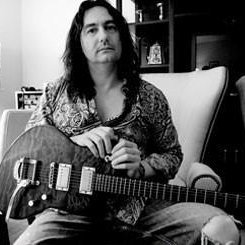
Edward DeGenaro is a fusion guitarist whose unique mix of bebop and metal sounds, along with a whole lot of the DeGenaro personality, collectively called the “Nude Guitars” sound, has been compared to the likes of Scott Henderson, Frank Gambale, and Steve Vai. Ed’s journey in music began in Germany, where he was born and raised. At an early age, he studied cello but quickly picked up the guitar as his instrument of choice for venting his artistic expression. After receiving a degree in Performance and Teaching from the German National Conservatory of Music in Nuremberg, he worked as a “hired gun” guitarist and session player, performing all over Europe before relocating to LA and finally to Seattle, where he currently resides. His contributions, as a musician and an engineer, include numerous projects with major labels, musicians like Elliott Sharp, Steve Kimock, David Byron Band, Accept, Hammerhead, Alcatraz, and producers David Rosenthal (Rainbow, Robert Palmer) and Roy Thomas Baker. Recently, he just finished recording all the audio samples for Jack Zucker’s “Sheets Of Sound Vol II”. He is also working on his soon-to-be-released CD called “Dog House”. In addition to recording, Ed also performs at various venues like the NAMM show and the NYC Fretless Guitar Festival.

As with all fretless guitarists, Ed’s artistic expression and desire to create his own sound took him beyond the fixed frequencies of fretted guitars and into the realm of the unfretted. He is one of the few talented guitarists who can make shredding look effortless on a fretless guitar and make the guitar groove to just about any sonic exploration, encompassing funk, blues, ethnic, jazz, metal and much more. (Thankfully, Ed also kept the metal hairdo, so he really delivers the entire package and more.) It’s difficult for me to encapsulate the essence of Ed’s music in words without resorting to “Nude Guitars” (a name that came naturally to Ed but took me quite a bit of listening and thinking to truly appreciate its meaning) because his artistic expression is indeed limitless and fretless, very much like the nude fingerboards on his guitars. I think one of the most common misconceptions about making music is that people often think music comes from the instrument itself; what most people don’t realize is that instruments only make sounds, not music. This distinction is what separates those who just play and the real musicians who create. For real musicians like Ed, their guitars are indeed nude, as blank canvases are to painters, allowing them to create music that is truly personal and original. Paraphrasing what Michael Vick once said, the real instrument is the musician himself, and one’s will to create is all one really needs to “Play what [one’s] inner ear hears”. So, what is “Nude Guitars”? It is who Ed DeGenaro is; so long as he creates, Ed is the music. Needless to say, Ed is a well-known fixture in the unfretted community, and his music continues to influence others. I thank Ed for taking the time to respond to all of my questions, for giving such a detailed tour of his studio, and for sharing his humor, music experiences, and other interests in this interview. Never have I met a musician who has almost as many pets as the guitars he owns! He is truly one-of-the-kind!

Ed DeGenaro has been a working musician since age 18. His resume includes David Byron Band, Accept, Hammerhead, Alcatraz, producers David Rosenthal (Rainbow, Robert Palmer) and Roy Thomas Baker (Queen, Cars), and work on various feature movies, TV commercials and major labels such as EMI, Atco and Atlantic. As an engineer his resume includes Elliott Sharpe’s last release “Secular Steel”, and the upcoming Henry Kaiser release “156 Strings II”. Currently he is finishing his new CD “Dog House”, available July..

MT: How were you first introduced to music?

ED: In general? By my old man playing violin. Then it was the obligatory diet of Beatles tune…those are my earliest memories of what I listened to.

MT: When and why did you decide to pursue a lifetime relationship with the guitar?

ED: …by my old man’s best buddy bringing over “Electric Ladayland”. That was it; Jimi was what I wanted to be. And then Blackmore, McLaughlin, Schenker, Roth…etc… Once I was hooked it became actually my outlet. You know the typical stuff, I sucked as a jock and got teased a lot so I locked myself in my room and tried to get better as a muso. And these days it functions as my form of therapy anyways… Having a bad day? Let me go into my studio and beat up a guitar.

MT: What was the first guitar that you owned? Do you still have it now?

ED: Acoustic…I don’t even remember that piece of firewood. There was this music store in my hometown that has Les Paul’s and Strat knock-offs made in Japan, my first electric came from there. My dad wired up the auxiliary input on our tube radio (remember this was Germany in the 60s 🙂 to take my guitar cable, and I was rocking it with my Les Paul Gold Top feeling like…well, Les Paul sans Mary Fords. That guitar lasted about 3 weeks until the fingerboard came off the neck, after I brought it to the local repair shop they glued it on, shit was hanging over the edge of the neck. That guitar was a goner fairly soon after that.

MT: Besides the guitar, what other instruments do you play?

ED: Depends on the definition of playing. I dabble in anything stringed, like bass, lap steel, sarod, and oud. But the only thing I PLAY would be guitar. I think there is actually some organ playing of mine on “Dog House” that I haven’t replaced with a better player.

MT: Do you teach music or give master classes? If so, what are some of the topics covered in your classes?

ED: I’ve been approached, and actually am considering it. SO…lets talk about this after I decide to do it. 🙂

MT: After your graduation from the Conservatory, you worked as a “hired gun” guitarist and session player in Europe. What kind of music/gigs did you play during this period?

ED: Back then Rock and Metal stuff. I try to avoid talking about it because that entire period, although fun at the time was pretty much me walking through life in a self induced haze.

MT: Could you share some of your most memorable experiences from this period?

ED: The ones that are memorable are way too embarrassing to share. They are the stuff AA meetings are made of.

MT: You developed the “Nude Guitars” sound, which is a unique fusion of your many talents and music styles. Why is it called “Nude Guitars”?

ED: I thought it was a good name at the time. No deep thought went into it at all.

MT: Which one of your tunes do you consider as the very first song showcasing this “Nude Guitars” sound?

ED: The original version of Hip To Hop comes to mind.

MT: Your impressive resume includes collaborations with David Byron Band, Accept, Hammerhead, Alcatraz, producers David Rosenthal (Rainbow, Robert Palmer) and Roy Thomas Baker (Queen, Cars). What did these collaborations entail?

ED: Mostly work for hire. I did the gig, got paid, and it was all over.

MT: I read that you also worked on movies and TV commercials. What are some of the projects that you worked on?

ED: All B-stuff, T+A Florida beach stuff. Like “Spring Break Forever”, parts 1 through 3443665346536. Commercials: typical stuff like PacBell, Goodyear, just stuff where somebody calls you to come in to lay down some guitars and get a check.

MT: You have also worked with major labels like EMI, Atco, and Atlantic. What was it like working with major labels? In your experience, were they supportive of your artistic expressions, or were they more driven by monetary incentives?

ED: It was entirely driven by money and marketing decisions. It was a great time because we all got to play Rock star and burn through money like it grew on trees. But it all comes to an end.

MT: In recent years, the music industry underwent many major changes. Many accomplished musicians are breaking away from major labels and are releasing albums themselves or starting their own labels. You have many years of experience working with various labels and are a veteran in the music business. For the indie musicians who are caught in the middle of this revolution and are trying to get their music heard, do you have any tips for them on how to survive in the music biz without sacrificing their individuality?

My most important piece of advice that got handed to me…If you don’t think you can make it you won’t….If you don’t believe in what you do nobody else will. The flip side is that just because it has become fairly easy to release a CD doesn’t mean it’s a necessity. Get some friends that will be honest with you and not just back pad you. Pressing a 1000 copies and having 800 sit in your bedroom is a recipe for depression.

MT: On the artist page featured on the website of your current label, Rocket City Records, I read that you are working on a CD tentatively called “Gods and Monstas”. Have you changed the CD name to “Dog House”, which is mentioned on your own website, or is that a separate CD? How did you come up with this name?

ED: Same CD, different name. And it likely will be released on Jeff Berg’s label if for no other reason than its fretless content. The name is pretty much a description of our house.

MT: When can we anticipate the release of this CD?

ED: I expected it to be out in June but since I decided to hand off stuff it will be postponed until the end of the year.

MT: How long have you been working on this CD?

ED: On and off? An awful long time, I think I cut some of the basic drum and bass tracks for it 4 years ago. And subsequently tossed them away. Every once in a while I’d load them in the studio and play over them and go, not what I want it to be. When I finally started working on it again it took about 2 months to finish the stuff.

MT: Between now and the release date, what remains to be done on the CD?

ED: I have to do two more guitar solos, and I’m waiting for one more track from the Orlando Marin the bass player I use back east. As well as two from the kid I just discovered in Germany, a bass player that reminded me of Jaco’s spirit like no one before. His name is Thiago Espiurio Santo and we’re about to hear lots more from him methinks.

MT: You have worked as an engineer on other musicians’ CDs. Does this mean that you are doing everything yourself on this CD, from recording to mixing and mastering?

ED: Oh hell no. I work with guys I trust; usually I use Anton Pukshansky whenever I can. He’s an amazing multi-instrumentalists and engineer. Also on this I have David Torn to mangle my audio and mix it. I’m looking forward to his take on my material. And since I’m really familiar with his own work, I pretty much give him free reign over it.

MT: What does this album mean to you personally?

ED: Hopefully the same it will mean to buyers…I tried to put a bit of everything I do on there, Fusion guitar fretted and fretless, fingerstyle stuff, ethnic stuff…you name it. I wanted it to be a guitar album without it being a guitar album. Hence lots of trumpet as well. 🙂 Guess that’s the Miles influence. Heck, I’m still trying to convince Henry Kaiser to do another “Yo Miles” album so I can be part of it. 🙂

MT: What other projects are you working on now?

ED: I just finished all the audio for an amazing instruction book I’d suggest to anyone that wants to get better as a guitarist. Jack Zucker’s “Sheets Of Sound II”. Jack hired me to play and record all the examples for this. And I’m really pleased with how it turned out, as well as how much it kicked my ass in the learning department. Also just finished a track for “Out”-the Derek Bailey tribute CD that will likely become the opener of “Dog House”. Also I finished the guitar parts for my friend Anton’s project, which is 70s Funk meets my stuff. Then it’s time for a vacation.

MT: How were you introduced to fretless guitars? What was your first fretless guitar?

ED: Well my introduction to fretless guitar was through fretless bass. I wanted to be able to have mmmm-wah sound Jaco has, and the other thing was the equal temperament of the guitar being sharp 14 cents when hitting a third drove me nuts for years. My first fretted guitar was a Vigier, my first fretless bass a Steinberger. I then found out about Ron and Fuze, but that was my knowledge of fretless guys.

MT: How did you find out about unfretted.com (our favorite site for everything unfretted)?

If I remember right, Jeff Berg put a link up to my stuff. I then cruised the site for a bit and was amazed how many more fretless knuckleheads there were.

MT: How would you describe your style of music now? Over the years, how has your music style evolved from your original concept for the “Nude Guitars” sound?

ED: That’s a hard one…it used to be that I wanted the intensity of a Metal rhythm section, but with hip Jazz/Be-Bop lines on top. Over the years it has become more 70s Funk and Rock with me just going off on top. Kinda 70s Miles meets the 80s We Want Miles band approach.

MT: How has the discovery of the fretless guitar impacted your artistic expression?

ED: I like to think so. If anything my fretless approach spilled over to the fretted guitar. There are times when folks are certain it’s fretless when it’s just a regular old guitar.

MT: Do you think your training on the cello, another fretless instrument, facilitated you in making the transition from fretted to fretless guitars? How long did it take for you to master the fretless guitar?

ED: Master? Like Itzhak Perlman on violin or Yo-Yo Ma on cello? I’m a long way from having command over the fretless guitar like those guys have over their instruments but I’m working on it. But I’ll answer it like this…it took me 3 days from start to finish to make my cats stop howling when I started on fretless.

MT: Which one is more difficult to master—playing a cello or a fretless guitar? Why?

ED: Cello, the right hand technique on guitar is cake by comparison.

MT: Do you still play the cello?

ED: Haven’t in decades. Every once in a while I’m thinking of starting again, but it’s more likely I end up getting a double bass instead.

MT: What is the setup inside your studio? Please list all the instruments in your collection.

ED: Seriously? Okay…Amps…some old Marshalls, one that I had used on all my 80s stuff in Germany that I bought back two years ago. Another one modded by Mike Soldano which is one of my fav Marshalls I have ever played. Then a mid 70s 50 watter I’ve been using for a good decade now that came from Lita Ford. Another one of my old amps I really dig is a 64 Bassman I got recently and that thing is a honey. Then there are of course a bunch of THD amps, a UniValve, BiValve, one of the old Plexi models and of course a few Flexi-50 that I pretty much use on everything. It’s my go to amp.

Then some high gain stuff like a Soldano Avenger with SLO power section (amazing for singing solo stuff), a Rivera KH2 (very cool clean especially when you push it into break up). Of course the obligary Dual Recto, and my newest high gainer and one of my fav amps period the VHT Deliverance.

Guitars…I go by the belief that the only thing cooler than a 3000$ guitar I like is a 200$ guitar I like as much. My main guitars are my Vigiers and O’Donnels. I’ve been using Vigier for 7 years now and every one of them is perfect for my needs. A Surfreter fretless (one of the earliest ones), another Surfreter this one with a pretty top and a sustainer. Then the guitar that finally retired my Steinbergers, a Vigier Excalibur with EMGs and a Floyd, this is one of my go to guitars for burner stuff. A Shawn Lane model, which I just had to have because of my friendship with Shawn and his family. Also this guitar has a completely flat board so I can bend strings farther than on a regular guitar without choking the note. I just got a Bumblefoot model 3 weeks ago and haven’t played anything else lately. The coolest simple Rock guitar I’ve come across…ever.

O’Donnell…I met Craig O’Donnell when I played in Melbourne last year and I have not come across any guitar builder more passionate about his craft then him. I use a chambered single cutaway model that is a cross between a really good Les Paul and a PRS. Next he build me a double cutaway that he calls his Fusion model, another guitar that has a completely flat finger board and that guitar together with my Vigier Excalibur is my other go to guitar. Unbelievable instrument. Next up is my O’Donnell Fusion fretless…which is my first fretless with a wood board, and my instrument of choice for clean Jazz lines. It also has this cello quality to the tone I have not heard from a fretless guitar unless you start messing with compression or gain. He’s somebody that will make it very big methinks. He’s also making me a fretted/fretless double neck that I think will be the last instrument I will aquire. 🙂

For more traditional stuff I have a pair of Tylers…a Strat and a Tele when I need a vintage tone. Except those also are total players. More in that direction I have 2 Suhr Strats and 3 Fenders. Then there are a few 80s Rocker guitars, a firewood beat up around the camp fire acoustic.

MT: What else is there?

ED: A Korean Les Paul knock off I have set up for slide, a Taiwanese Tele I like for Mike Stern type stuff. A Taylor T5 hollow body that I used on all the acoustic tracks on “Dog House”. And I think they’re making me a fretless version of it. I still have my Steinbergers (a M and GS model) I used in the 80s and 90s on everything. Then there are a few Patrick Eggle guitars that are my PRS type guitars. A 5 string Fender bass for quick bass takes, a Supro Lap Steel. And boat load of efx. Some mic pre’s and my fave recording software Sequoia, and I think that about covers it.

MT: What are some of your musical influences and favorite musicians?

ED: The earliest was of course Jimi. Then the usual Rock guys like Blackmore, Angus Young, Jeff Beck, etc.… The turning point for me was Ray Gomez. He was the one that send me back to the drawing board, one of the most overlooked artists of the last 30 years. And a dear friend. The next guy that had that kinda impact on me was Don Mock whom I studied with a decade ago when I moved to Seattle. There is nothing Don cannot play. Other influences… Jaco Pastorius, Miles Davis, Billy Cobham, Stephane Grapelli, and of course Allan Holdsworth.

Fav musos…Shawn Lane (another one that didn’t reach the success deserved while he was alive), Brett Garsed, Thiago Espirito Santos, Chris Nix (who virtually nobody knows but that guy has tone and ability for days), Ron Thal who has an amazing sense of humor and it comes through in his playing, Craig Erickson who has a Jimi type approach with Shawn like chops, Jason Macedo who can outshred just about anyone but doesn’t sound anything like your regular shredder, he’s very much his own man, Dave Torn for doing things nobody else even thought of, and Matte Henderson for kicking my ass with humanly impossible lines. Also two years ago I met the guys that are out on the road with Bette Midler, and it turns out the one guy Mike Miller is the cat that played on “Outside Man-Band Overboard”, one of my fave CDs. Another guy who also plays fretless occasionally is Paul Shigihara, who is a session guy in Germany and is currently on the road with Zawinul.

MT: What is your favorite guitar solo?

ED: That would have to be a Holdsworth solo, which one…you pick. Or on second though Jeff Beck’s version of A Day In The Life. Him and Kimock are the two guys that overcome the out-of tuneness of a fretted guitar.

MT: I noticed that you are performing in Austin, TX at the 2006 Summer NAMM show and at the Knitting Factory at the end of September during the Fretless Guitar Festival. For shows like these, do you have a permanent band that you perform with, or do these venues usually provide you with the supporting musicians?

ED: Up to about 15 month ago I used the same band for everything. But this was mostly a set of tunes where everybody needed to know certain parts. As I went into a more improvised direction, some may call it the Jam Band approach I started to hire guys appropriate for the gig. I have guys I use for local stuff, the drummer Fritz Wolf has been playing with me for a decade. However the rest of my local band was never on par with the guys I worked with out of town, which changed with the new guys…young players that are passionate and can burn.

Anyways, for the Knitting Factory stuff I use guys from NYC that are absolute monsters. Actually the bassist Orlando Marin and the trumpet player Satish are on “Dog House” as well. The Texas gigs will be with Craig Erickson and the bass player will be Trip Wamsley, who does a lot of Cajun gigs and tons of solo bassist gigs. We haven’t decided on a drummer just yet. The fun part about these gigs is that we don’t send material around and everybody learns their parts. We go up and start, and usually we won’t train wreck it. It worked out really well in New York last year, as well as when I played with Shawn Lane’s Powers Of Ten band in Memphis.

MT: Before you step on stage in front of live audiences, do you still get nervous or have you gotten used to performing live?

ED: I still get nervous, but it’s over after I play the first note. It gets worse on high profile stuff. Things at trade shows with cats like Verheyen and Holdsworth there. Funnily enough I don’t get this when I record, that’s kinda like second nature to me.

MT: What inspires you to make music?

ED: As I said before, it’s therapy. I need it as an outlet. It’s the addict personality thing. I have to pretty much channel my obsession into something.

MT: Of all the achievements, what are you most proud of?

ED: Absolutely, when guys that influenced me get in turn influenced by me. For example, Ray Gomez came to see me at the last Fretless Festival and walked away interested in fretless guitar. Also last year I hung with Steve Kimock and did a gig with the Steve Kimock band where I sat in with them for like 45 minutes and as a result he now regularly pulls out a fretless for one gig.

MT: What would you like to convey or communicate to the listener through your music?

That varies from tune to tune. If I had to compress it into a global one liner: Play what your inner ear hears…regardless of what self proclaimed critics think.

MT: What do you enjoy doing when you are not making music?

ED: I don’t know whether I say enjoy…but what I do with my remaining time is animal rescue.

MT: You were born and raised in Germany, but you currently live in Seattle. What brought you to the US years ago?

ED: The mistaken impression that I could be easily a big fish in a big pond LOL!

MT: In your experience, how is the German music scene different from the US music scene?

ED: Absolutely, but remember I have really no point of reference to Germany now but rather 20 years ago. Back then you could make 2 grand a night in clubs in Germany. When I moved to LA in the heyday of 80s poodle hair, and pay to play we made about 1500 a night when we sold out places like the Roxy, Gazarri’s or the Troubadour. Then moving to Seattle you’re looking doing 500 a night with Top 40.

MT: What do you miss most about living in Germany?

ED: What I miss is that when somebody tells you we’ll do lunch they’re there the next day, and it doesn’t mean sod off.

MT: Seattle is known as the coffee capital of the US, if not of the world. Do you have a favorite café that you go to regularly for coffee?

ED: Yes, my studio. I have a fave coffee stand where I grab my Quad Venti White Choc Mocca before I start working.

MT: Don’t you find the weather (the constant drizzle) in Seattle gloomy and depressing?

ED: Heck, that’s why I moved from Germany to LA 20 years ago. I hate rain. That said I won’t be here for the rest of my life that’s for sure.

MT: Germany is famous for their sausages. What is your favorite kind of bratwurst? And what kind of beer would you like to have with that?

ED: Funnily enough my preference is Beef Panang or Chicken Vindaloo. Beer…sadly enough, and my German passport will likely be revoked for this statement…Guinness. But usually I prefer Red Bull+Grey Goose.

MT: In the photo gallery on your website (very cool photos by the way), you have this one photo of you holding a guitar with what looks like 3 squirrels. What was that about?! Are those your band-mates?

ED: 4 Squirrels actually, my wife used to work at the zoo and their mom got poisoned, so they all fell out of a 20-foot tree when they got hungry. She brought them home. We lost 3 but one made it, and we had her live in the house for a while and then released her in the yard, where she actually had a grand old time.

MT: Like Michael Vick, you also have long hair. How long have you had long hair?

ED: About 25 years, but about every 8 years I cut it all off just to come to the conclusion that I don’t like to look at myself with short hair.

MT: Do you use duck-butter too?

ED: Only when doing Vick’s hair. 🙂

MT: How many tattoos do you have? What are they? Will you get more tattoos in the future?

ED: 3: a Hammerhead shark, a weird mystical thing, and a rat on skull. Of course I’ll get more. But I rarely have the time to sit around for a few hours.

MT: How many pets do you have? What are they and their names?

ED: Let’s see…a 350 pound pig named Lucy; two sugar gliders named Lily and Iris; cats…Spider, Stevie Ray, Jengo, Alphonse, Schmieg, Heidelberg, Francis; Dogs…Pastorius (blind Aussie shepherd), Frankie, Eve and Polli (American Eskies), Natsha and Desi (Papillions), Nina (Toy Fox Terrier), Betty and Holly (Pomeranians), Annabelle; Chicken…Gabe, Raphael, Jake, Pogo, Loui, Jericho, Ms. Wilson, Goldie, Bella, Thumper.

MT: Do you have names for your guitars? If so, what are the names?

ED: Only one…Betty, the fretless O’Donnell.

MT: How tall are you?

ED: 6’6

MT: Okay, one last question just for fun: What’s the vice in being 18 or looking like one?

ED: None, unless you’re in Wales and Jeff Berg is nearby.

MT: Haha….Isn’t Jeff always nearby? “Proximity of Wales”!

Latest album

Latest NEWS

SUBSCRIBE

Please Subscribe your mail to get notification from AbstractLogix.


Facebook-f


Twitter


Instagram


Youtube

Copyright © 2021 ABSTRACT LOGIX

Facebook-f


Twitter


Instagram


Youtube

Copyright © 2021 ABSTRACT LOGIX
Michael ATONAL Vick aka VVV

September 6, 2006
Michael ATONAL Vick aka VVV, News
Michael ATONAL Vick aka VVV

Buy

Itunes-note


Amazon


Bandcamp

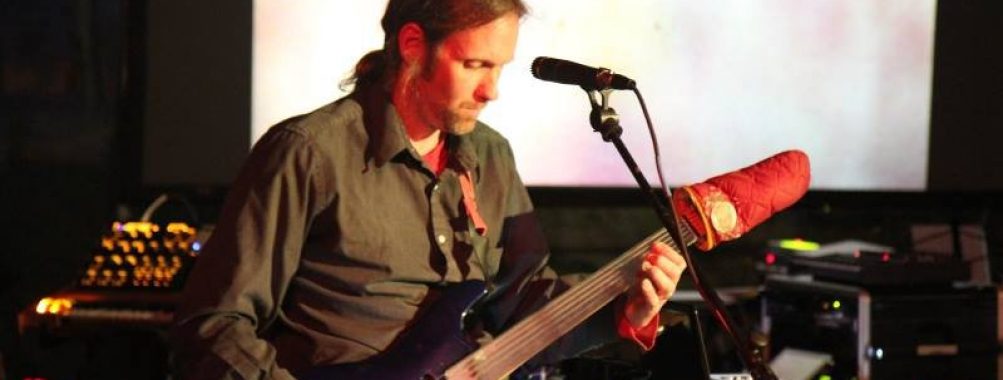
Michael Lloyd Vick, aka Michael ATONAL Vick, is an artist, a multi-instrumentalist, a promoter, a music instructor, and, as Guitar Player magazine dubbed him recently, the Ringleader behind the Fretless Guitar Festival. In Asian circles, he is also known as VVV, often with Free-Bananas. He is an accomplished musician on both fretless and fretted guitar and bass, among many instruments in his music arsenal. Although his music education began with the classics on the piano, he quickly discovered and pursued his passion for the guitar, and the rest is history in the making. Some of his major music projects include the Michael Vick Trip band and the WIT’S END group. The last time I checked online, he has 7 albums available for purchase on CD Baby, and that doesn’t even include his numerous contributions to other artists and projects, of which, most notably, is the release of the 2-CD compilation album called “Village of the Unfretted”, featuring music from 35 of the world’s most prominent fretless guitarists. In addition to recording music, Michael also gives master classes, performs at charity events and various live gigs, such as Bass Fight, is an activist for stem cell research, and is heavily involved in the promotion and organization of the annual NYC Fretless Guitar Festival. Along with Jeff Berg of unfretted.com and other talented musicians, Michael has been instrumental in pushing the fretless community into the limelight.

Although one can easily spend a long time listing all of Michael’s accomplishments, it’s much harder to describe Michael and his music in conventional terms because he is ATONAL! He is the kind of musician who will unfret just about anything and everything in his experimentations with sounds, and, in doing so, he creates music that transcends boundaries of traditional genres. For him, it’s not enough just to play music; what’s more important is to create. Technically, I think Michael has the aptitude to outplay many indie musicians and make tons of dough from it, but in my opinion, he chose the more solitary path because a true musician never compromises his creativity and individuality, and, in the end, that’s the most important thing one can have. For the average Joe out there, experimental music will probably never gain the same status as the more generic and easily digestible songs that often populate the charts, but then again, Michael is anything BUT generic. Listening to Michael’s music is a liberating aural experience because his music challenges your ears to hear beyond what is conventional. (Yes, this experience can be both exciting and dangerous.) To me, Michael embodies the spirit of a true indie musician, the one that is always free and unfretted! I thank Michael for his generosity, creativity, atonal music and sense of humor, and for taking the time to give this extensive interview, which has been both educational and fun for me.

MT: Michael ATONAL Vick = VVV + Free-Bananas. I came across this equation on your website. Would you please explain this equation to me? I think I am at my WIT’S END. 🙂

VVV: I am Michael ATONAL Vick. Who is also VVV (in Asia), and together one is bound to get Free Bananas LIVE with Lucky The Spirited-Dragon. Keep in mind that this is clue #4.442c. I originally started giving out Free-Bananas with WIT’S END in 1995 after the retiring of a friend who used to wear a fish mask on his head with his body draped in a long robe while wearing a shit head hat and holding a pitchfork in his hand dancing next to me in The Michael Vick Trip. At times, he would even have smoke coming out the eyes of the mask due to the fact that he had smoke something while doing that. Yeah, I definitely have a lot of names, but far too often it seems that WIT’S END will suffice.

MT: When and how did your passion for the guitar begin?

VVV: I was fairly young and heard groups like Boston and AC/DC plus I got to hear Joan Baez and Neil Diamond through my parents. I must also add that my passion in truth is uniquely growing like the beginning, and that is what is so lovely about learning music. The tone of the Guitar has always had a special touch with me too.

MT: What was the first guitar you played? Do you still have it now?

VVV: It was a blue Yamaha electric, obviously with frets. No but my Mom wishes I did…..

MT: For the non-musicians, what exactly is atonal?

VVV: Atonal music basically has no specific key and tends to have a very Chromatic sense with irregular rhythms. This School of Music was pioneered by Arnold Schoenburg and his 12 Tone Serial Technique or Dodecaphony.

MT: You studied classical guitar and performed with symphony orchestras, but when and why did you decide to become ATONAL?

VVV: Well, I am not perfectly Atonal. Now that is an oxymoron if I’ve ever heard one. I don’t specifically play everything in a strict Atonal style, and what is even funnier is that my heart leans more towards microtonal sonic explorations. Although, I do often play heavily Atonal sets, and that began around 1999 with my CD “Floating On A Time-Scale In Between”. I initially got into Atonal Music because I was in need of new sonic avenues, and I must add that most of my musical explorations are very intuitive, even my original Atonal leanings.

MT: What are some of your musical influences and favorite musicians?

VVV: Wow, how much time do we have? I will first say that I enjoy all styles with highlights from Indian (North and South), Classical (Any), Jazz (Any), Progressive Metal Electronica Fusions, Musique Concrete etc., and for Artists (last names only) Zappa, Partch, Davis, Hendrix, McLaughlin, Velez , Pastorius, Rhoads, Kottke, Gould, DeLucia, Jordan, Roland-Kirk, Debussy, Segovia, Christian, Theremin, Vitous, Coltrane, Hussain, Grappelli, Paganini, Hedges, Williams, Menhuin, Hellborg, Van Halen, Corea, Breau, Bach, Manring, Wonder, Shankar, Holland, Laswell, Zorn, Grisman, Dolphy, Cobham, Varese, Heifitz, Gaye, Pass, Schoenberg, Stravinsky, Gurtu, Glennie, Fripp and Crimson……………….for ex.

MT: In your 2004 interview for guitar9.com, you described your music gear as:

VVV: “I play many different, yet similar, instruments to achieve my sound. May I start with the one and only Tele C, Old #8 to you; a Fender Fretless Telecaster, an Ibanez Fretless Bass, Alvarez/Yari Classical, Ibanez Electric, Guild Acoustic, Fender P-Bass, Cordoba Classical, Orphariontar with deep Scalloped Frets, 12 String Rogue Acoustic, Santa Rosa Mandolin, Lauren Fretless Baritone Ukulele, Ovation Acoustic with Floating Tremolo System from the inventor Mr. Dave Story, Lauren Short-Scale Fretless Classical, Dixen Ukulele, various Flutes/Nose-Flutes, Clarinets, Recorders, Tablas, Dumbeks, Casio Keys, Xylophone, Various Sonic-Toys, TKO Drum Kit, Butter Knives, Spoons, Hair Ties, 2 Boss RC-20 Loop Stations, Boss Stereo Chorus, Boss Super-Shifter, Boss Turbo-Overdrive, Dunlop Cry Baby Wah Wah, Lexicon LXP-5, Fender TWIN, SWR Workingman’s Combo 15, Peavy TKO-65, Peavy XM4 PA, Metal Slide, Dunlop H3 Picks, Shure Mics, BEHR Condensers, Tascam US-122 USB Audio/Midi Interface, Sonic Foundry’s Sound Forge / CD Architect / Vegas and Steinberg Cubase.”

MT: Wow! How many roadies do you have?!

VVV: Depending on the performance, it can be anywhere from 2 to 8. I personally say the more the merrier, but I typically assign specific duties to keep it all organized and secured which means that certain people in the “crew” only watch the various posts around the venue.

MT: How did you learn to play all these instruments?

VVV: Many of these instruments use similar techniques to play but have blatantly different feels and outcome of tones. Please keep in mind that I can play more instruments than I own, but I still need to practice to keep up all of the various “chops”.

MT: Since that interview, have you added more instruments to your collection?

VVV: Yes, I recently acquired the Godin Glissentar which is an 11 string fretless acoustic/electric guitar based off the Arabic oud and 12 Tone guitar minus the frets (TRUE). I have also created some homemade instruments that are prototypes, and I cannot speak about them in detail currently.

MT: Which fretless guitar would you recommend to a beginner fretless guitarist?

VVV: Well, I tend to say unfret an inexpensive guitar and see if you like the tone and feel. Try www.unfretted.com for strict details. Although, this type of initial guitar won’t play anywhere near an Electric Vigier or Acoustic Godin. It will help one to realize how different exact Intonation is from a fretted guitar.

MT: If you could take only one instrument with you to a deserted island, which one would you choose? Why?

VVV: I am the instrument; so maybe a young lady of my liking too. (implied)

MT: You are known to unfret and modify various instruments to get the sound that you are looking for. Which instrument did you first unfret? How did you learn to unfret instruments?

VVV: I initially removed the frets from my Fender TeleCaster (Korean) named “Tele-C”, and it was and still is to some degree, very hard to play. The strings were so “High” off of the neck that at one point you could fit a small finger under them, but that “TeleCaster” tone still cuts right through no matter. I used common sense and asked Mike Poirier, a guitar tech friend, a few questions after starting the process. I love to experiment and create; so destroying a guitar by removing the frets certainly fits that criteria.

MT: Unfretting an instrument is obviously more complicated than just the physical removal of the frets. Could you briefly describe some of the key considerations involved in unfretting an instrument?

VVV:
1. Don’t use an expensive guitar.
2. Take your time.
3. Be careful not to damage the neck when removing the frets.
4. One might need to heat the frets up with a soldering gun (or similar) to unglue the frets.
5. One can use a slow dry epoxy (or similar) to fix unwanted gaps in the neck if they occur or refinish the whole neck.
6. Fill the slots from where the frets lived with a slow dry epoxy (or similar) because the neck could very possibly bow in especially after one puts strings on.
7. If one decides to smooth the neck thoroughly use atleast 2 grades of sandpaper light and thick.
8. For strings use heavier gauge flatwounds and tune down at least a Whole Step to keep the neck from possibly bowing in, and this will help the guitar keep its tuning better too.(Some professionally made fretless guitars can handle roundwounds, but they can be a nightmare for a home modified fretless guitar by chewing through the board.)
9. Remember that one can remove the whole fingerboard. That is frets and all, then replace it with glass, metal, carbon fiber or some similar plastics etc. A fully metal or carbon fiber fretless guitar would be beautiful with the fully emphasis on the “beauty”. Check out www.unfretted.com for even more detailed accounts and ideas.

MT: You are a big proponent for fretless guitars and basses. One of my favorite quotes by you regarding playing a fretless guitar is: “Playing FretLess Guitar is like having Sex without a Condom. It is more Dangerous and just Feels better.” Okay, I understand the “feels better” part, but in what way is it also “dangerous”?

VVV: Keeping your Intonation and holding resonating chords or even single strings can be very dangerous for ears only associated with the 12 Tone Equal Temperament System, and sex can sometimes be dangerous for, well…………….

MT: Does the fretless guitar have any limitations whatsoever? Of course, much of it depends on the skill of the player, but does the fretless instrument have any intrinsic limitations in terms of sounds that are otherwise obtainable with a fretted one?

VVV: Any limitations in the end would come from the individual, but I must also point out that certain simpler techniques on a fretted guitar can become extremely hard on its fretless counterpart. Again, any sort of limit would occur from the player, but there are very unique differences in tone and feel that each player must recognize on theirs own. Most of these are very, very obvious too; so hopefully it doesn’t live as a “final” limit to their perception of the instrument but as more of an opportunity for sounds.

MT: Do you play fretted instruments anymore? If so, under what circumstances would you pick up a fretted instrument?

VVV: Yes, I do on occasion, for example, at an informal jam, teaching lessons, BASS FIGHT and $$. I play a lot of instruments, and I don’t like to discriminate against any instrument, even the u-um “Computer turbo-turntable, Yo!!!”. It is really not that farfetched to catch me playing a piece of zinc or a razor………anything. I am also very interested in Quartertone and Multi-Fretted Guitars like the 62 or 19 Tone Guitars Jon Catler and Neil Haverstick use, respectfully.

MT: In addition to being an accomplished musician, you also give master classes. Among the various topics and techniques covered in your classes is micro tuning. What exactly is micro tuning?

VVV: Well, it is more typically referred to as Microtonal Tunings based on the Harmonic Series. Here one can create their own Just Intonation Tunings, as well as any of the various Equal Temperament Tunings like the ever popular 12 Tone Equal Temperament System i.e.. 12-TET. While I am a Student/Teacher of Microtonal Music, many of the advanced and excellent Microtonal Players/Composers/Groups that I have really enjoyed are Harry Partch, the Catler Bros., La Monte Young, Dan Stearns, Neil Haverstick, Birdhouse and acoustic guitarist Rod Poole. There are obviously more, yet all of these mentioned present a wide range with lots of fretless guitars and some with more frets than any sane player would want on a neck, bent and all. It is great to hear a world of sounds beyond the 12-TET, even Acoustically.

MT: Besides taking lessons from you, what kind of advice would you offer to an aspiring musician making the transition from a fretted to a fretless guitar?

VVV: Be patient and remember, “perfect practice makes permanent” and always strive to be unique through the knowledge of your Soul.

MT: How would you describe your style of music? What do you hope the listener will get out of your music?

VVV: World-Experimental featuring Fretless Guitars and Basses with Structured-ImproviZations in Acoustic and Electric atmospheres rich in a melding of original and fundamental Traditions with a Futuristic and comprehensive approach to all Sonics. High and Happiness with a richer vocabulary of sounds to hear and enjoy!

MT: What inspires you to make music?

VVV: Life and sound experiences with the idea to create something unique and possessing feel and technique balanced in any Key or Tuning.

MT: At age 18, you formed the Michael Vick Trip band. In 1995, you formed the WIT’S END group with Patric Kelly and James Webb. How are these groups different in terms of their artistic expressions and explorations?

VVV: The “original” Michael Vick Trip had an experimental blues/rock sound with more vocal tunes and a few covers too. I also had the fine Charleston, SC Bassist Kevin Hamilton playing with me no matter what Drummer including Geoff Cormier on tunes like “For Thou Art The Golden-Roman……Go Away!!!!” and “The Voyage”. WIT’S END (W.E.) was initially created with me and Patrik William Kelly in Atlanta, Ga as a heavy Duo group that at times was felt as a direct assault with Jazzy intentions. Soon after, James Webb joined in on Bass, Percussion and Vox, and WE’s sound developed with Vocal tracks like “2-Fisted-Samba” and “Blood-Less-Sores”. WIT’S END as a trio focused on more long form rehearsed and improvised song structures with more than a few 20+ instrumentals like “3-rd-Ven” and “Mirrored with Red-Linen”. WE also had long percussion work outs like “Albe-Nocture”, and WE loved to hit electro-acoustic tones with layered Flutes, Vox and Percussion delays like “Bill Or Change” and “Religious-Imposters”.

MT: In your opinion, what does it take to be a good musician? Is it all in the techniques or do you think there are certain things that one just can’t learn?

VVV: A good musician can have variety of attributes, and typically all standouts have an excellent feel and the technique to communicate it. To say that one cannot learn something would be very foolish to believe, and I do appreciate that each individual animal etc. can express various different feelings via sounds. Most issues with learning music come from not having enough time to practice or becoming mentally defeated in worst case scenarios. Learning an instrument can be a very intense experience, and one should enjoy what they create to some degree. Why do people play “covers”?

MT: If you could jam with any musician in the world, who would it be?

VVV: My band of clones ie. The MVC’s or currently Percussionist Evelyn Glennie and passed, Tony Williams.

MT: Of the music samples that I heard so far, I have yet to hear you sing. (Of course, I haven’t listened to your entire repertoire, so this question may just reflect my complete ignorance.) Are you working on any vocal tunes?

VVV: I have used singing from the beginning, and most of my CDs for sale are about 15-25% Vocal tunes. Although, I don’t typically use the Voice in a “poppy” sense either. My current project “UnFret My Heart w/ Free-Bananas” is about 40% Vocal Tunes, but in a style similar to singing Melodies with Spoken-Word dialogue. For some on-line stuff, I have a few vocal tracks at www.myspace.com/themichaelvicktrip

MT: What are some of the projects that you are working on now?

VVV: I am finishing up a new all acoustic/electric fretless guitar and bass CD “UnFret My Heart”. This recording will feature a smorgasbord of FretLess / UnFretted Guitars, and it will also feature a few contributions from Neil Haverstick and Dan Stearns for good measure. I am also about to release the Live BASS FIGHT CD / DVD www.BassFight.US, and a Re-Mastered version of WIT’S END: Interjections Part 2. Recently I improvised a Solo for a CD / Web Tribute to Derek Bailey from 3 Pups Music with www.kronosonic.com. Also, please check out www.artistforcharity.com for a track that I contributed a fretless guitar solo on my Glass-Neck “V5”, CD / Web. I am also currently organizing this year’s New York Fretless Guitar Festival, which will have performances and Workshops from many of the top players in field.

MT: When you compose music, do you have a vision of the finished work before you experiment with different sounds or do you improvise as you experiment?

VVV: Well, that can vary tremendously, but everything you mentioned can be true, as well as; some Composing secrets I cannot reveal at this time.

MT: In 2004, you were asked about your goals for the next 5-10 years. Your response was:

VVV: “Aside from being older, and I say, wiser, maybe doing many small to mid European and U.S. tours, with up-to-date CD/DVD web distribution, or whatever the modern format will be. I would also say completing my newest instrument designs and doing some endorsing and worldwide clinics. Hell, maybe meet the girl of my… Well, if I haven’t by the time you post this interview. Huuummm? Oh yeah, have some kids you know, and more money (mainly for music). I’ll be continuing to unfret any fretted instruments that wind up in my way. And build upon new tunings and sonics never felt possible. Currently, my 36 tone system is coming along nicely.”

MT: I know that it’s less than 2 years since you gave this response, but have you achieved some of these goals already? Do you have any new ambitions or goals to add to this list?

VVV: Yes, I have, to varying degrees, and many of them are extensions of others currently developing. My main goal is to continue extending my knowledge and have the patience to communicate my sounds into the future. I still would like to make some $$ doing this too!!!!!!

MT: What is the 36 tone system?

VVV: This is a sound system consisting of 36 Tones / Notes, and I have variations on how the notes are achieved. For example, I created a box like instrument / structure with strings stretched across various sized sound-holes top and bottom, and in between that there is a movable metal bar to change the pitches. This is prototype idea based off of Tradition with ears towards the Future, and this system is very broad in the tones one can explore if they are willing to take chances.

MT: You are the director of the annual NYC Fretless Guitar Festival. How do people register or buy tickets to this event?

VVV: One can purchase tickets for the Festival from the Knitting Factory on-line at www.knittingfactory.com and at the venue the day of the Event. One can also check for updates at www.fretlessguitarfestival.com , www.atonal-hole.com & www.unfretted.com for updates.

MT: According to the article Fretless Wonders, published in the December 2005 issue of the Guitar Player magazine, you were dubbed the Ringleader behind the NYC Fretless Guitar Festival, which also served as a party to celebrate the release the 2-CD compilation album “Village of the Unfretted”. Could you briefly tell us what it took for you to get the album and the festival off the ground?

VVV: Yeah, the CD Village Of The Unfretted would never have gotten off of the ground without Jeff Jahloon Berg as the Producer, www.unfretted.com, and then you have the 35 Artists from 16 Countries. Remember that these are many of the top Fretless Guitarists in the World today. Then the other key figures were yours truly (Promotions), Emre Meydan (Artwork) and Tim Mirth (Mastering). As for the NYC Fretless Guitar Festival and CD Release 2005, that was created to celebrate the diversity of the instrument and introduce the CD Village Of The Unfretted too the World. So basically, what it took for both projects was the focus of many individuals working together for a similar purpose. There were also a lot of behind the scenes and in front of the scene groups who helped including the 2 main Sponsors Godin Guitars and Vigier Guitars. Oh yeah, special thanks to Eddie DeGenaro and Eric Rhodes for the Free-Bananas!

MT: How does it feel to read about yourself and your achievements in magazines like Guitar Player?

VVV: I am glad that everything is having an impact because many of these concepts have been around for awhile, and often they have been misunderstood or overlooked. By the way, Barry Cleveland was the one at Guitar Player mag who took a chance on the Fretless Guitar, and it makes sense because he is an experimental player himself. I must also mention that various French Guitar mags covered the CD and Festival, and a few other US mags are coming along the way too.

MT: In the unfretted world, you are quite a celebrity. Has all of this publicity changed your life at all?

VVV: Yes, some but nothing a little sleep won’t cure.

MT: How is the preparation for the 2006 NYC Fretless Guitar Festival coming along so far?

VVV: Nicely, I have the tentative Dates for either late September or early October, and this years Festival will still be at the Knitting Factory. We will also have Fretless Guitar WorkShops and MasterClasses this year, along with the Performances, and every Event will take place at the Knitting Factory. This includes the WorkShops/MasterClasses starting early in the afternoon on Saturday. Just a quick hint on some of the players who might perform this year: Fuze, Bumblefoot, E#, Evett, Vagh, Vigroux, McGill, Powell, DeGenaro, VVV and Zjaca, and we will possibly have 2 of main the Microtonal Guitarists on the scene today, Jon Catler and Neil Haverstick. The line up will be determined after the final Date is set, but as of right now, all of the players mentioned are very interested in performing this year. We are striving for the NYC Fretless Fest to not just be the most “original” Fretless Guitar Festival in the World, but also to be the most “original” Guitar Festival in the World today. I understand that this is a bold statement, and it is meant to be. While the Guitar of the today many times comes off as a novelty/cliché Instrument. This Festival continues to establish the Guitar (fretless or fretted) as an innovative Instrument with many new roads to cover.

MT: You are also a proponent for stem cell research. Does this cause have any personal significance for you?

VVV: Yes it does and in a very proactive way. I feel that Humans are at a point where “real” differences can be made. This is not to say that times before ours did not have this burning need, but acting like a complete “reality” fool for whatever Profession isn’t the best way to go after it $$$$. If the United States Government cannot allow “Professionals” to work at the highest levels of the Sciences for human cures via Stem Cells; then we as citizens must educate ourselves on more than the “spiritual after-life consequences” of Stem Cell Research. As you can tell, I am Pro Stem Cell Research because it can Help Save Lives.

MT: What do you enjoy doing when you are not busy making music, teaching, and promoting?

VVV: I like to play competitive sports and investigate Nature. I also train “Darble Plunder’s: Parachuting Cat Troupe”.

MT: How long have you had long hair?

VVV: Since 1992, although; I did shave my head in 1997.

MT: Do you have any tips for keeping the tangles out of long hair?

VVV: Duck-Butter

MT: In many of the photos, I see you performing barefoot. Why is that?

VVV: I typically use my toes to run the floor mixers, but I did just get some grounded floor socks.

MT: You are/were based in North Carolina. What is your favorite Southern comfort food?

VVV: Well, I am a bit more South currently; so that should help because it is more on the “Southern” side. For my style, I prefer anything made with Love by someone else in a “home” style setting with porches etc…….

MT: What is your favorite movie?

VVV: “Desperate Living” by John Waters. I don’t really watch a lot of movies, but “Desperate Living” is so funny and Dirty plus gross (Sorry Charmin). I must also add these cult classics “2-Shots to Memphis: A Romantic Comedy About When The Gay Life Goes Urban” starring Cheech Marin and David Lee Roth and “Lou Ferrigno As The Big Fudgey”. Both of these are from circa mid 80’s.

MT: Thank you very much for the interview, Michael!

VVV: Thank you for the long InterView and until next time, remember that Love must first come from within…….This is my Peace for a shredded World, Universe not included.

Latest album

Latest NEWS

SUBSCRIBE

Please Subscribe your mail to get notification from AbstractLogix.


Facebook-f


Twitter


Instagram


Youtube

Copyright © 2021 ABSTRACT LOGIX

Facebook-f


Twitter


Instagram


Youtube

Copyright © 2021 ABSTRACT LOGIX

Recent Posts

  • GLOBAL FUSION PIONEERS SHAKTI NOMINATED FOR TWO 2026 GRAMMY™ AWARDS
  • Shakti – ‘Mind Explosion’
  • ‘THIS MOMENT’ AWARDED WITH GRAMMY
  • GRAMMY™ NOMINEE FOR BEST GLOBAL MUSIC ALBUM – SHAKTI’S ‘THIS MOMENT’
  • GLOBAL FUSION ALCHEMISTS SHAKTI ANNOUNCE NORTH AMERICAN TOUR

Recent Comments

  • irontemplates on Guns and Plants: Stardust
  • irontemplates on Carla & Bones: Trailblazers
  • irontemplates on Mantis: Glam Porn (Vinyl)
  • irontemplates on Love Elexir
  • irontemplates on Sweater The Rise

Archives

  • November 2025
  • June 2025
  • May 2024
  • December 2023
  • February 2023
  • May 2022
  • February 2022
  • June 2021
  • May 2021
  • April 2021
  • March 2021
  • February 2021
  • January 2021
  • July 2019
  • May 2019
  • February 2019
  • September 2018
  • August 2018
  • July 2018
  • February 2018
  • January 2018
  • November 2017
  • October 2017
  • September 2017
  • July 2017
  • November 2016
  • August 2015
  • May 2015
  • January 2015
  • November 2014
  • October 2014
  • August 2014
  • June 2014
  • February 2014
  • July 2013
  • May 2013
  • April 2013
  • February 2013
  • December 2012
  • September 2012
  • July 2012
  • June 2012
  • March 2012
  • May 2010
  • April 2010
  • December 2009
  • October 2009
  • August 2009
  • July 2009
  • May 2009
  • December 2008
  • November 2008
  • October 2008
  • August 2008
  • April 2008
  • February 2008
  • November 2007
  • October 2007
  • September 2007
  • April 2007
  • March 2007
  • February 2007
  • January 2007
  • December 2006
  • October 2006
  • September 2006
  • July 2006
  • June 2006
  • May 2006
  • April 2006
  • March 2006
  • February 2006
  • January 2006
  • October 2005
  • September 2005
  • August 2005
  • June 2005
  • May 2005
  • March 2005
  • January 2005
  • December 2004
  • September 2004
  • August 2004
  • July 2004
  • June 2004
  • May 2004
  • April 2004
  • March 2004
  • January 2004
  • December 2003
  • November 2003
  • September 2003
  • July 2003
  • June 2003
  • May 2003
  • April 2003
  • February 2003
  • January 2003
  • November 2002
  • October 2002
  • June 2002

Categories

  • Abstract Logix
  • Adam Nitti
  • Alex Machacek
  • Alex Skolnick
  • Allan Holdsworth
  • Andrea Marchesini
  • Anil Prasad
  • Avi Bortnick
  • Barry Cleveland
  • Barry Richman
  • Bela Fleck
  • Ben Monder
  • Bill Bruford
  • Bill Connors
  • Brett Garsed
  • Bunny Brunel
  • Chad Wackerman
  • Chris Beckers
  • Chris Poland
  • Chris Taylor
  • Chuba Aomori
  • Cindy Blackman
  • Colin D'Cruz
  • David ‘Fuze’ Fiuczynski
  • Debashish Bhattacharya
  • Dennis Chambers
  • Dewa Budjana
  • Dominic Miller
  • Dominique di Piazza
  • Ed DeGenaro
  • Ehsaan Noorani
  • Featured
  • Featured – John
  • Frank Gambale
  • Fresh News
  • Garaj Mahal
  • Gary Husband
  • Gary Wills
  • General
  • George Brooks
  • Gerald Gradwohl
  • Gergo Borlai
  • GIRLS DON’T LIKE REAL JAZZ
  • Gregg Bendian
  • Hadrien Feraud
  • Henry Kaiser
  • Hiromi
  • Hugh Ferguson
  • Ian Patterson
  • Jack DeJohnette
  • Jahloon
  • Jeff Babko
  • Jeff Berlin
  • Jeff Coffin
  • Jeff Richman
  • Jeff Sipe
  • Jennifer Batten
  • Jimmy Haslip
  • Jimmy Herring
  • John Czajkowski
  • John McLaughlin
  • John Molo
  • Jonas Hellborg
  • Keith Carlock
  • Ken Talve
  • Kevin Scott
  • Kirk Covington
  • Mandolin U. Shrinivas
  • Marc Rossi
  • Mark Egan
  • Mark Mondesir
  • Matthew Garrison
  • Mattias IA Eklundh
  • Michael ATONAL Vick aka VVV
  • Michael Landau
  • Mike Seal
  • Mitchel Forman
  • Nat Janoff
  • News
  • Ney Mello
  • Nguyen Le
  • Nima Rezai
  • Ohm
  • Oz Noy
  • Ozone Squeeze
  • Pandit Debashish Bhattacharya
  • Pat Martino
  • Paul Hanson
  • Percy Jones
  • Peter Fernandes
  • Prasanna
  • Rai Thistlethwayte
  • Rakalam Bob Moses
  • Ranjit Barot
  • Ray Gomez
  • Rez Abbasi
  • Richard Hallebeek
  • Rob Levit
  • Scott Henderson
  • Shakti
  • Shane Theriot
  • Shankar and Gingger
  • Shankar Mahadevan
  • Shawn Lane
  • Souvik Dutta
  • Stanley Clarke
  • Steve Khan
  • Steve Smith
  • Steve Topping
  • Stu Goldberg
  • Surinder Sandhu
  • T Lavitz
  • Terri Lyne Carrington
  • The 4th Dimension
  • The Mahavishnu Project
  • Tom Guarna
  • Tony Grey
  • Tony Smith
  • Trilok Gurtu
  • Uncategorized
  • Ustad Zakir Hussain
  • V Selvaganesh
  • Vernon Neilly
  • Vinnie Colaiuta
  • Walter Kolosky
  • Wayne Krantz
  • Wayne Shorter
  • Zakir Hussain

Meta

  • Log in
  • Entries feed
  • Comments feed
  • WordPress.org

SUBSCRIBE

Music news delivered to your inbox

Follow Us


COPYRIGHT © 2023 ABSTRACT LOGIX