• RELEASES
  • VIDEOS
  • ARTISTS
  • NEWS
  • ABOUT
  • STORE

Monthly Archives: October 2009

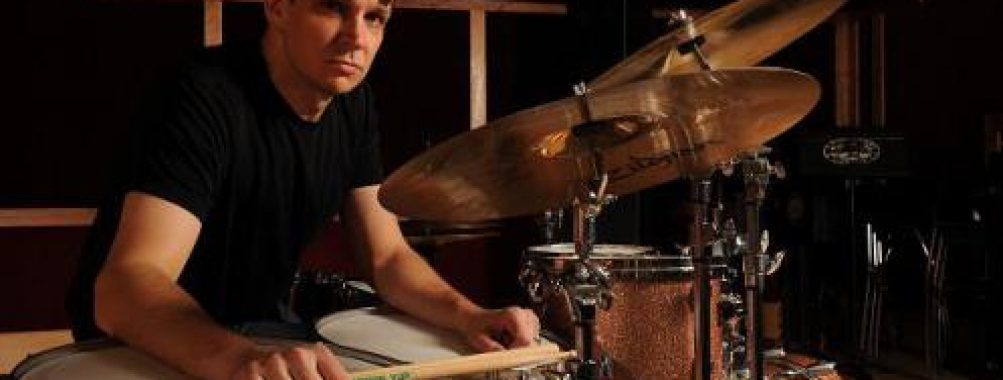
Keith Carlock paints the Big Picture

October 27, 2009
Keith Carlock, News
Keith Carlock

Buy

Itunes-note


Amazon


Bandcamp

In Modern Drummer’s cover story on Keith, Ken Micallef writes, Since his arrival in New York City from Clinton via North Texas State University, Keith Carlock has scurried up the drumming food chain with an inventive style that is equal parts Zigaboo Modeliste fire, Jon Christensen finesse, and Bernard Purdie funk…. Keith Carlock’s achievements prove that talent, skill, and determination is no respecter of locales.

Clinton, Mississippi is is where Keith Carlock was born and raised and where he started playing the drums at age 5. In High School, he joined the jazz band, show choir and drum corps. During that period he would also listen to a lot of rock, R&B and soul music – artists including Stevie Wonder, Earth Wind & Fire, and Tower of Power. (www.keithcarlock.com- Bio)

It was in New York that Keith met Wayne Krantz which started off the famed gigs at the 55 Bar with Tim Lefebvre. It was there that Steely Dan’s Donald Fagen and Walter Becker came by to see the band play and offered Keith a shot at playing on the title track of their [then] new record, “Two Against Nature”. Since then Keith has toured the world with Sting and have played with Diana Ross, Leni Stern and Faith Hill and many great musicians.

Abstract Logix: You seem to be having a great year , new album with Rudder, Wayne Krantz and Tim Lefebvre and now your first Instructional DVD , not to mention the tour with Steely Dan and James Taylor, how have you been managing it all ?

Keith Carlock: It has been a great year, but I never complain if things are busy. I’m happy to be working and playing in such diverse situations. It keep things fresh and I feel like I’m always moving forward and hopefully growing as a musician. Making the DVD with Hudson Music (Rob Wallis and Paul Siegel) was a very rewarding experience. I had never done something like that before and we are pleased with how it turned out.

AL: Tell me a bit about this DVD. I know there is a quite a bit of instructional Stuff out there, how does your stand out ?

KC: It’s entitled “The Big Picture” and I tried to make the focus on what I think is important without getting too technical or brainy about it. I put the music first, not patterns or technique. There’s a lot of performances, demonstrations, and technical stuff as well. It was filmed in front of a studio audience who were also involved by asking questions. The DVD features music of Oz Noy with Will Lee on bass, Rudder, AND a live in studio performance and master class with Wayne Krantz and Tim Lefebvre, my approach to Steely Dan’s music, and much more. I think this DVD will appeal to drummers of all ages and levels and also to guitar and bass players alike.

AL: I know there is a live performance with Wayne Krantz and Tim Lefebvre on it , tell us about it.

KC: Yes, we played several tunes and discussed our approach to the music in detail. We also had a question / answer session with the studio audience. I think this part of the video came out great and will be very interesting for musicians to experience.

AL: You are a graduate from North Texas State and originally from Mississippi. How did your origin and your college education contribute to who you are ?

KC: As a player, it gave me so much to draw from. Growing up in MS, I was around R&B, Memphis soul, New Orleans music, Rock, and later got into jazz and more experimental music. Growing up I was also always in drumlines and marching band as well as orchestral bands in school. I put all these influences together in a way that works together, but hopefully sounds like me. It’s so important to find your own voice and not copy your favorite players.

AL: How did you meet Wayne and Tim and could you let us known a bit into the trio and how you guys evolved over the years ?

KC: I met Wayne and Tim shortly after I moved to New York in 1997. I was already a fan of Wayne’s and basically politely bugged him into getting together and playing. We played duo one day and hit it off, and Wayne later asked me to do a gig at the 55. It eventually turned into a steady Thursday night gig for us and we would rehearse at least once a week to learn music and work out ideas and conceptual stuff. Over the years, we really grew as a band, and as improvisers, and I really feel we found something very unique and special.

AL: How is playing with this Trio musically compare to Rudder ?

KC: Rudder is a bit more structured, maybe not as improvisational, and more groove based generally speaking. It started as a side project recording tunes every now and then for fun, but we later decided it was pretty good, so we should put some stuff out and start playing around a little. It is a fun band, not too serious ya know? And I think we found a very cool approach that is a lot different than other instrumental jam bands out there. On the DVD, I play to several Rudder tracks and explain my approach to them. Rudder is myself with Henry Hey on keyboards, Tim Lefebvre on bass, and Chris Cheek on saxes.

AL: Tell us about the gigs with Sting, Steely Dan, and James Taylor and how they have helped you as a musician / drummer.

KC: All the artists I’ve been fortunate to work with have helped me grow as a player. I’m a fan and love the music and I really try to get inside of it as deep as possible. Playing shows consistently has helped my fluidity, finesse, and flow. I think my time has gotten much stronger and dynamic control is more wide. I have been lucky to play with some of the best musicians in the world, and that just makes me step up to the plate and I’m always trying to get better. The groove is really the most important thing.

AL: What’s up for Keith in 2010 ?

KC: I’m hoping to have more time to tour with Wayne and with Rudder. There are some plans in the works. Also, I hope to finally do a solo project. But, we shall wait and see.

Latest album

Latest NEWS

SUBSCRIBE

Please Subscribe your mail to get notification from AbstractLogix.


Facebook-f


Twitter


Instagram


Youtube

Copyright © 2021 ABSTRACT LOGIX

Facebook-f


Twitter


Instagram


Youtube

Copyright © 2021 ABSTRACT LOGIX
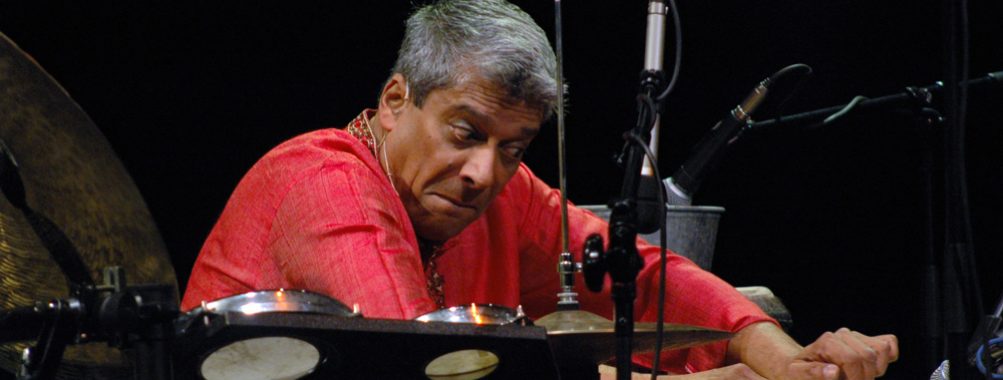
Trilok Gurtu Interview

October 15, 2009
News, Trilok Gurtu
Trilok Gurtu

Buy

Itunes-note


Amazon


Bandcamp

As a percussionist, multi-instrumentalist, vocalist and composer, Trilok Gurtu has forged an impressive career. He’s performed and recorded with some the world’s top-tier jazz and world music artists including Don Cherry; Dominique DiPiazza; Bill Evans; Jan Gabarek; Jonas Hellborg; Zakir Hussain; Karsh Kale; Salif Keita; Angelique Kidjo; Bill Laswell; Nguyên Lê; John McLaughlin; Pat Metheny; the group, Oregon; Terje Rypdal; L. Shankar; Joe Zawinul and numerous others. As a first-call sideman, he has appeared on numerous CDs, DVDs and compilations, supporting a wide variety of artists and genres. [Editor’s Note: To view Gurtu’s extensive discography, visit www.trilokgurtu.net.]

Gurtu’s demand as a first-call percussionist notwithstanding, under his own name, he has been highly creative and productive. Since 1983, he’s produced 15 highly acclaimed solo albums, each one boldly crossing genres, styles and sometimes continents. For example, in addition to his compelling Indo-Jazz excursions, Gurtu was one of the first Indian percussionists to explore and incorporate the music of Africa with Indian influences. His newest studio project, “Massical”, released earlier this year, continues to refine that exploration, in addition to branching out in new directions. “Massical” is arguably one of Gurtu’s finest albums to date; it’s continuing to earn high praises from his fans worldwide as well as from the media.

It’s not an overstatement to assert that Gurtu is one of the world’s most celebrated percussionists. Among his various esteemed awards and nominations: “Best Overall Percussionist,” Drum Magazine, 1999; “Best Overall Percussionist,” Carlton Television’s Multicultural Music Awards, 2001; “Best Percussionist,” Down Beat magazine Critics Poll in 1994, 1995, 1996, 1999, 2000, 2001, and 2002; and “Best Asia/Pacific Artist Nominee,” BBC Radio 3 World in 2002, 2003 and 2004.

Abstract Logix: I read on your website a joint interview you did with Selvaganesh. A comment he made really struck me: “Before we train our hands, we should tune our ears to good music. Listening is the first lesson.” Your thoughts?

Trilok Gurtu: I think this is very natural. You’re lucky if have a good teacher who tells you this. It’s very logical. But it doesn’t always work like that in Europe or America, you know. So the teaching is in the listening. Exhibiting comes later on. And I think this is very common in India, about listening. I don’t know if Selvaganesh was talking about his childhood or if he understood it later, I’m not sure. When you’re young, I doubt that anybody understands this. I think {laughs} after playing with [John] McLaughlin, he got me a little bit wiser, probably.

AL: I can see where that would happen. I had the honor of interviewing him last year and learned so much during our nearly two-hour conversation.

TG: {Laughs.} He’s a very good teacher and great person. Very intelligent.

AL: You studied tabla prior to taking up percussion. In addition to Abdul Karim, who were some of your other teachers; would some of us recognize their names?

TG: I think there a lot of Indians who might recognize them but probably most Americans would not. I studied from Ustad Abdul Karim Khan Saheb first. And then I studied with Ahmed Jan Thirakwa.

AL: How old were you when you first started lessons?

TG: I was about five or so when I first started playing tabla with my mother [renowned vocalist Shoba Gurtu], and then I began taking lessons when I was about ten.

AL: Later on you began to experiment with percussion …

TG: Yes. I took tabla first. But the lessons I got were for accompaniment, not for soloist. Not like the great maestros like Zakir [Hussain] and other great tabla players. He’s my age but he had the fortune being with all the top-notch musicians all the time. I was with some top-notch musicians although they weren’t that well known. But they were incredible, my mother being one of them. My grandmother, too, she was a dancer. So I studied that way. Also my brother was in to the Bollywood scene so that piqued my interest as well. Over time, I just got interested in playing other instruments.

AL: How much of a transition was it for you to move from tabla to a trap set?

TG: That’s a strange story about using a trap set. I got rid of that drum terminology when I became disillusioned with the Berklee College of Music.

AL: I didn’t know you had attended that school.

TG: Yes, I did. And I said, “I’m never going to play like this ever in my life!” You know, many of the Indian musicians who go there want to learn, without knowing their own music system’s rules, they go there and they get completely disillusioned. I know I was. But I don’t want to speak for everybody. When I started playing drums it was at the age of 10 or 12. I played every instrument. I played for marriages, I played on the street. So this is a different background than a normal [Indian] classical musician. I had no instruments so I played on everything; whoever would give me the instruments, I played. And I never took money from my parents to have instruments. My brother had some instruments made, so I used to borrow his. I’m mostly a self-taught musician.

AL: I’m still so surprised to learn you’d attended Berklee for a while; I never knew that about you.

TG: Yes, but not finishing there was a blessing in disguise. It enabled me to develop my own style out of all this arrogance that comes out of these types of institutions. I think the musicians were not even helpful when I was in America, they were pretty … because I came from the third world, you know? They were pretty much in your face, that kind of thing.

AL: When was that?

TG: 1975.

AL: Because I think it’s changed somewhat now, they’re much more accepting of international students.

TG: Of course, because they have less work {laughs}. Nobody’s calling them and they have to bite the bullet. And now there are some very good musicians out of New York. There’s all kinds of music coming up so they have to be a little bit more humble and be thankful for what they get. And thankful for whatever respect they get in Europe and everywhere else in the world. You don’t get that in America, you know. You know that?

AL: Unfortunately, that’s very true these days.

TG: It’s all about money and how large of an audience you can draw. And it seems like many in the music industry over there don’t care very much and nobody’s very hospitable. I mean it’s very rare to see, even when I was with John [McLaughlin]. It was very rare. So it’s a very different ballgame here [in Europe]. But my audience and my fans in America, they were fantastic. I would really like to play for them again. Not the politicians and the bureaucrats but for musicians and the people who love music. They have no caste, religion, creed, nothing.

AL: You don’t tour the States that often anymore.

TG: Not now. I used to tour twice a year, from 1980 until 2000. But then when Mr. Bush came into office, and all this post-9/11 stuff … You don’t realize how degrading it can be when you want to get a visa. If this process was done to Americans who want to visit other countries, they’d hit the roof, man. The Americans just tried to do something to a really famous Bollywood actor. Imagine this happening in reverse. It doesn’t work. Robert, it doesn’t work. This sort of thinking and action doesn’t cut it. We have to work hand-in-hand, mutually for music and culture. There is no body good or bad. We have to work together. We can’t have this attitude that “we are the best.” It doesn’t work. Not even within India or in Africa. We have to work together.

AL: That’s one of reasons I loved the video you performed on, Voodoo Chile—The Music of Jimi Hendrix, where there were musicians from different countries and genres coming together to celebrate a common cause. You all produced some wonderfully unique arrangements of Hendrix’s tunes.

TG: Yeah, I know what you mean. I would like to represent that type of thing if and when I can come to America. And that’s what I’ve been doing. I probably still have a good following in your country, even though I haven’t toured there in a good eight or nine years. I would like to really come and play for my audiences there. One of the problems is I don’t have a U.S. booking agent right now. We lost a lot of money, everybody lost a lot of money, even John [McLaughlin] lost a lot of money touring America. So it was out of sheer love for our American audience that we came, because the record sales are not there. So we need help to come to America.

AL: Okay, changing gears a little bit … In addition to the Hendrix video I saw, there are several YouTube videos of you in concert now, and also on your website. I sometimes see you playing a wooden, triangular-looking device with three drum heads in it. Where did you get that?

TG: This something I found in the ’80s, and I also found a fantastic bass drum sound to represent the tabla.

AL: I’m glad you mentioned that because I’ve always loved your bass drum sound. One of my best friends calls it “Popeye Drums.” Don’t ask me where he got that name from.

TG: {Laughs.} I just started EQ’ing it, tuning it, and working with it … Because when you start something, everybody starts laughing about it. Now everybody plays that triangular-shaped set of drums … Sivamani uses it, everybody does it. Everybody’s playing my instruments, dipping them in water … But when I did it, I had to go through criticism, “What kind of drum set is that?!” It’s ethnic, it’s an Indian drum set. So I searched for and obtained these drums so I could represent my language, the tabla language from India, that’s how I made it. It’s because I’m coming from tabla, mostly.

AL: Have you ever experimented with Roland’s HandSonic [electronic hand percussion instrument]? It’s quite diverse sonically.

TG: Yes, I used it on “Beat of Love”.

AL: I’ll have to go back and listen to that album more carefully.

TG: {Laughs.} It’s a nice instrument.

AL: Getting back to John McLaughlin … When we spoke last year, he discussed at length about how Ravi Shankar encouraged him to learn Carnatic konnakol [terminology describing the vocal percussion and rhythmic counting system from South India] and how important it was for him in developing his own musicianship.

TG: I studied Hindustani [North Indian] and also Carnatic. But I don’t say that I have any authority to all this. I am not a Pandit or an Ustad

; I just happen to love music. I don’t want to claim any authority. But I would agree with my friend that the study of Carnatic music is very important. For me, and for musicians, I would recommend Carnatic and African music, especially for my kind of style of playing.

AL: Before our time is up, I wanted to compliment you on your new album, “Massical”. I think it’s one of your strongest projects to date.

TG: Thanks very much, I appreciate that.

AL: I’d have to say that my favorite song is “Kuruksetra,” which you actually dedicated to John McLaughlin. It’s certainly one of the longest and most in-depth pieces you’ve composed in quite a while. Very impressive.

TG: Thanks. Some people have recently said, “Oh Trilok, you’re just trying to please the audience.” I said, “Okay I’ll write something different.” So I came up with this song. It’s very intense. It starts off mysteriously and then it starts building up in density as well as in rhythmic and melodic complexity.

AL: How did you go about writing it?

TG: I worked on it on the keyboard and I sang. And because I’d worked with a string quartet before on my album, “Arkeology”, I knew I wanted that element in this song as well.

AL: And there’s a brass section, too. This one of the first times you’ve worked with horns, to my knowledge.

TG: I did it together with my band member, Carl Cantini. He actually put the whole brass section together. He’s very talented.

AL: Yes, in reading “Massical”’s liner notes, I see he plays many different instruments; what an asset. I remember hearing the song for the first time and thinking, “This song is amazing! I’m even hearing a brass section.”

TG: Yeah, yeah, I surprise people a lot {laughs}. It’s a classic composition. And even John was very jacked about it when he heard it. You know, I think the main thing is to get this CD to the American audience. Because I do think it’s strong. I think when the people hear it, just like my earlier albums, they’ll going to like it very much.

AL: Of that, I have no doubt.

Latest album

Latest NEWS

SUBSCRIBE

Please Subscribe your mail to get notification from AbstractLogix.


Facebook-f


Twitter


Instagram


Youtube

Copyright © 2021 ABSTRACT LOGIX

Facebook-f


Twitter


Instagram


Youtube

Copyright © 2021 ABSTRACT LOGIX

Recent Posts

  • GLOBAL FUSION PIONEERS SHAKTI NOMINATED FOR TWO 2026 GRAMMY™ AWARDS
  • Shakti – ‘Mind Explosion’
  • ‘THIS MOMENT’ AWARDED WITH GRAMMY
  • GRAMMY™ NOMINEE FOR BEST GLOBAL MUSIC ALBUM – SHAKTI’S ‘THIS MOMENT’
  • GLOBAL FUSION ALCHEMISTS SHAKTI ANNOUNCE NORTH AMERICAN TOUR

Recent Comments

  • irontemplates on Guns and Plants: Stardust
  • irontemplates on Carla & Bones: Trailblazers
  • irontemplates on Mantis: Glam Porn (Vinyl)
  • irontemplates on Love Elexir
  • irontemplates on Sweater The Rise

Archives

  • November 2025
  • June 2025
  • May 2024
  • December 2023
  • February 2023
  • May 2022
  • February 2022
  • June 2021
  • May 2021
  • April 2021
  • March 2021
  • February 2021
  • January 2021
  • July 2019
  • May 2019
  • February 2019
  • September 2018
  • August 2018
  • July 2018
  • February 2018
  • January 2018
  • November 2017
  • October 2017
  • September 2017
  • July 2017
  • November 2016
  • August 2015
  • May 2015
  • January 2015
  • November 2014
  • October 2014
  • August 2014
  • June 2014
  • February 2014
  • July 2013
  • May 2013
  • April 2013
  • February 2013
  • December 2012
  • September 2012
  • July 2012
  • June 2012
  • March 2012
  • May 2010
  • April 2010
  • December 2009
  • October 2009
  • August 2009
  • July 2009
  • May 2009
  • December 2008
  • November 2008
  • October 2008
  • August 2008
  • April 2008
  • February 2008
  • November 2007
  • October 2007
  • September 2007
  • April 2007
  • March 2007
  • February 2007
  • January 2007
  • December 2006
  • October 2006
  • September 2006
  • July 2006
  • June 2006
  • May 2006
  • April 2006
  • March 2006
  • February 2006
  • January 2006
  • October 2005
  • September 2005
  • August 2005
  • June 2005
  • May 2005
  • March 2005
  • January 2005
  • December 2004
  • September 2004
  • August 2004
  • July 2004
  • June 2004
  • May 2004
  • April 2004
  • March 2004
  • January 2004
  • December 2003
  • November 2003
  • September 2003
  • July 2003
  • June 2003
  • May 2003
  • April 2003
  • February 2003
  • January 2003
  • November 2002
  • October 2002
  • June 2002

Categories

  • Abstract Logix
  • Adam Nitti
  • Alex Machacek
  • Alex Skolnick
  • Allan Holdsworth
  • Andrea Marchesini
  • Anil Prasad
  • Avi Bortnick
  • Barry Cleveland
  • Barry Richman
  • Bela Fleck
  • Ben Monder
  • Bill Bruford
  • Bill Connors
  • Brett Garsed
  • Bunny Brunel
  • Chad Wackerman
  • Chris Beckers
  • Chris Poland
  • Chris Taylor
  • Chuba Aomori
  • Cindy Blackman
  • Colin D'Cruz
  • David ‘Fuze’ Fiuczynski
  • Debashish Bhattacharya
  • Dennis Chambers
  • Dewa Budjana
  • Dominic Miller
  • Dominique di Piazza
  • Ed DeGenaro
  • Ehsaan Noorani
  • Featured
  • Featured – John
  • Frank Gambale
  • Fresh News
  • Garaj Mahal
  • Gary Husband
  • Gary Wills
  • General
  • George Brooks
  • Gerald Gradwohl
  • Gergo Borlai
  • GIRLS DON’T LIKE REAL JAZZ
  • Gregg Bendian
  • Hadrien Feraud
  • Henry Kaiser
  • Hiromi
  • Hugh Ferguson
  • Ian Patterson
  • Jack DeJohnette
  • Jahloon
  • Jeff Babko
  • Jeff Berlin
  • Jeff Coffin
  • Jeff Richman
  • Jeff Sipe
  • Jennifer Batten
  • Jimmy Haslip
  • Jimmy Herring
  • John Czajkowski
  • John McLaughlin
  • John Molo
  • Jonas Hellborg
  • Keith Carlock
  • Ken Talve
  • Kevin Scott
  • Kirk Covington
  • Mandolin U. Shrinivas
  • Marc Rossi
  • Mark Egan
  • Mark Mondesir
  • Matthew Garrison
  • Mattias IA Eklundh
  • Michael ATONAL Vick aka VVV
  • Michael Landau
  • Mike Seal
  • Mitchel Forman
  • Nat Janoff
  • News
  • Ney Mello
  • Nguyen Le
  • Nima Rezai
  • Ohm
  • Oz Noy
  • Ozone Squeeze
  • Pandit Debashish Bhattacharya
  • Pat Martino
  • Paul Hanson
  • Percy Jones
  • Peter Fernandes
  • Prasanna
  • Rai Thistlethwayte
  • Rakalam Bob Moses
  • Ranjit Barot
  • Ray Gomez
  • Rez Abbasi
  • Richard Hallebeek
  • Rob Levit
  • Scott Henderson
  • Shakti
  • Shane Theriot
  • Shankar and Gingger
  • Shankar Mahadevan
  • Shawn Lane
  • Souvik Dutta
  • Stanley Clarke
  • Steve Khan
  • Steve Smith
  • Steve Topping
  • Stu Goldberg
  • Surinder Sandhu
  • T Lavitz
  • Terri Lyne Carrington
  • The 4th Dimension
  • The Mahavishnu Project
  • Tom Guarna
  • Tony Grey
  • Tony Smith
  • Trilok Gurtu
  • Uncategorized
  • Ustad Zakir Hussain
  • V Selvaganesh
  • Vernon Neilly
  • Vinnie Colaiuta
  • Walter Kolosky
  • Wayne Krantz
  • Wayne Shorter
  • Zakir Hussain

Meta

  • Log in
  • Entries feed
  • Comments feed
  • WordPress.org

SUBSCRIBE

Music news delivered to your inbox

Follow Us


COPYRIGHT © 2023 ABSTRACT LOGIX