• RELEASES
  • VIDEOS
  • ARTISTS
  • NEWS
  • ABOUT
  • STORE

mark-egan

Mark Egan discusses what went into creating About Now

June 12, 2014
Mark Egan, News
Mark Egan

Buy

Itunes-note


Amazon


Bandcamp

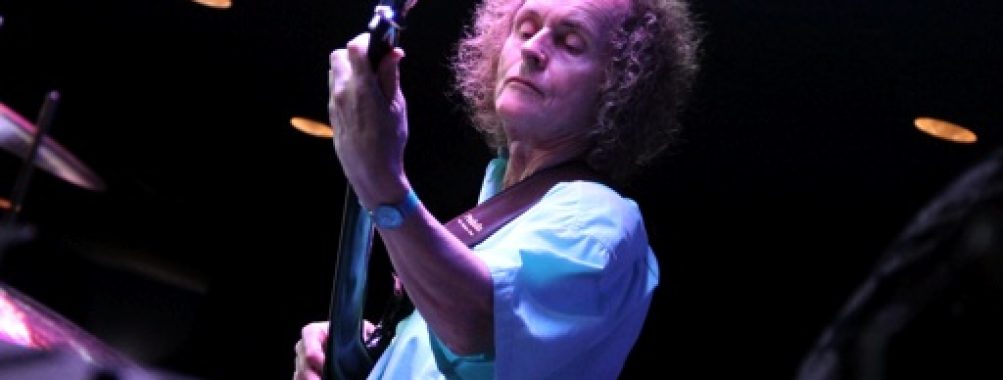
Composer and bassist Mark Egan returns in 2014 with a more introspective album called “About Now”. The album features a trio made of Danny Gottlieb, Mitchel Forman, and of course Mark Egan. Egan took some time to discuss what went into the making of “About Now”, his gear, and his experience at the University of Miami.

Abstract Logix: You have played with Danny Gottlieb on many projects, but how did the three of you come together to make “About Now” ? What was your inspiration? 
There is obviously a lot of interplay between musicians on the album. How much of the record was planned ahead of time?

Mark Egan: I love the openness of a trio and the space that it creates for everyone to express their ideas. I played in a trio with Larry Coryell for eight years and really loved that open format. My recording, “As We Speak”, released in 2007, is a trio featuring Danny Gottlieb and John Abercrombie.

For the “About Now” project I wanted to record another trio and this time with keyboards. The use of keyboards rather than guitar opens up the sonic space and gives me a lot of room to explore on the bass.

I’ve been playing with Danny Gottlieb since the early 1970’s and we have a lot of experience as a rhythm section team from our Pat Metheny Group days, our group Elements and many other varied projects. I’ve been playing with Mitchel Forman since 1976 with Elements and many projects in New York and worldwide. Mitchel was on my previous recording “Truth Be Told” as well as on my first solo record “Mosaic” and he also recorded on the Elements “Spirit River” CD. He is a master pianist as well as a multidirectional electric keyboardist.

I wrote the music specifically with Danny and Mitchel in mind and all of the compositions for album were composed and arranged ahead of time. My inspiration for the compositions was to create different backdrops that would be open vehicles for everyone to be featured as well as to have an active trio dialogue. I was very open to leaving plenty of room in the arrangements for Danny and Mitchel to create.

ABLX: How does your new album “About Now” differ from your last release “Unit 1” and how have you grown as a musician in that time span?

ME: The basic difference is that “About Now” is a studio project of original compositions with Mitchel and Danny where as “Unit 1” is a live recording of twisted jammy standards with John Hart-guitar and Karl Latham-Drums. What is similar between the two recordings is the creative intent for improvisation explorations.

Even though “Unit 1” was released in 2013 it was recorded in 2009 so I’ve had five years of growth on the bass from touring worldwide with various artists as well as a strong focus on composing for a variety of projects.

The release before “Unit 1” was my last solo project, “Truth Be Told” which features a quartet with Mitchel Forman, Bill Evans and Vinnie Colaiuta. This project is more of a comparison to my latest, “About Now”.

“Truth Be Told” had more of a groove focus for my bass playing and compositions and “About Now” is more introspective, featuring my fretless playing in a more intimate setting as well as drawing from production techniques from my earlier solo projects such as doubled 8-string melodies and layered harmonics.

ABLX: You have played and recorded with Danny Gottlieb numerous times over the past thirty years. What is it about Danny as a drummer that makes it so easy to collaborate?

ME: Danny is a master drummer and has seriously studied the jazz-drumming lineage. His experiences encompass a wide spectrum of musical styles from very experimental to pop music and everything in between. Danny is a great team player and is always listening and supporting as well as driving the rhythm section. Not only does he have great command over many styles but he is a master improviser.

We have a great communication from having played together for so many years in so many different situations. So much so that we know where each other can go and are very tuned into how to support and shape the music together as a team.

ABLX: The song Cabarete introduces a theme at the start of the tune, but never revisits the motif until the last song Puerto Plata. Is there a connection between these two songs?

ME: Yes, there is a connection to the intro of Cabarete and Puerto Plata. We did repeat the intro motif after the piano solo for a few measures. However, when we recorded Cabarete, the intro groove felt so good that we decided to make a separate song with just the intro as a vamp, which would feature a drum solo for Danny. I decided to title that piece with the drum solo vamp Puerto Plata that closes the album.

ABLX: What inspired some of your song titles?

ME: My song titles are inspired by a variety of experiences and ideas. I try to come up with a title early on so that it influences the direction of composition.

The tune Sailing reminded my of a Herbie Hancock tune, Maiden Voyage, so that is sort of a play on words. I also love sailing and boats and fishing and the water in general.

The title for Cabarete was inspired by a tour with Elements in the Dominican Republic to a town called Cabarete. This song has a Latin feel that was reminiscent of the local groups that were performing at the festival. It also reminded me of the amazing people that we met while playing there.

About Now is a pensive composition and I titled it to express being in the moment. The thing that I like most about playing creative music is that it’s all about being in the moment and reacting and going forward.

Graceful Branch is a song that was inspired by a friend who is a gardener and she told me about a remedy that she used for her dog, Coqui. I loved the title and was inspired to write a song with that graceful sentiment.

Mckenzie Portage was inspired by a fishing expedition in the boundary waters of Canada with my great friends Bill Evans and Tom Waterloo. We hiked the McKenzie Portage to access some very remote lakes and it was the most intense trip of my life. We carried canoes, gear and food for thirty miles through the densest forest of the Canadian wilderness. The fishing was great once we arrived and this song captured those feelings.

Little Pagoda was inspired by a trip to Bali, Indonesia and is a tone poem that features the trio in a very ECM sort of way.

Tea in Tiananmen Square was a title I came up with while on tour in China with George Grunz as I sat in Tiananmen Square sipping tea. The song has an eastern sentiment as well as thoughts about what happened there.

So, as you can see my song titles come from my experiences and thought processes.

ABLX: What gear made up your rig for this record? Did you use your fretless Pedulla 5 string bass on the whole album?

ME: I played a variety of my Pedulla basses. Most of the songs were recorded on an MVP 5-string fretless. I also played my 5-string fretted as well as an 8-string fretless on some melodies. The harmonics on Sailing were played on an 8-string fretted as part of my double neck bass. As far as electronics I recorded through two Radial JDI direct boxes with Jensen transformers as well as two Millennia TD1 EQ’s.

ABLX: As a bass player, and a composer, how do you compose? Do you exclusively use the bass, and what techniques did you use to compose the songs that make up “About Now” ?

ME: I compose in a variety of ways. For “About Now” I composed many of the songs on acoustic piano. I recently built a recording studio, Electric Fields, in Connecticut and acquired a beautifully rebuilt 1929 Steinway B grand piano. Even though I’m not a pianist I’m very inspired by this instrument and this was the foundation of the writing for this project. I also compose on the bass as well as in a DAW and sometimes just in my head.

Usually the process starts with an initial idea, a groove, a bass line or chord sequence and I continue to develop the ideas. I find it very helpful to have a recording device while I’m practicing so that I can document an idea that will later be used. I have a little program on my iPad called DAW and it’s a basic recorder that I can just use as a scratch pad for ideas. When it came time to put together songs for “About Now” I started listening to all of the ideas that I had collected and picked the best ones that I thought would be good for the trio with Danny and Mitchel in mind and started developing them into full arrangements.

Creativity comes in waves and you have to be ready to capture those precious moments and develop them into compositions. It really takes being open and not distracted which is becoming very difficult with all of the technology that is around us. When I’m composing I turn off my cell and house phones and go in on the music. If I’m writing ideas into music manuscript I try to write as much as possible to describe the feel, tempo, harmony, melody and some idea of an arrangement.

So many times in the past I look at something that I had written and I have no idea of what I was thinking about so I’ve learned to document as much as possible.

ABLX: You use so many unique basses. Frets, no frets, 4 strings, 10 strings, double necks. Do you have a “main bass” you prefer to use or does it depend on what you feel the song calls for?

ME: My main basses are my M.V.Pedulla 5-string fretless and fretted. I use them on 90% of my playing.

It does depend on what the song or arrangement calls for. For fluid and melodic songs I’ll usually choose the fretless and for more groove style music that calls for more point to the sound I like the fretted sound. Sometimes I use my 1964 Jazz Bass for vintage groove tracks. I found that bass at a Flea market while living in Miami in the 70’s. I’ve recorded with it with Sting, Joan Osborne, David Sanborn and on many sessions in New York.

ABLX: Do you approach composing a trio album like “About Now” differently than when you compose for music and television?

ME: Composing for movies and television is completely different for me than composing a trio album like “About Now”.

When you are writing music for visual medium it’s a different process and inspiration and you are using your sensibilities to work together with the director’s vision of the project. This can be a very creative process and usually brings me to musical places that I wouldn’t have explored on my own projects

Writing for my own projects is home for me because I know the areas that I want to explore, the players to write for and the type of productions techniques. I’m writing for my own musical movie in my head.

ABLX: You graduated from the University of Miami with musicians like Jaco Pastorius and Metheny, and came onto the music scene in the late 70’s with the Pat Metheny Group. What was it about that time and atmosphere in Miami that produced such incredible musicians?

ME: Musicians were drawn to the University of Miami because there was a great jazz program led by Jerry Coker. It was 1969 and things were really changing in music. Saxophonist Whit Sidener took over for Jerry Coker and was also a visionary mentor for so many musicians who have gone on to make incredible musical contributions.

ABLX: What was it about the time?

ME: Miles Davis had just released
“Bitches Brew” and “Live Evil”. Jimi Hendrix, the Beatles, Led Zeppelin, Cream, Mahavishnu Orchestra, Return to Forever were all releasing great new progressive music. Miami was a port city so there was a confluence of Afro Cuban, Brazilian and all the music from South America. This transformation was happening all over the world but especially in America and in Miami there was a very special music scene. I feel fortunate that I was born into the baby boomer generation.

I also realized from my studies at Miami that I had to go back to the roots of Jazz and really get a full understanding of the lineage and evolution of improvised music. I’m still going back to those roots to solidify my foundation.

ABLX: Do you have any plans for this trio to record together again?

ME: Yes, the trio will be recording a follow up record to “About Now” this summer and it will be released in the spring of 2015. This is such a fantastic trio to play with and I want to continue to give it room to evolve. I’m composing the songs now and really look forward to reuniting with Danny and Mitchel in the near future.

Thanks for speaking to us Mark, All the best to you and the band.

Latest album

Latest NEWS

SUBSCRIBE

Please Subscribe your mail to get notification from AbstractLogix.


Facebook-f


Twitter


Instagram


Youtube

Copyright © 2021 ABSTRACT LOGIX

Facebook-f


Twitter


Instagram


Youtube

Copyright © 2021 ABSTRACT LOGIX
Mark Egan: Funk to the Fore

April 28, 2010
Mark Egan, News
Mark Egan

Buy

Itunes-note


Amazon


Bandcamp

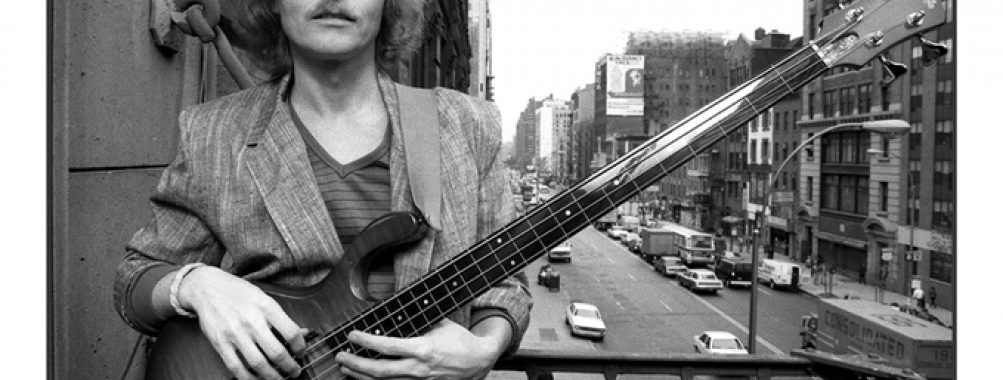
Mark Egan is considered to be one of the most respected and in-demand electric bassists on the music scene today. His unique fretless bass sound and style is both distinctive and versatile and his musical contributions incomparable. With three platinum and three gold albums to his credit, Mark has recorded with the Pat Metheny Group, Sting, Arcadia, Roger Daltry and Joan Osborne; performed with the Gil Evans Orchestra, Bill Evans, Danny Gottlieb, Marianne Faithful, David Sanborn, John McLaughlin and Sophie B. Hawkins among many others. He has added his musical prowess to such movies and television shows as “Aladdin”, “The Color of Money”, “A Chorus Line”, “NBC Sports”, ABC’s “All My Children”, CNN/“Headline News” and numerous award-winning television commercials.

Egan’s latest studio project, “Truth Be Told”, features him playing alongside top-tier music veterans drummer Vinnie Colaiuta, saxophonist Bill Evans, and keyboardist Mitch Forman.

Abstract Logix: Mark, this is the second time I’ve had the honor of interviewing you. The first, as you may recall, was for Bassics magazine a few years ago. Thanks in advance for your time and thoughtful responses to my questions.

Mark Egan: Robert, it’s my pleasure to speak with you again. I really enjoyed our last interview for Bassics.

AL: It’s nice to hear you playing again with Bill Evans. One of my favorite albums from years ago was his “Alternative Man” … That was a brilliant recording.

ME: It’s always great playing with Bill Evans. He is such an incredibly talented musician. “Alternative Man” is a great record and he has continued his career with touring and producing many great recordings since then. I had the pleasure of recording on that record with John McLaughlin and that is one of the musical high points of my career. I have also been a member of his touring band, Soul Grass, for the last few years and that has provided much of the inspiration for my new record, “Truth Be Told”.

AL: “Truth Be Told” definitely highlights some aspects of your bass playing and composing that many people haven’t been too familiar with. Tell me more about your overall creative process in writing for, planning and recording the album.

ME: For that latest album, I wanted to branch out and feature more of a quartet sound, similar in some ways to past Elements projects but more groove-oriented. Elements is a band that I co-lead with drummer Danny Gottlieb and we have recorded eight projects since its inception in 1982.
As I mentioned, over the past four years I have been playing in a lot of different situations, especially with Bill Evans’ band, Soulgrass, as well as recording with drummer Vinnie Colaiuta. The drummer is always the driving force in any ensemble that I am involved with, so I wanted to write the music around Vinnie Colaiuta for “Truth Be Told”. Many of my listeners are familiar with my bass playing alongside master drummer Danny Gottlieb. So on “Truth Be Told”, I wanted to orchestrate this recording in a different way. To get more into an improvisational groove concept, which is different than my previous ECM-influenced trio project, As We Speak, which I recorded with guests John Abercrombie and Danny Gottlieb.
This new recording was a conscious effort to do a different type of project, and I wrote with the players in mind, Bill Evans, Vinnie Colaiuta and Mitch Forman. My basic intent was to create music that not only had great grooves, but also would allow space for me to be a soloist. I enjoy being a team player by supporting these great soloists, Bill, Vinnie and Mitch. I wrote tunes specifically for these players in this concept. And I also had some songs from the past that hadn’t been recorded on my own projects, but that had been recorded on other people’s albums. For instance, the first track, “Frog Legs,” is a song that I wrote back in 1998 that I previously recorded with Lew Soloff and Jeff Ciampa on their respective records.
I’ve been so fortunate to play with so many great players, especially drummers, and every one of them comes from a different direction with different influences, which makes me play differently as a bassist. In Vinnie’s case, not only does he have an incredibly strong groove for most any genre, but his masterful technique for soloing is highly evolved and very exciting. He’s a great improviser as well as a great groove player and, in general, very flexible. I knew when I was conceptualizing this record that Vinnie would be the focal point. Beyond that, I really wanted to compose songs that would create an open backdrop that would allow Bill and Mitch to be as free as possible. Many of the songs have open vamps at the end with ostinato-type figures that were great vehicles for Vinnie to solo over, and he blew me away on every take!
As far as the compositions, they all started from a particular groove in mind and I expanded on some basic ideas. Some songs, like “Rhyme or Reason,” were written on my bass while others, like “Truth Be Told” and “Café Risque,” were started in my computer sequencing program.

AL: Looks like—according to the photos on the inside of the album—you guys were able to mostly play “live” in the studio as an interactive quartet, versus just laying down separate tracks sequentially. How does having that immediate interplay influence your bass playing specifically?

ME: We recorded eleven songs in three days “live” in the studio during June 2009 in New York City. The immediate interplay of playing together as a group is what music is all about for me. The musical conversation and interaction is my favorite form of expression and the reason why I became interested in music from the beginning.
I came to the sessions with some preliminary bass lines in mind for the various compositions and also knew that I needed to be open and flexible once we started recording, because I wanted to play off of everyone. I was super-focused on what Vinnie contributed and adjusted my lines in order to compliment his kick, snare and high-hat grooves. What I loved about this experience is the constant interplay between the bass and drums. I enjoy this aspect of interactive playing, just as much as soloing on top of a group. The sessions were all about creative listening, reacting and complementing each other.

AL: Many people think of you / your Pedulla bass(es) as being silky smooth and sonorous. But with this album, it was “funk to the fore.” Did your basses surprise you in their ability to deliver the punch you were looking for? It’s kind of like the Pedullas were speaking a new language …

ME: I played my Pedulla five-string fretted and fretless basses on the “Truth Be Told” sessions. I knew that they would be perfect for the music since I record with them all the time in a variety of styles. The reason that I like these instruments so much is because they can be very punchy and deep sounding, while at the same time very melodic, with a lot of sustain and with lots of versatility.

AL: Did you actively—for lack of any other word—“study” other funk / soul / R&B-driven tunes before writing the charts for this album? In other words, if you did so, what was the “homework” you did in advance?

ME: I didn’t actively listen to much funk / soul / R&B-driven music for inspiration for this project. Funk / soul / R&B are some of my deep playing roots for many years though and what I did listen to for inspiration were Don Grolnick’s music and some of the music from “Steps Ahead” and Michael Brecker. The creative writing process is fascinating to me. Whenever I start out with a music idea it always leads to another song that I didn’t have in mind. The most important part of the process is to have the time to be open, to let ideas flow. And one idea just leads to another.

AL: I love “Pepé.” It starts off sounding like a big ol’ Motown groove. Then it traverses in to lots of other territories. Parts of it remind of Béla Fleck & the Flecktones’ tunes. Tell me more about this song; I think it’s one of the boldest things you’ve recorded in quite some time.

ME: “Pepé” is a song that started from a bass line that I wrote in 1974 on a beach with my bass during a very creative period in Cape Cod, Massachusetts. I always keep a manuscript book of compositional ideas and when I was assembling songs for “Truth Be Told”, I wanted to finish this song for this instrumentation and feature Vinnie and Mitch. It was actually inspired by the Mahavishnu Orchestra. I added a melody played by Bill Evans and doubled by Mitch Forman. This was a fun song to record. Mitch later added some great synth parts.

AL: “Café Risque” is also another winner. Vinnie’s drum groove is so syncopated, at first, but it still keeps a driving pulse—like David Garibaldi. Then you go in to this fast-paced funky shuffle. That song must’ve been a lot fun to write and play …

ME: “Café Risque” was a lot of fun to record and was right up Vinnie’s alley. The composing of the song started on the keyboard and I kept extending the melody and creating sections that would feature Vinnie as well as Bill Evan’s incredible soprano sax playing. Mitch also plays some amazing acoustic piano parts.

AL: According to your comments in the album, the entire 11 songs were recorded in three days. Had you given the other players your music in advance? Or did it all come together for the first time when you four assembled in Avatar Studios? Again, what’s the backline story about this project?

ME: I sent the musicians a disc and pdf files of the music about two weeks before the session. On the disc were basic demos that I had produced at my Electric Fields studio. We only played the songs when in the studio and most of the takes were the first or second times that we played them. Everyone did their homework and it really came together the first time that we played the songs. I was “all-ears” with my own bass approach being in the presence of such heavy players. Even though I had some specific bass lines, I was very flexible with the creative process.

AL: Why did you choose to use predominately Avatar Studios versus your Electric Fields Studio in Warwick? That’s your home studio, right?

ME: Avatar studios is one of the finest studios in the world and I wanted its sound. My studio, Electric Fields, is a great project studio but for this recording, I wanted focus on being a musician and not have to think about the technical aspect of the recording. Phil Magnotti was the engineer and he got a great sound on everyone.

AL: Playing with Vinnie Colaiuta must’ve been quite an experience. Did playing with him—versus, Danny Gottlieb (and other drummers with whom you’ve played)—influence your bass playing differently for this project?

ME: As I mentioned earlier, all drummers have a different approach to the music and playing with Vinnie was an incredible experience. Danny Gottlieb and I have an ESP- type of connection with music. We have played together so much with the Pat Metheny Group and with our group, Elements, as well as many other musical experiences and we are a team. Vinnie has a different slant on that concept and has so much experience in many different styles of grooves. As I’d said, I just went with the flow and tried to fit into Vinnie’s sensibilities while still complimenting the music.

AL: I really dig “After Thought.” Tell me more about how that song came about; it’s quite different than many of the others. Who’s the Indian voice at the beginning?

ME: “After Thought” is a free ballad that I wrote for the session. I wanted to make a feature for my fretless bass sound for a free-flowing melodic / Indian-influenced space. Mitch Forman orchestrated the song so beautifully. The Indian voices are samples form Mitch’s collection of sounds.

AL: So what’s next for you? What projects are you working on now or are slated to work on in the near future?

ME: I will be recording with a great guitarist, Paul Shugihira, from Germany who I met while recording with Bill Evans and Dave Weckl with the WDR Orchestra on the CD, “Vans Joint”. It will be a trio with drummer Adam Nussbaum. I am also starting to compose for a new solo project that will be an acoustic ensemble featuring Indian percussion, acoustic guitar, flute and bass. And I continue to perform with Bill Evans’ group, Soul Grass, which is a great experience. Danny Gottlieb and I are also working on a new Elements album that we’ll record in the near future.

In closing, I’d just like to add that I continue to be inspired by the great improvisers of contemporary music. I still practice on a regular basis, which is endless, to improve my playing. My goals are to be in the playing presence of great improvisers and to continue growing and moving with contemporary music. I am also fascinated with composition and creating backdrops that create an environment for highly creative improvisations. What I enjoy the most is being in the moment of creating music with friends … that’s what it’s all about for me. “Truth Be Told”  is totally about this.

Latest album

Latest NEWS

SUBSCRIBE

Please Subscribe your mail to get notification from AbstractLogix.


Facebook-f


Twitter


Instagram


Youtube

Copyright © 2021 ABSTRACT LOGIX

Facebook-f


Twitter


Instagram


Youtube

Copyright © 2021 ABSTRACT LOGIX
Bassist Mark Egan Interview

October 24, 2006
Mark Egan, News
Mark Egan

Buy

Itunes-note


Amazon


Bandcamp

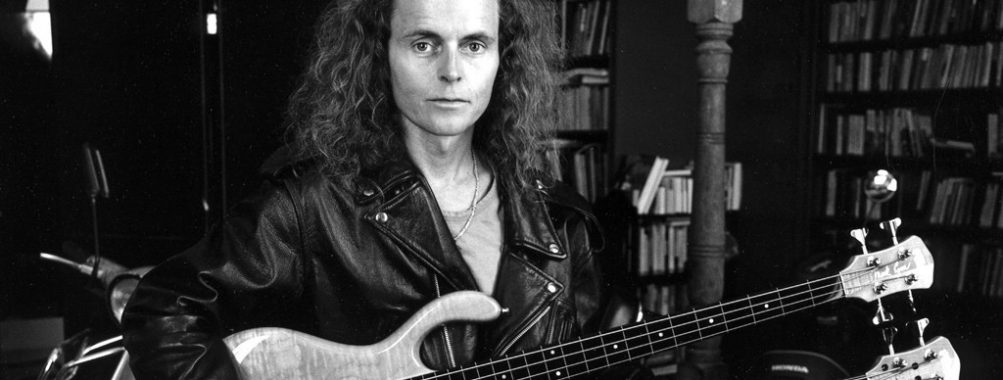
One of the premier electric bassists of contemporary jazz, Mark Egan has distinguished himself as an in-demand session player, valued sideman and respected leader in his own right. His distinctive fretless bass sound has graced countless jazz and pop albums as well as award winning movie and television soundtracks .

A charter member of the Pat Metheny Group, he has played on multi platinum-selling recordings by Sting, Arcadia and Joan Osborne and has also recorded with the likes of Roger Daltry, Sophie B. Hawkins, Marianne Faithfull, David Sanborn and John McLaughlin and was a member of the Gil Evans Orchestra for 13 years.

On his latest as a leader, the 2-CD set “As We Speak”, Egan stretches out in a wide open trio setting with jazz guitar great John Abercrombie and former Pat Metheny Group band mate and Elements co-founder Danny Gottlieb on drums. Recorded at his Electric Fields studio, Egan’s latest on his own Wavetone Records label is an ambitious follow up to 2001’s “Freedom Town”.

Mark just returned from a highly successful European tour featuring John Abercrombie and Danny Gottlieb.

AL: Mark, Congrats on your new record. Beautiful and powerful compositions that sound that it comes from an ECM realm. Could you speak about the project and your concept?

Mark Egan: Thank you, Souvik. Yes, I think the record does come from an ECM influence and it also comes from a lot of other areas as well. In some ways it’s more electric and more upfront than some of the ECM mixes and sounds. This was the way I heard it and mixed it with the great engineer Richard Brownstein. We’ve worked together on all my solo records, many of the Elements records, the group that I co-lead with drummer Danny Gottlieb, and other records I’ve produced. Richard has an amazing gift of organizing and bringing fourth distinctive and beautiful sound.
The concept behind this record was that for many years I’ve wanted to do a trio record, in particular with John Abercrombie and Danny Gottlieb. I’ve always enjoyed their playing in various groups and recordings. Danny Gottlieb and I always have such a great rapport with all of the various musical situations that we’ve been in as a rhythm section. We’ve been playing together for 35 years now. Danny and I first met at the University of Miami where we studied music under the direction of Jerry Coker and Whit Sidener.
I first met John Abercrombie in 1981 and we played together in New York at the club, Fat Tuesdays. At that time the event was called a guitar summit and many guitarists – Vic Juris, Chuck Loeb and John Abercrombie were featured. Also, when I was member of the Pat Metheney Group we toured with John and his band on an ECM tour of Japan and the US. Also on that tour were the bands Egberto Gizmonti and Nana vas Concelos. I really had the great opportunity listen to John on those tours for repeated nights. I always felt close to his music and wanted play and record with him.
I always thought that our sounds and our sensibilities would fit together very well. With “As We Speak” we finally had the opportunity to play together and it was a great experience for me. I worked on compositions for about 4 months before the recording with the specific players in mind. The inspiration for this trio was also influenced by the group Gateway, which is a group with Jack Dejohnette, Dave Holland and John Abercrombie. I really enjoy their sense of structure improvisation and freedom and I wanted to do more of an electric version but with some of the sensibilities in terms of improvisation and interplay. I have been playing in a lot of different trios for my whole musical career however during the last 10 years I’ve been focusing on the trio format with guitar and writing songs with that context in mind. For the last 4 years I’ve been performing worldwide with the Larry Coryell Trio featuring drummer Paul Wertico. I’ve been thinking, composing and playing with a trio in mind and really wanted to crystallize some ideas I’ve had for that format. I feel that this trio recording, “As We Speak”, really captures an intimate and exposed side of my musical expression.

AL: You have been performing with Larry Coryell and Paul Wertico in the recent past, what made you choose John Abercrombie as the plectorist on ‘As We Speak‘?

ME: I love the way Larry Coyell plays, and we have a great rapport with his trio with Paul Wertico. We have been touring worldwide for the last four years and have recorded one release, Tricycles. For my trio recording I wanted to record music in a different direction, and, as I said, I’ve always been fascinated with John’s playing and I thought he would really fit in with the way that Danny and I play.

AL: I know you have been using fretless basses for a while, what were you using on this album ?

ME: I mostly used my Pedulla 5 string fretless MVP5 bass, which is a Mark Egan signature series bass. It has a low B string and it is designed with my specifications. I use a fairly thin neck from top to bottom and it also has some special electronics, a mid-range boost, and a cut away which allows me to play up into the highest note on the fingerboard. I love to play in that area. I’ve been with Pedulla basses since 1981 when he built the first bass for me. I knew him in 1978 because he refinished a Fender Jazz bass from which I’d taken the frets out of and put a finish on. I did a bad job and had to take it to his shop and put a spray finish on the fingerboard to make it playable. We’ve since developed a great working relationship and he’s built many basses for me, all the double necks, the 8 string fretlesses, the 8 string fretted. On one track – “Tone Poem For My Father” – I used a fretted bass, also a Pedulla. The reason for this was that there were a lot of chords that I played, root 5, and melody, and I really wanted to play them in tune.

AL: How do you compose, on bass or anything else?

ME: I compose many different ways. Sometimes I write completely from the bass. Many of the songs on “As We Speak” were composed on the bass – the title track, “Vanishing Point,” “Depraw,” “Spirals.” Often times I start things on bass and then go to the piano and work on harmonies and melodies. Sometimes I’ll record a bass line and play on top of that on piano. One of the songs I wrote completely in my head away from anything except pencil and paper, and that was called “Plane to the Trane.” At times I write entirely on the keyboard, but for this record most of the compositions were written on the bass, and bass/keyboard combination.

AL: You come from the illustrious -University of Florida. Do You ever look back ?

ME: Actually, it’s the University Of Miami in Florida and it was a very fertile time for me when I attended there from 1969 untill 1976. There was a great jazz educator, Jerry Coker, that attracted a great combination of players such as; Danny Gottlieb, Clifford Carter, Pat Metheny, Steve Morse, Rod Morgenstern, Mark Colby, Eric Traub, Matt Bonelli, Stan Samole, Bill Bowker and many others. The timing was really great. A lot of people were taking chances, musically. Miles Davis had just come out with “Bitches Brew”, “Live Evil”. Jazz fusion was really coming on strong then. John McLaughlin just released the first Mahavishnu Orchestra recording and both Miles and Mahavishnu performed at the U. of Miami. Those were very inspiring times and I do look back at those days quite often and recall a lot of great memories. Those were very intense and inspiring years. I still have great friends there who are teachers and players that I’m in touch with regularly. It was a very deep experience for me and really opened my head up to creative jazz and world music. Not only was it great musically but it also opened me up to a path of yoga, mediation and an awareness of healthy food and exercise which I still follow today.

AL: The first time I heard about you was on the early Pat Metheny records, how do you feel your playing has evolved today?

ME: The Pat Metheny records were recorded almost 30 years ago in 1977 and 1980. I feel that my playing has evolved since then in so many ways. I’m much more technically fluid and harmonically I have much more knowledge of music in general. Compositionally I feel much more evolved since then having written music for the group Elements which I co-lead with Danny Gottlieb as well as my solo recordings and productions that I have been involved with. I always had good sensibilities about playing in tune and playing melodically since I was originally a trumpet player and I continually draw from those experiences.

Since my experience with Pat Metheny I’ve had so many great musical experiences; from being a part of the New York session recording scene to touring with many great artists. I’ve had the opportunity to play with Airto Moreira, and Bill Evans, the saxophone player. I was fortunate enough to record a Bill Evans record, “The Alternative Man”, with John McLaughlin – a high point of my career. It’s also been inspiring to play with Larry Coryell, Jim Hall, Pat Martino, John Abercrombie, Jeff Ciampa and many other great guitarists. I’ve drawn and emulated so much from all these great players and experiences. I honestly feel as if I’m only scratching at the surface of a deep well, and that is to me the beauty of music and art: It’s an endless well. Once you experience a taste from the well you just want more, and that’s what keeps me going musically and spiritually and creatively.

AL: I know you are already thinking about what you want to do next? So what is it?

ME: Well, Souvik, I have many ideas that I want to do, but one idea is to do another record with this trio because I feel like we just scratched the surface of what is possible. Although “As We Speak” is a double CD set I feel that’s there’s a lot more music where that came from. We just returned a few days ago from a great two-week tour of Europe which was very successful and it gave me a lot of ideas for compositions with the trio. At the moment I’m savoring those moments and using them to inspire new. You really learn what works and what doesn’t work very fast when you play for a live audience. I also have a lot of projects on the burners. I want to do a heavy groove record with the great drummer Steve Jordan along with some avant guard saxophone on top of it. What I’m thinking of is a heavy funk, “Bitches Brew”, groove type of feel with some real avant garde music on top of a real strong funk groove. I also have an idea to do a very acoustic record with acoustic guitars, flute, tablas and percussion, something I’ve wanted to do for a long time.

AL: You have a wonderful catalog through your company Wavetone records. Could you speak about the various releases?

ME: Thank you for the compliment on Wavetone records. We have 10 releases to date. One of the reasons I started Wavetone Records in 1993 was because I had a live CD which I recorded with Elements in Japan – actually we recorded a whole week – and I was able to release three CD’s from those sessions and they’re called: “Elements Far East Volumes 1 and 2”, and “Elements Untold Stories”. That band was with David Mann on saxophone and the great keyboardist and composer, Gil Goldstein, Danny Gottlieb and myself. Another release from Wavetone is a Joe Beck CD called “Finger Painting” and that features Bill Evans on saxophone, myself, and Danny Gottlieb on drums. Joe Beck is a monster guitar player, a deep thinker, very adept in harmony, and one of the greatest guitar players that I’ve ever played with. So that’s a very interesting project.
We’ve also done two other projects with another great guitarists Jeff Ciampa. One is called Signs of Life which features Danny Gottlieb and myself – we’re sort of the stable rhythm section of Elements. It also features Rick Martinez on keyboards, Jon Werking on keyboards and Billy Drews on saxophone. Jeff Ciampa The other release from Jeff Ciampa is called “House of Mirrors” and it’s a progressive, electric guitar trio with Danny and myself.
Jeff has an extraordinary fluid guitar style and a love of melodic jazz, Brazilian music and World Beat rhythms.
We also have “Mosaic” which was my first solo record originally released on Wyndham Hill. I licensed it to them and I decided to release it on my label after it was deleted from their catalog. I added two bonus tracks which were duos with Danny Gottlieb and myself. Mosaic is a special recording for me. It features many different basses that I was playing at the time and the music was orchestrated to feature those instruments in a very intimate and unique musical environment.
“Freedom Town” was my previous solo project release in 2001. It is a recording based on songs in a contemporary world jazz setting featuring the fretless bass as well as saxophonist Bill Evans and Trumpeter, Lew Soloff. I played a lot of the melodies and solos on various Pedulla fretted and fretless basses. Also featured are: Danny Gottlieb on drums, Clifford Carter on keyboards, Jeff Ciampa on guitar, David Charles on percussion and Jon Werking also on keyboards.
Thelonius Bach’s Lunch is an acoustic piano, bass and drums super jazz trio, It is original music with simplicity and complexity using a wide range of dynamics and textures to create a completely unique ensemble voice using traditional jazz trio sensibilities. It features Jeff Laibson on piano, Danny Gottlieb on drums and Mark Egan in a rare acoustic bass debut.

Mark Egan “As We Speak” is our latest two CD set release featuring John Abercrombie on guitar and Danny Gottlieb on drums. My intention for having Wavetone Records was and is to have a creative outlet for my different productions and recordings. It’s been a very successful company for the artists and myself, and I’m going to continue recording various creative projects. It has allowed us to do anything we want without restrictions in a wide open format of creative music.

Here is a summary of the Wavetone Records releases:

Elements Vol. 1
Elements Vol.2
Elements Untold Stories
Mark Egan Mosaic
Mark Egan Freedom Town
Mark Egan As We Speak
Joe Beck Finger Painting
Jeff Ciampa Signs of Life
Jeff Ciampa House of Mirrors
Thelonius Bach’s Lunch Feat; Jeff Laibson, Danny Gottlieb and Mark Egan

It’s great to be associated with Abstract Logix, Souvik, which is such a focused website and company that draws a lot of people to a world of creative music. I’m glad to have Wavetone Records afilliated with Abstrac Logix and I wish you continued success.

Thank you very much, Souvik, for the interview. Thanks to all the readers and to anyone who listens to my music. I appreciate the interest and support. There’s more to come.

Latest album

Latest NEWS

SUBSCRIBE

Please Subscribe your mail to get notification from AbstractLogix.


Facebook-f


Twitter


Instagram


Youtube

Copyright © 2021 ABSTRACT LOGIX

Facebook-f


Twitter


Instagram


Youtube

Copyright © 2021 ABSTRACT LOGIX
Mark Egan Interview

May 4, 2003
Mark Egan, News
Mark Egan

Buy

Itunes-note


Amazon


Bandcamp

Bassist Mark Egan has been a fixture of fusion’s bottom end for almost 25 years. He came to fame as a member of the Pat Metheny Group. But his lyrical playing and inventive mind have been in the mix for several noteworthy group projects and some solo efforts. Along with drummer Danny Gottlieb, Egan produced several outstanding albums as a founding member of the fine fusion ensemble “Elements”. (Another Elements CD is due soon). He also enjoys the status of being Bill Cosby’s favorite bass player. Egan spoke to Abstract Logix about his influences and the state of the art of fusion music.

AL: Can jazz or fusion music survive the current atmosphere?

ME: I think there is still a place for jazz and fusion in the music world today. I come from a jazz fusion background and still create within that style. In that genre there are a lot of musicians who are still pushing the envelope. It’s a bit more difficult than it was ten or fifteen years ago because music has become so compartmentalized. For instance, on radio today there are many different categories – smooth jazz, straight-ahead jazz, contemporary jazz, ambient, pop, rock, funk etc.. Whereas in the late 60’s there was just FM radio and they would play anything. You could go from listening to Jimi Hendrix to Miles Davis to Alan Watts reciting works about Zen philosophy to Charlie Parker, followed by the Mahavishnu Orchestra with John McLaughlin.

AL: Who influenced you?

ME: I have had many stage of influence. I was originally a trumpet player and some of my first influences were Miles Davis, Chet Baker and Lee Morgan – the whole lineage of trumpet players. As I got into jazz through trumpet I learned about bass players in the jazz world. Due to the fact that I’m a Baby Boomer I was also exposed to all the music that was happening in the sixties – Motown music, Cream, Led Zeppelin. So there was that side of my influences, as well. During that time, when I was about 15, I got really interested in the bass from listening to the radio. There were a lot of great bassists playing – James Jameson .. Chuck Rainey was playing with Aretha Franklin. So I really tuned in to the bass and those performers influenced me. When I went away to the University of Miami to study music I got deeper into it. One of my great live influences from that period was Jaco Pastorius. Being a member of the Pat Metheny Group was a big influence on my playing.

AL: Do you think you have influences on your composing?

ME: Compositionally I get my influences from many places. I studied Western Harmony and Counterpoint in college, so I had a whole classical background of composition. I was also influenced by great jazz composers such as Duke Ellington and Bill Evans and Miles Davis and John Coltrane. I listened to people like Joe Zawinul and Wayne Shorter, who are also great composers. I was especially attracted to the impressionists Dubussy and Ravel. When I write I try not to set limits. I try to keep myself open, to hear things. For instance, lately I’ve been waking up and going straight to the instrument and playing, just ideas, not reading or anything. I’ve been coming up with a lot of ideas, writing them down and making a point of saying, Today I’m going to finish a song with this idea. That’s been very helpful. So I did set myself that limit. As far as writing expectations go, I’m always looking to write a great melody, a great groove and a great song. It takes a lot of work – focusing and experimenting to come up with something that you’re satisfied with. There are only a few songs that I’ve written that I really, really like a lot. The others are approaching a place that I’m aspiring to.

AL: The sound you get is very distinct from other bassists. Does your sound affect what you write?

ME: I’m very affected by the palette of sounds that I have. Sometimes I write on the bass and I’ll come up with a melody. Because the particular Pedulla bass that I have has a lot of sustain and is really growly, it makes me play a certain way. It takes me into a specific area and that influences my writing process. I have many different ways that I write. Sometimes I’ll just write in my head, sometimes I’ll write at the piano or a keyboard synthesizer and get a certain loop or a groove going and work with that. Sometimes I’ll play along with a groove, think of a chord progression and write a melody after that. Another time I might write a melody and then harmonize it, come up with a groove that fits it. In general, the writing process starts for me with a mood or groove and then I go from there.

AL: You and Danny Gottlieb go back a long way.

ME: Danny Gottlieb and I met in 1971 at the University of Miami, both students. We both played in the jazz band together. Outside of the university we played in various ensembles and did a lot of gigs together. When Pay Metheny was going to form his group he asked Danny and me and Lyle Mays if we would be in the group, so we all got together and that was the original Pat Metheny Group. It was really then that Danny and I focused and came up with a sound together. We were on the road almost every day for four years. And when you play that much you really become a team and develop a sound together as a rhythm section. From that we branched off and started our group Elements which has a focus on the rhythm section – bass and drums, but also features the great Saxophonist Bill Evans, and the great Keyboardist and composer Clifford Carter. Danny and I continue to go and play together. We have a special rapport. Having played together in so many circumstances we know where each other are going to go and we compliment each other. And that’s a great thing, because drums and bass have to work as one thing.

AL: How did you get involved in writing for TV and the movies?

ME: After I left the Pat Metheny Group in 1980 I went back into the New York recording session scene. When I moved to New York originally in 1976 I was doing a lot of studio work because I was with the David Sanborn Group. Being in that band indoctrinated me into the whole New York session scene, and I left it to go on the road with Pat Metheny. In my session work I did a lot of playing for TV and movie scores. I met people who worked in those fields, they liked my music and one thing led to another. A lot of the projects that I was asked to write for TV or movies were very creative. I was free to write pretty much what I would write if I were doing my own record, with a lot of textures and bass features.

AL: Toninho Horta has had some effect upon your music.

ME: Toninho Horta is an incredible musician, guitarist, and composer. I first met him in Brazil in 1980, and I was a big fan of his even before that for his work with Milton Nascimento. Toninho has taken the Brazilian harmonic approach to playing guitar from the likes of Antonio Carlos Jobim and has created his own sound with it while still carrying on the tradition of Brazilian music. It’s very rich in harmony from the influence of classical western music fused with jazz and Brazilian rhythms. Toninho Horta’s writing inspired me to write in a Brazilian style, melodic and rich with chords.

AL: How does being the bandleader change things?

ME: Being a band leader is a lot of responsibility. It’s a different perspective than just being a player in a group and having someone else being the overseer of the musical arrangements, or the direction of the band, the logistics of traveling, or touring, of paying everyone, getting paid. All of those things are what a leader has to be involved with. You are the one on the line. When it’s a success it’s great, but when it’s a failure it’s not. Luckily we’ve been pretty successful with Elements and my solo projects where we always end up on our two feet.

AL: What do you have in your CD player currently?

ME: Lately I’ve been listening to Joe Zawinul’s new CD. I think it’s called Places & Faces or Faces & Places – great bass playing. It’s great to play along with. I also listen to a lot of classical music, Indian music – Zakir Hussein. I have a new Trio record that I’ve been producing and which I play on with Danny Gottlieb and a great piano player called Jeff Laibson. So I’ve been working on that and listening to it a lot. I am also listening to Keith Jarrett and the live Trio recordings that he’s done. It’s been good for me in making sure that our piano trio – the Jeff Laibson Trio, come up to those standards.

AL: You are currently touring with Larry Coryell. What kind of stuff are you playing?

ME: We have a trio with Paul Wertico on drums, formerly of the Pat Metheny Group. We’re doing a wide spectrum of contemporary jazz – standards to fusion. We’re doing originals from everyone in the group. It’s a great outlet for all of us. We just finished recording a record which is called “Tricycles” because it’s named after one of my songs of that name recorded in Heidelberg, Germany. It’s a really good representation of what we do live and has the same energy as a live concert even though it is a studio recording. And that’s a rare thing.

AL: What’s next?

ME: As I mentioned earlier, I’m completing a trio record with Jeff Laibson and Danny Gottlieb which will be out in the fall 2003. I’m excited about this recording because I’m using my acoustic, upright bass which I haven’t recorded with that much. I mostly played electric. It’s very experimental, free playing and I’m really happy with the results. As far as live touring I’m on the road with Larry Coryell. I also have a trio with a great guitar player named Jeff Ciampa, and Danny Gottlieb and we’ll be touring and playing around the Northeast. I’m also gearing up to do a new studio Elements record, which is long overdue. I’m working on compositions for that at the moment and hopefully will be recording that this year. That will feature Bill Evans and Clifford Carter. My label, Wavetone Records is also putting out an electric jazz trio record with Jeff Ciampa, Danny Gottlieb and I called “House of Mirrors”. That’s coming out at the same time as the Laibson Trio.

AL: Anything left unsaid?

ME: I’d like to say thank you for supporting creative music. It’s great to have a web site like Abstract Logix. We need more places like this on the Internet and in the world. There’s a lot of great music out there to hear and play, and we need an audience like you out there to share it with, because that’s why we do it.

Latest album

Latest NEWS

SUBSCRIBE

Please Subscribe your mail to get notification from AbstractLogix.


Facebook-f


Twitter


Instagram


Youtube

Copyright © 2021 ABSTRACT LOGIX

Facebook-f


Twitter


Instagram


Youtube

Copyright © 2021 ABSTRACT LOGIX

Recent Posts

  • GLOBAL FUSION PIONEERS SHAKTI NOMINATED FOR TWO 2026 GRAMMY™ AWARDS
  • Shakti – ‘Mind Explosion’
  • ‘THIS MOMENT’ AWARDED WITH GRAMMY
  • GRAMMY™ NOMINEE FOR BEST GLOBAL MUSIC ALBUM – SHAKTI’S ‘THIS MOMENT’
  • GLOBAL FUSION ALCHEMISTS SHAKTI ANNOUNCE NORTH AMERICAN TOUR

Recent Comments

  • irontemplates on Guns and Plants: Stardust
  • irontemplates on Carla & Bones: Trailblazers
  • irontemplates on Mantis: Glam Porn (Vinyl)
  • irontemplates on Love Elexir
  • irontemplates on Sweater The Rise

Archives

  • November 2025
  • June 2025
  • May 2024
  • December 2023
  • February 2023
  • May 2022
  • February 2022
  • June 2021
  • May 2021
  • April 2021
  • March 2021
  • February 2021
  • January 2021
  • July 2019
  • May 2019
  • February 2019
  • September 2018
  • August 2018
  • July 2018
  • February 2018
  • January 2018
  • November 2017
  • October 2017
  • September 2017
  • July 2017
  • November 2016
  • August 2015
  • May 2015
  • January 2015
  • November 2014
  • October 2014
  • August 2014
  • June 2014
  • February 2014
  • July 2013
  • May 2013
  • April 2013
  • February 2013
  • December 2012
  • September 2012
  • July 2012
  • June 2012
  • March 2012
  • May 2010
  • April 2010
  • December 2009
  • October 2009
  • August 2009
  • July 2009
  • May 2009
  • December 2008
  • November 2008
  • October 2008
  • August 2008
  • April 2008
  • February 2008
  • November 2007
  • October 2007
  • September 2007
  • April 2007
  • March 2007
  • February 2007
  • January 2007
  • December 2006
  • October 2006
  • September 2006
  • July 2006
  • June 2006
  • May 2006
  • April 2006
  • March 2006
  • February 2006
  • January 2006
  • October 2005
  • September 2005
  • August 2005
  • June 2005
  • May 2005
  • March 2005
  • January 2005
  • December 2004
  • September 2004
  • August 2004
  • July 2004
  • June 2004
  • May 2004
  • April 2004
  • March 2004
  • January 2004
  • December 2003
  • November 2003
  • September 2003
  • July 2003
  • June 2003
  • May 2003
  • April 2003
  • February 2003
  • January 2003
  • November 2002
  • October 2002
  • June 2002

Categories

  • Abstract Logix
  • Adam Nitti
  • Alex Machacek
  • Alex Skolnick
  • Allan Holdsworth
  • Andrea Marchesini
  • Anil Prasad
  • Avi Bortnick
  • Barry Cleveland
  • Barry Richman
  • Bela Fleck
  • Ben Monder
  • Bill Bruford
  • Bill Connors
  • Brett Garsed
  • Bunny Brunel
  • Chad Wackerman
  • Chris Beckers
  • Chris Poland
  • Chris Taylor
  • Chuba Aomori
  • Cindy Blackman
  • Colin D'Cruz
  • David ‘Fuze’ Fiuczynski
  • Debashish Bhattacharya
  • Dennis Chambers
  • Dewa Budjana
  • Dominic Miller
  • Dominique di Piazza
  • Ed DeGenaro
  • Ehsaan Noorani
  • Featured
  • Featured – John
  • Frank Gambale
  • Fresh News
  • Garaj Mahal
  • Gary Husband
  • Gary Wills
  • General
  • George Brooks
  • Gerald Gradwohl
  • Gergo Borlai
  • GIRLS DON’T LIKE REAL JAZZ
  • Gregg Bendian
  • Hadrien Feraud
  • Henry Kaiser
  • Hiromi
  • Hugh Ferguson
  • Ian Patterson
  • Jack DeJohnette
  • Jahloon
  • Jeff Babko
  • Jeff Berlin
  • Jeff Coffin
  • Jeff Richman
  • Jeff Sipe
  • Jennifer Batten
  • Jimmy Haslip
  • Jimmy Herring
  • John Czajkowski
  • John McLaughlin
  • John Molo
  • Jonas Hellborg
  • Keith Carlock
  • Ken Talve
  • Kevin Scott
  • Kirk Covington
  • Mandolin U. Shrinivas
  • Marc Rossi
  • Mark Egan
  • Mark Mondesir
  • Matthew Garrison
  • Mattias IA Eklundh
  • Michael ATONAL Vick aka VVV
  • Michael Landau
  • Mike Seal
  • Mitchel Forman
  • Nat Janoff
  • News
  • Ney Mello
  • Nguyen Le
  • Nima Rezai
  • Ohm
  • Oz Noy
  • Ozone Squeeze
  • Pandit Debashish Bhattacharya
  • Pat Martino
  • Paul Hanson
  • Percy Jones
  • Peter Fernandes
  • Prasanna
  • Rai Thistlethwayte
  • Rakalam Bob Moses
  • Ranjit Barot
  • Ray Gomez
  • Rez Abbasi
  • Richard Hallebeek
  • Rob Levit
  • Scott Henderson
  • Shakti
  • Shane Theriot
  • Shankar and Gingger
  • Shankar Mahadevan
  • Shawn Lane
  • Souvik Dutta
  • Stanley Clarke
  • Steve Khan
  • Steve Smith
  • Steve Topping
  • Stu Goldberg
  • Surinder Sandhu
  • T Lavitz
  • Terri Lyne Carrington
  • The 4th Dimension
  • The Mahavishnu Project
  • Tom Guarna
  • Tony Grey
  • Tony Smith
  • Trilok Gurtu
  • Uncategorized
  • Ustad Zakir Hussain
  • V Selvaganesh
  • Vernon Neilly
  • Vinnie Colaiuta
  • Walter Kolosky
  • Wayne Krantz
  • Wayne Shorter
  • Zakir Hussain

Meta

  • Log in
  • Entries feed
  • Comments feed
  • WordPress.org

SUBSCRIBE

Music news delivered to your inbox

Follow Us


COPYRIGHT © 2023 ABSTRACT LOGIX