• RELEASES
  • VIDEOS
  • ARTISTS
  • NEWS
  • ABOUT
  • STORE

alex-machacek

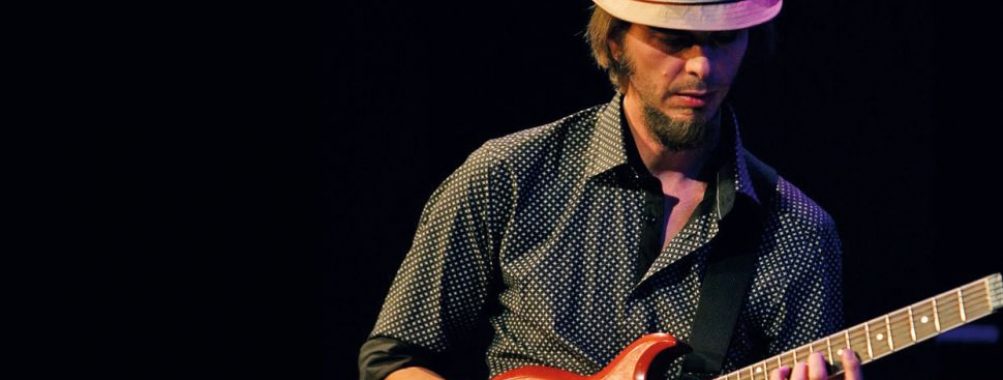
Alex Machacek Tales: The 24 Tales Interview

July 14, 2017
Alex Machacek, News
Alex Machacek

Buy

Itunes-note


Amazon


Bandcamp

Alex Machacek is one of the few guitarists on the jazz fusion scene who is as revered for his writing as he is for his playing. Through his solo albums and collaborative recordings, the Austrian-native – who currently lives in Southern California and teaches at GIT – has always displayed a knack for writing harmonically rich pieces that put (at least) as much emphasis on the composition itself as any improvisation it may include. Yes, he’s a gifted soloist with Holdsworth-like chops, but his writing is as big a part of his overall musical voice as his playing is.

Machacek has often employed the compositional technique of writing around, or over, a pre-existing piece of music, such as a drum solo. Machacek did just that for his latest album, “24 Tales” (Abstract Logix), but this project was far more complicated than anything he’s taken on in the past. The bedrock of “24 Tales” is an amazingly diverse 51-minute drum solo, performed by Marco Minnemann – a frequent Machacek collaborator. Machacek composed his own music over the solo, which he divided into 24 individual pieces. The 24 tracks are presented without gaps on the CD, which reemphasizes the fact that each song works as it’s own stand-alone piece, and as part of the big picture 51-minute composition. The final result is one of the most incredible albums of the year – an ever shifting cornucopia of styles and moods, peppered with Machacek’s searing guitar playing. I asked Macachek recently about “24 Tales”, his approach to composition, and his upcoming plans.

Abstract Logix: “24 Tales” has got to be the most unique album you’ve ever made. You’ve composed over drum solos in the past, but never one of this magnitude. Is it safe to say this was the biggest challenge of your career so far?

Alex Machacek: In certain aspects – definitely.

AL: You’ve mentioned that your original intention was to compose over only a small section of Marco’s solo. When you first decided to write for the whole thing, what were your initial thoughts or concerns?

AM: Yes, initially my plan was to make a drum recomposing CD with different drummers. (I still am planning to do that eventually) Later on Marco came up with his Normalizer 2 idea – giving the same solo to different musicians / composers. My main concern was the fact that there is no pause in the entire solo. I just pictured the listener and was a bit worried that 51min of music with no gap could be a bit overwhelming.

AL: “The Improvision” album with Jeff Sipe and Matt Garrison was similar, in that it too consisted (mostly) of music you composed over a pre-existing backdrop. Describe the differences between composing over improvised studio jams as you did for that album, and writing over a drum solo as you did for this one.

AM: “The Improvision” is a completely different story – we were in the studio together and we jammed. I always had a good idea if I already had enough material of a certain jam / mood. And then we moved on to the next piece. Plus Matt Garrison gave me so much material to work with on a melodic and harmonic level. And not to forget the interaction between bass and drums – so that was already there when I started doing my stuff around it. But with Marco’s solo I had no influence at all – I think he recorded it before we even met. And when you compose to a drum solo your harmonic and melodic canvas is empty. Of course the drums can also play “melodies” or “melodic curves” but it is a bit more vague (naturally…).

AL: You’re really at the forefront of this compose around style of making music. Is it more challenging for you to compose that way; where you have a pre-determined boundary you need to work with? Or is it harder when you’re writing something completely from scratch and you have an open canvas.

AM: It depends on the material you are composing around. Obviously it can be very inspiring and get you to do stuff that you wouldn’t have done otherwise. I guess this is the part that I like. But after finishing this project I am really enjoying the open canvas approach too. Both approaches have their pros and cons.

AL: Which approach do you prefer?

AM: I couldn’t tell you…

AL: When you first hear a drum solo that you’re going to write over, do you hear melodies in your head to go along with it right away?

AM: Sometimes. While listening to it I made notes of what I thought could go well with it.

AL: You’re well known as a great guitarist and improviser, but I think your writing is what really sets you apart from the pack in the jazz fusion scene. Do your GIT students ever pick your brain about composition or arranging? Or are they mainly interested in your playing and improvising techniques.

AM: Some students ask me a bit about my approach to composition but that happens rarely. The most common question I get is the good old “how to play over changes?”.

AL: How long did it take you to write and record “24 Tales”?

AM: This is hard to say because I didn’t do it in one go. I started in 2007 but I got interrupted with so many other things.

AL: During that time, did you ever reach out to Marco to get feedback on what you were writing, or ask him questions about his solo?

AM: I called Marco while I was “beat mapping” the solo because I needed some help with what the hell was going on rhythmically. But since Marco did his own version as well we decided on not listening to other versions while working on your own. This could have been some unwanted influence and we wanted to avoid that.

AL: Can you explain what beat mapping is, and why you need to do it for a drum solo like this?

AM: Beat mapping is “telling” your sequencer the tempo of an audio file. It is basically some sort of tempo detection. Once you have the tempo and the meter right you can easily input midi events with the mouse on a grid. Meaning you don’t have to search where the “1” is, etc.… And since I am not a piano player, this came in really handy! All the piano / synth and bass parts were done with my mouse – note by note.

AL: Were there any particular sections of the drum solo that gave you fits, where you just couldn’t think of what to do or how to approach it?

AM: Of course – “Sweet Torture” for example. It’s a fast 9/16 ostinato with lots of stuff over it. It’s one of the longer pieces and it was very challenging for me… And also every time I finished one “song” it was very challenging to start a new one – there I was with my empty canvas again…

AL: You touch on a wide variety of styles on the album – jazz, fusion, metal, funk, prog-rock, etc. Did you go into the project with the intention of throwing in all these different styles, or did it just come out that way based on how you were interpreting Marco’s solo?

AM: That just happened while I was working on it.

AL: There are several spots on the album where you revisit melodies that were introduced earlier in the piece, even though the groove may be totally different from when the melody was first heard. How did that process work? Were there themes you knew you wanted to find a place for? Or was it more nonchalant like Hey I bet I can reuse that melody here.?

AM: The latter…and once I started doing it I started looking out for more opportunities. I see those quotes as “musical glue” that connects the individual pieces in the bigger picture. This concept has been around for a while…

AL: Anamika has some of the best examples of your writing following every nook and cranny of the drums. In particular, there’s a crazy line that starts around the 3:06 mark and ends with a cool 5-note augmented pattern that works off the drum accents perfectly. How do you go about writing a line like that? Do you start at the end and map it out backwards?

AM: Kind of… I wanted to play the 5 note pattern with Marco and just wrote a 2 1/2 bar “lead in” where I don’t double Marco…

AL: Another piece that really stands out is Air – It’s pretty short, but I love the sound of the layered guitars and piano. What’s going on in that track?

AM: I think it might stand out because it is the only piece that leaves so much space. The instrumentation is: drums, fretless bass, piano, a pad sound, some occasional synth swirls and then I have 6tracks of artificial harmonics (so that they can overlap and sustain), 2 acoustic guitars and 2 clean electric tracks and finally 2 guitar loops for the high notes which play through the entire track. The only “trick” on this one is that I am using the 2 acoustics and the 2 clean tracks in small segments to double the piano. Let’s say a phrase has for example 10 notes, acoustic 1 plays notes 1-3, clean 1 plays 4-5, acoustic 2 plays 6-8, clean 2 plays 9-10. I guess this would be called “cascading”? You can hear the same concept at the end of “Sweet Torture.”

AL: Did you improvise anything on the record? There are a few guitar solos here and there, but I’m curious if you worked them out ahead of time.

AM: There are some improvised solos and some comping but the majority of this album is composed. And that was done intentionally – I always thought of this record as a compositional project.

AL: Tell me about your recording setup for this album (such as your computer and software, mixers, etc.).

AM: iMac, Logic Pro, MOTU 828, KRK monitors

AL: How about guitars, amps, and effects?

AM: Main guitars: Bill Delap, Godin Freeway, Steinberger and Yamaha acoustic. Amp: Mesa Boogie Rectoverb with a Port City 2×12 cabinet (which is a fantastic cab btw) FX: Xotic RC Booster, BB Preamp, Arion Chorus, Line 6 DL4. Also Fractal Audio Axe FX. Sometimes I used the amp simulations of Logic Pro. And of course a slide and the EBow.

AL: Marco gave this same drum solo to several other composers to write over (John Czajkowski, Trey Gunn, and others). Have you heard any of the other versions? What are your thoughts?

AM: I heard Trey’s and John’s version and I enjoyed both of them.

AL: In other news… you’ve got some dates booked in India this August with Jeff Sipe on drums, and Neal Fountain on bass. Any other plans for this trio? “The Live Triangle Sessions” album you guys did was great.

AM: Besides the India dates we will play at the Abstract Logix festival in November. This gig will also be filmed and later released as a DVD.

AL: What else do you have on the horizon?

AM: In early September I will record with my Austrian trio. Raphael Preuschl on bass and Herbert Pirker on drums. The band finally has a name: FAT – which stands for Fabulous Austrian Trio. We will also play a couple of gigs in Austria. I am definitely looking forward to this. I still do have the intention of writing an instructional book but I don’t know when that will be. I am also working on a new duo program with my wife. Once we have enough new material we will record it and play live again.

Latest album

Latest NEWS

SUBSCRIBE

Please Subscribe your mail to get notification from AbstractLogix.


Facebook-f


Twitter


Instagram


Youtube

Copyright © 2021 ABSTRACT LOGIX

Facebook-f


Twitter


Instagram


Youtube

Copyright © 2021 ABSTRACT LOGIX
Alex Machacek’s FAT

September 10, 2012
Alex Machacek, News
Alex Machacek

Buy

Itunes-note


Amazon


Bandcamp

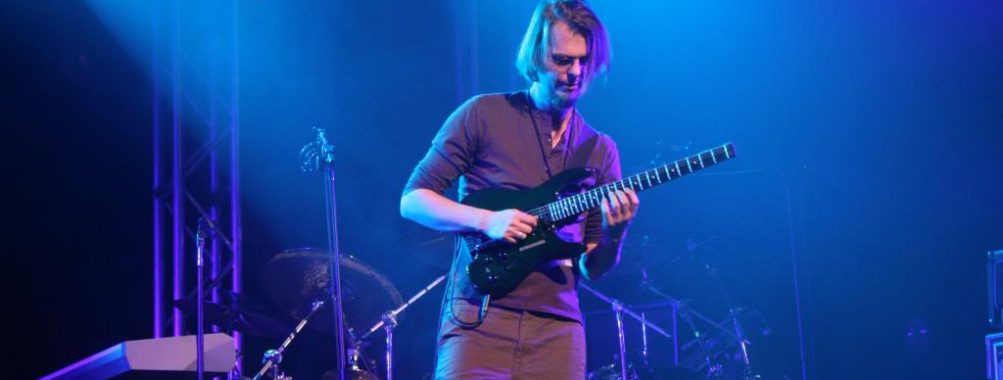
In anticipation for the release of Alex Machacek’s new studio album “FAT”(Fabulous Austrian Trio), Alex took some time to answer a few questions about his album, music, and his playing.

Neal Shaw: Your new record “FAT” features Raphael Preuschl and Herbert Pirker, who were both on “[Sic]”. How did you meet up with them again to record the latest record?

Alex Machacek: I teach at a jazz seminar every summer in Austria and everytime I am there we play some gigs together. Since I really enjoy working with Raphael and Herbert I decided to finally record another album. This trio already played together quite a bit before I moved to LA. I had always planned to produce a full album with them but on [sic] they were only introduced on a couple of tunes.

NS: How was “FAT” recorded? Was it something that stretched over a long period of time or did you guys go into the studio and knock it out?

AM: 2 years ago we went into the studio for one day. The goal was to get all the drum parts. The rest was done at home. And there it sat for a while until I finally found enough time this spring to finish it.

NS: With each record, do you feel a need to take a new direction from the last, or one up yourself if you will?

AM: Not necessarily a new direction, rather a continuation of my previous releases. Ideally, each album is a reflection of what I am up to currently.

NS: How do you approach writing a piece? Does it start with a melody or rhythmic idea, and is then build upon, or do you hear the whole finished work in your head?

AM: The writing process varies from piece to piece. Sometimes I do have a very conventional approach and just write a melody / chords / solo sections. At other times I just write rhythms and add “notes” to it later. But I still like the idea of recording (somewhat conducted) jams in the studio and writing the music later at home. Regardless of the approach I do have a clear idea of the finished work in my head.

NS: You’ve recorded albums to pre-recorded drum takes. Would you say it’s easier to compose off the drums because you’re not starting from scratch, or is it more difficult because you can’t easily change what you are given to work from?

AM: Starting with a blank page can be somewhat daunting. In this sense recomposing is a fresh and inspiring approach. At the same time, you are confined to the given material which can be quite challenging at times. I wouldn’t say one method is easier than the other – it’s just different.

NS: How’d you come to meet Terry Bozzio?

AM: This topic will be covered extensively on my website under the FAQ section. www.alexmachacek.com

NS: Percussion is always a featured part of your music. Do you have specific parts in mind during the writing process or do you let the drummers play what they feel?

AM: I have done both and it totally depends on the drummer and the piece of music.

NS: Most of your live shows and albums feature a trio. Is there some comfort in trios?

AM: The trio setting is a great starting point which gives me lots of freedom harmonically speaking. I constantly ask myself which instrument I would like to add – no conclusion so far! Not to mention the economics and logistics involved in producing CDs and taking bands on the road.

NS: If money weren’t a factor, what would the dream Machacek ensemble look like?

AM: Ok, let’s dream a bit: besides drums and bass I’d like to have a string quartet, piano, bass clarinet, my own sound engineer and, drumroll please: a team of roadies.

NS: There are hints of metal in some of your pieces. What initially got you into music and was there a moment or artist that sparked your interest for jazz and fusion?

AM: Metal is not the kind of music that I personally listen to. But I do like the force of power chords (occasionally). Just like many others I always had a strong interest in music but after listening to Joe Pass I wanted to find out more about Jazz. And from there it went on and on. Every time I heard something new and appealing I wanted to know more.

NS: You’re a guitarist that has studied a lot; from the conservatory of Vienna to Berklee School of Music in Boston, and you teach as well. Is there ever an end to studying music and an end to music in general and where you can take it?

AM: Hopefully not 🙂

NS: A lot of people ask about gear, but it seems like you have a very simple rig: One guitar on the road, midi board, or axe effects and an amp. Do you think having a ton of gear is essential to a great player, or is it more what’s in the player’s head, and fingers?

AM: It totally depends on what you want to do. Gear can be very inspiring and get you to musical places you wouldn’t go otherwise. But it is no substitute for musical imagination.

NS: You recorded an amazing instructional pentatonic DVD. Are there any more educational things in the works, or is piracy still keeping you away?

AM: I have an abundance of ideas for educational material. BUT, I do have to make a living. It seems private lessons are the only thing piracy has no control over. Still, I have not abandoned the idea of a book or a DVD entirely.

NS: The pentatonic scales are a part of your musical arsenal, but what other scales and modes do you often use in your playing?

AM: Basically the usual suspects: major, melodic minor, augmented and occasionally dominant diminished.

NS: What are your opinions on the music industries’ current condition?

AM: One word: hostile!

NS: What do you do outside of music that inspires you? Are there any new guitarists, or artist in general that have caught your attention that you think people should check out?

AM: I started playing Ping-Pong, I bake my own bread (old school: without the bread making machine!) and I ride my bicycle. My latest discovery is the album Rom / Schaerer / Eberle – this is a fantastic trio, check it out!

NS: Fusion or jazz is associated with people that take their music pretty seriously. Some of your songs like Why Not, on the new record, or “[Sic]” are quirky tunes. So the big Frank Zappa question: Does humor belong in music?

AM: Absolutely it does! At least in my sad case…

Latest album

Latest NEWS

SUBSCRIBE

Please Subscribe your mail to get notification from AbstractLogix.


Facebook-f


Twitter


Instagram


Youtube

Copyright © 2021 ABSTRACT LOGIX

Facebook-f


Twitter


Instagram


Youtube

Copyright © 2021 ABSTRACT LOGIX
SUBSCRIBE

Please Subscribe your mail to get notification from AbstractLogix.


Facebook-f


Twitter


Instagram


Youtube

Copyright © 2021 ABSTRACT LOGIX

Facebook-f


Twitter


Instagram


Youtube

Copyright © 2021 ABSTRACT LOGIX

Alex Machacek Conversations

November 25, 2008
Alex Machacek, News
Alex Machacek

Buy

Itunes-note


Amazon


Bandcamp

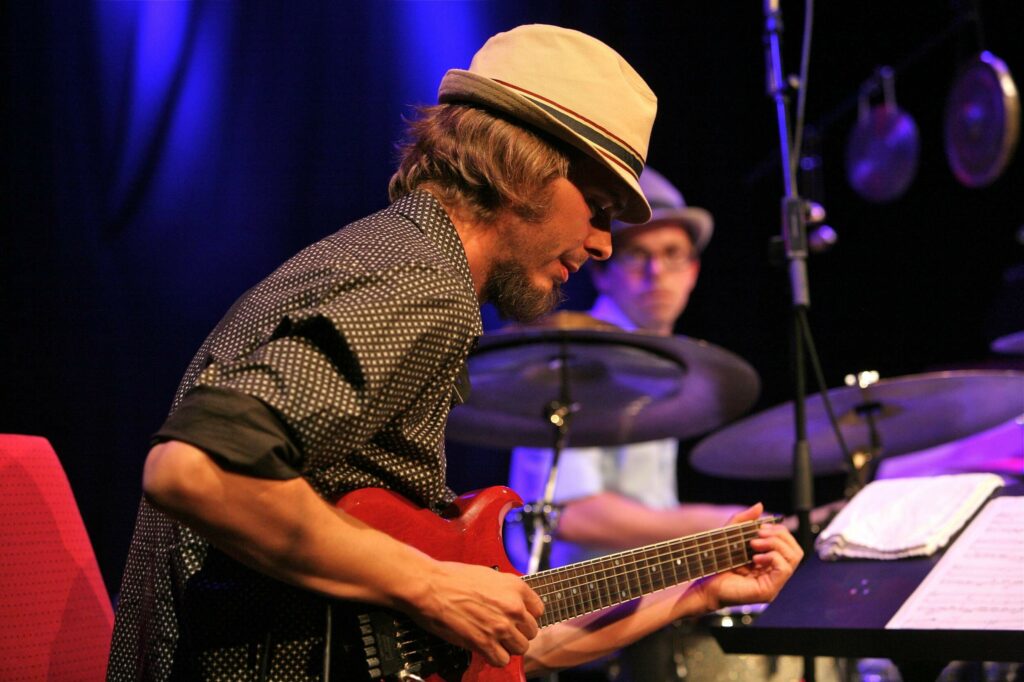
It has been about five years that I have been listening to Alex Machacek, one of my my very favorite guitar players. Originally from Austria, he now lives in Los Angeles with his beautiful singer and songwriter wife Sumitra. Alex has been teaching at Guitar Institute of Technology (GIT) and performing locally as well as globetrotting around the world with Jeff Sipe, Matthew Garrison, Virgil Donati, Marco Minnemann and others.

It has been a utmost pleasure to see this highly crafted guitarist grow as a musician. It just seemed the other day that late guitaritst Shawn Lane handed me “Featuring Ourselves” , a record that Alex did in his native Austria. Completely underground at the time, the record found its way to many hands around the world. His craftmanship was jaw dropping. I really had not heard something that interesting in a while.

After he moved to America, Alex recorded “[SIC]” , his first official worldwide release on Abstract Logix, and then a follow-up trio record – “Improvision” with ace drummer Jeff Sipe and the one and only Matt Garrison on bass, released in 2007 on AL as well.
Its just been a few years but these two albums have had some very defining moments in music and will continue to be heard for many years.

Alex has been recently hired by Eddie Jobson, the founder of U.K. to be the guitar voice for the new super band UKZ, which also features Trey Gunn, Marco Minnemann, Aaron Lippert. The band is scheduled to make their debut release and concert in 2009.

Someone like Alex Machacek does not come that often, and its not surprising that he gets accolades from guitar legends Allan Holdsworth and John McLaughlin among many others. In my mind, he is definitely one of the very hot candidates to write new chapters in guitar books.

Abstract Logix: It seems to be about 4 years that you have been living in Los Angeles. How have things been for you away from Vienna?

Alex Machacek: I have to say that I really can’t complain – which is a very untypical statement for a true Austrian!

AL: There has been a general view that for a young European musician to be for a lack of a better word ‘accepted in Europe’, you have to come to America to ‘prove’ it. Your thoughts on it?

AM: I can’t speak for Europe in general but coming from Austria there is a lot of truth to this belief. Austria is a small country with an enormous number of great musicians but it seems that the only style of music that Austria is really accepted for is classical music.
To illustrate, when I played in Japan I gave an interview for a guitar magazine and they asked me about the music scene in Austria – and they told me quite frankly that they have no idea what is going on there, because the only places they look at are New York, LA and maybe London.

AL: Alex, for people who follow your work closely, you have also proved yourself to be a great editor and producer and pretty smart engineer as well. Has it been out of necessity? Are you enjoying the experience?

AM:I have to answer yes to both questions.
Yes, it has been out of necessity for various reasons: a trivial one would be: budget…
But I also have to say that I really enjoy editing music, composing and recording around music. Sometimes this process can be quite tiresome and even frustrating because I am basically by myself throughout these processes, but on the other hand, I can dedicate as much time to any detail as I want. And sometimes I come up with stuff that wouldn’t have been possible in the typical “band in the studio” setting.

AL: Lets talk about “[SIC]”, a landmark record for you. Your collaboration with Terry Bozzio was one of the things that people came to know of. How do you reflect back on the experience?

AM: My collaboration with Terry started long before “[sic]” – in fact: some drum tracks on sic were leftovers from the “Delete and Roll” sessions.
I always enjoyed playing and working with Terry. He is a very unique musician and we had some great chemistry going on, especially live.
The other part: “[sic]” was a milestone for myself because I proved that I can make a record on a laptop – in a one bedroom apartment – in the middle of noisy Hollywood…

AL: The couple of days of making “Improvision” with the guys and then the editing and postproduction work after. Any stand out moments of the weekend, can you share with us?

AM: There were a lot of standout moments; Sipe and Garrison are wonderful musicians as well as people. We had some extreme technical difficulties in the studio but they never lost it – they always kept their cool. And the playing part was just pure joy. The idea was to just jam and get enough material so that I can finish the album at home – Matt and Jeff definitely gave me enough material.
I remember at the end of the session I wanted to have one ballad. I said to Matt: Let’s come up with a chord progression – I name the first chord, you call the next one and so on. So we came up with a neat little progression that ended up being the song Put me back to Sleep.
I took Joerg Mayr, a recording engineer and dear friend of mine with me to help record this album and I have to say without him we would have been lost.

AL: Lets talk about Sipe and Garrison, you guys seem to gel quite well?

AM: Let’s put it like this: Matt Garrison is not only a great bass player, he is also a source of creativity and everything a guitar player in a trio setting can ask for. Besides his insane chops he has such a deep sense for harmony and counterpoint, amazing!
And with Sipe it is quite similar – he always supports the band but he also opens doors to new directions if needed. Quite magical!
Before the studio sessions we played one improv gig in Raleigh (which unfortunately was not recorded) and this was pure magic. Neither Jeff nor I had played with Matt before but we created some very interesting, intimate and intricate music on the spot.
I felt comfortable and liberated from the get go!

AL: You played recently with Jeff and bassist Neal Fountain? Must have felt great to play some of your stuff live!!!

AM: Neil was the big surprise of the year. Matt couldn’t make those dates so Jeff suggested Neil. We met for a rehearsal which ended up with us just talking and getting to know each other. These are often the best rehearsals! And then we had 3 gigs where we played some material from the “Improvision” album but we also just jammed! And some of these impros were unbelievable to me. Take the first song on the live bootleg – which we entitled ‘Pinchproof’ – this was purely improvised but there is some serious harmonic depth to this piece. I remember when we played this I felt like I was flying and Neil was there to catch me!

AL: Alex you seem to have these trios that you are working with. Kai Eckhardt and Marco Minneman on the West Coast and I hear that you guys did some gigs as well in Mexico and LA. Let us in? What’s that like?

AM: Kai and Marco: this is a different vibe but it’s a great trio and I really enjoy being able to communicate in my mother tongue with these fellows. They shed a completely different light on my music. Marco comes from an entirely different background than I do, but we have some congruences.
Kai is a great bass player who I really enjoy playing with.

AL: Then we hear that drummer Virgil Donati has been gigging with you. He is a hot drummer…

AM: Virgil actually asked me to play in his band. We are mostly playing his tunes, which are challenging, to put it mildly.
Virgil recently asked me to do a European tour with Planet X – again, very difficult and challenging music but whatever doesn’t kill me makes me fat, right? That’s a literal translation from German! Just kidding!

AL: Alex Machacek with UKZ and Eddie Jobson. It seems that there was some buzz about it in 2007. I know fans are eager worldwide. How did that all go down? Where is that project currently?

AM: We are still in the process of completing an album. Recently the entire band actually met! I am only mentioning this because Trey Gunn and Aaron Lippert are doing their recordings remotely out of their own home studios.
The entire band rehearsed in LA and it was good to finally meet Trey Gunn and Aaron Lippert in person.
Eddie is now focusing on getting an EP released and there are plans for gigs in 2009. The full album will follow soon.

AL: I recently found out that you are working on a duet record with Marco Minnemann. Is that true?

AM: Yes, it is part of the Normalizer 2 project. Marco recorded a 52 min drum solo and gave this to several musicians to compose around. (John Czajkowski, Mike Keneally, Mario Brinkmann, Trey Gunn and me – Marco is also doing one version by himself)
My version and will be done by the end of this year. All I can say so far is that I’m enjoying the process and am excited every step of the way!
I remember I always wanted to do an album with just myself and my computer! Now it is Marco, me and the computer and occasional guest appearances of my wife, Sumitra. This album’s focus lies more on the compositional side. Some of the stuff on my version is simply not doable live – thanks to the punch-in option on my computer….

AL: Are you planning to do anything with your wife Sumitra? Indian Girl was refreshing on “[SIC]”.

AM: Yes, we are talking about a duo album as soon as the time is right, but we also are thinking of another band or ‘non-duo’ project. Since I am very busy now this will take a bit.

AL: What are your future plans? You already seem to have a busy schedule. Anything you care to tell us?

AM: I will do another drum recomposing CD but this time with a lot of different drummers. So far I have commitments from: Jeff Sipe, Gary Novak, Chad Wackerman, Minnemaus, Gary Husband, Herbert Pirker, Virgil Donati.
And then I am also thinking of doing a duos record – different duos….
And I want to do an album with Marco and Kai..
I am also working on writing an educational book…
Many, many plans…!

Latest album

Latest NEWS

SUBSCRIBE

Please Subscribe your mail to get notification from AbstractLogix.


Facebook-f


Twitter


Instagram


Youtube

Copyright © 2021 ABSTRACT LOGIX

Facebook-f


Twitter


Instagram


Youtube

Copyright © 2021 ABSTRACT LOGIX

Alex Machacek

Alex Machacek Interview

April 19, 2003
Alex Machacek, News
Alex Machacek

Buy

Itunes-note


Amazon


Bandcamp

When one thinks of Austria; jazz-rock guitarists don’t usually come to mind. Alexander Machacek wants to change that. Alex has released a stunning new CD called “Featuring Ourselves”. While Machachek maintains a core sound of his own, some of his playing is similar to what you may hear from the guitars of Frank Zappa and Alan Holdsworth. Abstract Logix was able to ask Alex a few questions.

AL: How did you get started?

AM: As a kid I took classical guitar lessons for 6 years but then I became more interested in electric guitar. At the age of 17 I went to the local conservatory and finished there with a degree in Jazz Guitar. Then I attended the Berklee College of Music in Boston for 2 semesters. After this I went back to Austria and studied music education at the conservatory and finished again with a degree.

AL: “Featuring Ourselves” has a unique sound. But, influences can be heard.

AM: I was definitely aware of the fact that one can hear my influences from Holdsworth and Zappa on this CD which was the reason why I thanked them in the additional thanks-section. Alan Holdsworth was a big influence for me. I remember when I first heard him I was completely blown away and I had absolutely no idea what this guy was doing. So I started transcribing some of his solos and learn them. I tried to get every record of his. What I admired so much about Zappa was his sense of humor in many of his compositions and the fact that his bands were always so well prepared/rehearsed. The combination of these qualities will always fascinate and motivate me…unfortunately; they are rarely to be found… Everyone has their heroes. Holdsworth and Zappa are certainly two of mine. I do not try to deny these influences and at the same time I feel that my playing has become more personal.

AL: You have been working with drummer Terry Bozzio?

AM: Gerald Preinfalk and I helped to mount Terry’s premiere of his chamber works at the Jazzfest Wien. In addition to Terry’s compositions, Gerald and I wrote 3 trio tunes which we played during this concert as well. We had a great chemistry going on and decided that we should continue as a trio. In 2001 we recorded a trio CD called “Delete And Roll” and the name of the band was BPM for Bozzio, Preinfalk, Machacek. We played 2 tours in Europe promoting the album. BTW, the CD is available at www.terrybozzio.com. In February this year we played a gig in Austin, Texas but this time with Patrick O’Hearn on bass instead of Gerald. The show was filmed and will be released as DVD this year. The good thing about Terry is that he plays exactly the way I always imagined it to be. We interact so well together. We are definitely musical soul mates.

AL: Did the new album come out the way you wanted it to?

AM: The concept (if there was one…) was to have strong compositions and blowing as well. Almost all the parts were written out (except for the solos, of course!). This was my debut-CD and naturally, I would like to move forward, which I think I have already done with the “Delete And Roll” album. The biggest difference here is that the interaction, the interplay is the main focus which didn’t stop us from performing difficult heads.

AL: How did coming from Austria influence your direction?

AM: Well, I can not yodel. No, seriously… of course I also listen to classical music, which is still a big part of Austrian culture, and I am currently involved in projects with contemporary composers.

AL: How do you find your voice?

AM: I try to distinguish myself by playing what I hear, i.e. by trying to contribute to the music by playing it the way I hear it and not by just letting my fingers do what they would automatically do. Sometimes it works, sometimes it doesn’t. The main thing to me is to be aware of that difference.

AL: What is your approach to writing music?

AM: I am trying to write sing-able or at least recognizable heads. And most of the time I start out just writing rhythms which become melodies later. Sometimes I use the guitar but sometimes I just sing some lines (very slow of course) and program them into my computer and then learn how to play them on the guitar. And BTW I can’t play piano at all I can just program the piano.

AL: Do you have a favorite axe?

AM: Since I don’t have any endorsements, I actually shouldn’t be advertising here, but anyway, mainly I use a cheap Steinberger Spirit guitar (with new pickups and frets in it). The headless format makes it much easier to travel these days and the guitar is very light. On the amplifier side I use a Mesa Boogie (which are ridiculously expensive here in Europe. These amps cost double here in Europe!!!) As for effects I use a Boss GT3, a Line 6 delay.

AL: Do you have any principles you live by?

AM: My principles which I try to live by are Fun!…. Maintaining a sense of humor!….Continuity?? Never taking myself too seriously and never to lose my love for music

Latest album

Latest NEWS

SUBSCRIBE

Please Subscribe your mail to get notification from AbstractLogix.


Facebook-f


Twitter


Instagram


Youtube

Copyright © 2021 ABSTRACT LOGIX

Facebook-f


Twitter


Instagram


Youtube

Copyright © 2021 ABSTRACT LOGIX

Recent Posts

  • GLOBAL FUSION PIONEERS SHAKTI NOMINATED FOR TWO 2026 GRAMMY™ AWARDS
  • Shakti – ‘Mind Explosion’
  • ‘THIS MOMENT’ AWARDED WITH GRAMMY
  • GRAMMY™ NOMINEE FOR BEST GLOBAL MUSIC ALBUM – SHAKTI’S ‘THIS MOMENT’
  • GLOBAL FUSION ALCHEMISTS SHAKTI ANNOUNCE NORTH AMERICAN TOUR

Recent Comments

  • irontemplates on Guns and Plants: Stardust
  • irontemplates on Carla & Bones: Trailblazers
  • irontemplates on Mantis: Glam Porn (Vinyl)
  • irontemplates on Love Elexir
  • irontemplates on Sweater The Rise

Archives

  • November 2025
  • June 2025
  • May 2024
  • December 2023
  • February 2023
  • May 2022
  • February 2022
  • June 2021
  • May 2021
  • April 2021
  • March 2021
  • February 2021
  • January 2021
  • July 2019
  • May 2019
  • February 2019
  • September 2018
  • August 2018
  • July 2018
  • February 2018
  • January 2018
  • November 2017
  • October 2017
  • September 2017
  • July 2017
  • November 2016
  • August 2015
  • May 2015
  • January 2015
  • November 2014
  • October 2014
  • August 2014
  • June 2014
  • February 2014
  • July 2013
  • May 2013
  • April 2013
  • February 2013
  • December 2012
  • September 2012
  • July 2012
  • June 2012
  • March 2012
  • May 2010
  • April 2010
  • December 2009
  • October 2009
  • August 2009
  • July 2009
  • May 2009
  • December 2008
  • November 2008
  • October 2008
  • August 2008
  • April 2008
  • February 2008
  • November 2007
  • October 2007
  • September 2007
  • April 2007
  • March 2007
  • February 2007
  • January 2007
  • December 2006
  • October 2006
  • September 2006
  • July 2006
  • June 2006
  • May 2006
  • April 2006
  • March 2006
  • February 2006
  • January 2006
  • October 2005
  • September 2005
  • August 2005
  • June 2005
  • May 2005
  • March 2005
  • January 2005
  • December 2004
  • September 2004
  • August 2004
  • July 2004
  • June 2004
  • May 2004
  • April 2004
  • March 2004
  • January 2004
  • December 2003
  • November 2003
  • September 2003
  • July 2003
  • June 2003
  • May 2003
  • April 2003
  • February 2003
  • January 2003
  • November 2002
  • October 2002
  • June 2002

Categories

  • Abstract Logix
  • Adam Nitti
  • Alex Machacek
  • Alex Skolnick
  • Allan Holdsworth
  • Andrea Marchesini
  • Anil Prasad
  • Avi Bortnick
  • Barry Cleveland
  • Barry Richman
  • Bela Fleck
  • Ben Monder
  • Bill Bruford
  • Bill Connors
  • Brett Garsed
  • Bunny Brunel
  • Chad Wackerman
  • Chris Beckers
  • Chris Poland
  • Chris Taylor
  • Chuba Aomori
  • Cindy Blackman
  • Colin D'Cruz
  • David ‘Fuze’ Fiuczynski
  • Debashish Bhattacharya
  • Dennis Chambers
  • Dewa Budjana
  • Dominic Miller
  • Dominique di Piazza
  • Ed DeGenaro
  • Ehsaan Noorani
  • Featured
  • Featured – John
  • Frank Gambale
  • Fresh News
  • Garaj Mahal
  • Gary Husband
  • Gary Wills
  • General
  • George Brooks
  • Gerald Gradwohl
  • Gergo Borlai
  • GIRLS DON’T LIKE REAL JAZZ
  • Gregg Bendian
  • Hadrien Feraud
  • Henry Kaiser
  • Hiromi
  • Hugh Ferguson
  • Ian Patterson
  • Jack DeJohnette
  • Jahloon
  • Jeff Babko
  • Jeff Berlin
  • Jeff Coffin
  • Jeff Richman
  • Jeff Sipe
  • Jennifer Batten
  • Jimmy Haslip
  • Jimmy Herring
  • John Czajkowski
  • John McLaughlin
  • John Molo
  • Jonas Hellborg
  • Keith Carlock
  • Ken Talve
  • Kevin Scott
  • Kirk Covington
  • Mandolin U. Shrinivas
  • Marc Rossi
  • Mark Egan
  • Mark Mondesir
  • Matthew Garrison
  • Mattias IA Eklundh
  • Michael ATONAL Vick aka VVV
  • Michael Landau
  • Mike Seal
  • Mitchel Forman
  • Nat Janoff
  • News
  • Ney Mello
  • Nguyen Le
  • Nima Rezai
  • Ohm
  • Oz Noy
  • Ozone Squeeze
  • Pandit Debashish Bhattacharya
  • Pat Martino
  • Paul Hanson
  • Percy Jones
  • Peter Fernandes
  • Prasanna
  • Rai Thistlethwayte
  • Rakalam Bob Moses
  • Ranjit Barot
  • Ray Gomez
  • Rez Abbasi
  • Richard Hallebeek
  • Rob Levit
  • Scott Henderson
  • Shakti
  • Shane Theriot
  • Shankar and Gingger
  • Shankar Mahadevan
  • Shawn Lane
  • Souvik Dutta
  • Stanley Clarke
  • Steve Khan
  • Steve Smith
  • Steve Topping
  • Stu Goldberg
  • Surinder Sandhu
  • T Lavitz
  • Terri Lyne Carrington
  • The 4th Dimension
  • The Mahavishnu Project
  • Tom Guarna
  • Tony Grey
  • Tony Smith
  • Trilok Gurtu
  • Uncategorized
  • Ustad Zakir Hussain
  • V Selvaganesh
  • Vernon Neilly
  • Vinnie Colaiuta
  • Walter Kolosky
  • Wayne Krantz
  • Wayne Shorter
  • Zakir Hussain

Meta

  • Log in
  • Entries feed
  • Comments feed
  • WordPress.org

SUBSCRIBE

Music news delivered to your inbox

Follow Us


COPYRIGHT © 2023 ABSTRACT LOGIX