• RELEASES
  • VIDEOS
  • ARTISTS
  • NEWS
  • ABOUT
  • STORE

asarkar

GLOBAL FUSION ALCHEMISTS SHAKTI ANNOUNCE NORTH AMERICAN TOUR

February 13, 2023
Abstract Logix, Bela Fleck, John McLaughlin, Shakti, Shankar Mahadevan, Zakir Hussain
Abstract Logix, Bela Fleck, Ganesh Rajagopalan, John McLaughin, Selvaganesh Vinayakram, Shakti, Shankar Mahadevan, world music, Zakir Hussain

Co-Founders John McLaughlin and Zakir Hussain Lead Current Lineup On First U.S. Tour In 16 Years

With Special Guests Béla Fleck, Bill Frisell and others on select shows

More dates and special guests to be announced at a later date.

Feb 6, 2023: Following word of the Summer 2023 release of This Moment – their first new studio album in 46 years – revolutionary world music ensemble Shakti will continue to discover and explore the musical common ground bridging East and West on an extensive U.S. tour, beginning August 17 in Boston. Born in the mid-1970s out of the deep artistic and spiritual connection bonding British guitarist John McLaughlin and Indian tabla player Zakir Hussain, Shakti’s cross-cultural musical conversation dissolved boundaries with uncommon passion, grace, and dexterity – awakening subsequent generations of musicians to the possibilities of such hybrids in the process. Alongside McLaughlin and Hussain, today’s Shakti features renowned vocalist Shankar Mahadevan, violinist Ganesh Rajagopalan, and percussionist Selvaganesh Vinayakram (son of original Shakti ghatam player T.H. “Vikku” Vinayakram).

Looking ahead to the performances, McLaughlin equates the endeavor to a homecoming of sorts. “Shakti was born in the USA in 1973,” he reflects, “and is also no stranger to American audiences. We’ve played concerts all over the US from coast to coast and north to south – and everywhere we’ve played, we’ve had wonderful audiences.”

Joining Shakti on more than half of the dates will be another performer dedicated to intermingling and transcending genres, Béla Fleck, who will open the performances with a solo set. “Hearing Shakti was a revelation and I started listening right when they started,” Fleck recalls. “Something about Shakti, and also making music with Zakir, was very relatable – perhaps akin to the acoustic guitar and fiddle. But it wasn’t until playing with Zakir and Edgar Meyer [on 2009’s Melody of Rhythm: Triple Concerto & Music for Trio] that I started having more of a sense of what they were up to. Keeping in mind the virtuosic and energetic level of the band, I’ll be attempting to create a solo set that mesmerizes and excites.”

In addition, renowned guitarist Bill Frisell will also be opening the Shakti concerts with solo sets on certain selected dates.

“Béla Fleck and Bill Frisell are both truly fine musicians whom I’ve admired for decades,” McLaughlin says.

With the recording of their new studio album now complete, the members of Shakti now await the opportunity to continue their pan-global dialogue. “In our initial incarnation,” Zakir Hussain concludes, “we did not always have the time nor the means to explore. Now, with the decades of individual musical experiences we all have poured into this, the result reveals an extraordinary depth and level of interaction within this band.”

Preliminary USA Tour Dates

Show Date  Venue                                                  City, State

8.17.2023 Wang Theatre at Boch Center                  Boston, MA ***
8.19.2023 The Capitol Theatre                          Port Chester, NY ***
8.20.2023 Prudential Hall                                  Newark, NJ *
8.22.2023 Keswick Theatre                                  Glenside, PA
8.23.2023 Wolf Trap                                          Vienna, VA *
8.25.2023 Cobb Energy Performing Arts Center  Atlanta, GA ***
8.27.2023 Koka Booth Amphitheatre                  Cary, NC *
8.29.2023 Palace Theatre                                  Columbus, OH *
8.31.2023 Ryman Auditorium                                  Nashville, TN ***
9.3.2023         Ravinia Festival                                  Highland Park, IL *
9.5.2023         Arlene Schnitzer Concert Hall                Portland, OR ***
9.6.2023        Paramount Theatre                                 Seattle, WA *
9.8.2023        Mondavi Center for the Performing Arts Davis, CA **
9.9.2023        Davies Symphony Hall                          San Francisco, CA
9.11.2023 Irvine Barclay Theatre                          Irvine, CA
9.14.2023 Hill Auditorium                                  Ann Arbor, MI *
9.16.2023 H-E-B Center                                          Austin, TX *

*with Bela Fleck
**With Bill Frisell
***TBD

  • ** w/ Bill Frisell
Shakti

World Fusion Pioneers- John McLaughlin and Zakir Hussain mark 2023 return with Shakti 50th anniversary album and world tour

May 18, 2022
Featured, Featured - John, News

World Fusion Pioneers- John McLaughlin and Zakir Hussain mark 2023 return with Shakti 50th anniversary album and world tour

Shakti

An unprecedented, transcontinental collaboration, Shakti united eastern and western musicians, and in the process forged the template for what is now called “world music.” From the West came virtuoso British guitarist John McLaughlin, who re-wired jazz via his work with Miles Davis and the Tony Williams Lifetime. From the East came visionary tabla player Zakir Hussain, who had accompanied legendary Hindustani musicians from adolescence. A music shop owner in New York City’s Greenwich Village connected the two in 1969, sowing the seeds of what was to become Shakti. “There wasn’t a first meeting,” Hussain recalls today. “It felt like a reunion of long-lost brothers…”

In 1973, McLaughlin stunned the music industry by walking away from the Olympian popularity and acclaim of his pioneering jazz/rock ensemble, the Mahavishnu Orchestra. Something else was calling out to him – a music that reflected his evolving spiritual practice while feeding his insatiable hunger to converse, communicate, and explore.

With Hussain, violinist Shankar, and ghatam player T.H. “Vikku” Vinayakram, McLaughlin founded Shakti. “For me,” McLaughlin reflects, “it was an imperative that Shakti become my permanent group after the Mahavishnu Orchestra.” Together they honed an ecstatic new fusion, blazing uncharted pathways and demonstrating the potential of such global composites to generations of musicians around the world.

Now McLaughlin and Hussain are preparing to resume their journey – joined by percussionist V. Selvaganesh (T.H. Vinayakram’s son), vocalist Shankar Mahadevan, and violinist Ganesh Rajagopalan – for an album of new compositions and a world tour marking Shakti’s 50th anniversary. Today’s Shakti honors the legacy of the original band by acknowledging their tradition while continuing to push beyond existing boundaries into new musical landscapes. “It’s really a thrill,” McLaughlin says of Shakti’s 50th anniversary plans. “I’m delighted to be part of this marvelous tradition of the Shakti group.”

Stay tuned over the next couple of months on album release date, tour schedules, support acts, special guests and much more.

Reach out to Shakti management with any inquiries via http://eepurl.com/h2flTH

Krantz Carlock Lefebvre

Wayne Krantz goes on tour exactly two years after the start of the pandemic

February 21, 2022
General, News, Wayne Krantz
Wayne Krantz, What's New

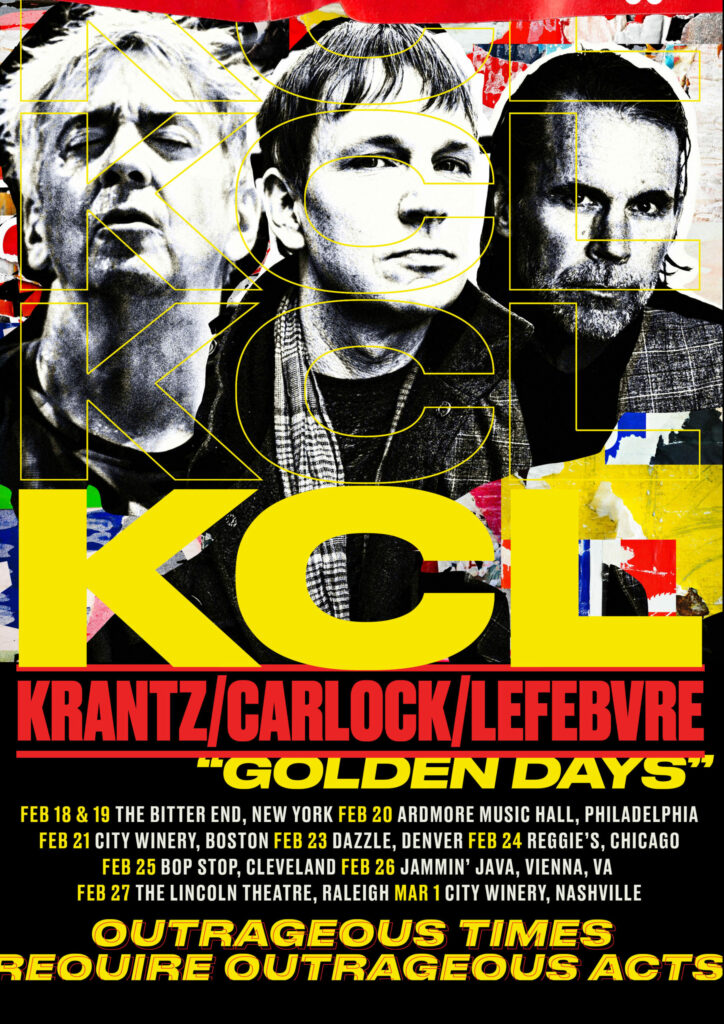
After their world tour during January and February 2020, right before the pandemic, KCL, the iconic, genre-bending powerhouse trio featuring guitarist Wayne Krantz, drummer Keith Carlock and bassist Tim Lefebvre is returning with a string of dates to kick off their “Golden Days” world tour, starting in New York City on Feb 18 at The Bitter End.
Cutting live recordings from the club and posting them online in the early days of the internet and touring only sporadically, KCL developed a thoroughly original style of interactive group improvisation inspired in part by the great Miles Davis Quintet of the 60s but played out in spontaneously generated contexts of heavy funk, rock, and electronica instead of straight-ahead swing.
As other instrumental bands of the day dabbled in derivative fusion and retro-jazz, KCL became an underground phenomenon, cultivating an international following of devoted fans of every stripe looking for an alternative creative music that served the mind, body, and spirit. Relentlessly grooving, always innovative, never complacent – KCL made contemporary music that resonated beyond category.
Other sideman obligations sidelined the band soon after their Abstract Logix release, “Krantz Carlock Lefebvre,” in 2010, but their reputation continued to expand globally through fan circulation of the band’s many live videos and recordings. Now, in 2022, KCL re-ignites to tour with incendiary shows in the USA, and in Europe and Asia later in the year.

  • TOURDATES
    February 18, The Bitter End, New York City
  • February 19, The Bitter End, New York City
  • February 20, Ardmore Music Hall, Ardmore, PA
  • February 21, City Winery, Boston, MA
  • February 23, Dazzle, Denver, CO
  • February 24, Reggies, Chicago, IL
  • February 25, Bop Stop, Cleveland, OH
  • February 26, Jammin Java, Vienna, VA
  • February 27, The Lincoln Theatre, Raleigh, NC
  • March 1, City Winery, Nashville, TN
Vinnie Colaiuta

Podcast with Vinnie Colaiuta and John McLaughlin

June 23, 2021
John McLaughlin, News, Vinnie Colaiuta
John McLaughlin, Vinnie Colaiuta


Bandcamp

Vinnie Colaiuta invited one of the most influential guitarists of our time, John McLaughlin in his podcast Breakfast with Vinnie.

A living legend of improvised music, with a career now spanning more than five decades, John McLaughlin opens his heart about how music has been a primary focus of his life and about his wonderful journey till now. He also discussed about his new album, “Liberation Time”, which is all set to release on 16th July, 2021 on Abstract Logix.

To listen to the entire podcast click here: https://breakfastwithvinnie.com/episodes?fbclid=IwAR1ZGKd_Ad_z71j4uyIWYKTkJgvRp3jvq_C7IEVeC92YQSXNkgWMf0KyIe8

John McLaughlin

John McLaughlin covers Straight No Chaser by Thelonious Monk for India fundraiser

May 7, 2021
John McLaughlin, News
John McLaughlin

AN URGENT PLEA FROM JOHN McLAUGHLIN:
Guitar icon releases exclusive video to raise awareness and funds for COVID relief in India, asking all to donate to Project Hope today.

John McLaughlin has made no secret of the musical and spiritual debt that he owes to the people and nation of India. Whether explicit (the unprecedented east/west hybrid of his beloved Shakti ensemble) or implicit (the daring rhythmic structures he transmitted via the Mahavishnu Orchestra), India has exerted a gravitational pull on McLaughlin’s life and music, and his gratitude is boundless.

Now, with India suffocated by a rampant outbreak of the deadly COVID-19 virus, McLaughlin is asking all of us to give just a little in support of relief efforts there. To encourage donations to the global health and humanitarian organization Project Hope (www.projecthope.org) — who are providing essential supplies and personnel to the Indian people — he has gathered a group of musician friends in Monaco to film an exclusive version of Thelonious Monk’s immortal blues “Straight No Chaser.” This fiery performance is his humble offering, a beacon beaming out to his many admirers with the hope of helping to offset the terrible blight now ravaging India.

Captured live, the performance features McLaughlin alongside pianist Roger Rossignol, bassist JM Kiki Aublette, and drummer Nicolas Viccaro, investing Monk’s timeless, knotty blues theme with an innovative spark and infectious abandon. Through his improvisation, alternately soaring and keening, McLaughlin delights in paying tribute to Monk’s deft rhythmic constructions and cunning use of dissonance. His compatriots are with him at every step, resulting in a conversational, refreshingly human treatment of this timeless standard.

“The world is in dire straits,” McLaughlin implores, “but India is just catastrophic: People dying outside hospitals because there are no beds, there is no oxygen. We recorded this video thinking of them. It is our gift to you in the hope that you will make a small gift.”

John McLaughlin

John McLaughlin announces new album Liberation Time

April 28, 2021
John McLaughlin, News
John McLaughlin

Preorder the album | Get Free download

Bandcamp

Recorded remotely during lockdown, new album examines the pandemic era with a provocative mix of catharsis and reflection.

A living legend of improvised music, with a career now spanning more than five decades, John McLaughlin is no stranger to translating tumultuous moments into compelling, thoughtful audio art. Witness his searing contributions to Miles Davis’s infamous Jack Johnson sessions, the explosively pioneering rock/jazz hybrid he helped create as a member of the first edition of Tony Williams’s “Lifetime”, or the expansive explorations encompassed by his own music — be it the rhythmic revolution of the Mahavishnu Orchestra, the unprecedented east/west fusion of Shakti, or the thrilling telepathic interplay his current outfit, the 4th Dimension.

With his newest album, “Liberation Time”, McLaughlin draws from one of humanity’s most fraught, uncertain epochs to produce music that gracefully reflects the uncertainty, vulnerability, and slowly awakening joy of our times. A direct response to the mandated restrictions imposed by the spread of Covid-19, the album is — unusually for McLaughlin’s recent projects — not the work of one fixed ensemble. With physical proximity no longer a prerequisite, McLaughlin drew upon decades of experience as a bandleader to select musicians best suited to each composition.

“As the Spirit Sings” introduces the album by contrasting churning rhythmic tension (stoked by drummer Vinnie Colaiuta and bassist Sam Burgess) with McLaughlin’s soaring guitar figures — all underpinned by Gary Husband’s subtle, supportive piano. The knotty post-bop figures of “Right Here, Right Now, Right On” mark one of the most jazz-inflected performances McLaughlin has laid down in some time, featuring Nicolas Viccaro (drums), Jerome Regard (bass), Julian Siegel (tenor saxophone), and Oz Ezzeldin (piano). The sense of brotherhood that bonds McLaughlin’s current 4th Dimension ensemble (McLaughlin, Husband, bassist Etienne Mbappe, and drummer Ranjit Barot) is on full display during “Lockdown Blues,” a playful refraction examination of blues tropes first released last summer to benefit the Jazz Foundation of America.

With vaccination campaigns now in full effect and a more promising tomorrow coming into view, “Liberation Time”’s title track can be felt as visceral anticipation — a rousing glimpse into an unbound future rich with possibilities. And while much of Liberation Blues revels in the sort of spontaneous interplay that has been denied by Covid restrictions, some of the album’s most touching moments feature McLaughlin alone at the piano — an instrument he has not recorded on since his 1973 collaboration with Carlos Santana, “Love Devotion Surrender”. 

“Liberation Time” is a product of its times, and yet it looks both forwards and backwards — at once drawing upon memories of better days yet reaching for a new dawn. Looking back at the album’s transcontinental sessions, McLaughlin concludes, “The wonderful thing about music is that you put the headphones on and you are all in the same room.”

Oz-noy-facebook-live-at-the-iridium

Oz Noy: Live from New York

March 17, 2021
News, Oz Noy
Oz Noy

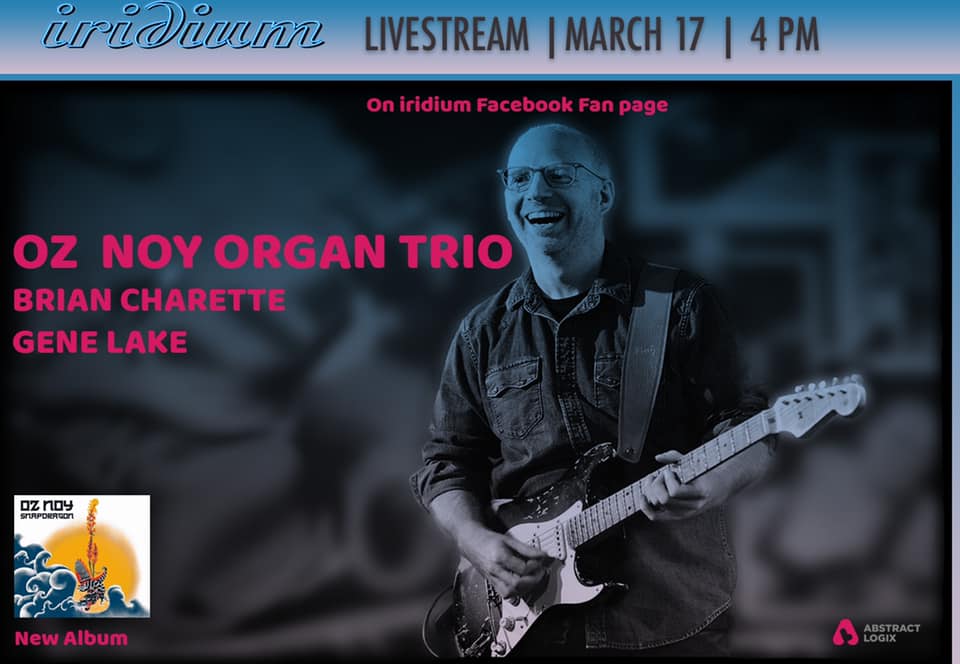
Abstract Logix recording artist Oz Noy will be doing a live broadcast from The Iridium on Wednesday, March 17, 2021 from 4 p.m. with his Organ Trio featuring Brian Charette on organ/keys and Gene Lake on Drums.

Watch it live on The Iridium Facebook Page

Wayne Krantz

Wayne Krantz 1985

February 21, 2021
Featured, Wayne Krantz
Wayne Krantz What's New

Buy

Itunes-note


Amazon


Bandcamp

Order the album today

Wayne Krantz unearths Music Room 1985 – The Thrilling Lost Solo Debut
from Guitar Iconoclast.
Previously unheard one-man recordings to be released on March 19, 2021 by Abstract Logix.

Few musicians invest so much in the moment as guitarist Wayne Krantz, whose career has been defined by a fearless embrace of risk and a willingness to charge headlong into uncharted terrain — testing himself and thrilling an ever-growing legion of dedicated, adventurous listeners. Existing in a state of relentless forward motion, Krantz rarely has the time or inclination to look back, which makes the emergence of the newly rediscovered 1985 recordings gathered as “Music Room 1985” all the more extraordinary.
To be released on March 19, 2021 on the Abstract Logix imprint, “Music Room 1985” was laid down by Krantz alone in a Reseda garage studio in the summer of 1985, with Krantz handling all the compositional and instrumental duties himself. Its six tracks predate his first solo album by five years. Not long after committing a final mix to tape, “Music Room 1985” was left behind — a victim of the machinations of the music industry and Krantz’s own rapidly accelerating career as both a bandleader and a hired gun. Even Krantz himself didn’t manage to hang on to a copy.
When reminded of the project in 2020, he reached back through his contacts and unearthed a safety copy in a now-obsolete media format. With much legwork, playback was achieved and a high-resolution transfer was made. As evidence that Krantz’s singular talent was already well established even at this early stage, “Music Room 1985” is entirely convincing. Simply as an album of music long lost to time and now only being heard, it is staggering, offering an entirely unique brand of agile, intelligent instrumental pop defined by taught rhythms and insidiously infectious melodies. Every snarled rhythmic figure is offset by soaring melodic gestures and pensive, reflective spaces.
“It wasn’t based on anything happening at the time,” Krantz says. “I was already on a contrary path and “Music Room 1985” was my version of ‘alternative’: jazz / instrumental music that worked more like pop, melody-centric with verses, bridges, hooks and few solos.”
While he reached back to these recordings out of his own curiosity, Krantz quickly realized that “Music Room 1985” has value not just as a snapshot of his journey’s progress at that moment, but in and of itself. “It held up,” he says on the eve of the project’s first release — to which no re-recording or remixing has been done. “The sounds on it aren’t very trendy, so it doesn’t sound too dated to be relevant. It’s fun to listen to: it still has the vitality, mojo, and integrity that initially made it sound good.”

Latest album

Latest NEWS

SUBSCRIBE

Please Subscribe your mail to get notification from AbstractLogix.


Facebook-f


Twitter


Instagram


Youtube

Copyright © 2021 ABSTRACT LOGIX

Facebook-f


Twitter


Instagram


Youtube

Copyright © 2021 ABSTRACT LOGIX

Wayne Krantz

Wayne Krantz

January 16, 2021
Featured, News, Wayne Krantz
Wayne Krantz

In musician circles, Wayne Krantz is something of an icon. Having come on the scene in the latter 80’s, he was already making a splash in guitar circles when he retreated from outside influence to build a style that was all his own. Emerging with a sound and technique that was as formidable as it was unique, he soon shook loose from the control of major record labels and went totally independent – in the process being one of the first musicians to put something called “the internet” to use. Restlessly creative, his output has ranged from fully composed albums to fully improvised albums with various stops in between. He had just completed a reworking of his book “An Improviser’s O. S.” when we sat down for a chat…

“An Improviser’s OS v.2”

ABLX: Rumor has it that you have a new record in the works…

WK: I do. I started writing last Summer and finished it about four or five months ago, maybe. It’s a layered thing and I’m just kind of putting it together piece by piece. It’s a little more expansive than my usual trio format – a little more complex in terms of logistics and instrumentation. I’m hoping to have it done by the Fall [2019]. That’s the goal. I just finished writing this revision on my book [“An Improviser’s O.S.”] – that’s just going to press now. So now that that’s done I can focus full time on moving forward with the record.

ABLX: So this is not a trio record?

“Howie 61”

WK: No, it’s bigger. There’s no singing and it’s a little less pop oriented than “Howie 61”. It’s sort of jazzier in a way – not swing but…. it’s a little hard to describe. It’s very composed. In terms of how I’m thinking about it, there’s almost no improvising on it – yet, anyway. It’s quite different from what I’m doing right now with the live stuff.

ABLX: Almost harkening back to say, your “Long To Be Loose” period?

WK: Yeah, in a way, except it’s not orchestrated for trio. But yeah, it’s THAT composed, I would say. I haven’t done that in a long time because the trajectory of the music has been going deeper and deeper into the improvisational side. The thing is, the improvising is always evolving. It’s not like it would be entirely inappropriate to make another record of the improvisational stuff in terms of how it might sound different at this point. I do think that’s important – that new records sound different than the ones that came before. But I’ve documented the improvisational stuff on record a lot and I kind of felt the need to get back to some writing, so that’s the thrust of this one.

“The Sellouts”
“The Sellouts – Live at Iridium” August 23 2019, Tickets on Sale

ABLX: You say the new record is “very composed.” Is it meant to stay that way when you reach the studio? In other words, is the idea to document a pretty strict representation of what’s in your head or let it morph a bit when it gets into live players’ hands?

WK: Right now, it’s [going to be] entirely composed – probably with a few solos here and there but I’m not really sure about that. What I’m going to do is basically record it as I wrote it and then listen to it. If at that point it seems too static to me…. I mean I’m not writing classical music here, it has to live and breathe. And typically I don’t write for drums, they provide for a lot of living and breathing on this stuff just because what they play is largely improvisational. But yeah, then I’m just going to make sure that the desired balance between compositional and improvisational stuff is struck in the right way.

ABLX: Do you have any musicians in mind for this project?

WK: I do but I don’t like to talk about that before it’s recorded. It’s a bunch of good people. I’m not worried about them at all. (laughs)

ABLX: Your last three studio albums all contain varying degrees of structure but even in the more improvisational oriented offerings – such as “Good Piranha Bad Piranha” – there seems to be a greater refinement of expression present than in earlier efforts. What’s your take on that observation?

“Good Piranha Bad Piranha”

WK: That’s interesting that you say that. That last one [“Good Piranha Bad Piranha”] was vastly more jammy than the other two records. Krantz Carlock LeFebvre was a pretty fair amount of writing with space left for improvising. Like I said, we’re always trying to balance those two things in a desirable way from record to record. And that balance shifts from record to record. KCL was a lot more composed than the live records I was making at the 55 Bar – which were basically just live documents of improvising. With KCL, I wrote a lot and we balanced it with improvising because that’s what that band does, largely. But “Howie 61”, that’s very, very composed. It’s basically songs that may have a solo or two here and there but there’s almost no jamming on it.

“Good Piranha Bad Piranha” was really what we do live. That was basically a live session recorded in the studio, but we could have been in a club doing that. And in fact I didn’t write at all for it. It was four cover jams with two different groups doing their own things with it. And of course that was edited because the record has to be 40 minutes long, not 120. Plus – and maybe this is what you were noticing – the way that we improvise is becoming more and more compositional over time.

I like organizing the improvising so it resembles composition in how it’s shaped and put together and how it evolves – the arc of it, the form of it. I really look for that as opposed to just taking a guitar solo over a groove, then a bass solo over a groove, then a drum solo over a groove. It’s really more of an effort to spontaneously generate stuff that has improvisational fire in it but also kind of stands as a credible piece. Something where we’re not just asking the audience to sit back and admire what good soloists we are. That’s kind of a different intent than the normal case of just going in and blowing on a riff.

So if that record seems more succinct, I take that as a really nice compliment because about 94 percent of that record was improvised. Maybe we’re making some headway… (laughs)

Remember, I’m trying to prevent people from being bored. That’s what’s going on here… seriously …(laughs)

ABLX: Even yourself, right?

WK: Well… me too, yeah, but it’s fun to play music so there’s less of a chance that I’m going to be bored. You’re asking an audience to sit there and listen to either a record or a live show of people improvising. To get them to sit for that and like it…. or listen to the record again, or come see the gig again… The main thing you’re fighting at that point is the incredibly high potential for it to be boring. You know, it’s just a bunch of guys playing their instruments. By itself, that’s really not that interesting – you have to make something of that. It’s no accident that when you go see Radiohead or something there’s a 90-foot screen behind them with state of the art video. Or you see Madonna and there’s fifty dancers on stage. Even if you see somebody artistic like Nine Inch Nails there’s state of the art lighting – there’s a show attached to this great music they’re playing. That’s part of what’s holding the audience’s attention and part of the reason they’re willing to pay 150 bucks to stand up with four or five thousand other people in an uncomfortable room – because there’s a show going on, a spectacle.

What we do is on such a modest scale compared to that, all of the interest has to come from the music itself. The show is the music and the music is the show. I always feel a big responsibility to try and figure out how to structure it in a way so that it holds up – so it’s not just three guys jamming wildly and revelling in the fact that we can play our instruments. To me, that gets boring real fast. That’s one of the reasons why I like thinking more compositionally with it because we want to improvise.

That’s the energy of this thing, that’s where living in the present with the music really is. So we want to do that but we have to figure out how to somehow give it the weight that composition has. So that becomes like a tactical exercise – how do we make it sound credible – even when you’re asking them to show up and pay for something that’s basically unprepared on some level.

ABLX: Hearing you say that, I’m thinking about the various live albums you recorded at the 55 Bar – specifically “Greenwich Mean”. Here was an album where you sifted through I don’t know how many hundreds of hours of live improv…

WK: Just one hundred… (laughs)

ABLX: Just one hundred, right. (laughs) But on that one, with the listening, cutting and pasting sections of improvs together and assembling that into a new whole, do you think that process may have spawned – in a reverse way – what is now your impulse for “compositional improvisation?”

WK: Maybe… Yeah, you know it probably did because in fact on that record in particular, whatever you hear that sounds compositional – and there’s a little bit on every track of that record, even though there are so many tracks – was all constructed. None of the stuff we were actually playing is on that record “compositionally.” It’s all stuff constructed from the improvising. Even back then I recognized that there had to be some kind of balance between compositional content and improvisational content for it to work.

Krantz Carlock Lefebvre

That really became clear to me at the beginning of the Carlock / LeFebvre band, which was much more improvisational than the Danziger / Goines band before it. “Two Drink Minimum” and “Long To Be Loose” – there was a lot of writing with that first trio. When I started that second band, we started without any composition at all. We had this weekly gig and we would just go up without any written stuff and just jam. I quickly realized, even though with certain people you can make that work, in general I couldn’t count on it every week. I can’t ask the audience – and us for that matter – to really come up with the goods consistently every week without any kind of compositional content. So there needed to be at least some writing. Then I kind of re-found the balance with that trio and that ethos for me was pretty much defined by that particular group.

That said, “Howie 61” was a very composed record and this new one is almost entirely composed so this is a shifting dynamic. It’s like whatever feels right for right now. I’m also reacting against what I’ve done before because I don’t want to keep making the same record. Some people are good at doing that and have an audience that expects that but it just never felt right to me.

ABLX: One thing I wanted to ask about was your compositional process. There are many guitarists who compose with or for the guitar. Then there are those who compose in their heads and it just finds its way out through the guitar. Your style is so distinctive that it’s a little difficult to tell so, which is it for you?

WK: In my case, until this record that I’m making now, my writing has been entirely a function of my guitar playing. I wrote for guitar, period. I looked for stuff that sounds good on guitar and from that I orchestrated it, usually for trio. Prior to this new record, I kind of hit a wall with that and felt that I had done it that way enough. This thing I’m working on now is entirely written, every single note, away from the guitar. I’ve never done that before and in fact I wasn’t even sure I could do it.

ABLX: Did you have to learn your own guitar parts?

WK: I didn’t write too much for guitar because I just presumed I’d be able to deal with that in the studio later. But yeah, I have a little bit of guitar written and I’m gonna have to learn how to play it because it didn’t come from guitar. For me that was an interesting difference with this [new] thing. It would be interesting to have a good listener’s take on this because it’s NOT strictly guitar-based, for once.

ABLX: Well, knowing your bio, you did take piano when you were younger so your window onto understanding music isn’t one hundred percent coming from guitar, right?

WK: Well, the piano lessons I took as a child don’t really consciously inform what I’m doing now. In fact, if it were not for the beauty of Sibelius software I don’t know if I could have written a record’s worth of stuff away from the guitar in any kind of way that would satisfy me. I don’t know if I’m capable of that. I mean people wrote like that 200 years ago and I suppose some people can still write like that. But I needed the orchestration aspect of being able to hear, “Oh, that’s what that bass part is going to sound like, that’s what that piano part sounds like…”

ABLX: So hypothetically, if someone commissioned you to write a piece for orchestra, how do you think you would fare?

WK: I think I could make something that I would be happy with now – because of the experience I just had writing for this record. I wrote for a bigger ensemble without touching the guitar and I’m satisfied with the result, in terms of the writing. Not that my phone is ringing off the hook with people wanting orchestral pieces but if that phone ever does ring, that’s kind of nice news for me.

ABLX: You’ve talked before that at an early point in your career, you decided to sort of sequester yourself from other musical influences to find and develop your own personal style. From there mainly worked in your own trios for many years so you have been very submerged in “your own thing” for the bulk of your career. On those occasions where you’ve stepped out of that to work with others, – i.e., Steely Dan, Chris Potter, Tal Wilkenfeld, The Ringers – do you find this has affected your ability to “play well with others “ so to speak?

WK: It’s difficult for me to assess because I have nothing to compare it to but on some level I think it probably makes it harder. No matter who it is, no matter how open minded someone is that comes to me and says, “Hey, you want to play guitar on my thing?”, they’re going to have some idea of what a guitar is supposed to do. Even if they are going to give me as much freedom as I want, they’re still going to have ideas about that. So that’s why maybe a player who is more of a stylist has less of a disconnect with that because whatever it is that the leader is hearing at that point is playable. You know what I mean? It’s like, “Oh ok, you want that kind of a thing? Cool I got that.”

Whereas with my thing, it’s so defined now as a personal thing, invariably there’s going to be some element of it that wasn’t quite was expected. Sometimes that’s a good thing and sometimes it isn’t. I think it has kind of taken care of itself by this time because really the only people that would ask me to play on their record are people that know what I do and want that sound. Nobody’s gonna call me to do an imitation of Steve Lukather – there’s no point in it.

ABLX: But is it culture shock for you to step out of your own thing and into say, The Ringers where you’re playing with Michael Landau and Jimmy Herring? There you’re not only playing different material but you also don’t often play with other guitarists.

WK: Well sure, that was a different thing. Talking about that situation specifically, the thing that really made it the most fun was that they’re such great people – and such great guitar players. It kind of can’t help being fun at that point. At the same time though, it ain’t my thing and never will be. You can kind of flirt with other things and it’s interesting to see what works and what doesn’t but ultimately it’s hard to beat your own thing once you’ve tasted it.

But it’s absolutely not a bad thing, I’m happy to have those opportunities and I hope they continue to come in occasionally.

ABLX: It is interesting to hear you in other settings though because sometimes these situations draw something out that may not have otherwise emerged. Case and point, there’s a few audio clips floating around the internet of you playing with Steely Dan – a very interesting context to hear you in. How did you feel about that gig?

WK: It was fun. I had a good time. I mean they hired me to improvise. They hired me because for that season they didn’t want to have somebody playing the stuff on the records. They needed somebody who could come up with something other than what was expected in that situation and so that was kind of a license to do my thing. You know, I used to listen to them in high school and I had a lot of respect for them, so I tried to do the music justice. It was a fun job.

ABLX: One outside project that was striking in that it sounded very natural for you was Tal Wilkenfeld’s “Transformation”. You, and the others involved, sounded very integrated – as if those tunes were written for you.

WK: Honestly, I don’t remember it very well but that’s good. If it strikes you as sounding organic then that’s cool. Tal really had listened to my thing and she knew that we had some fundamental things in common. But any of these situations are mostly fun. Now most of the time people email me stuff to play on. That’s fun too because I can really do whatever I think is right and email it off to them. It’s perfect in a way, you know. I don’t have to deal with any raised eyebrows from the engineer. (laughs) I can just do my thing and let it fly.

ABLX: You still gig pretty regularly at the 55 Bar with a range of players. What do you look for in a musician to do that trio gig with you?

WK: They have to have good time, obviously…to be creative. They have to have some kind of feel for funk and rock grooves because that’s the foundation of the music. They have to be strong rhythmically because the band rigidly adheres to four, eight and sixteen bar forms, that’s always the foundation of the improvising, so somebody has to be able to hear that in the middle of the rhythmic maelstrom that inevitably occurs. You know, it has to be creative and feel good and be funky.

And [I look for] somebody who listens – because that’s like the ‘jazz’ part of what we do, the interaction. You know, what Miles did in the 60’s with Wayne and Ron and Herbie and Tony, where they would play the same ten standards every night but always play them differently. They would react to each other differently and create all these different contours and terrains. All of them would improvise and one night was never like any other. That music heavily influenced what we do, but we don’t do it over swing grooves and standards. We do it over funk and rock. A straightforward groove drummer might not work so well for my thing, even though groove is a really important part of it, because if it’s somebody that doesn’t know how to creatively interact in the moment, then it gets compromised and we can’t really do our thing.

ABLX: You’re known for doing a lot of on-the-fly tempo changes in you live set. Where did that come from?

WK: That came from making “Greenwich Mean”. When I was assembling that record I would just pull two tempos next to each other. There’s no spaces between any of the tracks and it’s pretty much a stream of consciousness thing. So things would get edited together – these tempos that had absolutely nothing to do with each other and also keys that had nothing to do with each other. The only criterion I had as to whether to do it or not was if it sounded cool.

So after that record was done, that was one of the things I wanted to do live. But how can we do that – like a needle-drop randomly on an LP, from song to song? So that was one of the ways we found to do that – radically change the tempo marking, without it relating mathematically in any way to what came before it, so it literally would sound like dropping the needle someplace else.

ABLX: How do you do that logistically?

WK: Hey man, you know… that’s the magic. (laughs)

ABLX: Trade secrets, ok… (laughs)

WK: No no, it’s really driven by the drummer. I cue when it happens, whether we go faster or slower and how much. Then it’s up to them, at the beginning of the next phrase, to shift non-mathematically to another tempo, and play it strongly enough so that the bass and guitar can grab onto it immediately. So it’s just a feel thing. We sorta rehearsed it initially when that band started doing it. At this point I’ve been doing it for twenty years and now a lot of people can do that so it’s not so big a deal anymore. I know that James Brown and Prince also did radically different tempo shifts that they cued. I don’t know how they did it but for me it just came from trying to replicate this effect that happened almost incidentally on that record.

ABLX: It’s deceiving because it sounds like such a unified thing, one just assumes the change is a mathematical subdivision of the tempo in some way…

WK: But that’s the whole goal, man – to get it so it sounds that tight, without being that. And again, that just comes under the heading of “How do we keep them, and ourselves, from getting bored?” That’s just one of the moves we’ve come up with as a band to create a drastic change in terrain.

ABLX: Early on and for long stretches of your career you’ve been very “DIY,” in terms of putting music out. In that way you’ve almost been prophetic for how many must now look at navigating the current landscape as musicians. You’ve also been with different labels for chunks of time. Could you talk about the downsides and upsides you’ve experienced with each situation?

WK: I was completely independent of labels, managers and distributors for 10 years. That’s when I first studied HTML and learned how to build a website. This was back in the old days when having a website was like “Wow, you have a website? How do you do that?” (laughs). But that’s when I got into this idea of cutting out the middleman, as it were. Trying to make stuff as good as I could, sell it directly to whatever little audience I had at the time and see if I could survive. I kind of struggled to do that but I managed to do that for a pretty long time. And you know, the audience grew organically, bit by bit. I mean not hand over fist or anything but the audience slowly got a bit bigger, just by word of mouth and it was a cool thing. I was selling downloads on the website and doing stuff like that.

And really the only reason I entertained the idea of working with a label again – and that happened to be Abstract Logix – was that I was so far out of the business at that point that I had no way of touring. Touring involves promoters. I could be selling ten thousand records a year – and in jazz, that might be one of the best sellers of the year – but unless it was on the radar of the music business, a promoter would have no way of knowing whether I’d done that or who bought them. So I found that I couldn’t tour effectively, and I wanted to get the stuff out on the road. So the label provided an opportunity to interface a little bit with the music business – I mean, we’re still talking about an independent label here.

But immediately upon making the first record – I guess it was Krantz Carlock LeFebvre – I was on the road. We were able to do some gigs. I went to Asia for the first time. It did what I wanted it to do and got me out a little bit more, which was cool.

And in the case of that label [Abstract Logix], there were zero controls [put] on what I’m doing. I guess I’ve made three records with them and they are all really different. They all speak to different parts of what my thing is and there was nobody instructing me about what to do and where to go creatively with those. That was nice because I know some people have to deal with that on more mainstream labels. Plus the economic structure of it worked – it wasn’t as abusive as most record company contracts are.

So there was now somebody between me and the audience – and I’m not nuts about the idea of that conceptually – but it’s really hard to interface with the music business without being in it, you know, so… (laughs) If you want to be active at all, there have to be some kind of inroads and alliances made.

ABLX: I see that you’re planning on touring soon.

WK: Yeah, it looks like KCL is gonna raise its head up out of the mud and do some gigs, which should be fun. We just did one the other day after not playing for years and we all had a good time. I think we’re going to try to do something the first part of next year (2020).

ABLX: You’ve all had a lot of experiences since you played together regularly – Carlock with Steely Dan and others, LeFebvre with Tedeschi Trucks and Bowie…

WK: Hopefully all of those experiences won’t compromise their abilities too much…

ABLX: (laughs) Do you feel that experience in them when you play together now?

WK: Well, none of us play like we did then, it’s interesting. I mean I play WAY differently now so… but that’s kind of the fun part. Even though there are some differences – especially when we’re improvising – it’s still fun, it still works. So that was cool and really why we decided to try and do some more stuff.

ABLX: You said earlier that you recently finished a second edition of your book, “An Improviser’s O.S”. How is this edition different from the first?

WK: It’s a little more involved on the application side. More involved with [things like] “How can I use this to become a stronger improviser?” and “How do I make myself sound better?” – musical things. The core math of the thing is the same but I rewrote it so hopefully it’s a little clearer. I had the advantage of fifteen years of people going, “Huh? What does that mean?” So I cleared up some common misunderstandings, hopefully, and added to the content of it.

ABLX: Would you call it a guitar oriented book?

WK: It’s written as a guitar book primarily, I guess, but even more than the first one, it’s really just an improvising book, not strictly limited to guitar. A lot of the exercises are guitar-centric, but not without potential for application to other things. It would be great if some drummers bought it, some saxophone players and piano players. Some did with the first book and that was cool. I wanted to write something that wasn’t just a guitar book but that worked as a guitar book and I think I did. I hope I did.

ABLX: So the book is a reflection of your approach to improvising and music. Has that approach has changed much over the years or even since the last book?

WK: Yeah, that’s the thing about improvising – built into the word is change. There’s no way it could not change. The only way for it not to change would be not to improvise. The book is all about using theory as a way to practice being a better improviser. The theory becomes a servant for the main order of business – which isn’t the theory at all. The theory is just the “math” of it. The main order of business is actually playing music, actually being creative and performing in a creative way.

And that is change. I can’t even keep up with the changes that are happening. They happen all the time. Once you commit to being a creative player, then every day there’s just new things. There’s always these new directions happening and new solutions to challenges. I’ve committed myself to that kind of trajectory as a player. To be honest, just trying to keep up with the ideas is just really exciting. I mean, I’ve never liked playing guitar more than I do today… ever, and it just never seems to stop. It keeps opening up.

This has nothing whatsoever to do with working or being paid or being known. I’m just talking about my relationship to the guitar and playing music. One of the things I like most about improvising is that it allows – and really asks – for change, evolution, movement. I like those things because, like I said man, it’s all about trying not to bore the people. No matter how great it is, the more you do the same thing, the more boring it gets – for us and for them. So improvising is like the answer to all that, I think. You just have to figure out a way to do it so that it’s good enough, so it satisfies people. That’s where the practicing of improvisation comes in and that’s what the book talks about – how to practice that. It’s a different discipline than lick playing. It asks for a different focus.

ABLX: As you say that, it’s a bit ironic that you’re working on your most composed album to date…

WK: Yeah, but there’s room for that. We are not records. We’re people playing music in the world and occasionally we make records. The wider our imagination is, the wider the range of stuff that can be made and called a record. And like I said, every time it comes time to make a record I think, “Well, what needs to be done now? What’s right, now? Without doing what I just did, what’s in front of me?” That’s what was in front of me this time so that’s what I’m doing.

ABLX: What do you hear or see today that inspires you – musically or otherwise?

WK: I think I’m a little weird in that way compared to my brother and sister musicians in that I don’t look to music so much for inspiration. I mean, I guess I do but if I do that, I tend not to look at what is happening around me but at classic things that have happened. I listen to dead people a lot. I don’t go scouring the clubs for the latest sounds. I’m really not up on it and I don’t use the energy of that in what I do. There are classic things that I listen to through the years – as opposed to when I was just getting started on guitar when you just listen to everything you can and imitate it. That’s how you get on your feet. As you mentioned earlier, at some point I got tired of being a sponge for everything I loved, and sounding like everything I loved. So I kind of intentionally turned away from music as a source for inspiration for a long, long time. Then when I felt like I had defined myself well enough – to myself and hopefully to anybody listening – I could start listening to music again without just being a sponge that gives themselves up over every new sound that comes their way.

So at that point I did start listening to music a little more but still not so much. As far as where the inspiration comes from, in my case, I think it’s a little like asking where do the ideas come from. I don’t really know the answer to that exactly. I know I can listen to, say, Django Reinhardt radio recordings from Rome and be inspired by the melody that he makes, for example. So I’ll listen to that and say, “Wow, that’s what’s possible for an improviser, melodically.” Once you realize that’s possible, that means you can do it, too.

So that’s the inspiration, not going out and trying to sound like Django, like I would do when I first started to listen to music. Now the things that inspire me are the things underneath the playing, not the idiosyncrasies of the player. My big thing in recent years is trying to connect to the music more deeply when I play. That’s one of my main goals.

There’s a Hendrix‘s Woostock video where you see him able to really connect in a situation that presented so many distractions from connection. I find that really inspiring. I can be inspired by THAT… without trying to cop the solo on Foxy Lady. (laughs)

You go to those places where you see the soul bubbling to the surface, whatever it is. Then you get the message, “That’s possible.”

John McLaughlin

John McLaughlin and the 4th Dimension offer first new recording in five years to benefit the Jazz Foundation of America during Covid-19 Crisis

January 3, 2021
Featured, John McLaughlin, News, The 4th Dimension
John McLaughlin, The 4th Dimension

The blues may be the only thing even more universal than the current global pandemic we are all operating through. With this in mind, pathbreaking guitarist and bandleader John McLaughlin has convened his longstanding band the 4th Dimension — Gary Husband (keyboards), Etienne M’Bappe (bass), and Ranjit Barot (drums, konnakol) — via the Internet to record “Lockdown Blues”, the multifaceted ensemble’s first new studio recording in five years. Although each performer contributed his part remotely from far-flung locales (McLaughlin: Monaco, Husband: London, M’Bappe: Paris, Barot: Mumbai), their deeply felt connection transmits clearly through high-speed data lines as they tackle a rigorous, propulsive new McLaughlin composition rooted in the blues, but enlivened and disrupted by his signature rhythmic intricacy.

McLaughlin convened the 4th Dimension to help raise awareness and funds for the Jazz Foundation of America, who has supported jazz music and jazz musicians for over 30 years. “The pandemic has thrown hundreds of thousands of musicians out of work,” McLaughlin reflects, “and nobody knows how long.” With this in mind, the Jazz Foundation of America has recently established a COVID-19 Musicians’ Emergency Fund to give musicians and their families money to help cover basic living expenses.

A video of the 4th Dimension performing “Lockdown Blues” is available to view on YouTube, Facebook, Instagram and the audio recording can be downloaded free on Abstract Logix Bandcamp page: https://abstractlogix.bandcamp.com. Donations can be given directly to the Jazz Foundation of America at www.jazzfoundation.org.

“As a band, we’ve been together so long we’re family,” McLaughlin concludes. “But in fact we go further back: Humanity is the only family, and we believe the only way humanity will survive is if we care enough for each other. We hope that whoever sees or hears this will care also. So if you donate something — even something really small — thank you.”

Jimmy Haslip

Jimmy Haslip Interview

July 10, 2019
Jimmy Haslip, News
jimmy haslip

Jimmy Haslip Interview- The Zen of Bass

It was just the other day, during a casual conversation  with guitarist Jimmy Herring, I asked him that which bass players come to your mind who you would like to play with, and the first name that came out his mouth was Jimmy Haslip. He continued to say how musical and sublime Haslip was in situations that he had heard him. When you ask  session and touring musicians, everyone wants to have Haslip in their mix.

From a personal standpoint, working with him over the past several years ( with Oz Noy trio), you realize how important it is to have a really cool guy on the road, who keeps it all together and goes above and beyond than just playing on stage. It is not enough to just having a great musician in your band, it is as important to have a zen-like force with you on tour who keeps it rock steady and is a team player. Jimmy Haslip falls in that category, a really special one.

A deep musician, Jimmy Haslip has been holding it down for so many greats, starting with Yellowjackets, Robben Ford, Allan Holdsworth to Oz Noy, just to name a few. The list can go one forever.

We caught up with Jimmy at his home in Los Angeles as he was preparing to travel to Europe.

Abstract Logix : Its been a few years, since you left the Yellowjackets to work on other endeavors. How has it been?

Jimmy Haslip : 7 years now to be exact. Can’t believe that !

Well actually from the moment I left in 2012 I have been solicited to produced 5 and possibly 6 projects that year which I ended the year producing 10 projects and that trend has continued for now 7 years.

I’ve been producing between 10-12 projects a year for the past 7 years. . . and this year I’m already producing 9 projects in various stages with 3 more project awaiting scheduling.

Currently I’m now completely finished with One of these projects which is a collaborative recording with Jeff Lorber and Mike Stern called ‘ELEVEN’

I’m mixing two projects and close to finishing those now . .The other 6 projects are in still being worked on with tracking session and overdubs.  So on average in the last 7 years I’ve produced around 80 recordings.

Also included in the years calendars have been some live performance mostly with the Jeff Lorber Fusion and the Oz Noy trio.

All in all . . The last 7 years have some far been extremely interesting and fascinating musically.
All else has be great and challenging to on many levels with life in Los Angeles. Hahahaha. It’s all motivating and inspiring !!

AL : You recorded and toured with the great Allan Holdsworth during his final years, from someone who worked with him so closely, what runs through your mind when you reflect on his music?

JH : I did work with Allan for just about 10 years on and off. I worked with him quite a bit in 2015.

Then 2016 there was a bit of a break in his schedule. I recorded with him in January / February 2017 on a production production I brought him in on.

I miss him dearly . . He was beyond a one of a kind musician and composer. Working with him was Incredible on every level and it was a blessing that I’ll never forget, to have shared the stage and play his compositions. It was the most special feeling playing gigs with him.

I can almost compare it to my childhood feeling of excitement in the air that I felt every Christmas Eve!

Extraordinary experience for sure but it’s really hard to express in words.

AL :  You are known as a prolific bassist who does not overpower the music but serve its purpose. What’s going through your head as you prepare for the music you have to serve?

JH : Well I love music . . All kinds of music and I have even studied music from many other countries.
Indigenous Folk music has been a focus for me since the mid 1980’s and I love the simplicity of a lot of the music I’ve heard in these ethnic genres.

It hundred and maybe even thousands of years of developed music that is deeply rooted in these different cultures.

Who’s to argue with that, as far as structure, harmony, rhythms and essence of expression . .

That’s a bottom line for me and the foundation of  how I learned to play the electric bass when I studied bass lines from even James Jamerson Sr. (Iconic bass player who recorded on quite a bit of Motown Music).

I definitely first learn any bass parts written by the composer and then I try to make it feel solid and expressive so it hopefully breathes life into the notes on the music paper.

If I then can add any natural and instinctual improvised notes, phrases and melodic enhancement that comfortable for the artist / composer / producer . . That’s just some added icing bring in some possible new element(s) to the piece.

I just want the music to feel natural and wholesome. I also want and strive for the the artist / composer / producer to be happy with the final recorded performance. It’s important to me to know that I fulfilled their expectation and vision for the music !!

AL :  As you know, “Harbor Lights” by Bruce Hornsby has been a landmark record for me personally. I know its been over 25 years. Can you reflect back on the moments of working on that record?

JH : That project was so special to me because Bruce and I became friends long before he and the Range put out “THE WAY IT IS” . . .

So to be invited to work with Bruce on this new music for him as a solo artist. His first solo project was for me a huge gift and a delight. I stayed in Williamsburg, VA for about 10 days where Bruce had moved to and built a home and a private recording studio there.

John Molo ( the drummer with the RANGE) was there as well and we rehearsed and recorded all the basic tracks for this project . . . He then casted the individual songs with guest artists which included a who’s who lineup and the rest was history.

I always loved Bruce’s writing !  Exquisite and prolific.

He worked on lyrics with his younger brother Lon. Bruce came from a super cool and talented family . . Just the best vibes all around and I think the music expresses those feelings. Even the controversial lyrical content is enlightening and poignant on so many levels.
The music is deep and rich !

Again an honor to have worked with Bruce on this music as well as his follow up recording we worked on basically the following year called HOT HOUSE.

Everything about these projects was above board, high end and yet so comfortable and to work there with everyone.

Another unforgettable experience in my life !

AL : There are so many records that you have been a part of , if you had a moment to think about from very beginning of your career, tell me at least five records which are close to your heart?

JH : That’s an awful tough question to answer !!

But I’ll choose these projects for now ! There’s probably at least another 20 or so projects I could easily add to this as I have recorded on over 400 recordings.

Robben Ford ‘The Inside Story’
Yellowjackets ‘Four Corners’
Rok Golob ‘The Story of Laxeno’
Jing Chi ‘3 D’
ARC Trio ‘ARC Trio’

If I could add a 6th record that I’m wanting to add to the list below of the 5 recordings ( very difficult to answer this request !!! Hahahaha)

Bobby McFerrin ‘Bang Zoom’

AL: Thanks so much Jimmy for taking the time, we will see you shortly on the road. Until then….

For all things Jimmy Haslip, check out his website and Facebook.

Mike Seal Interview

May 2, 2019
Mike Seal, News
mike seal

“Mike Seal is a rare type of musician, a one of a kind. His notes are treated with inflection and love for the universal language. Not only that, he’s a consummate professional and caring, considerate human being. He keeps me on my toes musically.”- Jeff Sipe

It must be almost ten years ago that I went to see Jeff Sipe perform in Raleigh with two young cats, one of them was guitarist Mike Seal. At the time, he could not have been any more than 20 years old, I remember leaving the gig, mentioning to Sipe that Seal was going to be a force to reckon with. Fast forward a few years, and this Nashville based guitarist was hired by Dobro maestro Jerry Douglas in his own band. Mike released his first solo album, “Dogwoods” (Seal Club, 2018), an acoustic guitar album, which displays Seal’s finger-style playing and showcases his wide ranging tastes and mastery of styles—from João Pernambuco’s “Sons de Carrilhoes” to Jerry Reed’s “The Claw.” During the last couple of weeks, I was on the tour bus with John McLaughlin in Europe and was listening to “Dogwoods”, and John jokingly said with fondness, “I hate this guy”. Mike is one of a kind, who respects tradition and music, yet constantly evolving.

There is a new revitalized energy which has been infused in the duo of Mike Seal and Jeff Sipe. The State Birds are a new band with them two along with the great Neal Fountain on bass and Bryan Lopes on saxophone. Their run of shows start soon and we cant wait to see what’s in store . We caught up with Mike to find a bit more about him.
Foreword by Souvik Dutta.

Abstract Logix: Can you tell us about your earliest musical memories? Where did you grow up? Did you attend a music school?

Mike Seal: I grew up in the Bridgewater, Virginia area. I remember at age four or five, my older brother had this half-sized acoustic guitar with a cowboy painted on the body. I vividly remember trying to pick out melodies on that guitar, and generally being curious about it. I also remember hearing my brother play Beethoven’s Fur Elise, and marveling that anyone could play something so beautiful on a guitar. He was probably 9 at the time, no small feat when I look back. Our grandfather also played southern gospel music on guitar, and sang. My parents encouraged us to study music and put us in piano and guitar lessons at a very young age.

I became heavily invested in learning music during middle school and high school. I lucked out to have a really great jazz guitar teacher, Mark Whetzel, in Harrisonburg, VA. He turned me on to so many great players–Scofield, Metheny, Martino, Krantz, McLaughlin, Stern, you name it. He had a great pension for explaining advanced musical concepts, and I was completely inspired starting with the first lesson. I did attend music college in Knoxville, TN for a few years, but did not complete my degree. I was getting offers to go out and play, and really wanted to do that, so I went for it and haven’t turned back.

AL: Tell us about the new record?

MS: Yes, my first album, “Dogwoods”. It is all acoustic guitar. Half are duets, and half are solo pieces. I recorded it at home but had a very skilled team mix and master it: Roger Alan Nichols did the mixing, and Richard Dodd the mastering. I’m very excited. I want to follow it up with a full band recording, hopefully by the end of the year.

AL: It’s apparent that you have a multitude of influences: jazz, classical, bluegrass, rock… how did this come to be?

MS: I grew up hearing classic rock and blues thanks to my father, who was really a big fan of blues and rock and roll guitarists. Duane Allman, Eric Clapton, and Jerry Garcia are three of his favorites. I remember being into most of the 80’s and 90’s rock bands as I grew up. During middle school I became enamored with Led Zeppelin, and then in early high school I heard jazz guitar for the first time. My teacher exposed me to so many great records and players that I hardly listened to anything else for years to come.

When I went off to college, my brother started turning me on to bluegrass players like Bela Fleck, Jerry Douglas, Tony Rice, Mark O’Connor, Chris Thile, Bryan Sutton, and a whole bunch more. I couldn’t believe the musicianship and their ability to improvise, and have been a fan of that music ever since. Classical music is something that my brother and I were introduced to as kids, but is something that I have enjoyed coming back to throughout my life. I see all of these styles as different branches of the same tree, and share an equal love for all of them.

AL: Most folks first heard about you through your playing with the Jeff Sipe Trio. Can you comment about your time in that group, and what you learned there?

MS: Jeff Sipe has been like a musical father to me. I heard Aquarium Rescue Unit when I was in high school in Virginia, and quickly became obsessed with the “Mirrors of Embarrassment” record, the live record, and the “In a Perfect World” album. I learned to drive a car while listening to those albums in the CD player. To me, they married the amazing complexities of jazz and improv with the hard hitting, ass-moving groove of rock and roll. I was an instant fan.

I first met Jeff at a gig in Knoxville when I was twenty years old. He was so incredible to play with. It was like getting to ride in a very powerful luxury car for the first time. Every note he plays is made with such clarity of intention and purpose. He asked me to start playing shows with him, and that was really the beginning of my musical career. Jeff has introduced me to so many other musicians, and has always had my back as a friend and a bandleader. I’ve known him for 13 years now, and my immense love and respect for him has only grown over that period. I owe him more than I could ever repay in a lifetime.

AL: You currently play with the Jerry Douglas band. How did you get connected to him? What have you learned from one of the best dobro players ever?

MS: Jerry called me to play with him at the Telluride Bluegrass Festival back in 2016. I had some friends in his band, and they threw my name in the hat when he was looking for an electric guitar player.
He is another of my all-time musical heroes, and I couldn’t believe my good fortune to get that call. I’ve learned so much from him in the last two years, and continue to learn more every time I’m around him. He is one of the most innovative and adaptive players I’ve ever worked with. He commands total authority on his instrument, but plays with incredible sensitivity to what’s going on around him. It’s no coincidence that he’s been on thousands of records. He really knows how to support and add to a song. He can find that one perfect part that lifts the whole thing to a new level.

AL: When you’re not on the road or in the studio, what do you like to do with any spare time you have?

MS: Right now, I’m slowly accruing hours for a pilot’s license. I also love reading about history, and practicing very basic carpentry. I mostly cherish spending time with my lovely wife, who is a very talented and successful musician, and travels even more than I do.

AL: Are there any musicians that you admire but haven’t worked with yet that you would like to work with?

MS: Yes, too many to name! But I’ll say a few: Chris Potter, Bela Fleck, Chris Thile, Brad Mehldau, Yo-Yo-Ma, Edgar Meyer, Chick Corea, Herbie Hancock… damn, this could go on forever…

AL: You play without a pick (fingerstyle), much like Jeff Beck and Mark Knopfler. Was this a conscious decision, and what do you think are the advantages (and / or disadvantages) of doing this?

MS: I play this way because I really didn’t know better as a kid. I stuck with it, because the pick seemed difficult and it seemed like starting over. Learning to articulate notes with any clarity came a lot slower to me as a fingerstyle player. Fingers don’t have the same attack, or even volume that you can achieve with a pick. But after being exposed to Derek Trucks, Kevin Eubanks, Mark Knopfler, Jeff Beck, Bela Fleck, Paco De Lucia, Jerry Reed, and many more, I realized that fingerstyle players can achieve really precise articulation. It’s just a different technique, and a little different tone. I don’t really think one is better than the other, just different paths towards the same goal: good tone and clear articulation.

  • 1
  • 2
  • 3
  • …
  • 15
  • »

SUBSCRIBE

Music news delivered to your inbox

Follow Us


COPYRIGHT © 2023 ABSTRACT LOGIX