• RELEASES
  • VIDEOS
  • ARTISTS
  • NEWS
  • ABOUT
  • STORE

Wayne Krantz Interview – A Guitarist’s Guitarist

February 2, 2018
News, Wayne Krantz
Wayne Krantz

Alan Bryson of Talking2Musicians fame has posted an interview done a few years back with Abstract Logix stalwart Wayne Krantz. Check it out at:
https://steemit.com/music/@roused/wayne-krantz-interview-a-guitarist-s-guitarist

Steemit is an exciting new platform for musicians & music lovers.

Buy

Itunes-note 
Amazon  Bandcamp

Hear Oz Noy’s Interview with Slickster Magazine

January 4, 2018
News, Oz Noy, Ozone Squeeze
Oz Noy, Ozone Squeeze

While on tour back in September, Abstract Logix artist Oz Noy gave an interview to Slickster Magazine. He discusses influences, the genesis of his new project Ozone Squeeze, and more. Click here to check it out.

Buy

Itunes-note 
Amazon  Bandcamp

Trading Licks: Wayne Krantz Interviews John McLaughlin

November 8, 2017
John McLaughlin, News, Wayne Krantz
John McLaughlin, Wayne Krantz

Two Abstract Logix labelmates spent some time together this week when maverick guitar craftsman Wayne Krantz sat down to interview maestro John McLaughlin. They discussed influences, history, and more.

WK: You’re a citizen of the world. Do you consciously identify as a Brit anymore?

JM: There are certain aspects of a culture you grow up in that stay with you for life. Having spent the greater part of my life living outside the UK, the only cultural aspect that remains after all these years is the British sense of humor, which is completely wacky, irreverent and very culturally specific.

WK: Where do you feel your professional ambition as a bandleader came from?

JM: I would say from Miles Davis. Playing with Miles both in the studio and in concert was a revelation to me. Miles was the greatest; he knew how to get the best out of his musicians, and could even get music out of them that they themselves didn’t know was possible. When Miles recommended me to form my own band in the fall of 1970, naturally my role as a leader was based entirely on my experience with Miles.

WK: What did you practice today?

JM: At home there’s always a guitar near at hand, so I play everyday, not because I have to practice something, but simply because I love to play. I eat to survive, but it’s pretty much the same with the guitar. That said, this past year had been oriented towards the tour I’m currently making in the US, so a lot of work has been in the relearning the Mahavishnu music from the early 70’s.

WK: Do you believe in jazz education?

JM: Absolutely.

WK: Do improvisation and composition have different values?

JM: The values we put on ‘things’, can vary drastically from person to person. It’s absolutely personal. For one person improvisation is critically important and composition far less: for another person the exact opposite can be true.
At the beginning of my musical education in jazz, great improvisation was the supreme goal. It was only later, after beginning to analyze the works of Monk, Mingus, Miles and Coltrane, that compositional ideas began to appear in my mind. But it was never my intention to compose music.

WK: Do you feel you’ve ever sacrificed anything musically for professional success?

JM: In between the years 1966 to 1967 I became a studio musician in London. Of course the music was 99.9% pop music, most of which I didn’t like very much, but it was the first time I had money in my pocket. My tenure as a studio musician lasted about 18 months, and I quit the studios to concentrate on my music. I became quite poor again, but more importantly, happy.

WK: Did you ever see the Beatles play live?

JM: No, only on video.

WK: Did Jimi Hendrix have significant impact on the jazz musicians of his day?

JM: I wouldn’t say that Jimi had an impact on jazz musicians, on the other hand, his impact on guitarists can not be overestimated. And as a consequence, with the advent of jazz rock fusion, his impact entered the world of jazz.

WK: After defining modern jazz interaction with Miles Davis, Tony Williams opted for a much less interactive approach to his rock projects. Did he ever talk about that?

JM: I don’t really agree with your statement. Tony was always an interactive player, that’s how he played. He listened to all the soloists. Tony was a master of contrast and dynamics, and as such was misunderstood, especially in the group Lifetime. The concept of less interactivity in playing could never occur to Tony, so this kind of conversation could never happen.

WK: When did you first become aware of Allan Holdsworth?

JM: I knew of Allan before I left the UK, but met him only later in New York after he had replaced me in Lifetime. Allan was a phenomenon, an amazing guitar player who introduced new concepts to guitar playing.

Buy

Itunes-note 
Amazon  Bandcamp

WORLD FUSION PIONEERS- JOHN MCLAUGHLIN AND ZAKIR HUSSAIN MARK 2023 RETURN WITH SHAKTI 50TH ANNIVERSARY ALBUM AND WORLD TOUR

October 3, 2017
Fresh News, Uncategorized

An unprecedented, transcontinental collaboration, Shakti united eastern and western musicians, and in the process forged the template for what is now called “world music.” From the West came virtuoso British guitarist John McLaughlin, who re-wired jazz via his work with Miles Davis and the Tony Williams Lifetime. From the East came visionary tabla player Zakir Hussain, who had accompanied legendary Hindustani musicians from adolescence. A music shop owner in New York City’s Greenwich Village connected the two in 1969, sowing the seeds of what was to become Shakti. “There wasn’t a first meeting,” Hussain recalls today. “It felt like a reunion of long-lost brothers…”

In 1973, McLaughlin stunned the music industry by walking away from the Olympian popularity and acclaim of his pioneering jazz/rock ensemble, the Mahavishnu Orchestra. Something else was calling out to him – a music that reflected his evolving spiritual practice while feeding his insatiable hunger to converse, communicate, and explore.

With Hussain, violinist Shankar, and ghatam player T.H. “Vikku” Vinayakram, McLaughlin founded Shakti. “For me,” McLaughlin reflects, “it was an imperative that Shakti become my permanent group after the Mahavishnu Orchestra.” Together they honed an ecstatic new fusion, blazing uncharted pathways and demonstrating the potential of such global composites to generations of musicians around the world.

Now McLaughlin and Hussain are preparing to resume their journey – joined by percussionist V. Selvaganesh (T.H. Vinayakram’s son), vocalist Shankar Mahadevan, and violinist Ganesh Rajagopalan – for an album of new compositions and a world tour marking Shakti’s 50th anniversary. Today’s Shakti honors the legacy of the original band by acknowledging their tradition while continuing to push beyond existing boundaries into new musical landscapes. “It’s really a thrill,” McLaughlin says of Shakti’s 50th anniversary plans. “I’m delighted to be part of this marvelous tradition of the Shakti group.”

Stay tuned over the next couple of months on album release date, tour schedules, support acts, special guests and much more.

Reach out to Shakti management with any inquiries via http://eepurl.com/h2flTH

Jimmy Herring featured on ‘No Guitar is Safe’ Podcast

September 16, 2017
Jimmy Herring, News
Jimmy Herring

When it comes to playing music that features epic, improvised guitar solos, it’s hard to name a guitarist who has had a more fulfilling career than Jimmy Herring.

From his two current bands (Widespread Panic and his solo band, Jimmy Herring and the Invisible Whip) to his past musical adventures with Col. Bruce Hampton and the Aquarium Rescue Unit, the Allman Brothers Band, and the Dead, Herring has enjoyed some of the most thrilling lead-guitar tenures in the history of jam bands, and he reflects on all of them on the latest episode of the “No Guitar Is Safe” podcast, which is presented by PRS Guitars.

Bonus: Throughout the interview, Jimmy has his Paul Reed Smith NF3 plugged in! And, in addition to jamming with host Jude Gold on various grooves, Jimmy shows you how he is preparing for one of the most meaningful tours of his life—the “Meeting of the Spirits” tour, which starts November 1 and finds Herring co-headlining U.S. concert halls with his hero, John McLaughlin.

The podcast also finds Herring detailing his deep devotion to finding great guitar gear—an obsession that spans everything from vintage amps, preamp tubes, and speakers to more modern accouterments such as the PRS Narrowfield pickups found on his NF3.

Best of all, on this episode of “No Guitar Is Safe”, Herring shares much of what McLaughlin, Phil Lesh, and the late great Col. Bruce Hampton have taught him about tapping into an energy bigger than oneself to deliver guitar solos that transcend your chops and knowledge.

“Bruce never wanted to hear your skills,” says Herring. “He wanted you to get beyond that. He wanted to hear your essence. He wanted to hear music that came through you.”

To learn more from Jimmy about going “beyond chops” to play the biggest solos of your lifetime, stream Episode 55 of “No Guitar Is Safe” on iTunes, RSS, Soundcloud or wherever you get your podcasts.

Listen to the podcast here: https://soundcloud.com/guitar-player-magazine/episode-55-jimmy-herring

http://www.guitarplayer.com/miscellaneous/1139/jimmy-herring-explores-the-art-of-improvisation-on-no-guitar-is-safe-podcast/63605

Buy

Itunes-note 
Amazon  Bandcamp

John Czajkowski Interview

July 14, 2017
John Czajkowski, News
John Czajkowski


Guitarist-composer, John Czajkowski, founded the critically acclaimed fusion-rock band, Hectic Watermelon in 2004. The 2006 debut Hectic Watermelon album, “The Great American Road Trip”, features Jerry Goodman (of Mahavishnu Orchestra and Dixie Dregs) on electric violin. HWM was quickly recognized as a fiery and creative new tour de force earning a number one ranking in the UK Alternative Jazz polls published by Jazzwise magazine. HWM has performed live with Jerry Goodman and more frequently as a power trio in Southern California and West Coast tours, festivals and clubs. Additionally, HWM has also performed live with Trans Siberian Orchestra founder and Grammy-nominated violinist, Mark Wood.

John has helped spearhead an historic multi-composer multi-CD project with German drumming phenom, Marco Minnemann named “Normalizer 2.” The composers Mike Keneally, Trey Gunn, Alex Machacek, Phi Yann-Zek, Marco and John each are writing and recording a complete album around a virtuosic 52-minute recorded drum performance. John’s album, “West ZooOpolis”, is a colorful and tightly woven trip that weaves its way though many Americana, Rock, Jazz and Fusion textures. John has also engineered Mike Keneally’s album, “Evidence of Humanity”, at his studio, Picasso By The Sea.

New York downtown composer, Scott Johnson, remarks, “John Czajkowski is a monster guitarist with a metal carapace and a creamy jazz center, sprouting hydra heads of classical picking, insinuating slide, and a particularly funky banjo. He leads us on a tour of the American landscape and all the music that grows here.”

John is presently writing for the next HWM record which will may include Jerry Goodman on violin, Mike Keneally on keys, vocals and pitched percussion, Marco Minnemann on drums in addition to the regular HWM team, Darren DeBree and Harley Magsino. John is an active BMI composer publishing both independently and with Sonikstep Publishing which places music on TV networks ranging from CNN to MTV and beyond.(www.hecticwatermelon.com

Randy Allar: This is Randy Allar and you are tuned to the Fusion Show on 89.3 WCSB. For those of you just joining in, we just heard the first gapless 7 tracks from a beautiful new album by John Czajkowski, from Hectic Watermelon, and now teamed up with drummer extraordinaire Marco Minnemann. The album is called “West ZooOpolis”. Wow, what a weird name…Here joining us live is John Czajkowski. John, I have to tell you: this album is absolutely stunning. The diverse sounds you brought in and the compositions just knock me out. I loved your Hectic Watermelon album with Jerry Goodman, but this is just awesome music!

John Czajkowski: Thank you so much, Randy. Yes, it is a very different album that was born from a very different compositional process compared to a traditional situation where you write 10-12 songs independently, record them from ground on up with your band, then go hit the road with it. Yes, this began with a raw drum track that Marco recorded in one single 52-minute seamless performance. My job was to imagine and create an album of music around this monster that sounds like it was written either before or concurrently with the drums rather than after them. Not a simple task. It was actually the most difficult musical challenge I have ever faced. However, as with most all challenges, the difficulties are often accompanied by hidden opportunities along the way. These opportunities often inspired me to bring in new sounds that I didn’t use on “The Great American Road Trip” album. Marco both challenged and inspired me to write and play things I probably would not have done if I were starting from scratch.

RA: So, that this album actually started with a drum solo – this didn’t sound very appealing to me at first to be perfectly honest. But what you’ve done with it feels like a jazz-rock masterpiece with banjos, these beautiful acoustic guitars, Nashville sounds – very unusual and very creative.

JC: Thanks again Randy. Well, what Marco is doing here is not at all a traditional drum solo either per se. When he first gave me the solo to check out I had no idea what to expect, I wasn’t familiar with what he does. We’d been introduced by mutual friend, Mike Keneally, and after hearing some of my Hectic Watermelon stuff one night after NAMM in 2007 Marco gave me some files to feast on. When I loaded his drum session into my ProTools rig, I was not prepared for what I was about to hear. I quickly realized this was unlike anything I’d ever heard. I mean, in my Master’s degree program, we’d analyze the most ridiculously complex serialized and atonal music of the 20th century like Boulez, metrically complex music of Stravinsky where he has different sections of his orchestra in different time signatures, and Elliot Carter with all his highly patterned metrical modulations, or Brian Ferneyhough who makes some of the most complicated music conceivable. But, with Marco’s drum track, I soon realized here is just one dude in a single drum performance employing many of these same techniques like a big funky octopus juggling all these different rhythms simultaneously. Unreal.

RA: Sounds pretty crazy…and scary!

JC: Absolutely. Although I was somewhat intimidated by the challenge of trying to get my pea brain around some of the most severe sections, I was immediately inspired by the musicality of it all, that I soon lost track of how hard I was working. If it didn’t grab me emotionally, the complexity would be of little interest, but Marco’s still manipulating traditional styles…just turning them completely inside out, upside down, and into pretzels! It’s the best of both sides of the historical equation – the complexity of high art music mixed with the primal urgency of popular forms and sounds.

RA: So how do you take this insanely complex drum solo and end up with something so fluid and seamless in the end? I mean, I can start your album anywhere along the 20 tracks you’ve divided and it just wants to play out until the end. It’s really hard to stop! How did you do this?

JC: Well thanks again Randy. Although I do have a high pain threshold for the mathematical elements of music theory, but when I write, I am most happy with my music that occurs with the most expression and fluidity. In other words, when I’m not thinking about it. I’m sure this is pretty common. So, obviously trying to write around this solo presented hazardous bait. With all the mathematical complexity inherent to this beast, it would be tempting to let the analytical brain hijack the creative process for me. However, I can bet this would end up in music that leaves me cold after the gee wiz factor quickly wears off. So, after leaping in and initially composing a few pieces over the easier drum sections, I stopped the presses and mapped out the whole thing with a beat map. This took forever, like a couple of weeks, but it forced me to sit down and thoroughly analyze all the levels and layers of Marco’s polymetric jungle up front.

RA: So the computer helps you analyze this?

JC: Yes and no. You still have to do most of the hard work with more difficult and abstract metrical stuff. Keep in mind, Marco recorded his performance in free time with no click to start with. So, a beat map helps a Digital Audio Workstation like ProTools, Logic or Digital Performer – whatever – tick along with a metronome click to what you determine to be the dominant beat. His playing is so complex and layered. He may be doing a 9/16th repeating pattern with one foot on a high hat and then a totally different and seemingly unrelated pattern in say 5/4 and maybe even in a different tempo will appears with the adjacent arm on the toms. So, you just have to decide which time signature and maybe tempo is the dominant or most consistent to get the machine to click along to it. The computer only helps line up the workstation’s general time reference. You still need to tell it what to follow and correct it’s errors.

This can be useful when tracking so you can actually mute a busy drum channel like the toms or something and focus on a particular part of the groove. When I engineered Mike Keneally’s album (another album in the whole group along with Alex Machacek, Trey Gunn, Phi Yan-zek), Mike made great use of this strategy a number of times Also, it helps you just see bar structures overlaid to help analyze it all visually, so you can more easily plat out arrangements. You could also use it if you wanted to sync up MIDI sequences with something recorded in free time. So, there are lots of ways it can be helpful. In the 40 hours or more it took me to map this out, I started to internalize the math of what Marco is doing so I could let myself compose more freely and naturally later in the end.

RA: Well, like I said, you would never realize that your album was composed to a pre-existing drum track. It has me fooled — regardless of how you figured it out.

JC: Nice. Remember that getting the beat map together is just basic preparation. Like getting your kitchen organized before you really start cooking.

RA: In addition to Marco’s amazing drumming, you have many new sounds here on “West ZooOpolis” that we haven’t heard on the first Hectic Watermelon album. There are banjos, steel guitars, all kinds of stuff!

JC: Yes! In terms of orchestration, with Hectic Watermelon, you are hearing my amalgam jazz-rock that can actually be performed in a trio or quartet setting with minimal modification. However, in “West ZooOpolis”, I am trying to evoke the image of my ideal vision of a 70s-esque Americana jazz-rock ensemble playing a folksy, through-composed program that flows seamlessly. This music would take far more musicians to perform live, but I didn’t let that constrain me whatsoever. With “West ZooOpolis”, the orchestration is such a huge part of how I hear the music, that in order to play it live, I’d need to add about three people to the Hectic Watermelontrio. We’d need a keyboard player plus one or two multi-instrumentalists for the acoustic guitar (both classical and flatpicking styles), banjo, baritone, pedal steel, and maybe marimba. It would be hard to reduce much of the album to a trio format, but some of the rock pieces could still actually work pretty well as is.

RA: This album also sounds great I’m terms of the mix and sonics in general. It has a nice 70’s open spatial thing going on.

JC: Thanks. In terms of the sonics of the album, I really worked hard to balance the modern expectations with the classic 70s production sensibilities in terms of space and depth of field. The mastering engineer, John Cuniberti, and I worked hard to ensure these elements made it all the way through to the CD. I have some buddies who are super freaky audiophile geeks who sweat all the details, so I want it to be a real treat to their ears.

Also, mixing “West ZooOpolis” was very demanding because of orchestration choices as well as all the variations of the drums. Due to the whole vibe I was going for, I sought both instruments and tones that had suggested classic sensibilities. There were times where I may have wanted to carve up a more modern metal guitar and bass tone, but doing so would threaten the unity of sounds across the album. So, I’d shape it so that it all fit together as a cohesive whole, but still with as much variety as possible.

RA: So, there actually is a lot of thought that goes into making this album flow so well from track to track.

JC: I wanted it to reward not only the audiophile guys, but more importantly, the dying breed of people who like to enjoy whole albums, or album sides in a sitting. So, I tried my best to create a through-composed program that flows seamlessly and feels like it is developing along the way. This happens best with contrast, variation and some repetition of orchestrations, but hopefully I’m not overdoing it. I do enjoy the idea of creating the image of performers coming on and off the stage and switching instruments along the way.

When writing a new section, I had to pay careful attention to where I had been, and where I was going with all this so everything had a purpose. Each new idea would have to be good enough to pass that initial test of, “Ok, do I like this idea?” Then it had to pass the test of “Next, is this thing serving a purpose in the macro structure of the album?” Then I’d consider more subtle things as well.

RA: Ok, so where do you get these song titles like “Midget Magi and the Bearded Hippo”, or “Elephant Emergency” or “West ZooOpolis.” I guess there are some normal ones too like, “Three Trains to Tennessee.”

JC: Well, with instrumental music, you are pulling the narrative element of lyrics away from the listener for starters, so with the title you can give them something to help hear your music so it’s communicating a little less abstractly. Sure, you can also be difficult and just call the piece “Irritant Number 5” for no reason in particular. I know some of my titles may sound random or whimsical, but I don’t usually roll that way. Speaking of which, Debussy would write a beautiful piece of music and then ascribe a title to it utterly whimsically – and totally after the fact. He’d be walking through the park and see his footprints in the snow and viola, (in French accent) “Ahhh, this is it! I will call it footsteps in the snow.” The funny thing is that such a title may actually encourage a listener to create a whole visual, or other sensual narrative to follow this. It’s how we try to make meaning of things I suppose.

I have to admit, I have a whole storyline created that could be animated later, so these animals do all suggest specific characters in the plot. However, I felt it was best to keep my liner notes minimalist to not try to direct the listener’s interpretation of my music either. I may just leave it open-ended. I think the role for titles is really just to suggest possibilities of interpretation rather than constraining the listener’s imagination. It’s no secret from reading my titles and the few clues from the album art and liner notes, that there are some strong suggestions of theme, plot, character and settings…Iguanas, American landscapes, Kodachrome 60s beaches, deserts, cold war spies, tumbleweeds, dwarfs, circus freaks, psychedelia, you know…the usual menagerie. But out of due respect to the creativity of my listeners, I’ll leave the rest up to your imaginations.

Buy

Itunes-note 
Amazon  Bandcamp
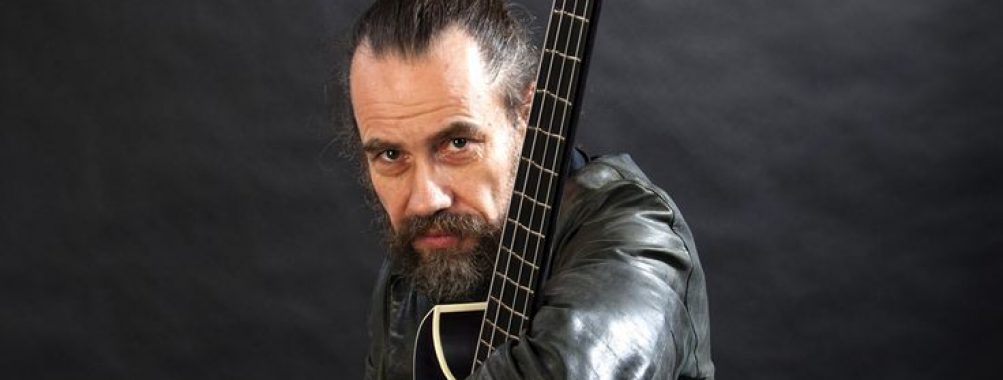
Jonas Hellborg A Candid Conversation

July 14, 2017
Jonas Hellborg, News
Jonas Hellborg

Over the last 30 years, Jonas Hellborg has simultaneously defied and defined what it means to be an electric bass player. In the 21st century, he is doing more of the same. As one of the most iconoclastic musicians experimenting with the bottom frequencies, Hellborg has seemingly never been at a loss for ideas or direction.

From his new approach to the bass (aside from Spinal Tap, who else had the balls to play a double-neck bass?) with John McLaughlin’s third Mahavishnu Orchestra, to his groundbreaking work with virtuosos Shawn Lane and Jeff Sipe, through his current focus with drumming maestros Selvaganesh, Ranjit Barot and freak guitarist Mattias IA Eklundh, Hellborg has always found ways to innovate within the confines of composition, improvisation and technique. But try to ask him where he is consciously going in his journey and you are likely to get an answer that is at once hazy yet steadfast. He struggles to define what the music is, but is confident in his approach, which is, at the moment, centered on his guitar trio.

Due to editorial guidelines the full interview wasn’t published in the May issue of Performer Magazine Abstact Logix now presents Jonas’ full perspective from January 2010.

On Current Projects: I’m just dealing with a bunch of different musicians. It’s all a network of people. Of course the center core of the Indian music thing for me is Selvaganesh, who I’ve been working with for ten or 20 years.

On the Genesis of Indo-fusion Projects: I played with John Mclaughlin, was a huge fan of Shakti, and the person I admired most in Shakti was Vikku. And I never got to meet him when I was playing with John. I was at a Frankfurt music trade show about 15 years ago and I heard about Vikku’s son. I was really excited and I wanted to meet him and hook it up and he wanted to meet me also, but we could never get it together. I think it was like 1991 or something like that I came back to Paris where I was living at the time…it must have been 1995 or ‘96. Somebody calls me up and says Zakir is playing today and Selvaganesh is playing with him, so I went to the gig and we met after the gig in Paris and from then on we started playing together. Selvaganesh is the center figure in my whole connection with India and Indian music and through him I met Ranjit Barot and I really love how Ranjit plays the drums because he is a kit drummer and he knows all the classical Indian stuff but isn’t trying to make it sound Indian. He just uses it in kind of jazz or fusion kind of language. So if you just listen to it casually you wouldn’t even know it is Indian stuff, it would just sound like this intricate incredible stuff. But it being Indian, it makes me able to approach it that way or to understand it that way and integrate with it. So what comes out is not all Indian sounding but it elevates the jazz language to a much higher level.

On Mattias Eklundh: After Shawn [Lane] the only guitarist who interested me was Mattias Eklundh because he has also an incredible capacity and a totally different approach to how he’s doing stuff. And a vast knowledge of music.
What unites them is that they both know all music. With Shawn, I could play classical music, and with Mattias I can play classical music. With Shawn I could play Indian music, with Mattias I can play Indian music. With Shawn I could play rock n’ roll music, with Mattias I can play rock n’ roll music. It’s the same sort of relationship which covers all the musical territories necessary. And my instrument, my ensemble is the guitar trio and it has been since I was a kid. It’s my natural environment in which to play music. This is just a continuation of that work. We tried the Art Metal thing because we wanted more architectural kind of project so we tried to do that. But when it comes to just playing, just blowing, that environment is the easiest for me to handle, to deal with, so we went back to the trio format.

The Art Metal thing was much more about structure, about compositions. This is about improvisation. It’s a whole different thing.

He covers music on a level on which I am comfortable with. If I ask about string quartets to understand what that is have heard that and be familiar with that. I can’t start by explaining who Bela Bartok was if I want to go that stylistic direction or approach. And if I say rock I can’t start by explaining that approach or what that is. I can’t educate people who I am playing with. I need someone to come to the table and give me something. I don’t want to play with my students. I want people who can challenge me and elevate me to the next level.

I do not want to revisit places I’ve already been.

On Composition: At the heart of this is me; it’s what I do and what I’m comfortable with. I play bass. I will continue to play bass. I’m not going to switch to tuba all of a sudden. I know how to deal with the trio. It’s like you say you write for string quartet as an instrument as you write for piano as an instrument. I write for guitar trio as an instrument in the same way. We’re not doing the same thing we did with Shawn. There is a whole new set of ideas and knowledge that has come at this point in my life. My understanding of Indian music is deeper, my understanding of life is deeper, my understanding of classical music is deeper. Everything has gone to another level. [I’m] not taking anything away from what I did with Shawn which was great, but this is another time and another approach and has another depth to it.

I look at it like this. For some people they could look at something as a certain style of music. For me that is not valid because it’s basically based on the instrumentation always. If you hear a certain piece of music played by a string quartet they will say classical music. If you give the same music to Megadeth it will be heavy metal. But it might be the same notes being played. So what is the style? Is it the instrumentation? So I can’t really discuss style or stylistics. To me, that’s fashion. And I’m not dealing with fashion. I’m dealing with music. The parameters and knowledge and human implications of what music and musical sources are. I learn with all types of interaction I have with other human beings and that comes out in my music. It’s about substance, not about style. It’s about content.

If I meet somebody, I want to interact, discuss, synergize and find something I didn’t know before. I’m not here to lecture anybody or tell anybody about life. I’m here to learn, not to teach. I’m not going to tell anybody what anything is. I’m not going to try to push my answers to the questions of life down anybody’s throat. I’m just exploring, experiencing, learning and studying. And that’s what these meetings are. It’s not about telling anybody how great I am. If somebody gets something out of what I do, I’m very happy, but I don’t see it like I invented anything or created anything, because whatever comes through me, I’m just a mirror reflecting the light that has already come down through the centuries. It’s coming from this mirror to that mirror and it’s just reflecting. It’s just a different angle.

On Selvaganesh / Carnatic Rhythm: Selvaganesh and I have the duets. And we’ve never done a duet album yet. We’re working on it. That includes me developing my bass playing to a new level and a new standard. I’m working very hard on that.

Selvaganesh understands western music very well and western drumming. He can play a groove like a motherfucker. He can really hit it. We westerners think of pulse and then stuff that falls within the pulse beat. Indian rhythms consist of musical phrases that make up the totality of a whole. And it’s not about the bar. It’s about the whole periodic movement that might be repeated or not be repeated.

On Jazz: If you just play rehashed Charlie Parker or Coltrane licks, what’s the bloody point? If you are going to do it, write some new chord changes and go somewhere else. Don’t play fucking “Stella by Starlight.” That’s not now. It has nothing to do with now. You have to understand harmony, tonality, and of course you have to study that stuff, but jazz or bebop is just one expression that is very bound into certain time aspects and social situations that aren’t valid anymore. Here we have a song that is not normally a very intelligent harmonic composition anyway, it’s just the bloody same ii-V progression in eternity over and over again. As soon as you learn to play over ii-V-I progression, you can put those building blocks and go doopie doopie doopie doopie forever. What’s the fucking point? This doesn’t make any sense. So you have to be smarter than that. If you go back in time and study Bach, Beethoven, Mozart and study harmony for real. Then all of that (jazz) harmony is rubbish—it’s useless. Take something out of that history, make it modern, make it today, and do something that hasn’t been done. Then wow, great. Modern Jazz pedagogy is totally fucked. I can explain all that stuff on one page. All that stuff you go to Berklee for four years to learn I can explain on one page. But I don’t because everybody should figure it out for themselves because there’s nothing to it. It’s empty.

Bebop think bebop is tradition and I would say no, it’s not. Bebop comes out of the crossroads between western classical music and the black tradition which I would say is an African tradition, which has to do with gospel which is a cross between European and African music, going back which is traceable back to African music. And so there’s that tradition of course. But even Duke Ellington studied western classical music to make his compositions. If you are really getting into that, his compositions and his arrangements, there you go. Then you have something worthwhile to study. But study it, and OK, play it for educational purposes, but you don’t have to recreate it.

On Expression: I think all expressions are valid. Having said all that, I can totally contradict myself by saying whatever you feel to express yourself is who you are and what you should do. So if you feel very strongly that you should play doopie doopie doop then that’s who you are and I cannot criticize that. I am not here to tell anybody what they should do.

On Style: Wayne Shorter is the god. He’s amazing. Because it’s music. It’s beyond stylistic. And Keith Jarrett does everything I am criticizing. He’s playing “Autumn Leaves” and whatever, and what he’s doing is unbelievable. It’s amazing. But it’s not doopie doopie doop. When he plays it’s composition. There is intelligence. There is continuity. There is cross reference. He doesn’t just play a bunch of phrases stacked on each other. He starts and from the point where he starts to where he stops playing. There is a thread. He builds a house. He builds a cathedral. It is improvisation on the level of the great Indian masters. That’s what they do. It’s not, “Now I play this lick, then I play that lick, then I play that lick.” No. It’s music created in the mind in time, in  consciousness, in continuity.

If you give up formulated music, you can actually attract normal people. Because when you have a click of people, let’s say you have the fusion click. Then you start to set rules for what is fusion. If you have the jazz click, you start to set rules for what is jazz. And if you just let that go and you actually deal with human, general human tastes in music, what actually moves you and you get away from the whole concept of, “Is it stylistically this music or that music?” then you will actually attract people who are not in your field. Keith Jarrett, case in point. People will not listen to [imitates traditional jazz]. But they will listen to Keith Jarrett because he’s making music. What he does goes beyond styles. You can take someone like Stevie Wonder. He’s an R&B guy, but everybody loves Stevie Wonder. Why? Because he goes beyond that. And whatever level you are on, if you actually don’t cut any kind of musical parameter or resource of your world, just because you are this or that, which is what stylistic ideas do, they confine you. Then you will deal with music as it is. It’s just like food. They talk about fusion food. I don’t like the term, but the fact is I have Indian spices in my pantry. So when I make an omelette, I get something out and I put it in there and it tastes good.

If you decide to be in a small neighborhood and stay there all your life, that’s what you do, and that’s fine. That’s just another choice. But if you live in the modern world, the global world, you are encountering all these things. You just deal with it. But do whatever you like. You take it and you use it. Whatever is in your culture. But they key concept for me is not to confine yourself just because it’s supposed to be that way.

On Meaning In Music: In order to be a fulfilled human being…I don’t want to use terms like spiritual because it kind of gets out of the subject. But in order to function as a human being, you have to be able to focus. You have to be able to center. Some people are into religion. They pray or they meditate or they do this and that. Music is such a thing. It’s a discipline and you use it for the purpose of focusing your mental, your spiritual activity in one direction and become whole. And as you do that you will get more and more capacity as a musician. But if you can express what you need to express with just a very limited vocabulary, you can still do that. It’s not about the vocabulary. It’s not about how many words you can use; it’s about what you can say.

I don’t want people to admire me, and I don’t want to admire people. We are all the same. We all have basically the same capacity. I admire Gandhi. When you think about what Gandhi did it’s unbelievable. Everybody can learn a scale and everybody can practice forever, but it’s the other thing. But really, it’s a quest for truth. It’s sort of encapsulated in what Thelonious Monk said: “The true definition of a genius is one who is most like himself.” It starts and ends there. And when you are really in tune with yourself—and this is where the discipline comes in, and you really express yourself truthfully and powerfully, then people will say, “Oh wow. That’s amazing.” And it doesn’t matter if you do with two notes or a fugue or a really intricate rag, or whatever it is. It’s the same thing. It’s the spirit. When are you open and clear and innocent like a child, that’s when it really hits you. And that’s why somebody like Wayne is so powerful. Because he really does that.

Buy

Itunes-note 
Amazon  Bandcamp

Tony Grey speaks about his Unknown Angels

July 14, 2017
News, Tony Grey
Tony Grey


Bass, the final frontier. Anyone who has taken a moment to study the low frequencies cannot help but notice a philosophical bent that many of its finest exponents take on. Cats like Victor Wooten, Kai Eckhardt, and Jonas Hellborg are just a few of the players at the vanguard of music introspection—low plains drifters, if you will. With the release of his third album “Unknown Angels”, Tony Grey continues his foray into the company. Known for his gorgeous tones and textures (not to mention his chops galore backing up the blazing Hiromi Uehara), on “Unknown Angels” Grey offers up a series of meditative and introspective compositions featuring Indian maestros U.Srinivas and Selvaganesh.

Abstract Logix caught up with him via e-mail to get the down low low down on the new Obliqsound release.

Abstract Logix: This album strikes me as more textural, spacious, and maybe meditative. Simpler, but let’s say no less sophisticated. Was this something you were going for on the release? Not unlike Coltrane’s approach on “A Love Supreme” or McLaughlin’s new track “To the One”. Was this stylistic change a conscious one?

Tony Grey: Well, this last year has been a tough one for many reasons and as always music is like therapy for me. So this loopy sonic meditation sound came out. It all really came about with me just creating loops on my bass, but in a way that almost sounded like a pad. From there I was experimenting with chords and melodies on top. It was never really intended to become tracks for an album—it was just calming for me to play in this way.

AL: Obvious direction aside (specific harmonies / voicings / lines) that Hiromi dictates in Sonic Bloom, do you approach the bass differently in her group as opposed to your own projects? How so?

TG: As a sideman I just try to envision the concept the writer or leader is going for and try to put as much of my personality as possible into what I’m doing. It can be a little tricky sometimes because as writers we all have our own tastes and vision, so it’s always a balance to create something to please the leader and yourself at the same time. I think it’s important to let go of the ego a little and first try to do the job you need to do. Next, where it’s appropriate for the music, you can take liberties to find the moments to express and please yourself within the boundaries.

But in Jazz usually the writer hires musicians based on their sound and personality to give you want you want with limited instruction. Hiromi is very aware of with whom she’s playing and always tries to accommodate the musician’s own personal approach.

When I write for a CD I’m also very aware of whom I want to recreate my vision.

I always create the complete concept I’m going for myself on a sequence, and send the tracks to the musicians for some feedback [as] I don’t want to be over controlling as a leader. I know very much what I want and am looking for but I’m also trying to be open so that everyone in the band can totally have freedom to express themselves fully. And sometimes being open can really help the music take off in an unexpected direction. My band is full of amazing beautiful original creative musicians—they completely get what I’m going for and add so much to any idea I come up with.

AL: What made you want to incorporate your vocals so heavily into the album?

TG: Well for this CD the music was really about making a statement, and vocals really helped convey that message. They aren’t really meant to be the main focus but are kind of like food for thought. I left the message open enough hopefully for the listener to fill in the message with their own thoughts and experiences.

AL: You said in a press release, Why did John McLaughlin help me realize this drastic, extreme shift in my lifestyle? I had very limited contact with him and really had no idea what he did. What was the lifestyle shift that McLaughlin helped you realize?

TG: What I was trying to say about John McLaughlin was that it’s funny sometimes the twists and turns life throws at you unexpectedly. I was in the army with absolutely no plans or dreams of being a musician. If my step Dad never gave me a bass without any request or provocation, and I hadn’t known John what would I be doing now? It was a series of extreme events that lead me to this place. It was his [McLaughlin’s] idea I apply for Berklee and move to the US. “Unknown Angels” is really about the people you encounter in your life that completely change your direction and way of thinking.

AL: McLaughlin has pointed many times in interviews to the connection his (largely eastern) spiritual practices have to do with him as a person and by proxy his music. Your description of “No More Struggle” on your website seems as though it may be suggestive of such an outlook. Does spirituality inform your music, and if so, can you talk about how?

TG: For me music is completely spiritual. It’s not about technique, advanced complicated time signatures or ambiguous harmonies, all of which are cool and fun, but about expressing yourself as an artist and a human being. If that leads to all the complicated things music has to offer then fine. My goal is to be informed of all the things that make up music, and then to make choices in the best way to relay my message.

AL: The track Out of Something, kind of reminds me of a track by Vinnie Colaiuta, I’m Tweaked. Rhythmically the pulse stays the same but you are doing some unconventional rhythmic shifts. Can you talk about that track and how you think about it, how you conceived of it?

TG: Wow, I love Vinnie Colaiuta—he is so amazing. I had never heard that track but yes, I hear the similarities in the groove.
What I was going for with Out Of Something a rhythm very stable but not obvious. The harmony and melody is a little more active so I wanted a solid groove with a twist.

AL: How is your philosophy with the new one different from say “Chasing Shadows” ?

TG: “Chasing Shadows” was a completely different concept but a good reflection of where I was at that point. For “Unknown Angels” I wanted to do something so different and unexpected to surprise the listener. I love Indian music and I lost that connection with my last CD so I wanted to explore that world a little more. My first CD “Moving” touched on a few different elements of world music, Indian, Chinese, Greek etc. Chasing Shadows was a very focused sound as is “Unknown Angels”.

AL: You have talked in the past about how many different ways you have used to compose, melody first, harmony first, groove first, etc. Is there any one in particular that you’ve found most effective, or does it just depend?

TG: When I compose it’s still a mixed bag. Sometimes groove first like in the track Out Of Something. Bass chords were the starting point in the track “Unknown Angels. The loops were the birth of Some Are Saved, Some Are Lost and No More Struggle. Harmony was the starting point in Living Underground, and the track Say What You Mean was written off of the vocal. It just starts from sitting down with a cup of tea and letting come out what comes out.

AL: Do you have any specific goals, ideas or projects you can point to at this point in your journey?

TG: My goals are to really get on the road a little more with my project. These musicians are so expressive and amazing I think it’s a really interesting journey of emotions when we play live. It’s so open everything changes every time we play.

AL: You also started teaching on Skype? Can you talk about that? Due to your own unique journey in music, aside from the above do you have any specific philosophy or approach with regard to teaching?

TG: I have been spending a lot of time writing an instructional book and DVD. This has been a lot of work and I’m very excited about it.
It basically is my own concept and way of practicing which is very focused and a very creative approach. My goal with that is to help the student learn the vocabulary but find their own ways of using it—to help find their own personality and voice.
One thing I hate is where musicians just sound like someone else. Possibilities in music are infinite and everyone should be searching for their own way of doing things. All I want to do is give some direction, tools and methods to help achieve this.
I do teach on Skype, which can be a lot of fun. It’s amazing to me that we can connect all over the world with each other just like that.

AL: Can you talk about U.Srinivas and V.Selvaganesh? What made you want them for the session and how’d you get hooked up? Did you guys track live or did they overdub?

TG: I have loved U.Srinivas and Selvaganesh from the very first time I heard them with Shakti. They are explosive, calm with beauty and so in control of their instruments. When I got to meet them through John McLaughlin I was blown away touched by their humility. They are everything I hope to be as an artist. No ego and such love and devotion for their art. I was so lucky they wanted to be a part of this vision. I flew to Chennai to record with them which was an amazing experience for me. Mahesh Vinayakram is Selvaji’s younger brother is a vocalist who was recommended to me by Selvaji. He is a deeply passionate musician and person and was so thrilled he also took part in the music.

AL: You talked about how in the past you used to sometimes panic in unknown musical situations. What was it that pulled you in the direction of not panicking and allowed you to open up more?

TG: Well I think that music and time happens when you just let go and let it happen. Sometimes there is a tendency with musicians and bands to try and force the issue. It’s important to trust yourself as an artist, leader or sideman to realize you are there for a reason, usually because you are wanted. When you find yourself nervous or in a frame of mind that is pre- planned you can find yourself panicked when someone throws you a curve ball. We are playing improvised music with other musicians that are also improvising. So the thing I learned is to prepare as much as you can, then let go and trust yourself and the musicians around you.

AL: You have talked about how you meticulously document your practice regiment. What benefits have you found in doing this?

TG: I like to document what I work on as it helps me be more efficient with my time. Sometimes I’m on the road or in the studio for a period of time so if I keep a note of what I’m working on or where I’m at I can just continue where I left off. I like to split my practice routine up into 30 minute sessions. I think the brain can only absorb so much information at one time so I put a time limit on it to optimize my study. Also, it helps me cover a lot of different things I work on in a day. It also helps me stay focused knowing exactly what I’m working on and how far I have come with it.

AL: Obligatory gear question: Anything you want to talk about with regard to what you are playing through now? I’ve always loved the tone Fodera players get (seemingly through any rig). Anything new or interesting for you now in the gear world?

TG: I’m loving my Fodera at the moment. It gives me everything I need to express myself. I’m working with Aguilar Amps and effects which are amazing, DR Strings and TC Electronic Effects for my bass and vocals. It’s all really incredible equipment and I feel very lucky.

AL: Who will be in your ensemble for the upcoming dates in NYC?

TG: My band for NYC will include these fantastic musicians and friends:
Romain Collin, Keys
John Shannon, Vocal and Guitar
Gregoire Maret, Harmonica
Dan Brantigan, Trumpet and FX
Obed Calvaire, Drums.

AL: Thanks Tony for your time. The record sounds great and I wish you all the success with it. See you soon

Buy

Itunes-note 
Amazon  Bandcamp

Walter Kolosky Interview: Follow Your Heart

July 14, 2017
News, Walter Kolosky
Walter Kolosky

Walter Kolosky, the author of the acclaimed “Power, Passion and Beauty” – The Story of the Legendary Mahavishnu Orchestra had no plans to write a book specifically about the leader of that band, John McLaughlin. His next work was going to be about the movies. He says he is still going to write that one, but the order of things has changed. In the meantime, his new book “Follow Your Heart: John McLaughlin Song by Song – A Listener’s Guide” was officially released on November 1 by Abstract Logix Books.

Over the summer of 2010, Kolosky presented a sneak peek of his new book during a presentation he was invited to give by The Cordoba Guitar Festival in Cordoba, Spain.

Recently, Abstract Logix interviewed Kolosky to find out why he decided to write about John McLaughlin again and why he chose such a unique format to do so.

Abstract Logix: Before we get to the actual book’s contents, you must have been thrilled that Chick Corea agreed to write the foreword.

Walter Kolosky: More than I can say. His manager Bill Rooney was most helpful in getting this done. Chick is the busiest man in jazz. For him to find the time to write something for me was a dream come true. At the same time, I was quite confident that Chick’s deep admiration of John would play in my favor. I am very thankful Chick proved me right!

Abstract Logix: Where did the idea to write about 298 of John McLaughlin’s songs from 1969 to 2010 come from?

Walter Kolosky: I was driven to write this book mostly by fans that convinced me there was a real need to chronicle McLaughlin’s career above and beyond Mahavishnu and put it in one place for purposes of enjoyment, history and study. Truthfully, I didn’t need much nudging. After all, we are really talking about one of the most important musicians on the planet today. However, I decided that if I were to write such a book, I had to take a totally unique approach.

My last book, “Power, Passion and Beauty: The Story of the Legendary Mahavishnu Orchestra” came out about four years ago, but I still receive a lot of mail from fans who tell me one of their favorite things to do is to listen to a particular Mahavishnu Orchestra cut while they read about that song in the book. The idea also stems from my experience writing for Jazz.com. Reviews on that site were of individual tunes and not whole albums. This made you listen to each song much more deeply. I heard many new things by doing that. I thought John McLaughlin fans and others would be interested in doing the same thing. I’ll never forget the thrill of discovering McLaughlin’s music. It was literally life-changing. It was an experience I thought I could never relive. I was wrong. Going back and listening to every single minute of music again in such a focused way was very profound. It didn’t matter I had already heard “Birds of Fire” about 1,000 times. I still discovered things. There were true revelations. I would find myself listening to “The Heart Of Things” albums and pausing the CD player to run to the bookshelf and grab a McLaughlin album from 1970 to discover the genesis of a motif or melody. It was fascinating.

Abstract Logix: Who is the audience for “Follow Your Heart”?

Walter Kolosky: It is a listener’s guide and is best enjoyed while listening to the music. So, first and foremost, it was written with the listener in mind, whether that be the everyday fan, musician or student. The more McLaughlin music you have, the more you will get from this book. If you don’t have all the music, I hope “Follow Your Heart” makes you get some more. Of course, I am very interested in reaching people who are not yet fans of McLaughlin’s work as well. The book is more than just a listener’s guide. It can be read straight through as a history of jazz, rock, fusion and world music. It is also a quick reference guide and, very importantly, it is a source of inspiration as well. John McLaughlin kindly agreed to comment on many songs. He very much agreed with my approach, which was to shy away from dry analysis and, instead, focus more on the pure act of listening. It is really about cause and effect. That’s why he plays. He wants to make people happy or to move them in some way. Readers will not only learn about the music in this book, they will learn about the man behind it as well.

Abstract Logix: “Follow Your Heart” is not simply a collection of reviews. Each album and song seams to be approached in a different manner. Some tunes, for instance the Mahavishnu and Shakti stuff, can be quite detailed when it comes to describing song structure. There are other songs on which the structure is not touched upon.

Walter Kolosky: This is quite on purpose. Form and structure are emphasized when I think it is important. They are not emphasized when I believe they are not so important. This is all very subjective. Not everyone will agree with me about everything and I probably made a mistake or two in counting time or structural analysis that someone will point out to me. This is music that sometimes can quite easily fool you. But, I hope readers will get a fuller understanding of McLaughlin’s musical portfolio that allows them to enjoy it in a way maybe they never thought about before. I simply let the music lead me.

Abstract Logix: As you said earlier, the book is designed so that regular fans and musicians can both enjoy it. How did you go about trying to obtain that equilibrium?

Walter Kolosky: I am not a musician. I can play guitar just good enough to impress myself in my own house. However, I have a very good ear and know just enough about structure to be dangerous. I used a simple formula to make this book accessible. With the help of some fine musicologists, who have studied McLaughlin’s music deeply for many years, I acted as any good news reporter would. I asked them specific questions about music structure in McLaughlin’s work that I had questions about. In the end, if I was able to grasp what they were talking about, and write about it in an understandable way, it may appear in the book. If I couldn’t – it does not. By following that rule, I could represent the everyday fan and the serious musician at the same time. For the uber-serious, I provide resources in the book for deep study and analysis of McLaughlin’s music.

I am most grateful to the musicologists who helped me – Marco Anderson, John Curtin, Marc Rossi, Nat Janoff and Massimo Morrone. My senior editors, Rod Sibley and Ted McCallion, were also very knowledgeable.

Abstract Logix: What was the hardest part in writing about 298 songs?

Walter Kolosky: It is to try and not repeat yourself. I mean, how many different ways can you say John McLaughlin is a great composer and guitar player, or that two musicians may play in unison? It is very difficult. It forces you to approach each album and song from a different place. I think readers will be appreciative that I had to do that. Each album and song is its own story.

Abstract Logix: I must say that “Follow Your Heart” has some of the most remarkable pictures of John McLaughlin’s career I have ever seen.

Walter Kolosky: Thank you for bringing that up. I spent months searching the world for images of John McLaughlin that have never been seen before. I contacted everybody I could think of. In many cases, we had to scan photos from private collections that were over three decades old and make them as presentable as possible. I am so thankful to each and every photographer whose work appears in the book. I have confidence that my written words are good enough to support interest in this book, but I believe many fans will want to own “Follow Your Heart” for the photos alone.

Abstract Logix: That’s a beautiful cover too.

Walter Kolosky: Thank you. Joe DeRenzo, its designer, and I wanted it to be clean and pure. That is why it is mostly white. Although I associate many colors with John McLaughlin’s music, white is the most dominant in my mind. The pictures on the cover represent John McLaughlin in transition. And of course, the title “Follow Your Heart”, which came from McLaughlin’s composition of the same name, is the core of McLaughlin’s life and music. For that matter, it should be the driving force for us all.

Buy    Amazon  Bandcamp

Steve Smith Interview Raga Bopping

July 14, 2017
News, Steve Smith
Steve Smith

For nearly three decades in music Steve Smith has proven himself as one of the finest technicians worldwide on the drum kit. Adept at nearly every style from fusion (Jean-Luc Ponty, Steps Ahead, Vital Information), pop (Journey, Mariah Carey), and straight jazz (Buddy’s Buddies, Jazz Legacy) through to his original iconoclastic work on the Tone Center label, Smith’s formidable technique has earned him innumerable accolades and awards both from connoisseurs and contemporaries. In 2010 he continues his experiments with Indian music with “Raga Bop”, his collaboration with Carnatic guitarist Prasanna Ramaswamy and sax maestro George Brooks. Prior to the group’s tour of North America, Smith took time out to talk to Abstract Logix via phone from his New York residence. In part one of this two-part interview Smith talks about his interest in Indian music and the genesis of the exciting new project.

Abstract Logix: What initially got you into Indian music?

Steve Smith: In 2001, a tabla player named Sandip Burman hired me to do a tour. At that time he was really trying to make a name for himself. He had just played with the Flecktones and he put together an all-star band and by doing that was successful in booking a tour of the USA. The group was Jerry Goodman, Howard Levy, Victor Bailey, Randy Brecker, Paul Bollenback and David Pietro. It was a very good band. Really, nobody knew Sandip but we all knew each other so everyone said they’d do it. Sandip was living in Chicago and he had dictated his music to Howard Levy orally and Howard wrote it down. At the time Howard didn’t really know much about Indian music, so when Howard wrote the charts of Sandip’s tunes some of the charts had each measure in a different time signature. There’d be a bar of 9/8, a bar of 7/8, a bar of 5/8 and then another bar of 9/8 and so on. One of the reasons that Howard and Jerry decided to call me was that they knew I was a good reader and could play odd time signatures. We had just made an album for Tone Center called “The Stranger’s Hand”, with Oteil Burbridge on bass. They called me to do the tour and that was my introduction to Indian music.

I didn’t know anything about the music but during that tour I figured out a couple of things. The first thing was that I learned how to play with a tabla player, as far as volume goes. I altered my drum set radically and ended up using a small Sonor jungle kit that has a 16” bass drum and just a couple of flat ride cymbals and splash cymbals and I was using brushes and bundle-like sticks. I found that the tabla was much softer than any jazz situation that I was ever in, even compared to an acoustic bass and piano trio. Playing with a tabla player is even much softer than that. So I developed an approach to playing with tabla players. The next thing that happened is that as the tour progressed I was able to see that the music was not really in a lot of odd time signatures but each tune was in one time signature but the phrasing of the rhythms could have the appearance of odd time signatures if you didn’t understand the music. I started to see the rhythmic structure that was inside the music, which was very interesting to me. For instance, one of the songs that Howard had written out with lots of different time signatures was actually in 4/4 but he didn’t realize that. I started to notice the rhythmic symmetry, the phrasing and patterns and explained it to him. And then a light bulb went off in that way where it was all very interesting to us. Unfortunately that tour ended on 9/11 because of the tragic attacks that happened, the remainder of the tour was cancelled. But during that tour I developed a curiosity about the Indian rhythms.

A year later when I was teaching at a drum camp in Gemany in 2002 there happened to be a thavil player named Karuna Moorthy who was teaching Indian rhythms and basic konnokol. I went to his class every day for a week. He was very clear at teaching the fundamentals of Carnatic rhythm theory and konnokol. Karuna is a very good teacher and because I have an extensive musical background, it’s not like I’m learning the music from nothing. I have a lot to relate it to as far as western music and rhythms. As a result of that I was able to learn the concepts very quickly and understand them easily. After the drum camp I worked on the rhythms by myself, practicing over the next year, and then I met George Brooks on a gig with Larry Coryell. Larry was playing a gig in the San Francisco area and hired Kai Eckhardt, George and myself as his “local” band. George and I talked about Indian music because I learned that he was into Indian music and was putting together his group Summit. He was in the stage of organizing the line-up and asked me to be the drummer. That was a fantastic situation and opportunity so I jumped at that chance, and Zakir Hussain was the tabla player in that group. In 2003 we recorded an album and Zakir really appreciated the fact that I could play at a very low volume and play all these rhythms with him. When we recorded that first Summit CD he and I played in the same room together about five feet apart. At first he very surprised that that worked because he was used to overdubbing or being in a different room from a normal kit drummer, but as it turned out we could play together. We had a strong rapport because he realized that I respected not only his playing but that I could play at a volume level that was comfortable for him. That was a fantastic opportunity for learning that developed over the course of more than three years where we played a number of gigs and tours with Summit, the entire time I was learning from Zakir. And the method of learning on the job is really crucial to becoming a great musician. You can take lessons and practice by yourself but it doesn’t become something that you own until you play with the musicians and have the music happen on stage. And that really occurred during those years with Summit where I could internalize the rhythms, play the music and have great musical experiences with Zakir and the entire Summit group.

AL: So when you were playing with Zakir was it coming from a Hindustani vocabulary, or a Carnatic thing when it was in Summit?

SS: Well I would say it was initially more from the Carnatic side because that’s what I knew and those rhythms tend to be a bit more universal when it comes to fusion projects. Zakir is well versed in Carnatic rhythms because of his association with Shakti and specifically Vikku Vinayakram. Zakir would also show me some of the Hindustani rhythms, and of course they’re different but they’re related so they’re not radically different. Sometimes I would learn rhythms that he would teach me and I really couldn’t tell you if their background was Carnatic or Hindustani but he would show me rhythmic compositions and I would memorize them or write some notes so I would remember them and then memorize the rhythms and we’d perform them. I’d say my association with Zakir was as valuable an experience as a jazz musician getting a gig with Miles Davis. It was a game changer in that it was a fantastic learning environment from a master that’s a once in a lifetime type of opportunity. And we’ve continued to play and have had different musical experiences. For instance Zakir invited me to come to Mumbai, India to play the Homage to Abbaji [the annual concert dedicated to the memory of Zakir’s father Allah Rakha]. That event is amazing because it starts around six o’clock in the morning and goes until ten o’clock at night. People play all day and over 3,000 people attend so it’s quite incredible. In 2009 Zakir had four nights at Carnegie Hall where he could do whatever he wanted and one of the nights he had a four-piece group, Masters of Percussion, that was Vikku Vinayakram and Giovanni Hidalgo, Zakir and myself so I was able to play an exciting concert with him at Carnegie Hall. That was fantastic.

In 2003 and 2004 I was playing with Summit and through the Indian grapevine Prasanna heard that I was a western drummer playing Indian rhythms and so he hired me to play some duet gigs. I didn’t know about him but he tracked me down and called me up. Those turned out to be really interesting and great opportunities. We were playing in a setting that was, in a way, traditional for Indian music because there was a melodic instrument and a percussion instrument, but the instrumentation was very modern because it was a drumset and an electric guitar. I learned a lot from Prasanna because in order for me to play his music I had to learn a lot of Carnatic patterns and concepts in order to accompany him. He uses a lot of Carnatic patterns and devises in his improvising. So again, that on-the-job learning really expanded my rhythmic knowledge and musicianship. And there’s been other fantastic musicians that I’ve had the opportunity to work with. I’ve played quite a bit with Vikku Vinayakram and he always greets me with a lesson, or a new composition within the first five minutes of saying hello. It’s all very natural, it’s simply his way of relating. Then I have to learn his rhythmic composition right away and he’ll want to play it that night! And another fantastic musician who is very well versed in both north and south Indian rhythms is Pete Lockett. Pete is British and lives in London and we’re always looking for opportunities to play together. I’ve worked a lot with Pete Lockett lately and he’s also an excellent teacher. He shows me a lot of rhythms and worked with me on my konnokol because he’s really fantastic at konnokol. In fact I had him perform on my Vital Information album called “Vitalization” where I incorporated a lot of Indian rhythms into the music. I’ve been working the Indian rhythms into my concepts, whether it’s solo drumming, Vital Information or other group situations I’m involved in.

What led directly to the creation of the Raga Bop Trio was the latest George Brooks Summit record called “Spirit and Spice”. One of the things I really enjoy about working with George Brooks is that he still writes music with pen and paper — not a computer demo — and comes in with a chart and we work out all the details of the groove and tempo and the form of the song. One of the downsides of modern technology is that a large part of drummers job is done for him by the composers when they program the drum parts into the computer demos. A big part of what used to be valued as a creative part of a drummer’s life was being presented with music and the drummer had to come up with an interesting drum part, that is not so much a part of today’s drummers’ world. If we go back to 1976, where I first got my start on the international touring scene with Jean-Luc Ponty, he hired me to play in his band and play on his record “Enigmatic Ocean”. He handed me charts and said “the tempo is about here,” he counted it off, we played the music and I needed to come up with drum parts. That was common for every musical situation I was in up until more recent times, where that creative part is generally much less. With the new Summit record George came to my house and just the two of us worked on the music before we rehearsed with the other band members. So I was in on the ground floor of helping the music take shape. We found that it sounded pretty good with just the two of us playing together which recalled another situation of a duo which was me and Prasanna. I mentioned, “Do you know Prasanna,” and he had heard of him but didn’t really know him. Then I suggested we do something with the three of us. There are different ways of looking at the construction of this trio, one way you could look at Raga Bop Trio is it started as a duo: drums and guitar, and we added a sax, or a drums and sax duet adding a guitar. Anyway, we liked the idea, so after we were finished with the Summit album we booked some time to get together with Prasanna and jam for a few days. In fact in those three days we came up with all of the music for the “Raga Bop Trio” album. George and Prasanna brought in some compositions they thought would work and we rehearsed them and came up with a couple of original pieces, we had a very successful collaboration. Next we booked recording time at a studio in Northern California, Prairie Sun, which has a little living facility where we could go and live and record. We spent four days there and recorded the entire album during that time. We made the record by getting together in a room and playing, we didn’t construct it with computers and overdubbing. Prasanna and I were in the same room and George was in the vocal booth and we played the music and that’s what you hear on the record.

Buy

Itunes-note  Amazon  Bandcamp
Steve Smith 11/10 pt.2

July 14, 2017
News, Steve Smith
Steve Smith


AL: I remember checking out the interview you did some time ago with Bill Milkowski where you talked about drum machines. Do you have any general opinion about how the trend in having a musician actually play drums to emulate a machine has taken music, or where you feel it might be going?

Steve Smith: For thousands of years music was created by musicians playing without the technology of computers or drum machines. The idea of drummers keeping time, without a click track, and coming up with interesting drum parts was one of the main reasons why you got hired as a drummer, whether it was Ringo playing with the Beatles, Gene Krupa playing with Benny Goodman or Hal Blaine getting called for countless sessions. Especially in the ‘60’s and 70’s studio drummers were hired because of their creativity and time keeping ability. Then as it became popular to use click tracks in the mid to late ‘80’s, right around when the drum machine came in, things started changing where it became crucial not only to have good time but to be able to play in perfect sync with a click track and to be able replace the drum machine part. Generally what happened in the studio, starting in the late ‘80’s to the present, was an artist would record a song with a drum machine or computerized drums and then have the drummer replace that with live drums. With this scenario there is less creativity asked of the drummer because the drum part has already been composed. The drummer learns the parts, maybe embellishes them a bit, and cuts the tracks. Performance accuracy becomes very important because there’s no room for the time to move around naturally the way it has for the past 20,000 or 30,000 years, or however long you want to look back, in music making. I think one of the musical ideas that has changed over time is, composers can tend to find what I consider, “awkward tempos” because they program a drum beat and write a tune that is composed at a particular exact tempo. A real band might never actually play that tempo and feel, or care to play it, because it’s some uncomfortable tempo crack. That’s something that I’ve noticed that’s different from the earlier days, whether it’s Buddy Holly, The Beatles, James Brown or Led Zeppelin. The tempos that different groups play are quite natural whether they are easily danced to or whatever it is. Tempos are so finite with machines that they’re not that natural to play. With the exact steadiness of tempo, it’s an unnatural way to approach music. Music naturally has more breath, tempo moves up and down. Imagine “Stairway to Heaven” with a click track, it wouldn’t have worked. There are thousands of examples of music like that; “Lucy in the Sky with Diamonds,” for instance, that’s a tune where the tempo changes a couple times. In some ways I think clicks can keep people from having a freer approach. A good musician, an evolved musician hopefully, can go beyond that, but “perfect time” has its pluses and minuses. One way you can see it a plus is that people can overdub parts and more easily create music that way. But another way of looking at it is that it’s an artificial way of making music. Overdubbed records can tend to sound that way, especially if they are jazz oriented records. They don’t sound like people playing music together — just my thoughts on the subject.

AL: You said in an interview a long time ago you practiced every day. Do you still get a chance to get in the hours and if so, what are you practicing?

SS: I still do like to practice every day but I don’t practice as religiously as I used to because it’s difficult these days. I live in New York City a portion of the year and I can’t practice in my apartment. It’s not practical, it’s just too small. Actually I go to the Drummers Collective to practice, which is a drum school in New York. For me to go to the Drummer’s Collective I have to get on a schedule and go in for two or three hour increments, so it all has to be planned in advance. At least three or four days a week I go to The Collective. When I don’t go to The Collective I practice on a practice pad here in the apartment just to try to stay in shape. When I’m at my house in Oregon I have a drum room there, so I can practice every day. But one of the other things, since that interview in 1997, is that my life as a band leader and the person organizing the details of tours has become even bigger and more time consuming. There’s a lot of administrative work with having a band on the road and sometimes my life gets taken up with all of those details. I don’t like it, but that’s the problem with being a bandleader and musician. I still like to practice but unfortunately I don’t feel like I get to do it quite enough.

Lately what I’m working on is developing the konnokol and incorporating the Indian rhythms on the drumset and different ways of orchestrating the Indian rhythms on the drum kit. Lately, because of the “Raga Bop” tour, I’m working on memorizing the songs and coming up with a lot of vocabulary for each song. My practice tends to be on exactly what it is I’m doing, not practicing chops for their own sake, but I keep it focused work on the music that I’m playing.

AL: I remember reading the liner notes to the second “Vital Tech Tones” record where you said “With Vital Information I’m not so concerned with virtuosic playing. We have more of an overall sound that we’re putting across so we’re focusing more on the vibe of the tunes. We have solos but virtuosity is not an over-riding concern. It is with this band. Is it ever a concern that taking an approach like that the music can become too clinical, for lack of a better word?

SS: No [laughter]. No, because I think that with the all the musicians that I work with there’s a certain aesthetic of earthiness and blues and rock that comes across. Some of those quotes were addressing the vibe of the times. When Mike Varney (the president / owner of Tone Center Records) came up with the idea to make records for Tone Center there was a lot of smooth jazz in the air. People were simplifying their music. Mike and I had talked and felt there were a large segment of record buyers that were being ignored. The people who were fans of the Mahavishnu Orchestra and Return to Forever or Larry Coryell’s Eleventh House and Weather Report were not being addressed. The musicians that played on those recordings were no longer making music in that style, or the some of the artists who were making music were not address their fan base. A lot of the concept of Tone Center was to push beyond that. I feel like the Tone Center records that I produced and played on had a very good musical concept. Whether it was Henderson / Wooten, Gambale / Hamm, or Howard Levy / Jerry Goodman, or the other strong lineups, there was always a very musical aesthetic along with the virtuosity.

For example, in the 90’s, if you made a record for Columbia they’d ask, “Who’s going to buy this record? Who will this appeal to?” So they’d try to go for, what they thought was, the biggest market and that can lead a big record company to try to make the music a little more “listener friendly” which means catchier melodies, simpler grooves and all the stuff that everyone knows about. Mike Varney was saying the opposite. He said let’s appeal to those people who don’t want to buy the smooth jazz records. They have all the classic fusion records but they want to buy a new fusion record. Imagine that person going into the store looking for some new music, that’s a wonderful idea! That’s a great idea! And I miss that about the current market. To be fair to Columbia, back in the ‘60’s and ‘70’s Columbia was on the cutting edge of having great fusion music. They signed Miles Davis, The Mahavishnu Orchestra, Weather Report and The New Tony Williams Lifetime. There was a time when all the major labels had fantastic jazz and fusion. Without those labels pushing those musicians to make those records we would not have a lot of those amazing records. It’s much more difficult in today’s world, as far as I’m concerned, because you have to finance the recordings yourself. In the days where Atlantic was saying to John Coltrane, “Maybe you should make an album with Johnny Hartman,” that was genius! In today’s world we might not have a record like that because we’re left totally to the ideas, and more importantly the BUDGETS, of the artists. Musicians might not think of a particular collaboration or might not want to finance it themselves, or be able to finance it. As much as some people are saying there is great liberation with people making their own music, I think there’s a lot that’s lost in the process in the well. You can look back at whether it’s Blue Note, Columbia or Atlantic, there’s a lot of great of jazz and fusion records that came about as a result of a record company wanting to put out an album that people would buy, so they came up with music that we now have and can listen to forever. Without Mike Varney we wouldn’t have those great Tone Center albums. We had a fusion renaissance for about 10 years and now Mike’s not making new albums. Now the future is Abstract Logix where Souvik Dutta is really taking the lead in putting out adventurous music. This is great, I’m really pleased to be associated with Souvik and I hope he continues to make albums for a long time. But the sad part is that it’s unfortunate that we’re in a world where there are so few labels putting out adventurous music.

AL:When you interpreted the music for your recent DVD Drum Legacy: Standing on the Shoulders of Giants you took on the compositions of some of the legendary jazz drummers, was your focus on recreating the music exactly or interpreting the music as yourself?

SS:The first thing I did was research the approach and vocabulary that great drummers used. I transcribed and learned vocabulary from Max Roach, Art Blakey, Philly Joe Jones, Tony Williams and Elvin etc. I’ve always done that since I was a teenager but I readdressed it to get deeper into that jazz vocabulary. Each one of those drummers had unique approaches as far as how they developed their concepts. Each developed into the next sequentially. You needed one innovation before the next idea emerged — there’s logic to how that vocabulary evolved. It’s interesting to get inside that, and then to internalize it so that I’m comfortable in that approach. When I play the tune I do my best to get inside that approach but not in a re-creationist way. My drums are tuned the way I like to have them tuned in today’s world. I play with an energy and an attitude that is current but I pay respects to the vocabulary and direction of the drummers who originally played that music. Even though I’ve done the homework and learned the licks and phrases, at a certain point I let my creativity take over and flow with the discipline that each tune takes to make it work. It’s hard to describe, and it’s more organic than it may sound in an interview. In the end I increase my vocabulary and it can be used in a variety of ways. In general, as different projects come up, and I complete them, there’s a sense of finality and integration that occurs and that tends to open up possibilities for new ideas to come.

AL:What are you currently listening to?

SS:I’m very eclectic in what I listen to. From the new Roots album, How I Got Over and their new collaboration with John Legend to Stravinsky’s Rite of Spring. I’m always a fan of Prince, I buy whatever he puts out. I also listen to the records that my friends make. For example I like Walt Weiskopf’s new album See The Pyramid. Anthony Wilson, Diana Krall’s guitar player, has a very good album out Jack Of Hearts. Mark Soskin’s got a new one out with Ravi Coltrane called Man Behind the Curtain with Bill Stewart on drums. I enjoy all of Bill Stewart’s records too like his latest Incandecence. Ari Hoenig is another young drummer who is really innovative. There are a lot of great young jazz drummers and I’m always amazed at how they developed such evolved concepts at such a young age in this society and culture. There seems to be no shortage of them, that’s for sure.

It’s the music, man.

It’s the music, but it takes a very discerning young person to be drawn to jazz. It has to be quite a different person than the average teenager or young adult who doesn’t see beyond rap or heavy metal. Of course there are certain rock things there that I like. Porcupine Tree is an incredible band. If I had to name a favorite band it would be that one. They’re really singular, they’re that unique.

Buy

Itunes-note 
Amazon  Bandcamp
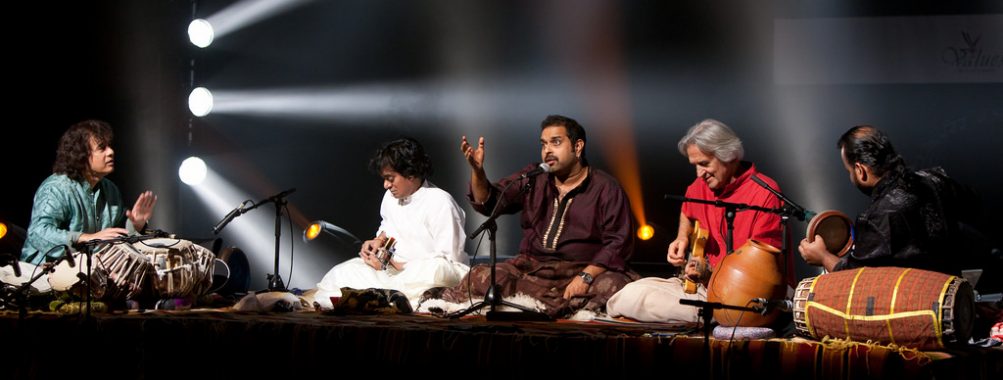
John McLaughlin, Zakir Hussain and Shakti: The Palestine Concert

July 14, 2017
John McLaughlin, News, Shakti, Zakir Hussain
John McLaughlin, Shakti, The Palestine Concert, Zakir Hussain

Buy

Itunes-note


Amazon


Bandcamp

Though far removed from the occupied Palestinian territories, the Akha people of South East Asia have a saying about music that strikes a universal note; a village without music is not a village. Back in the 1930s and 1940s there was a Palestine Philharmonic but now it’s called the Israeli Symphony Orchestra, just one more example of the cultural occupation that Israel exerts on Palestinians. The conditions that Palestinians are forced to live under mean that, like the Philharmonic, there is no longer a Palestine. Nevertheless, the Palestinians voice and aspirations for statehood cannot be ignored, and neither too, can the flame of music be extinguished there. Remember Shakti’s concert at the Ramallah Cultural Palace in aid of and in solidarity with Al Mada, was a reminder of the power of music to inspire, to empower and to heal.

There was a wonderful symbiosis about the coming together of Palestinian organization Al Mada and John McLaughlin and Zakir Hussain’s legendary group, Remember Shakti. Formed in 2009 by Executive Director Reem Abdul Hadi and Artistic Director Odeh Turman, Al Mada is dedicated to improving the quality of people’s lives in the occupied Palestinian territories, not in the physical sense, but by lifting the human spirit through the medium of music and art as therapy. McLaughlin, perhaps not by design, has been doing something not too dissimilar for more than forty years, with music so powerful, and often so beautiful, that it is, in its own way, inspirational and transformative.

Remember Shakti’s concert was a fundraising event in support of Al Mada’s work with Palestinian children, youth and adults. Inspired by pianist / conductor Daniel Barenboim’s efforts to improve understanding between Israelis and Palestinians, McLaughlin became aware of Al Mada’s pioneering psycho-social interventions in the West Bank and responded immediately; when Jazzahead! honored him with the 2010 Skoda Award for services to jazz, McLaughlin donated the 15,000 Euros to Weltfriedensdienst, the German World Peace Service, which is co-founder of Al Mada. WFD is also one of the longest serving NGOs in the occupied Palestinian territories, having operated there since 1968.

However, helping highlight the 64-year plight of the Palestinian people was an equally important aspect of this historic concert, as Jean Gough, Director of UNRWA – partners with Al Mada in its mission to improve lives – explained: “In Palestine more than half of the people are below 18 years. There is a lot of talent in these young people, a lot of power that they bring forward, today and for the future. However, we also realize that given the conditions, there is a lot of violence facing children; on the streets, sometimes they face violence at home, and violence in the institutions. They are also affected by the violence of the conflict. ”

UNRWA is responsible for two million children across the Palestinian territories and although the grinding violence and oppression they suffer is known to a greater or lesser degree the world over, Gough’s statistics are sobering: “In 2011 there were 20 Palestinian children killed in Gaza and the West Bank due to the conflict, and more than 450 children were injured. There has been an increase in attacks on schools, 48 cases were reported, which is a 50% increase on 2010. We also see more demolitions happening – more than 600 children have been displaced due to house demolitions. All of this brings great stress to the lives of children and we have a duty to find solutions if we can. It’s important that we speak on behalf of these children.”

This is where Al Mada and music comes in. Al Mada reaches out to the vulnerable and the marginalized, which includes children, youth at risk, women and girls affected by domestic or sexual violence, children in conflict with the law, special needs children and adults, traumatized children, and anyone suffering from stress. Its center in Ramallah has a state-of-the-art recording studio and a music therapy room, furnished with beautiful cushions and an array of percussive and stringed instruments. Meditation, relaxation sessions and training also take place here. Music therapist Buran Saada has been with Al Mada from the beginning of its journey and talks with passion about the needs of Palestinians and the effectiveness of the music therapy programs. “They need to express their feelings and their daily conflicts,” she explains. “There are no age limits for people who want to take music therapy and they come from all backgrounds. Everyone can take a music therapy session; people who are displaced, stressed or who need to express themselves or to feel in a safe environment and to feel better in themselves.”

Much of Al Mada’s work is done in the West Bank’s 19 official refugee camps, which accommodate around 200,000 Palestinians. The camps are clearly not as well appointed as the music therapy room at Al Mada’s center, but for Buran this is not a disadvantage. “I prefer to go to the camps to work in the environment they live in,” Buran explains. “It doesn’t matter how beautiful the room is. It depends on the dynamics of the group; how they are with each other. You can make them feel comfortable in a garden. Every group has its unique character, and it depends on the personality of the people.”

A musical background is not necessary to participate in the therapy sessions. “If they know music before it can make them more comfortable with the instruments, but just that,” says Buran. “To an outsider it maybe sounds like noise at first, but it’s amazing to feel their emotions and expression through the playing. “

Buran is one of just three music therapists at Al Mada, but an essential part of their work is training people in other organizations to bring music therapy into schools, psycho-social programs and clinics across the Palestinian territories. So far, more than 100 social workers, counselors and educators have graduated from Al Mada’s 40-hour training course in basic music therapy, thereby helping reach many more Palestinians. “This is the main idea,” explains Buran. “I close the circle I open and the psycho-therapist continues with them. It’s not just about playing music. The psycho-therapists and educators are very open to the idea and trust in the effectiveness of music therapy. We have had many success stories and it’s very exciting to see that.”

The success of Al Mada’s music therapy program is notable, according to data collected by the UNRWA office in Jerusalem. Children have reported improved feelings of well-being as a result of their participation in the music therapy programs, and that they are able to think more clearly. Significantly, they have expressed greater feelings of hope and motivation for the future. Parents for their part have noted that their children are less stressed, less nervous, and closer to them than before. Some parents stated that their children stopped wetting their beds following music therapy sessions. Parents have also observed improved communication in their children, improved performance in school with their studies, and an improvement in their social relationships.

Clearly Al Mada’s music program is one worth supporting, and this is why John McLaughlin brought Remember Shakti to Ramallah, to promote its work and show solidarity with the Palestinian people. “It is my conviction that music is one of the most powerful healing processes in the world,” says McLaughlin. “Now while it is also true that there are many instances of music therapy, music itself is a natural cohesive power that unites peoples. A world without music is frankly inconceivable.”

McLaughlin has been asked many times what the message of the concert in Ramallah is: “What is the message in music? Well, what message do you see in a painting? It really doesn’t have a message, does it? The only message is we are here because we care. We have played in most other countries and we want to play in Palestine.

“The Palestinian situation, not just for the children but for all the Palestinian people, we all know about to some degree or other. It’s my personal feeling that the Palestinian situation is not broadcast enough. More awareness and attention needs to be brought to Palestine, and if we as musicians can bring a little more awareness so much the better.

The love and joy that is in music is the only message we can bring, and bring a smile to the faces of the Palestinian people, because we’re all human, we’re all brothers and sisters. This is really the message. However, Zakir and I and the musicians are under no allusions about changing the political situation,” states McLaughlin. “This can only happen in the long term.”

On the question of encouraging children who perhaps doubt their musical abilities, to embrace music in their lives, McLaughlin is clear: “First of all you have to have an institutionalized encouragement; without the encouragement they will doubt themselves. But children by nature are very positive, aren’t they? They believe anything is possible. This is the marvelous thing about being a child and this is why it’s so important that work being done for children takes place.

“This encouragement needs to be affirmed and reaffirmed on a daily basis. You need the presence of teachers, you need instruments, you need access to the different methods of music teaching that exist, and there are many, and you need enthusiasm. Enthusiasm is probably one of the greatest of the spiritual qualities.”

Zakir Hussain has no doubt as to the innate musical ability of all children: “Kids are actually born with Mozart-like qualities to be able to relate to and recognize tone, tempo and rhythm. If you look at the southern part of the United States where they use some kind of a washboard to play music, or in Africa where they use a piece of string on a little stick in a bowl of water to play bass, or just a one-string guitar. In India you have kids playing on the road with tin cans; they find ways to make organic instruments out of whatever they can find and express themselves. They have the ability inside of them. The thing is to be able to create the environment around them to make them tie the knots together, that what they are thinking, what they are hearing in their subconscious mind does actually exist.”

“Music,” notes Hussain, “is something that has been blessed and given as a boon by the God that exists, to all of us. The first thing is to recognize and to note rhythm; some of us have turned those into war drums but a lot of us have made it into instruments of love and vibrations of the good kind.”

Remember Shakti’s concert in Ramallah was the embodiment of joyful communication, and the love and good vibrations flowed for two unforgettable hours. At the concert’s end, and after a standing ovation, eight children from several of the refugee camps presented the musicians with mementos and tokens of thanks.

Outside the Ramallah Cultural Palace, there was a buzz about the people exiting the hall, clearly on a high from the energy and emotion of Remember Shakti’s performance. Three children aged 8 and 9 from the Amari refugee camp, Duha, Rahwan and Asrar al Zaman (the secrets of time, in English – a name that could have sprung from the poetry of Mahmoud Darwish) gave their reaction to the concert. “I felt very good when I was invited to attend,” said Rawan. “It was very beautiful. I’m very pleased I came to the concert,” said Doha. Remember Shakti’s concert will hopefully encourage these children to continue playing music. All three now play music – guitar and piano – following their music therapy sessions with Al Mada, an experience that Asrar al Zaman described as giving her “a very pleasant feeling.”

McLaughlin describes the concert in Ramallah as the most difficult concerts ever to pull off. After several years of organizing, the music itself was over in a flash. At once, we are reminded of the ephemeral nature of music, and of its lasting power. Al Mada, and children like Doha, Rawan and Asrar al Zaman can take further encouragement when McLaughlin says: “The Palestinian people need us just as we need them. I would hope, really sincerely, that now we’ve made it one time that we can come again.” Hopefully, McLaughlin and Remember Shakti’s concert of solidarity will serve as inspiration to others to follow suit. It has certainly provided a measure of inspiration and hope for Al Mada, its supporters and its beneficiaries.

For more information on Al Mada visit its website at:www.al-mada.ps

Latest album

Latest NEWS

SUBSCRIBE

Please Subscribe your mail to get notification from AbstractLogix.


Facebook-f


Twitter


Instagram


Youtube

Copyright © 2021 ABSTRACT LOGIX

Facebook-f


Twitter


Instagram


Youtube

Copyright © 2021 ABSTRACT LOGIX

  • «
  • 1
  • 2
  • 3
  • 4
  • 5
  • …
  • 15
  • »

Recent Posts

  • John McLaughlin to perform at Crossroads Guitar Festival in Austin September 26-27
  • Paul Hanson, a musical innovator
  • GLOBAL FUSION PIONEERS SHAKTI NOMINATED FOR TWO 2026 GRAMMY™ AWARDS
  • Shakti – ‘Mind Explosion’
  • ‘THIS MOMENT’ AWARDED WITH GRAMMY

Recent Comments

  • irontemplates on Guns and Plants: Stardust
  • irontemplates on Carla & Bones: Trailblazers
  • irontemplates on Mantis: Glam Porn (Vinyl)
  • irontemplates on Love Elexir
  • irontemplates on Sweater The Rise

Archives

  • September 2026
  • August 2026
  • November 2025
  • June 2025
  • May 2024
  • December 2023
  • February 2023
  • May 2022
  • February 2022
  • June 2021
  • May 2021
  • April 2021
  • March 2021
  • February 2021
  • January 2021
  • July 2019
  • May 2019
  • February 2019
  • September 2018
  • August 2018
  • July 2018
  • February 2018
  • January 2018
  • November 2017
  • October 2017
  • September 2017
  • July 2017
  • November 2016
  • August 2015
  • May 2015
  • January 2015
  • November 2014
  • October 2014
  • August 2014
  • June 2014
  • February 2014
  • July 2013
  • May 2013
  • April 2013
  • February 2013
  • December 2012
  • September 2012
  • July 2012
  • June 2012
  • March 2012
  • May 2010
  • April 2010
  • December 2009
  • October 2009
  • August 2009
  • July 2009
  • May 2009
  • December 2008
  • November 2008
  • October 2008
  • August 2008
  • April 2008
  • February 2008
  • November 2007
  • October 2007
  • September 2007
  • April 2007
  • March 2007
  • February 2007
  • January 2007
  • December 2006
  • October 2006
  • September 2006
  • July 2006
  • June 2006
  • May 2006
  • April 2006
  • March 2006
  • February 2006
  • January 2006
  • October 2005
  • September 2005
  • August 2005
  • June 2005
  • May 2005
  • March 2005
  • January 2005
  • December 2004
  • September 2004
  • August 2004
  • July 2004
  • June 2004
  • May 2004
  • April 2004
  • March 2004
  • January 2004
  • December 2003
  • November 2003
  • September 2003
  • July 2003
  • June 2003
  • May 2003
  • April 2003
  • February 2003
  • January 2003
  • November 2002
  • October 2002
  • June 2002

Categories

  • Abstract Logix
  • Adam Nitti
  • Alex Machacek
  • Alex Skolnick
  • Allan Holdsworth
  • Andrea Marchesini
  • Anil Prasad
  • Avi Bortnick
  • Barry Cleveland
  • Barry Richman
  • Bela Fleck
  • Ben Monder
  • Bill Bruford
  • Bill Connors
  • Brett Garsed
  • Bunny Brunel
  • Chad Wackerman
  • Chris Beckers
  • Chris Poland
  • Chris Taylor
  • Chuba Aomori
  • Cindy Blackman
  • Colin D'Cruz
  • David ‘Fuze’ Fiuczynski
  • Debashish Bhattacharya
  • Dennis Chambers
  • Dewa Budjana
  • Dominic Miller
  • Dominique di Piazza
  • Ed DeGenaro
  • Ehsaan Noorani
  • Featured
  • Featured – John
  • Frank Gambale
  • Fresh News
  • Garaj Mahal
  • Gary Husband
  • Gary Wills
  • General
  • George Brooks
  • Gerald Gradwohl
  • Gergo Borlai
  • GIRLS DON’T LIKE REAL JAZZ
  • Gregg Bendian
  • Hadrien Feraud
  • Henry Kaiser
  • Hiromi
  • Hugh Ferguson
  • Ian Patterson
  • Jack DeJohnette
  • Jahloon
  • Jeff Babko
  • Jeff Berlin
  • Jeff Coffin
  • Jeff Richman
  • Jeff Sipe
  • Jennifer Batten
  • Jimmy Haslip
  • Jimmy Herring
  • John Czajkowski
  • John McLaughlin
  • John Molo
  • Jonas Hellborg
  • Keith Carlock
  • Ken Talve
  • Kevin Scott
  • Kirk Covington
  • Mandolin U. Shrinivas
  • Marc Rossi
  • Mark Egan
  • Mark Mondesir
  • Matthew Garrison
  • Mattias IA Eklundh
  • Michael ATONAL Vick aka VVV
  • Michael Landau
  • Mike Seal
  • Mitchel Forman
  • Nat Janoff
  • News
  • Ney Mello
  • Nguyen Le
  • Nima Rezai
  • Ohm
  • Oz Noy
  • Ozone Squeeze
  • Pandit Debashish Bhattacharya
  • Pat Martino
  • Paul Hanson
  • Percy Jones
  • Peter Fernandes
  • Prasanna
  • Rai Thistlethwayte
  • Rakalam Bob Moses
  • Ranjit Barot
  • Ray Gomez
  • Rez Abbasi
  • Richard Hallebeek
  • Rob Levit
  • Scott Henderson
  • Shakti
  • Shane Theriot
  • Shankar and Gingger
  • Shankar Mahadevan
  • Shawn Lane
  • Souvik Dutta
  • Souviks Music Blog
  • Stanley Clarke
  • Steve Khan
  • Steve Smith
  • Steve Topping
  • Stu Goldberg
  • Surinder Sandhu
  • T Lavitz
  • Terri Lyne Carrington
  • The 4th Dimension
  • The Mahavishnu Project
  • Tom Guarna
  • Tony Grey
  • Tony Smith
  • Trilok Gurtu
  • Uncategorized
  • Ustad Zakir Hussain
  • V Selvaganesh
  • Vernon Neilly
  • Vinnie Colaiuta
  • Walter Kolosky
  • Wayne Krantz
  • Wayne Shorter
  • Zakir Hussain

Meta

  • Log in
  • Entries feed
  • Comments feed
  • WordPress.org

SUBSCRIBE

Music news delivered to your inbox

Follow Us


COPYRIGHT © 2023 ABSTRACT LOGIX