• RELEASES
  • VIDEOS
  • ARTISTS
  • NEWS
  • ABOUT
  • STORE

Oz-noy-facebook-live-at-the-iridium

Oz Noy: Live from New York

March 17, 2021
News, Oz Noy
Oz Noy

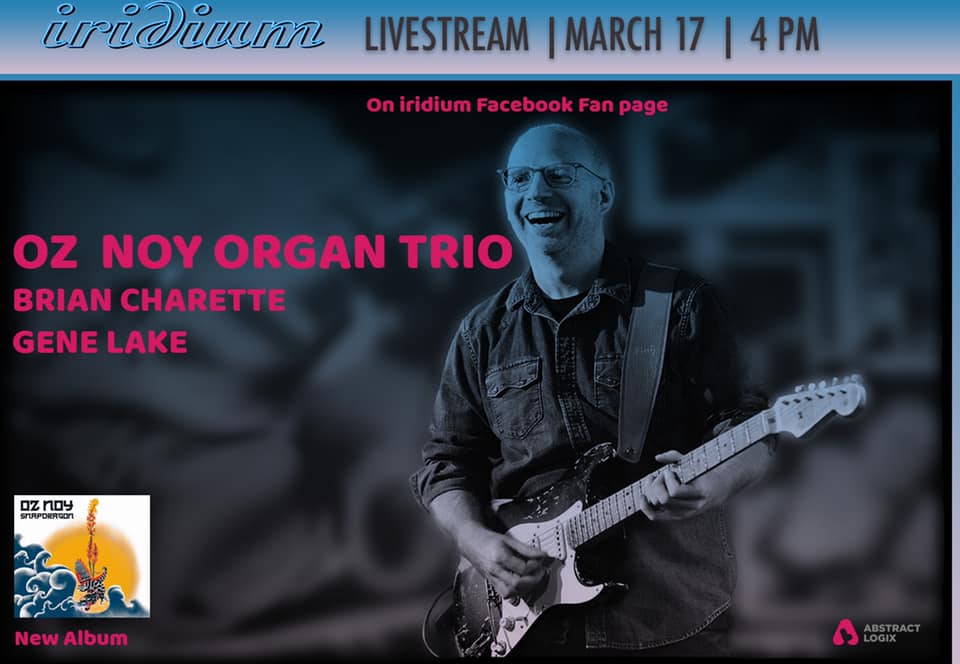
Abstract Logix recording artist Oz Noy will be doing a live broadcast from The Iridium on Wednesday, March 17, 2021 from 4 p.m. with his Organ Trio featuring Brian Charette on organ/keys and Gene Lake on Drums.

Watch it live on The Iridium Facebook Page

Wayne Krantz

Wayne Krantz 1985

February 21, 2021
Featured, Wayne Krantz
Wayne Krantz What's New

Buy

Itunes-note


Amazon


Bandcamp

Order the album today

Wayne Krantz unearths Music Room 1985 – The Thrilling Lost Solo Debut
from Guitar Iconoclast.
Previously unheard one-man recordings to be released on March 19, 2021 by Abstract Logix.

Few musicians invest so much in the moment as guitarist Wayne Krantz, whose career has been defined by a fearless embrace of risk and a willingness to charge headlong into uncharted terrain — testing himself and thrilling an ever-growing legion of dedicated, adventurous listeners. Existing in a state of relentless forward motion, Krantz rarely has the time or inclination to look back, which makes the emergence of the newly rediscovered 1985 recordings gathered as “Music Room 1985” all the more extraordinary.
To be released on March 19, 2021 on the Abstract Logix imprint, “Music Room 1985” was laid down by Krantz alone in a Reseda garage studio in the summer of 1985, with Krantz handling all the compositional and instrumental duties himself. Its six tracks predate his first solo album by five years. Not long after committing a final mix to tape, “Music Room 1985” was left behind — a victim of the machinations of the music industry and Krantz’s own rapidly accelerating career as both a bandleader and a hired gun. Even Krantz himself didn’t manage to hang on to a copy.
When reminded of the project in 2020, he reached back through his contacts and unearthed a safety copy in a now-obsolete media format. With much legwork, playback was achieved and a high-resolution transfer was made. As evidence that Krantz’s singular talent was already well established even at this early stage, “Music Room 1985” is entirely convincing. Simply as an album of music long lost to time and now only being heard, it is staggering, offering an entirely unique brand of agile, intelligent instrumental pop defined by taught rhythms and insidiously infectious melodies. Every snarled rhythmic figure is offset by soaring melodic gestures and pensive, reflective spaces.
“It wasn’t based on anything happening at the time,” Krantz says. “I was already on a contrary path and “Music Room 1985” was my version of ‘alternative’: jazz / instrumental music that worked more like pop, melody-centric with verses, bridges, hooks and few solos.”
While he reached back to these recordings out of his own curiosity, Krantz quickly realized that “Music Room 1985” has value not just as a snapshot of his journey’s progress at that moment, but in and of itself. “It held up,” he says on the eve of the project’s first release — to which no re-recording or remixing has been done. “The sounds on it aren’t very trendy, so it doesn’t sound too dated to be relevant. It’s fun to listen to: it still has the vitality, mojo, and integrity that initially made it sound good.”

Latest album

Latest NEWS

SUBSCRIBE

Please Subscribe your mail to get notification from AbstractLogix.


Facebook-f


Twitter


Instagram


Youtube

Copyright © 2021 ABSTRACT LOGIX

Facebook-f


Twitter


Instagram


Youtube

Copyright © 2021 ABSTRACT LOGIX

Wayne Krantz

Wayne Krantz

January 16, 2021
Featured, News, Wayne Krantz
Wayne Krantz

In musician circles, Wayne Krantz is something of an icon. Having come on the scene in the latter 80’s, he was already making a splash in guitar circles when he retreated from outside influence to build a style that was all his own. Emerging with a sound and technique that was as formidable as it was unique, he soon shook loose from the control of major record labels and went totally independent – in the process being one of the first musicians to put something called “the internet” to use. Restlessly creative, his output has ranged from fully composed albums to fully improvised albums with various stops in between. He had just completed a reworking of his book “An Improviser’s O. S.” when we sat down for a chat…

“An Improviser’s OS v.2”

ABLX: Rumor has it that you have a new record in the works…

WK: I do. I started writing last Summer and finished it about four or five months ago, maybe. It’s a layered thing and I’m just kind of putting it together piece by piece. It’s a little more expansive than my usual trio format – a little more complex in terms of logistics and instrumentation. I’m hoping to have it done by the Fall [2019]. That’s the goal. I just finished writing this revision on my book [“An Improviser’s O.S.”] – that’s just going to press now. So now that that’s done I can focus full time on moving forward with the record.

ABLX: So this is not a trio record?

“Howie 61”

WK: No, it’s bigger. There’s no singing and it’s a little less pop oriented than “Howie 61”. It’s sort of jazzier in a way – not swing but…. it’s a little hard to describe. It’s very composed. In terms of how I’m thinking about it, there’s almost no improvising on it – yet, anyway. It’s quite different from what I’m doing right now with the live stuff.

ABLX: Almost harkening back to say, your “Long To Be Loose” period?

WK: Yeah, in a way, except it’s not orchestrated for trio. But yeah, it’s THAT composed, I would say. I haven’t done that in a long time because the trajectory of the music has been going deeper and deeper into the improvisational side. The thing is, the improvising is always evolving. It’s not like it would be entirely inappropriate to make another record of the improvisational stuff in terms of how it might sound different at this point. I do think that’s important – that new records sound different than the ones that came before. But I’ve documented the improvisational stuff on record a lot and I kind of felt the need to get back to some writing, so that’s the thrust of this one.

“The Sellouts”
“The Sellouts – Live at Iridium” August 23 2019, Tickets on Sale

ABLX: You say the new record is “very composed.” Is it meant to stay that way when you reach the studio? In other words, is the idea to document a pretty strict representation of what’s in your head or let it morph a bit when it gets into live players’ hands?

WK: Right now, it’s [going to be] entirely composed – probably with a few solos here and there but I’m not really sure about that. What I’m going to do is basically record it as I wrote it and then listen to it. If at that point it seems too static to me…. I mean I’m not writing classical music here, it has to live and breathe. And typically I don’t write for drums, they provide for a lot of living and breathing on this stuff just because what they play is largely improvisational. But yeah, then I’m just going to make sure that the desired balance between compositional and improvisational stuff is struck in the right way.

ABLX: Do you have any musicians in mind for this project?

WK: I do but I don’t like to talk about that before it’s recorded. It’s a bunch of good people. I’m not worried about them at all. (laughs)

ABLX: Your last three studio albums all contain varying degrees of structure but even in the more improvisational oriented offerings – such as “Good Piranha Bad Piranha” – there seems to be a greater refinement of expression present than in earlier efforts. What’s your take on that observation?

“Good Piranha Bad Piranha”

WK: That’s interesting that you say that. That last one [“Good Piranha Bad Piranha”] was vastly more jammy than the other two records. Krantz Carlock LeFebvre was a pretty fair amount of writing with space left for improvising. Like I said, we’re always trying to balance those two things in a desirable way from record to record. And that balance shifts from record to record. KCL was a lot more composed than the live records I was making at the 55 Bar – which were basically just live documents of improvising. With KCL, I wrote a lot and we balanced it with improvising because that’s what that band does, largely. But “Howie 61”, that’s very, very composed. It’s basically songs that may have a solo or two here and there but there’s almost no jamming on it.

“Good Piranha Bad Piranha” was really what we do live. That was basically a live session recorded in the studio, but we could have been in a club doing that. And in fact I didn’t write at all for it. It was four cover jams with two different groups doing their own things with it. And of course that was edited because the record has to be 40 minutes long, not 120. Plus – and maybe this is what you were noticing – the way that we improvise is becoming more and more compositional over time.

I like organizing the improvising so it resembles composition in how it’s shaped and put together and how it evolves – the arc of it, the form of it. I really look for that as opposed to just taking a guitar solo over a groove, then a bass solo over a groove, then a drum solo over a groove. It’s really more of an effort to spontaneously generate stuff that has improvisational fire in it but also kind of stands as a credible piece. Something where we’re not just asking the audience to sit back and admire what good soloists we are. That’s kind of a different intent than the normal case of just going in and blowing on a riff.

So if that record seems more succinct, I take that as a really nice compliment because about 94 percent of that record was improvised. Maybe we’re making some headway… (laughs)

Remember, I’m trying to prevent people from being bored. That’s what’s going on here… seriously …(laughs)

ABLX: Even yourself, right?

WK: Well… me too, yeah, but it’s fun to play music so there’s less of a chance that I’m going to be bored. You’re asking an audience to sit there and listen to either a record or a live show of people improvising. To get them to sit for that and like it…. or listen to the record again, or come see the gig again… The main thing you’re fighting at that point is the incredibly high potential for it to be boring. You know, it’s just a bunch of guys playing their instruments. By itself, that’s really not that interesting – you have to make something of that. It’s no accident that when you go see Radiohead or something there’s a 90-foot screen behind them with state of the art video. Or you see Madonna and there’s fifty dancers on stage. Even if you see somebody artistic like Nine Inch Nails there’s state of the art lighting – there’s a show attached to this great music they’re playing. That’s part of what’s holding the audience’s attention and part of the reason they’re willing to pay 150 bucks to stand up with four or five thousand other people in an uncomfortable room – because there’s a show going on, a spectacle.

What we do is on such a modest scale compared to that, all of the interest has to come from the music itself. The show is the music and the music is the show. I always feel a big responsibility to try and figure out how to structure it in a way so that it holds up – so it’s not just three guys jamming wildly and revelling in the fact that we can play our instruments. To me, that gets boring real fast. That’s one of the reasons why I like thinking more compositionally with it because we want to improvise.

That’s the energy of this thing, that’s where living in the present with the music really is. So we want to do that but we have to figure out how to somehow give it the weight that composition has. So that becomes like a tactical exercise – how do we make it sound credible – even when you’re asking them to show up and pay for something that’s basically unprepared on some level.

ABLX: Hearing you say that, I’m thinking about the various live albums you recorded at the 55 Bar – specifically “Greenwich Mean”. Here was an album where you sifted through I don’t know how many hundreds of hours of live improv…

WK: Just one hundred… (laughs)

ABLX: Just one hundred, right. (laughs) But on that one, with the listening, cutting and pasting sections of improvs together and assembling that into a new whole, do you think that process may have spawned – in a reverse way – what is now your impulse for “compositional improvisation?”

WK: Maybe… Yeah, you know it probably did because in fact on that record in particular, whatever you hear that sounds compositional – and there’s a little bit on every track of that record, even though there are so many tracks – was all constructed. None of the stuff we were actually playing is on that record “compositionally.” It’s all stuff constructed from the improvising. Even back then I recognized that there had to be some kind of balance between compositional content and improvisational content for it to work.

Krantz Carlock Lefebvre

That really became clear to me at the beginning of the Carlock / LeFebvre band, which was much more improvisational than the Danziger / Goines band before it. “Two Drink Minimum” and “Long To Be Loose” – there was a lot of writing with that first trio. When I started that second band, we started without any composition at all. We had this weekly gig and we would just go up without any written stuff and just jam. I quickly realized, even though with certain people you can make that work, in general I couldn’t count on it every week. I can’t ask the audience – and us for that matter – to really come up with the goods consistently every week without any kind of compositional content. So there needed to be at least some writing. Then I kind of re-found the balance with that trio and that ethos for me was pretty much defined by that particular group.

That said, “Howie 61” was a very composed record and this new one is almost entirely composed so this is a shifting dynamic. It’s like whatever feels right for right now. I’m also reacting against what I’ve done before because I don’t want to keep making the same record. Some people are good at doing that and have an audience that expects that but it just never felt right to me.

ABLX: One thing I wanted to ask about was your compositional process. There are many guitarists who compose with or for the guitar. Then there are those who compose in their heads and it just finds its way out through the guitar. Your style is so distinctive that it’s a little difficult to tell so, which is it for you?

WK: In my case, until this record that I’m making now, my writing has been entirely a function of my guitar playing. I wrote for guitar, period. I looked for stuff that sounds good on guitar and from that I orchestrated it, usually for trio. Prior to this new record, I kind of hit a wall with that and felt that I had done it that way enough. This thing I’m working on now is entirely written, every single note, away from the guitar. I’ve never done that before and in fact I wasn’t even sure I could do it.

ABLX: Did you have to learn your own guitar parts?

WK: I didn’t write too much for guitar because I just presumed I’d be able to deal with that in the studio later. But yeah, I have a little bit of guitar written and I’m gonna have to learn how to play it because it didn’t come from guitar. For me that was an interesting difference with this [new] thing. It would be interesting to have a good listener’s take on this because it’s NOT strictly guitar-based, for once.

ABLX: Well, knowing your bio, you did take piano when you were younger so your window onto understanding music isn’t one hundred percent coming from guitar, right?

WK: Well, the piano lessons I took as a child don’t really consciously inform what I’m doing now. In fact, if it were not for the beauty of Sibelius software I don’t know if I could have written a record’s worth of stuff away from the guitar in any kind of way that would satisfy me. I don’t know if I’m capable of that. I mean people wrote like that 200 years ago and I suppose some people can still write like that. But I needed the orchestration aspect of being able to hear, “Oh, that’s what that bass part is going to sound like, that’s what that piano part sounds like…”

ABLX: So hypothetically, if someone commissioned you to write a piece for orchestra, how do you think you would fare?

WK: I think I could make something that I would be happy with now – because of the experience I just had writing for this record. I wrote for a bigger ensemble without touching the guitar and I’m satisfied with the result, in terms of the writing. Not that my phone is ringing off the hook with people wanting orchestral pieces but if that phone ever does ring, that’s kind of nice news for me.

ABLX: You’ve talked before that at an early point in your career, you decided to sort of sequester yourself from other musical influences to find and develop your own personal style. From there mainly worked in your own trios for many years so you have been very submerged in “your own thing” for the bulk of your career. On those occasions where you’ve stepped out of that to work with others, – i.e., Steely Dan, Chris Potter, Tal Wilkenfeld, The Ringers – do you find this has affected your ability to “play well with others “ so to speak?

WK: It’s difficult for me to assess because I have nothing to compare it to but on some level I think it probably makes it harder. No matter who it is, no matter how open minded someone is that comes to me and says, “Hey, you want to play guitar on my thing?”, they’re going to have some idea of what a guitar is supposed to do. Even if they are going to give me as much freedom as I want, they’re still going to have ideas about that. So that’s why maybe a player who is more of a stylist has less of a disconnect with that because whatever it is that the leader is hearing at that point is playable. You know what I mean? It’s like, “Oh ok, you want that kind of a thing? Cool I got that.”

Whereas with my thing, it’s so defined now as a personal thing, invariably there’s going to be some element of it that wasn’t quite was expected. Sometimes that’s a good thing and sometimes it isn’t. I think it has kind of taken care of itself by this time because really the only people that would ask me to play on their record are people that know what I do and want that sound. Nobody’s gonna call me to do an imitation of Steve Lukather – there’s no point in it.

ABLX: But is it culture shock for you to step out of your own thing and into say, The Ringers where you’re playing with Michael Landau and Jimmy Herring? There you’re not only playing different material but you also don’t often play with other guitarists.

WK: Well sure, that was a different thing. Talking about that situation specifically, the thing that really made it the most fun was that they’re such great people – and such great guitar players. It kind of can’t help being fun at that point. At the same time though, it ain’t my thing and never will be. You can kind of flirt with other things and it’s interesting to see what works and what doesn’t but ultimately it’s hard to beat your own thing once you’ve tasted it.

But it’s absolutely not a bad thing, I’m happy to have those opportunities and I hope they continue to come in occasionally.

ABLX: It is interesting to hear you in other settings though because sometimes these situations draw something out that may not have otherwise emerged. Case and point, there’s a few audio clips floating around the internet of you playing with Steely Dan – a very interesting context to hear you in. How did you feel about that gig?

WK: It was fun. I had a good time. I mean they hired me to improvise. They hired me because for that season they didn’t want to have somebody playing the stuff on the records. They needed somebody who could come up with something other than what was expected in that situation and so that was kind of a license to do my thing. You know, I used to listen to them in high school and I had a lot of respect for them, so I tried to do the music justice. It was a fun job.

ABLX: One outside project that was striking in that it sounded very natural for you was Tal Wilkenfeld’s “Transformation”. You, and the others involved, sounded very integrated – as if those tunes were written for you.

WK: Honestly, I don’t remember it very well but that’s good. If it strikes you as sounding organic then that’s cool. Tal really had listened to my thing and she knew that we had some fundamental things in common. But any of these situations are mostly fun. Now most of the time people email me stuff to play on. That’s fun too because I can really do whatever I think is right and email it off to them. It’s perfect in a way, you know. I don’t have to deal with any raised eyebrows from the engineer. (laughs) I can just do my thing and let it fly.

ABLX: You still gig pretty regularly at the 55 Bar with a range of players. What do you look for in a musician to do that trio gig with you?

WK: They have to have good time, obviously…to be creative. They have to have some kind of feel for funk and rock grooves because that’s the foundation of the music. They have to be strong rhythmically because the band rigidly adheres to four, eight and sixteen bar forms, that’s always the foundation of the improvising, so somebody has to be able to hear that in the middle of the rhythmic maelstrom that inevitably occurs. You know, it has to be creative and feel good and be funky.

And [I look for] somebody who listens – because that’s like the ‘jazz’ part of what we do, the interaction. You know, what Miles did in the 60’s with Wayne and Ron and Herbie and Tony, where they would play the same ten standards every night but always play them differently. They would react to each other differently and create all these different contours and terrains. All of them would improvise and one night was never like any other. That music heavily influenced what we do, but we don’t do it over swing grooves and standards. We do it over funk and rock. A straightforward groove drummer might not work so well for my thing, even though groove is a really important part of it, because if it’s somebody that doesn’t know how to creatively interact in the moment, then it gets compromised and we can’t really do our thing.

ABLX: You’re known for doing a lot of on-the-fly tempo changes in you live set. Where did that come from?

WK: That came from making “Greenwich Mean”. When I was assembling that record I would just pull two tempos next to each other. There’s no spaces between any of the tracks and it’s pretty much a stream of consciousness thing. So things would get edited together – these tempos that had absolutely nothing to do with each other and also keys that had nothing to do with each other. The only criterion I had as to whether to do it or not was if it sounded cool.

So after that record was done, that was one of the things I wanted to do live. But how can we do that – like a needle-drop randomly on an LP, from song to song? So that was one of the ways we found to do that – radically change the tempo marking, without it relating mathematically in any way to what came before it, so it literally would sound like dropping the needle someplace else.

ABLX: How do you do that logistically?

WK: Hey man, you know… that’s the magic. (laughs)

ABLX: Trade secrets, ok… (laughs)

WK: No no, it’s really driven by the drummer. I cue when it happens, whether we go faster or slower and how much. Then it’s up to them, at the beginning of the next phrase, to shift non-mathematically to another tempo, and play it strongly enough so that the bass and guitar can grab onto it immediately. So it’s just a feel thing. We sorta rehearsed it initially when that band started doing it. At this point I’ve been doing it for twenty years and now a lot of people can do that so it’s not so big a deal anymore. I know that James Brown and Prince also did radically different tempo shifts that they cued. I don’t know how they did it but for me it just came from trying to replicate this effect that happened almost incidentally on that record.

ABLX: It’s deceiving because it sounds like such a unified thing, one just assumes the change is a mathematical subdivision of the tempo in some way…

WK: But that’s the whole goal, man – to get it so it sounds that tight, without being that. And again, that just comes under the heading of “How do we keep them, and ourselves, from getting bored?” That’s just one of the moves we’ve come up with as a band to create a drastic change in terrain.

ABLX: Early on and for long stretches of your career you’ve been very “DIY,” in terms of putting music out. In that way you’ve almost been prophetic for how many must now look at navigating the current landscape as musicians. You’ve also been with different labels for chunks of time. Could you talk about the downsides and upsides you’ve experienced with each situation?

WK: I was completely independent of labels, managers and distributors for 10 years. That’s when I first studied HTML and learned how to build a website. This was back in the old days when having a website was like “Wow, you have a website? How do you do that?” (laughs). But that’s when I got into this idea of cutting out the middleman, as it were. Trying to make stuff as good as I could, sell it directly to whatever little audience I had at the time and see if I could survive. I kind of struggled to do that but I managed to do that for a pretty long time. And you know, the audience grew organically, bit by bit. I mean not hand over fist or anything but the audience slowly got a bit bigger, just by word of mouth and it was a cool thing. I was selling downloads on the website and doing stuff like that.

And really the only reason I entertained the idea of working with a label again – and that happened to be Abstract Logix – was that I was so far out of the business at that point that I had no way of touring. Touring involves promoters. I could be selling ten thousand records a year – and in jazz, that might be one of the best sellers of the year – but unless it was on the radar of the music business, a promoter would have no way of knowing whether I’d done that or who bought them. So I found that I couldn’t tour effectively, and I wanted to get the stuff out on the road. So the label provided an opportunity to interface a little bit with the music business – I mean, we’re still talking about an independent label here.

But immediately upon making the first record – I guess it was Krantz Carlock LeFebvre – I was on the road. We were able to do some gigs. I went to Asia for the first time. It did what I wanted it to do and got me out a little bit more, which was cool.

And in the case of that label [Abstract Logix], there were zero controls [put] on what I’m doing. I guess I’ve made three records with them and they are all really different. They all speak to different parts of what my thing is and there was nobody instructing me about what to do and where to go creatively with those. That was nice because I know some people have to deal with that on more mainstream labels. Plus the economic structure of it worked – it wasn’t as abusive as most record company contracts are.

So there was now somebody between me and the audience – and I’m not nuts about the idea of that conceptually – but it’s really hard to interface with the music business without being in it, you know, so… (laughs) If you want to be active at all, there have to be some kind of inroads and alliances made.

ABLX: I see that you’re planning on touring soon.

WK: Yeah, it looks like KCL is gonna raise its head up out of the mud and do some gigs, which should be fun. We just did one the other day after not playing for years and we all had a good time. I think we’re going to try to do something the first part of next year (2020).

ABLX: You’ve all had a lot of experiences since you played together regularly – Carlock with Steely Dan and others, LeFebvre with Tedeschi Trucks and Bowie…

WK: Hopefully all of those experiences won’t compromise their abilities too much…

ABLX: (laughs) Do you feel that experience in them when you play together now?

WK: Well, none of us play like we did then, it’s interesting. I mean I play WAY differently now so… but that’s kind of the fun part. Even though there are some differences – especially when we’re improvising – it’s still fun, it still works. So that was cool and really why we decided to try and do some more stuff.

ABLX: You said earlier that you recently finished a second edition of your book, “An Improviser’s O.S”. How is this edition different from the first?

WK: It’s a little more involved on the application side. More involved with [things like] “How can I use this to become a stronger improviser?” and “How do I make myself sound better?” – musical things. The core math of the thing is the same but I rewrote it so hopefully it’s a little clearer. I had the advantage of fifteen years of people going, “Huh? What does that mean?” So I cleared up some common misunderstandings, hopefully, and added to the content of it.

ABLX: Would you call it a guitar oriented book?

WK: It’s written as a guitar book primarily, I guess, but even more than the first one, it’s really just an improvising book, not strictly limited to guitar. A lot of the exercises are guitar-centric, but not without potential for application to other things. It would be great if some drummers bought it, some saxophone players and piano players. Some did with the first book and that was cool. I wanted to write something that wasn’t just a guitar book but that worked as a guitar book and I think I did. I hope I did.

ABLX: So the book is a reflection of your approach to improvising and music. Has that approach has changed much over the years or even since the last book?

WK: Yeah, that’s the thing about improvising – built into the word is change. There’s no way it could not change. The only way for it not to change would be not to improvise. The book is all about using theory as a way to practice being a better improviser. The theory becomes a servant for the main order of business – which isn’t the theory at all. The theory is just the “math” of it. The main order of business is actually playing music, actually being creative and performing in a creative way.

And that is change. I can’t even keep up with the changes that are happening. They happen all the time. Once you commit to being a creative player, then every day there’s just new things. There’s always these new directions happening and new solutions to challenges. I’ve committed myself to that kind of trajectory as a player. To be honest, just trying to keep up with the ideas is just really exciting. I mean, I’ve never liked playing guitar more than I do today… ever, and it just never seems to stop. It keeps opening up.

This has nothing whatsoever to do with working or being paid or being known. I’m just talking about my relationship to the guitar and playing music. One of the things I like most about improvising is that it allows – and really asks – for change, evolution, movement. I like those things because, like I said man, it’s all about trying not to bore the people. No matter how great it is, the more you do the same thing, the more boring it gets – for us and for them. So improvising is like the answer to all that, I think. You just have to figure out a way to do it so that it’s good enough, so it satisfies people. That’s where the practicing of improvisation comes in and that’s what the book talks about – how to practice that. It’s a different discipline than lick playing. It asks for a different focus.

ABLX: As you say that, it’s a bit ironic that you’re working on your most composed album to date…

WK: Yeah, but there’s room for that. We are not records. We’re people playing music in the world and occasionally we make records. The wider our imagination is, the wider the range of stuff that can be made and called a record. And like I said, every time it comes time to make a record I think, “Well, what needs to be done now? What’s right, now? Without doing what I just did, what’s in front of me?” That’s what was in front of me this time so that’s what I’m doing.

ABLX: What do you hear or see today that inspires you – musically or otherwise?

WK: I think I’m a little weird in that way compared to my brother and sister musicians in that I don’t look to music so much for inspiration. I mean, I guess I do but if I do that, I tend not to look at what is happening around me but at classic things that have happened. I listen to dead people a lot. I don’t go scouring the clubs for the latest sounds. I’m really not up on it and I don’t use the energy of that in what I do. There are classic things that I listen to through the years – as opposed to when I was just getting started on guitar when you just listen to everything you can and imitate it. That’s how you get on your feet. As you mentioned earlier, at some point I got tired of being a sponge for everything I loved, and sounding like everything I loved. So I kind of intentionally turned away from music as a source for inspiration for a long, long time. Then when I felt like I had defined myself well enough – to myself and hopefully to anybody listening – I could start listening to music again without just being a sponge that gives themselves up over every new sound that comes their way.

So at that point I did start listening to music a little more but still not so much. As far as where the inspiration comes from, in my case, I think it’s a little like asking where do the ideas come from. I don’t really know the answer to that exactly. I know I can listen to, say, Django Reinhardt radio recordings from Rome and be inspired by the melody that he makes, for example. So I’ll listen to that and say, “Wow, that’s what’s possible for an improviser, melodically.” Once you realize that’s possible, that means you can do it, too.

So that’s the inspiration, not going out and trying to sound like Django, like I would do when I first started to listen to music. Now the things that inspire me are the things underneath the playing, not the idiosyncrasies of the player. My big thing in recent years is trying to connect to the music more deeply when I play. That’s one of my main goals.

There’s a Hendrix‘s Woostock video where you see him able to really connect in a situation that presented so many distractions from connection. I find that really inspiring. I can be inspired by THAT… without trying to cop the solo on Foxy Lady. (laughs)

You go to those places where you see the soul bubbling to the surface, whatever it is. Then you get the message, “That’s possible.”

John McLaughlin

John McLaughlin and the 4th Dimension offer first new recording in five years to benefit the Jazz Foundation of America during Covid-19 Crisis

January 3, 2021
Featured, John McLaughlin, News, The 4th Dimension
John McLaughlin, The 4th Dimension

The blues may be the only thing even more universal than the current global pandemic we are all operating through. With this in mind, pathbreaking guitarist and bandleader John McLaughlin has convened his longstanding band the 4th Dimension — Gary Husband (keyboards), Etienne M’Bappe (bass), and Ranjit Barot (drums, konnakol) — via the Internet to record “Lockdown Blues”, the multifaceted ensemble’s first new studio recording in five years. Although each performer contributed his part remotely from far-flung locales (McLaughlin: Monaco, Husband: London, M’Bappe: Paris, Barot: Mumbai), their deeply felt connection transmits clearly through high-speed data lines as they tackle a rigorous, propulsive new McLaughlin composition rooted in the blues, but enlivened and disrupted by his signature rhythmic intricacy.

McLaughlin convened the 4th Dimension to help raise awareness and funds for the Jazz Foundation of America, who has supported jazz music and jazz musicians for over 30 years. “The pandemic has thrown hundreds of thousands of musicians out of work,” McLaughlin reflects, “and nobody knows how long.” With this in mind, the Jazz Foundation of America has recently established a COVID-19 Musicians’ Emergency Fund to give musicians and their families money to help cover basic living expenses.

A video of the 4th Dimension performing “Lockdown Blues” is available to view on YouTube, Facebook, Instagram and the audio recording can be downloaded free on Abstract Logix Bandcamp page: https://abstractlogix.bandcamp.com. Donations can be given directly to the Jazz Foundation of America at www.jazzfoundation.org.

“As a band, we’ve been together so long we’re family,” McLaughlin concludes. “But in fact we go further back: Humanity is the only family, and we believe the only way humanity will survive is if we care enough for each other. We hope that whoever sees or hears this will care also. So if you donate something — even something really small — thank you.”

Jimmy Haslip

Jimmy Haslip Interview

July 10, 2019
Jimmy Haslip, News
jimmy haslip

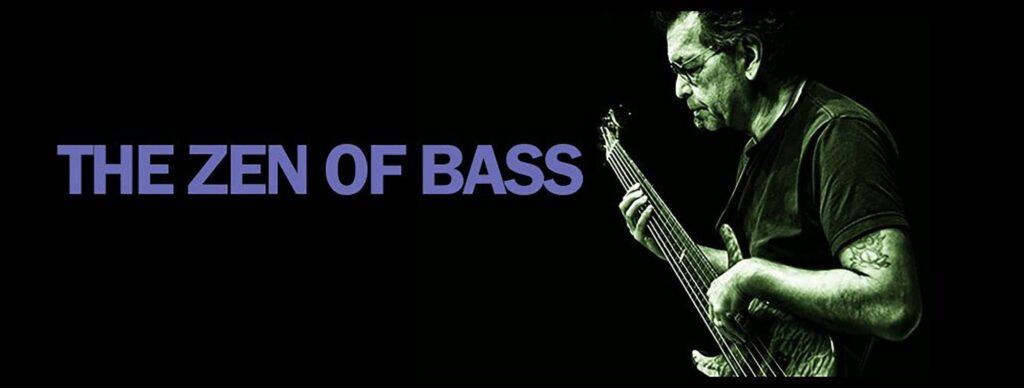
Jimmy Haslip Interview- The Zen of Bass

It was just the other day, during a casual conversation  with guitarist Jimmy Herring, I asked him that which bass players come to your mind who you would like to play with, and the first name that came out his mouth was Jimmy Haslip. He continued to say how musical and sublime Haslip was in situations that he had heard him. When you ask  session and touring musicians, everyone wants to have Haslip in their mix.

From a personal standpoint, working with him over the past several years ( with Oz Noy trio), you realize how important it is to have a really cool guy on the road, who keeps it all together and goes above and beyond than just playing on stage. It is not enough to just having a great musician in your band, it is as important to have a zen-like force with you on tour who keeps it rock steady and is a team player. Jimmy Haslip falls in that category, a really special one.

A deep musician, Jimmy Haslip has been holding it down for so many greats, starting with Yellowjackets, Robben Ford, Allan Holdsworth to Oz Noy, just to name a few. The list can go one forever.

We caught up with Jimmy at his home in Los Angeles as he was preparing to travel to Europe.

Abstract Logix : Its been a few years, since you left the Yellowjackets to work on other endeavors. How has it been?

Jimmy Haslip : 7 years now to be exact. Can’t believe that !

Well actually from the moment I left in 2012 I have been solicited to produced 5 and possibly 6 projects that year which I ended the year producing 10 projects and that trend has continued for now 7 years.

I’ve been producing between 10-12 projects a year for the past 7 years. . . and this year I’m already producing 9 projects in various stages with 3 more project awaiting scheduling.

Currently I’m now completely finished with One of these projects which is a collaborative recording with Jeff Lorber and Mike Stern called ‘ELEVEN’

I’m mixing two projects and close to finishing those now . .The other 6 projects are in still being worked on with tracking session and overdubs.  So on average in the last 7 years I’ve produced around 80 recordings.

Also included in the years calendars have been some live performance mostly with the Jeff Lorber Fusion and the Oz Noy trio.

All in all . . The last 7 years have some far been extremely interesting and fascinating musically.
All else has be great and challenging to on many levels with life in Los Angeles. Hahahaha. It’s all motivating and inspiring !!

AL : You recorded and toured with the great Allan Holdsworth during his final years, from someone who worked with him so closely, what runs through your mind when you reflect on his music?

JH : I did work with Allan for just about 10 years on and off. I worked with him quite a bit in 2015.

Then 2016 there was a bit of a break in his schedule. I recorded with him in January / February 2017 on a production production I brought him in on.

I miss him dearly . . He was beyond a one of a kind musician and composer. Working with him was Incredible on every level and it was a blessing that I’ll never forget, to have shared the stage and play his compositions. It was the most special feeling playing gigs with him.

I can almost compare it to my childhood feeling of excitement in the air that I felt every Christmas Eve!

Extraordinary experience for sure but it’s really hard to express in words.

AL :  You are known as a prolific bassist who does not overpower the music but serve its purpose. What’s going through your head as you prepare for the music you have to serve?

JH : Well I love music . . All kinds of music and I have even studied music from many other countries.
Indigenous Folk music has been a focus for me since the mid 1980’s and I love the simplicity of a lot of the music I’ve heard in these ethnic genres.

It hundred and maybe even thousands of years of developed music that is deeply rooted in these different cultures.

Who’s to argue with that, as far as structure, harmony, rhythms and essence of expression . .

That’s a bottom line for me and the foundation of  how I learned to play the electric bass when I studied bass lines from even James Jamerson Sr. (Iconic bass player who recorded on quite a bit of Motown Music).

I definitely first learn any bass parts written by the composer and then I try to make it feel solid and expressive so it hopefully breathes life into the notes on the music paper.

If I then can add any natural and instinctual improvised notes, phrases and melodic enhancement that comfortable for the artist / composer / producer . . That’s just some added icing bring in some possible new element(s) to the piece.

I just want the music to feel natural and wholesome. I also want and strive for the the artist / composer / producer to be happy with the final recorded performance. It’s important to me to know that I fulfilled their expectation and vision for the music !!

AL :  As you know, “Harbor Lights” by Bruce Hornsby has been a landmark record for me personally. I know its been over 25 years. Can you reflect back on the moments of working on that record?

JH : That project was so special to me because Bruce and I became friends long before he and the Range put out “THE WAY IT IS” . . .

So to be invited to work with Bruce on this new music for him as a solo artist. His first solo project was for me a huge gift and a delight. I stayed in Williamsburg, VA for about 10 days where Bruce had moved to and built a home and a private recording studio there.

John Molo ( the drummer with the RANGE) was there as well and we rehearsed and recorded all the basic tracks for this project . . . He then casted the individual songs with guest artists which included a who’s who lineup and the rest was history.

I always loved Bruce’s writing !  Exquisite and prolific.

He worked on lyrics with his younger brother Lon. Bruce came from a super cool and talented family . . Just the best vibes all around and I think the music expresses those feelings. Even the controversial lyrical content is enlightening and poignant on so many levels.
The music is deep and rich !

Again an honor to have worked with Bruce on this music as well as his follow up recording we worked on basically the following year called HOT HOUSE.

Everything about these projects was above board, high end and yet so comfortable and to work there with everyone.

Another unforgettable experience in my life !

AL : There are so many records that you have been a part of , if you had a moment to think about from very beginning of your career, tell me at least five records which are close to your heart?

JH : That’s an awful tough question to answer !!

But I’ll choose these projects for now ! There’s probably at least another 20 or so projects I could easily add to this as I have recorded on over 400 recordings.

Robben Ford ‘The Inside Story’
Yellowjackets ‘Four Corners’
Rok Golob ‘The Story of Laxeno’
Jing Chi ‘3 D’
ARC Trio ‘ARC Trio’

If I could add a 6th record that I’m wanting to add to the list below of the 5 recordings ( very difficult to answer this request !!! Hahahaha)

Bobby McFerrin ‘Bang Zoom’

AL: Thanks so much Jimmy for taking the time, we will see you shortly on the road. Until then….

For all things Jimmy Haslip, check out his website and Facebook.

Mike Seal Interview

May 2, 2019
Mike Seal, News
mike seal

“Mike Seal is a rare type of musician, a one of a kind. His notes are treated with inflection and love for the universal language. Not only that, he’s a consummate professional and caring, considerate human being. He keeps me on my toes musically.”- Jeff Sipe

It must be almost ten years ago that I went to see Jeff Sipe perform in Raleigh with two young cats, one of them was guitarist Mike Seal. At the time, he could not have been any more than 20 years old, I remember leaving the gig, mentioning to Sipe that Seal was going to be a force to reckon with. Fast forward a few years, and this Nashville based guitarist was hired by Dobro maestro Jerry Douglas in his own band. Mike released his first solo album, “Dogwoods” (Seal Club, 2018), an acoustic guitar album, which displays Seal’s finger-style playing and showcases his wide ranging tastes and mastery of styles—from João Pernambuco’s “Sons de Carrilhoes” to Jerry Reed’s “The Claw.” During the last couple of weeks, I was on the tour bus with John McLaughlin in Europe and was listening to “Dogwoods”, and John jokingly said with fondness, “I hate this guy”. Mike is one of a kind, who respects tradition and music, yet constantly evolving.

There is a new revitalized energy which has been infused in the duo of Mike Seal and Jeff Sipe. The State Birds are a new band with them two along with the great Neal Fountain on bass and Bryan Lopes on saxophone. Their run of shows start soon and we cant wait to see what’s in store . We caught up with Mike to find a bit more about him.
Foreword by Souvik Dutta.

Abstract Logix: Can you tell us about your earliest musical memories? Where did you grow up? Did you attend a music school?

Mike Seal: I grew up in the Bridgewater, Virginia area. I remember at age four or five, my older brother had this half-sized acoustic guitar with a cowboy painted on the body. I vividly remember trying to pick out melodies on that guitar, and generally being curious about it. I also remember hearing my brother play Beethoven’s Fur Elise, and marveling that anyone could play something so beautiful on a guitar. He was probably 9 at the time, no small feat when I look back. Our grandfather also played southern gospel music on guitar, and sang. My parents encouraged us to study music and put us in piano and guitar lessons at a very young age.

I became heavily invested in learning music during middle school and high school. I lucked out to have a really great jazz guitar teacher, Mark Whetzel, in Harrisonburg, VA. He turned me on to so many great players–Scofield, Metheny, Martino, Krantz, McLaughlin, Stern, you name it. He had a great pension for explaining advanced musical concepts, and I was completely inspired starting with the first lesson. I did attend music college in Knoxville, TN for a few years, but did not complete my degree. I was getting offers to go out and play, and really wanted to do that, so I went for it and haven’t turned back.

AL: Tell us about the new record?

MS: Yes, my first album, “Dogwoods”. It is all acoustic guitar. Half are duets, and half are solo pieces. I recorded it at home but had a very skilled team mix and master it: Roger Alan Nichols did the mixing, and Richard Dodd the mastering. I’m very excited. I want to follow it up with a full band recording, hopefully by the end of the year.

AL: It’s apparent that you have a multitude of influences: jazz, classical, bluegrass, rock… how did this come to be?

MS: I grew up hearing classic rock and blues thanks to my father, who was really a big fan of blues and rock and roll guitarists. Duane Allman, Eric Clapton, and Jerry Garcia are three of his favorites. I remember being into most of the 80’s and 90’s rock bands as I grew up. During middle school I became enamored with Led Zeppelin, and then in early high school I heard jazz guitar for the first time. My teacher exposed me to so many great records and players that I hardly listened to anything else for years to come.

When I went off to college, my brother started turning me on to bluegrass players like Bela Fleck, Jerry Douglas, Tony Rice, Mark O’Connor, Chris Thile, Bryan Sutton, and a whole bunch more. I couldn’t believe the musicianship and their ability to improvise, and have been a fan of that music ever since. Classical music is something that my brother and I were introduced to as kids, but is something that I have enjoyed coming back to throughout my life. I see all of these styles as different branches of the same tree, and share an equal love for all of them.

AL: Most folks first heard about you through your playing with the Jeff Sipe Trio. Can you comment about your time in that group, and what you learned there?

MS: Jeff Sipe has been like a musical father to me. I heard Aquarium Rescue Unit when I was in high school in Virginia, and quickly became obsessed with the “Mirrors of Embarrassment” record, the live record, and the “In a Perfect World” album. I learned to drive a car while listening to those albums in the CD player. To me, they married the amazing complexities of jazz and improv with the hard hitting, ass-moving groove of rock and roll. I was an instant fan.

I first met Jeff at a gig in Knoxville when I was twenty years old. He was so incredible to play with. It was like getting to ride in a very powerful luxury car for the first time. Every note he plays is made with such clarity of intention and purpose. He asked me to start playing shows with him, and that was really the beginning of my musical career. Jeff has introduced me to so many other musicians, and has always had my back as a friend and a bandleader. I’ve known him for 13 years now, and my immense love and respect for him has only grown over that period. I owe him more than I could ever repay in a lifetime.

AL: You currently play with the Jerry Douglas band. How did you get connected to him? What have you learned from one of the best dobro players ever?

MS: Jerry called me to play with him at the Telluride Bluegrass Festival back in 2016. I had some friends in his band, and they threw my name in the hat when he was looking for an electric guitar player.
He is another of my all-time musical heroes, and I couldn’t believe my good fortune to get that call. I’ve learned so much from him in the last two years, and continue to learn more every time I’m around him. He is one of the most innovative and adaptive players I’ve ever worked with. He commands total authority on his instrument, but plays with incredible sensitivity to what’s going on around him. It’s no coincidence that he’s been on thousands of records. He really knows how to support and add to a song. He can find that one perfect part that lifts the whole thing to a new level.

AL: When you’re not on the road or in the studio, what do you like to do with any spare time you have?

MS: Right now, I’m slowly accruing hours for a pilot’s license. I also love reading about history, and practicing very basic carpentry. I mostly cherish spending time with my lovely wife, who is a very talented and successful musician, and travels even more than I do.

AL: Are there any musicians that you admire but haven’t worked with yet that you would like to work with?

MS: Yes, too many to name! But I’ll say a few: Chris Potter, Bela Fleck, Chris Thile, Brad Mehldau, Yo-Yo-Ma, Edgar Meyer, Chick Corea, Herbie Hancock… damn, this could go on forever…

AL: You play without a pick (fingerstyle), much like Jeff Beck and Mark Knopfler. Was this a conscious decision, and what do you think are the advantages (and / or disadvantages) of doing this?

MS: I play this way because I really didn’t know better as a kid. I stuck with it, because the pick seemed difficult and it seemed like starting over. Learning to articulate notes with any clarity came a lot slower to me as a fingerstyle player. Fingers don’t have the same attack, or even volume that you can achieve with a pick. But after being exposed to Derek Trucks, Kevin Eubanks, Mark Knopfler, Jeff Beck, Bela Fleck, Paco De Lucia, Jerry Reed, and many more, I realized that fingerstyle players can achieve really precise articulation. It’s just a different technique, and a little different tone. I don’t really think one is better than the other, just different paths towards the same goal: good tone and clear articulation.

Oz Noy Interview

February 20, 2019
News, Oz Noy
Booga Looga Loo, John Patitucciew, Oz Noy, Steve Ferrone, Vinnie Colaiuta

Oz Noy is a very unique voice in guitar who brings great writing, infectious sensibilities and mind-bending chops rarely heard in a mix together. A New Yorker now for over two decades, Oz won Guitar Player Magazine Readers Poll for “Best guitar riff on a record” (2007), “Best new talent” (2008), and “Best out there guitar player” (2013). With several acclaimed records under his belt, Oz Noy is already considered one of the most accomplished plectorists in the world today, playing with some of the best in music- Vinnie Colaiuta, Dave Weckl, John Patitucci and others to name a few. His new album “Booga Looga Loo” is a testimony to his brilliant musicality and vision. Read what Oz has to say about his new project as he prepares for the world tour to support his latest.

Abstract Logix: You have been based out of New York for a quite a while now to call you a New Yorker, How has your journey evolved from the first day you picked up the guitar to being recognized as one of the finest players of today ?

ON: I grew up in Israel and started to play guitar at the age of 10, by the age of 15 my friend started to tell me that I need to go to NYC and play there, I never really though i would actually do it but when I turned 24 I got the courage and went there, I still pinch myself sometime going like “ waoo , I live in NYC and play with a lot of my heroes!” even after all this years , its still exciting!

AL: “Booga Looga Loo” sound exciting and fun?

ON: Its the funnest record I have done.

AL: Take your fans through your journey of the music you wrote and recorded for the album?

ON: I have to have a concept in order to write an album, once I know what the concept is its much easier for me to start writing and collecting songs that will fit the album. when I did “Twisted Blues vol 1” & 2″ I have this concept of taking the blues and mixing it with jazz, when I did “Who Gives A Funk” I had an idea of making a soul , funk R&B album. on this latest album I wanted to make a Boogaloo record but mix it with some electric jazz so its like Boogaloo Meets Miles Davis “Bitches Brew”… that was kind of my idea.

AL: You seem to have some of the finest musicians on the record?

ON: Yes, I am a very lucky guy to have excess to all this guys!

AL: How do you “feel” the guys on the songs you recorded ?

ON: A lot of the time when I write I will already think of who can play on that track, its mostly starts with drummers, that inspire the direction of the song & groove sometimes, once I know who the best drummer for that song or songs I will try to call a bass player that works really well with that drummer. Will Lee & Steve Ferrone have a long history together and I played with them a bunch!, Vinnie Colaiuta & John Patitucci done a lot of stuff together and Vinnie was actually in John’s band for a while so I know that would be a great combination, and I also played with both of them separately a bunch so… I did a few tours with James Genus & Dave Weckl and we have a great hook up together so that was a no-brainer for me.

AL: You recorded a lot of the music at Sweetwater ?

ON: Yes, its an amazing facility and this guys are the absolute best!

AL: Was it recorded live and did you overdub a lot ?

ON: yes, we record live like we are doing a jazz record! I live the live interaction and organic sound of a band playing together in the same room, that where the magic happens for me! I am really not interested in making music any other way.

AL: Great to see that you are going to be touring in a few weeks with Dave Weckl and Jimmy Haslip, Considering that you have been playing with those two for a while, what’s going through your head as you get ready to go on the road ?

ON: I want to choose a song list that will be inspiring for us to play and that will also be different them the last thing we did and will include some new material and also some old stuff.

AL: Oz, its clear that you love all kinds of music especially Funk, who are some of your favorite Funk guitar players ?

ON: I like every kind of music , jazz, Blues, Pop, R&B Funk, Flamenco, Classical etc.… so I like all the masters of this kinds of music!

AL: You seem to love the Strat, at least mostly I have seen you playing it ?

ON: Start is my main instrument BUT I have been also using a Telecaster for last few years(since “Twisted Blues”), and on the last two albums I have been also playing a Les Paul so… but if I have to choose only one guitar it will be a Strat.

AL: What you are listening to nowadays ?

ON: Everything i can get my hands on::) from radio pop to old jazz stuff and everything in the middle.

AL: Lastly how did a guy from Israel play blues better than most guys out of Texas ?

ON: I don’t think I play better than the Texas guys, I am not a real blues player but I do try to lean the language as well as I can and mix it with what I do which is really jazz & funk… I think the reason the Texas guy like playing with me (Chris Layton, Roscoe Beck, Reese Wynans, Eric Johnson etc.…) is cause I don’t try to copy SRV or any of those guys, I take what I can from them and mix it with my own style so I think they find it refreshing to not have another SRV clown try to do it.

Mandolin U. Shrinivas and Shawn Lane

September 20, 2018
Mandolin U. Shrinivas, News, Shawn Lane
Jonas Hellborg, mandolin U. Shrinivas, Selvaganesh Vinayakram, Shawn Lane, Umashankar, Vikku Vinayakaram


In Memory of two gentle giants, Mandolin U.Shrinivas and Shawn Lane.

I have been very blessed in life to meet some truly remarkable people, and some of them are musicians. Among those musicians, a select few have left this planet with a body of work that is so rich and deep that it requires a lot of time, attention, and dedication to fully appreciate their genius.

They were never pop stars or household names; they never had chart-topping hits or thousands of people in the audience. But when you cut through the hype – and see what is real – the joy and happiness in their music that awaits you can be infinite. You forget about all the bullshit that stands between us and pure music.

Among the ones who left us too soon are two very deep souls with whom I just happened to cross paths in life: guitarist Shawn Lane from Memphis, USA and mandolinist U. Shrinivas from Chennai, India. Two musicians who were born continents and cultures apart, grew up in different social circumstances, and under normal circumstances would have never met each other.

Until one miraculous day, the stars in the universe aligned and they connected. The meeting of these two happened only once that I know of, in California, with bassist Jonas Hellborg, percussion maestro Vikku Vinayakram together with his sons V. Selvaganesh and V.Umashankar. I was handed a copy of the video by someone around mid 2000s, and I promised that I would never share it. In the 15 years that have passed, I have “lost” this DVD in my house more than a few times. This year I found it again, and I told myself that I would put it out in the public domain.

I reached out to Selvaganesh and told him about the DVD, and he wanted to see it. I tried to reach Hellborg, but could not. But deep in my heart, I do not think Jonas would mind. Shawn Lane left us in 2003, and U. Shrinivas in 2014. It would be a huge injustice to the world if people did not get to see this concert.

The video does not have the greatest sound or picture, but it’s the only visual proof that this special event happened. Share this with your close friends and like-minded people; and pass it on to younger generations. I hope you will remember these two wonderful musicians. Music is sacred for us, and Shawn Lane and U. Shrinivas were shining stars of our times.

Buy

Itunes-note 

Amazon.

Bandcamp

Guitarist Oz Noy goes another direction with Ozone Squeeze and great songs

September 5, 2018
News, Oz Noy, Ozone Squeeze
Oz Noy, Ozone Squeeze


What happens musically with an unconventional yet a stellar meeting of the minds with the super talented Australian singer and keyboardist Rai Thistlethwayte (Knower, Thirsty Merc) , New York’s very own electric Jazz-Blues plectorist Oz Noy and Atlanta based drummer Darren Stanley ( Col.Bruce Hampton, Jimmy Herring) ?
Its called Ozone Squeeze and is one of music’s hottest new bands today that encompasses all the jazz, blues, rock and pop background that these guys brings to the table. Oz Noy, probably the most well known among them all, having made an profound presence in the world of guitar, jazz and blues who has toured or recorded with Eric Johnson, Warren Haynes, John Medeski, Dave Weckl, Keith Carlock, Will Lee, Fred Wesley, Randy Brecker and so many others.

But on this outing Oz Noy takes a different musical approach based around great songs and compositions. We caught up with Oz Noy as he gets ready for this touring hitting major markets- New York, Washington DC, Nashville, Austin, Los Angeles and Philadelphia.

Abstract Logix: There is a certain feeling of fun and funk and still great playing in your new project “Ozone Squeeze”, how did it happen?

Oz Noy: I call this band my Pop Jam-band, the idea was to get great songs, whether is original Rai songs or covers and put the Ozone Squeeze sound on it and able to open them up to improvisation and some sections.

AL: The songs itself seem to be a focus in this project ? Was that the idea?

OZ: Yes, that was the idea of this project, to have it be song oriented band but still with great playing and some space for improvisation.

AL: “Rai Thistlethwayte is a absolute revelation to American audience , how did you hook up with him ?

OZ: He’s amazing! I found him on YouTube. I was actually looking at the some drummer videos and stumble on his video recording in the studio with Matt Chamberlin & Victor Indrizzo, I was blown away.

AL: How did you connect with Darren Stanley, He is one of the hottest young drummer from Col. Bruce Hampton school of music .

OZ: Souvik from Abstract logix turned me onto him, i watched a few YouTube videos and really liked his playing. he’s awesome!

AL: How do you adapt to this format of Ozone Squeeze in comparison to your trio with more traditional jazz-fusion musicians ?

OZ: Its more about playing to the actual song and supporting the song & singer but once it time to open up and solo i can really go where ever i want with it. i would say though, I’m trying to keep my playing more in the box to support the songs.

Buy

Itunes-note 
Amazon  Bandcamp

Who is Rai Thistlethwayte and why he is a badass (Ozone Squeeze and Knower)

August 26, 2018
News, Ozone Squeeze, Rai Thistlethwayte
Oz Noy, Ozone Squeeze, Rai Thistlethwayte

Rai Thistlethwayte is one of those rare talents among a breed of forward thinking young musicians who are constantly evolving and are in pursuit of What’s Next. But, what is remarkable about Australian born multi-instrumentalist is his wide encompassing umbrella of musical abilities. It is so rare to hear someone who treats the legacy of soul, pop, jazz, electronic and rock idioms with an uncanny passion, honesty and respect. On the top of it , Rai is a real player. A relatively unknown among American and European audiences, Rai came to popular prominence in his native Australia with rock outfit, Thirsty Merc .

Recently, Rai has been touring Europe and US with Knower, a hip jazz-funk-electronic-fusion outfit from Los Angeles led by duo Louis Cole and Genevieve Artadi. Early in 2017, Rai started to collaborate on a trio concept , Ozone Squeeze, a funk-bluesy-jazzy ensemble with catchy tunes and instrumental improvisation featuring Atlanta based drummer Darren Stanley, who have been a fixture in the Atlanta music scene with the late Col.Bruce Hampton and New York jazz-bluesman Oz Noy on guitar. With a debut self-titled album under their belt, Ozone Squeeze is just about to go out in US playing some select dates in New York, Los Angeles, Nashville, Austin, Washington DC and Philadelphia. The band is hip, soulful, jazzy with a right dose of funk to make you groove. Recently we caught up with Rai from his home in Sydney.

Abstract Logix: You come across as this totally hip musician that can play keyboards, bass and sing and entertain all at once. Seems like you got more than just one brain?

Rai Thistlethwayte: Firstly, thanks so much for the kind words! I was lucky enough to be born into a musical family, Mom taught piano and my Dad taught languages at schools and played lots of gigs on the weekends on bass. It all started from there, i think!

AL: Can you talk about this transcontinental gathering of three musicians who did not previously know each other? What’s the story behind “Ozone Squeeze”?

RT: It’s a really interesting project. I was in NYC working and Oz reached out to me. I jumped at the chance to work with him because he’s such a tremendous instrumentalist and I’d been a fan for a while. Darren came on board a little later on and then we went into the studio, did a few short tours and that was great because Darren has worked in Atlanta, Europe, all sorts of places, and had this great understanding and background in Jam band scenes… Jazz, funk, session playing, fusions of many styles. It really is an interesting mix of players and sounds!

AL: How are Darren and Oz and their chemistry?

RT: The chemistry is great – it’s like we all add something unique to the mix. I think we all have some fire, and some laid back elements to our personalities, but in different areas in our outlooks. This also comes through in the playing. You’ll have a bed of groove going on, and then Oz will throw something REALLY left field in there, melodically, every now and then, and I’ll look up from the keyboard rig and think, “wow! these guys are next level”.

I try and choose musically, using taste, experience, and just a bit of being in the moment – whether I’ll jump on such an idea, or whether to stay in the engine room of the groove and keep things cranking on an underlying level.

AL: You have been sitting in on keyboards with KNOWER… what a band! Can you fill us in on that music?

RT: Yes! They are a pretty amazing duo. They do shows with video/electronic sort of backing, and it is nothing short of amazing music production – a mix of Jazz, Dance, Funk, Electronic Dance Music, Dubstep, Orchestral and Choral music, and some fast tempo female pop, even up-tempo new jack swing thrown in there. Largely they’ve been recently playing as a live band. I’ve known Louis (drummer / writer / producer) and Gen (vocals/writer) for about 4 years now. Lovely humans. Working also with Sam Wilkes and Jacob Mann, Thom Gill and Sam Gendel has been really fun. The live shows are super exciting, and Louis has a sense of humor that you have to experience to believe (laughter).

AL: Can you tell us how your approach might differ between a band like Thirsty Merc, KNOWER and Ozone Squeeze?

RT: Well, that’s a great question. I feel like in a band like Thirsty Merc, it’s more of a singer songwriter project, with a lot of my own personal storytelling – and goes back to me coming through the ranks in Australia, finding my place in life, coming of age, relationships, that sort of theme. Plus – I play a lot of guitar in that band too! I work with some of my best friends on that band and it’s a really deep connection – like we’re family. That’s been together for 15 years, so you can imagine it’s got that history. We’ve been through SO much together.

With Knower, I’m playing much more in the ‘synthesizer’ world, lots of rhythmic stabs, a few keyboard solos with lead sounds. I’m using a laptop based setup, so that garners a very different sound in terms of tone color. In terms of Ozone Squeeze, I’m the vocalist, but also handling the bass role on a Moog, and playing more of a Rhodes and Wurlitzer sound – so the influence there is probably more of a ‘retro’ sort of thing – it’s got a lot more analogue nature to it, and ties in with the nature of Oz’s Fender Strat sound through a really nice valve (tube) amp. The drums are full range sounding, and it’s ALL about pocket. If it’s not grooving, it’s not happening. I don’t over think an ‘approach’ to playing, I just try and do what seems musically sound for the task at hand!

AL: We just heard that you played solo at Rochester Jazz Fest. What’s your solo set like?

RT: What a great festival! I had a blast, playing with a young and very talented drummer by the name of Russell Holzman, from The Bronx, in NY. We played 2-piece; I used an acoustic piano and played some really heartfelt songs, some off-beat stuff, and also we just ‘saw what came out.’ Truth be told, we didn’t rehearse. That’s the thing though. It made the performances especially real. I hadn’t seen Russell for 5 years or so! I just wanted to just bring the audience with us on that journey. After all, it was a Jazz fest, where improvisation is the central theme. It went down really well!

AL: With Ozone Squeeze, you play bass parts on a Moog synth with your left hand, keyboard with your right, and sing simultaneously. How taxing is this, and does it require additional practice or preparation on your part?

RT: I think practice does make perfect, but I don’t really practice much on that as a style. I have played quite a bit in that config over the years here and there, but sometimes I have to learn. I think I learn the most on the shows!

AL: You performed with regarded pianist Mark Isaacs at the Brisbane Jazz Festival a few years back. Mark said, “It’s a well-kept secret that Rai is an outstanding jazz pianist… I consider Rai the most exciting young jazz pianist to emerge in this country in recent years.” That’s some praise! Do you see yourself exploring more acoustic jazz and releasing any music in this vein?

RT: I would LOVE to. I actually have so much stuff I haven’t released. There’s a bit of a backlog of some acoustic piano stuff that I’ve got. I have to get around to releasing all of this stuff!!

AL: You’ve done a lot of session work for other artists. Could you share a particularly memorable session and tell us why it stands out?

RT: One such memorable session was at Sunset Sound in L.A. with a great guitarist, Eli Wulfmeier. We did his E.P. and it was great fun. He’s a great session player himself. Amazing studio, such history there, such great players, crew, and everything went really organically. I also remember Daxx Nielsen on drums for that session, he has a really great vibe too; he sounded killer as always! I’ve done quite a few fun sessions over the years in Australia, mainly on acoustic piano.

AL: Do you play any other instruments?

RT: I play a bit of bass, and a bit of drums… guitar, keys, vocals, that’s pretty much it. But I’ve messed around on many instruments. It’s always a fun thing to do. I’ve got a violin, but you don’t wanna hear me on that. It’s pretty painful!!!

Buy

Itunes-note 
Amazon  Bandcamp

Bassist Kevin Scott- Holding it down with Jimmy Herring, Wayne Krantz, Forq and King Baby

July 19, 2018
Kevin Scott, News
forq, Jimmy Herring, Kevin Scott, King Baby, Wayne Krantz


“His time, the energy, the creativity, the soul.” – Wayne Krantz
“Kevin is family! He’s that rare kind of musician who always plays to the song and loves all kinds of music.”- Jimmy Herring

Kevin Scott is one of the unspoken captains of this brand new ship brimming with young musical guns from the South, among them- Darren Stanley, Matt Slocum, Mike Seal, Rick Lollar, Duane Trucks, Carter Arrington, Nic Johnson, Mark Raudabaugh, Carter Herring and many others. Its been a storied career for Kevin, who holds down the fort with some of the most admired and cutting edge musicians: renegade guitarist Wayne Krantz and the amazing Jimmy Herring. He delves into soul, jazz and experimental adventures with Henry Hey’s Forq, jazz saxophonist Donny McCaslin, and Matador Soul Sounds, and does occasional hits with legendary drummer Bernard Purdie. Between all of this, he hosts “Kevin Scott’s Tuesday Night Musicians Jam Session”, a weekly event that turns into an Atlanta version of unchained, experimental musical and performance art. An old soul at heart, Kevin got a first hand education about music and life on the road from his mentor Col. Bruce Hampton, who continues to serve as his life long guiding force.

Abstract Logix: Kevin, you have had a storied career until now, and I am sure you have a long way to go. So what’s the story of the man from Dothan, Alabama who gets to hold down the groove for some of most groundbreaking musicians of our times?

Kevin Scott: I grew up around a very musical family. My uncle Jay Scott was an amazing session sax player in the 70s & 80s; my mother Laura Scott is an amazing singer that did sessions; my step dad David Adkins is a multi-instrumentalist that toured the world with his band Beaverteeth and also continues to do sessions; my Aunt Linda is a singer/actress; my late grandmother was a dancer and vocalist, and my late Grandfather Jay Paul Scott played bass for Mel Torme and Ella Frizgeirld, to name a few.

When the bug hit me around 10 years old my family was excited and horrified at the same time (laughter). In middle school my band director Larry Smith would stay after class to teach me how to read music. He also introduced me to prog and fusion. David got me playing in one of his bands “Dear Abby” when I was around 14. We played private parties and bars around Dothan and the pan-handle. By the time I was 16 I had a steady gig at this bar called Moontimes where I would do the occasional improv shows. Around high school I got heavy into jazz and my band director at the time, Tim Gilley, saw potential and pretty much let me have free reign around the band room. Having amazing support from my family and Tim Gilley gave me the confidence to want play for a living. Hit the southern bar/frat circuit for years and years with Highly Kind. I was lucky enough to cut my teeth the old school way of being broke and playing 5- 7 nights a week.

AL: In my own travels, people talk about the music scene in New York, Nashville, and Los Angeles, but I feel there is something very vibrant with new music happening in Atlanta. Tell us what’s going on down there.

KS: Atlanta is an amazing “sleeper” city when it comes to the arts. In terms of music, the most important sounds, producers, musicians and bands have come from there in past 20 years. It has grown so much in the past 13 years because you can actually afford to live there (laughs). In the past few years, this amazing melting pot has been happening, where all these people with different backgrounds are inspiring each other and playing together. Don’t get me wrong, I love New York and all the amazing people I have met and worked with, but Atlanta has this underground vibe that I hope lasts forever.

AL: “Kevin Scott’s Tuesday Night Musician’s Jam” in Atlanta comes across as a musical church of creativity, freedom and experimentation. How long has that been going on? How far do you guys go “out” ?

KS: Ha! The jam is going on its 13th year. I started it with the intent of merging all these players together that normally wouldn’t meet and making them as uncomfortable as possible. The evolution of the concept has organically grown into a little bit Zambi meets a little bit performance art. Col. Bruce Hampton said, “Don’t take yourself seriously, but take what you do seriously”, and that statement is exactly what the jam is about. Without Kirk Hollingsworth, Mike Jakobs, Pete Jakobs, and the amazing musicians that have been coming out over the years just for the love of doing it, it would have ended a long time ago. For a club owner to let me throw chairs, scream, make fun of the audience, tell offensive jokes, and sometimes play bad shit is everything. Having a gig where I am improvising with the my favorite musicians every week has done wonders for my ear and overall well-being. Starting the jam was the most important thing I have done musically in Atlanta. I found myself and met everyone I play with through that gig.

AL: You have a very deep connection with Col. Bruce Hampton and his music, don’t you ?

KS: Bruce was like my surrogate father it felt like. The amount of influence he has on me is beyond words to me. Randomly being gifted a record of his at a flea market in Dothan, AL when I was 16 changed my musical life. His concepts of getting past your ego and not being scared to be yourself musically in all situations was THE game changer. He embedded in me how important intent is when it comes to creating music. Its not about the girls, drugs, money, or status. Number one thing is and will always be about the music. He would say, “Gawd, all we do is push metal to wood for a living… we aren’t doctors or firemen”. He also stressed how important pure intention-based art could change the world… yin and yang. I miss him dearly. It’s been a major transition after he passed away, musically and mentally. He always seemed to have the answers to everything. I feel like I’m on my own after he passed.

AL: So how did you leap from Bruce Hampton’s galaxy to Wayne’s World? Can you fill us in on Wayne Krantz and his music, approach and philosophy?

KS: I got the call for Wayne from a recommendation from Tim Lefebvre. I tell people that my musical concepts come from Wayne and Bruce. When I first heard Wayne 11 years ago, it floored me. His trio with Tim and Keith (Carlock) got me excited about instrumental music again. I remember getting his book, “The Improviser’s OS” and thinking, “wow, this is what I’ve been trying to do but didn’t know how to explain it”. I really studied that book and got as many bootlegs as I could. My buddy Carter Arrington and I flew to NYC 10 years ago just to see him at the 55 Bar. Seeing it live inspired me to push my jam towards an all-improv concept. When I got the email that Wayne wanted me to fly up to NYC and do some playing, I literally dropped my phone. I was horrified and excited that I would get even more deep into the concept I was studying on my own for so many years. Now I fly up to NYC once or twice a month to play with him. After two years of working with him, the connection we have musically is very strong. I have to pinch myself, to this day, every time I play the 55 Bar with him. I think that he is a national treasure for sure.

AL: Can you discuss your relationship with Jimmy Herring and the rest of the Invisible Whip?

KS: I consider Jimmy Herring family. He’s another one of my huge influences growing up. His work with Bruce set the bar for many guitar players. Some of my friends and I were so into what he was doing, we would buy everything / anything he was on as a guitarist. Once I got to know Jimmy I realized that he has an amazing soul and really loves what he does for all the right reasons. He is also one of the most humble musicians I have ever met on top of being one of the greatest to ever have played the guitar.

As far as the rest of the Whip, Matt Slocum is one of my best friends. Matt and I have our own group called King Baby. We have shared many miles on the road over the years. I got his back and he has mine. Jason Crosby and I met last year and we hit it off immediately. He is a hilarious, brilliant musician. Every time I hear him or play with him it’s very inspiring. He always plays the prefect part at the right moment. Jeff Sipe is another all-time hero. I first heard Jeff with Shawn Lane and Jonas Hellborg. When I was 14 or 15, Emil Werstler showed me this album called “Temporal Analogues of Paradise” that Jeff played on with Shawn. It started my obsession with all things Shawn Lane. Jeff is one of the greatest improvisers on any instrument, ever. I remember how excited I was once I first played with him. I was like, “Oh my god, I am playing with THE Jeff Sipe!”. I still feel that way after every gig. I love everyone involved with this band dearly… musicians and crew alike!

AL: For the bass player readers, What’s the magic in Moollon instruments?

KS: The first person that I saw playing them, and probably everyone else that plays them, was the amazing Tim Lefebvre. Tim has been my bass mentor and big brother for years. I was skeptical at first since I was a Fender guy. A few years ago Tim and I were doing a double bass gig with Kebbi (Williams, saxophonist) in Atlanta. I played his Moollon P-bass and was floored! How could this be? A bass that has an old Fender vibe but plays & sounds better. He put me in contact with their rep, Andi Roseland, who then sent me my ’58 maple neck P-style bass. I don’t know what magic Young Joon puts on them, but its something else. Its basically like having a P-bass or J-bass on steroids. They play and sound perfect! I have converted many bass players to Moollon without even having to say a word about them. They hear it, then they play it, and then next thing you know they have one in a few months (laughs).

AL: You come across as a fearless rock-solid, low end bass player that holds down the groove. What is your personal approach to the instrument and how do you see yourself fitting in to various musical contexts?

KS: Years of experimenting with different styles… I started playing bass because of hearing Duck Dunn on Booker T & The MGs hit “Green Onions” when I was 10. Of course around the age of 12 when I got serious about the instrument I started seeking out all the bass heroes. My first, biggest heroes were Victor Wooten, Jaco Pastorius, Flea, Les Claypool, Cliff Burton, and John Pattituci. Jaco had the biggest impact back then as a bass player. I transcribed as much of his shit as I could find.

I studied jazz and fusion from age 13-24. When I was 24 I was pretty much trying to be a Matt Garrison and Otiel Burbridge clone. That got real frustrating since thats impossible (laughs). I had an old ’73 P-bass that I bought very cheap when I was in high school. I never played it because I couldn’t play fast on it. All the drummers I was working with at the time would come over and say, “Dude, why aren’t you playing that thing?”. So, I made the switch to approaching concepts that were influencing me at the time, which were funk, R&B, Drum-n-Bass, Jungle, and Dub. I was also starting to play with Bruce and do more and more session work. It was very frustrating at first to make the switch. I am glad I did! My personal approach is, “what can I add that works musically for the moment or for the song”. Sometimes a lot of notes work, sometimes the same four notes for 20 minutes work. I think that not caring what musicians think helps too. “Easter Island arm-crossers” will always exist. They don’t matter to me at all.

AL: Will we see a Kevin Scott solo album one of these days?

KS: I have been working on my project “WAXpaper” for a few years now. The band consists of Darren Stanley on drums, Spencer Pope on keys / synths, and Zach Pyles on keys/effects as the core. The record features some guests; Chris Spies, Carter Arrington, Emil Werstler, Scotty Bryan, and Marshall Ruffin. The concept is that I record hours of improvised moments live and in the studio, slice them up, and make songs out of them. I have three albums worth of material I want to get out there. Its hard to describe what it is (laughs). I am very influenced by old dancehall and dub music, so there is a lot of that in the songs. There is also a lot of EDM and sludge metal going on. It’s all over the place!

AL: Thanks Kevin, get out there and keep kicking some ass . Safe Travels!!

Find out where Kevin Scott is playing at his website.

Buy

Itunes-note 
Amazon  Bandcamp

Interview with the Founder & CEO of Abstract Logix

February 6, 2018
Abstract Logix, Jimmy Herring, John McLaughlin, News, Souvik Dutta
Abstract Logix, Bruce Hampton, Jimmy Herring, John McLaughlin, Souvik Dutta


Fresh off a tour with the 2018 Grammy award-winning guitarist John McLaughlin, Souvik Dutta, CEO of Abstract Logix, gives us a behind the scenes look at the jazz legend’s historic “American Farewell Tour” & we discuss Steem-powered music.

You can read the piece here.

Buy

Itunes-note 
Amazon  Bandcamp

  • «
  • 1
  • 2
  • 3
  • 4
  • …
  • 15
  • »

Recent Posts

  • John McLaughlin to perform at Crossroads Guitar Festival in Austin September 26-27
  • Paul Hanson, a musical innovator
  • GLOBAL FUSION PIONEERS SHAKTI NOMINATED FOR TWO 2026 GRAMMY™ AWARDS
  • Shakti – ‘Mind Explosion’
  • ‘THIS MOMENT’ AWARDED WITH GRAMMY

Recent Comments

  • irontemplates on Guns and Plants: Stardust
  • irontemplates on Carla & Bones: Trailblazers
  • irontemplates on Mantis: Glam Porn (Vinyl)
  • irontemplates on Love Elexir
  • irontemplates on Sweater The Rise

Archives

  • September 2026
  • August 2026
  • November 2025
  • June 2025
  • May 2024
  • December 2023
  • February 2023
  • May 2022
  • February 2022
  • June 2021
  • May 2021
  • April 2021
  • March 2021
  • February 2021
  • January 2021
  • July 2019
  • May 2019
  • February 2019
  • September 2018
  • August 2018
  • July 2018
  • February 2018
  • January 2018
  • November 2017
  • October 2017
  • September 2017
  • July 2017
  • November 2016
  • August 2015
  • May 2015
  • January 2015
  • November 2014
  • October 2014
  • August 2014
  • June 2014
  • February 2014
  • July 2013
  • May 2013
  • April 2013
  • February 2013
  • December 2012
  • September 2012
  • July 2012
  • June 2012
  • March 2012
  • May 2010
  • April 2010
  • December 2009
  • October 2009
  • August 2009
  • July 2009
  • May 2009
  • December 2008
  • November 2008
  • October 2008
  • August 2008
  • April 2008
  • February 2008
  • November 2007
  • October 2007
  • September 2007
  • April 2007
  • March 2007
  • February 2007
  • January 2007
  • December 2006
  • October 2006
  • September 2006
  • July 2006
  • June 2006
  • May 2006
  • April 2006
  • March 2006
  • February 2006
  • January 2006
  • October 2005
  • September 2005
  • August 2005
  • June 2005
  • May 2005
  • March 2005
  • January 2005
  • December 2004
  • September 2004
  • August 2004
  • July 2004
  • June 2004
  • May 2004
  • April 2004
  • March 2004
  • January 2004
  • December 2003
  • November 2003
  • September 2003
  • July 2003
  • June 2003
  • May 2003
  • April 2003
  • February 2003
  • January 2003
  • November 2002
  • October 2002
  • June 2002

Categories

  • Abstract Logix
  • Adam Nitti
  • Alex Machacek
  • Alex Skolnick
  • Allan Holdsworth
  • Andrea Marchesini
  • Anil Prasad
  • Avi Bortnick
  • Barry Cleveland
  • Barry Richman
  • Bela Fleck
  • Ben Monder
  • Bill Bruford
  • Bill Connors
  • Brett Garsed
  • Bunny Brunel
  • Chad Wackerman
  • Chris Beckers
  • Chris Poland
  • Chris Taylor
  • Chuba Aomori
  • Cindy Blackman
  • Colin D'Cruz
  • David ‘Fuze’ Fiuczynski
  • Debashish Bhattacharya
  • Dennis Chambers
  • Dewa Budjana
  • Dominic Miller
  • Dominique di Piazza
  • Ed DeGenaro
  • Ehsaan Noorani
  • Featured
  • Featured – John
  • Frank Gambale
  • Fresh News
  • Garaj Mahal
  • Gary Husband
  • Gary Wills
  • General
  • George Brooks
  • Gerald Gradwohl
  • Gergo Borlai
  • GIRLS DON’T LIKE REAL JAZZ
  • Gregg Bendian
  • Hadrien Feraud
  • Henry Kaiser
  • Hiromi
  • Hugh Ferguson
  • Ian Patterson
  • Jack DeJohnette
  • Jahloon
  • Jeff Babko
  • Jeff Berlin
  • Jeff Coffin
  • Jeff Richman
  • Jeff Sipe
  • Jennifer Batten
  • Jimmy Haslip
  • Jimmy Herring
  • John Czajkowski
  • John McLaughlin
  • John Molo
  • Jonas Hellborg
  • Keith Carlock
  • Ken Talve
  • Kevin Scott
  • Kirk Covington
  • Mandolin U. Shrinivas
  • Marc Rossi
  • Mark Egan
  • Mark Mondesir
  • Matthew Garrison
  • Mattias IA Eklundh
  • Michael ATONAL Vick aka VVV
  • Michael Landau
  • Mike Seal
  • Mitchel Forman
  • Nat Janoff
  • News
  • Ney Mello
  • Nguyen Le
  • Nima Rezai
  • Ohm
  • Oz Noy
  • Ozone Squeeze
  • Pandit Debashish Bhattacharya
  • Pat Martino
  • Paul Hanson
  • Percy Jones
  • Peter Fernandes
  • Prasanna
  • Rai Thistlethwayte
  • Rakalam Bob Moses
  • Ranjit Barot
  • Ray Gomez
  • Rez Abbasi
  • Richard Hallebeek
  • Rob Levit
  • Scott Henderson
  • Shakti
  • Shane Theriot
  • Shankar and Gingger
  • Shankar Mahadevan
  • Shawn Lane
  • Souvik Dutta
  • Souviks Music Blog
  • Stanley Clarke
  • Steve Khan
  • Steve Smith
  • Steve Topping
  • Stu Goldberg
  • Surinder Sandhu
  • T Lavitz
  • Terri Lyne Carrington
  • The 4th Dimension
  • The Mahavishnu Project
  • Tom Guarna
  • Tony Grey
  • Tony Smith
  • Trilok Gurtu
  • Uncategorized
  • Ustad Zakir Hussain
  • V Selvaganesh
  • Vernon Neilly
  • Vinnie Colaiuta
  • Walter Kolosky
  • Wayne Krantz
  • Wayne Shorter
  • Zakir Hussain

Meta

  • Log in
  • Entries feed
  • Comments feed
  • WordPress.org

SUBSCRIBE

Music news delivered to your inbox

Follow Us


COPYRIGHT © 2023 ABSTRACT LOGIX